Burg Honrath: A Sixteenth-Century Castle House in Germany
Site at a Glance
- Rating
- 4.6
- Popularity
- Very Low
- Country
- Germany
- Primary era
- Early Modern
- External website
- Open
- Eras represented
- Medieval, Early Modern
- Civilizations
- Holy Roman Empire
- Site type
- Military
- Remains
- Castle
On this page6 sections
History
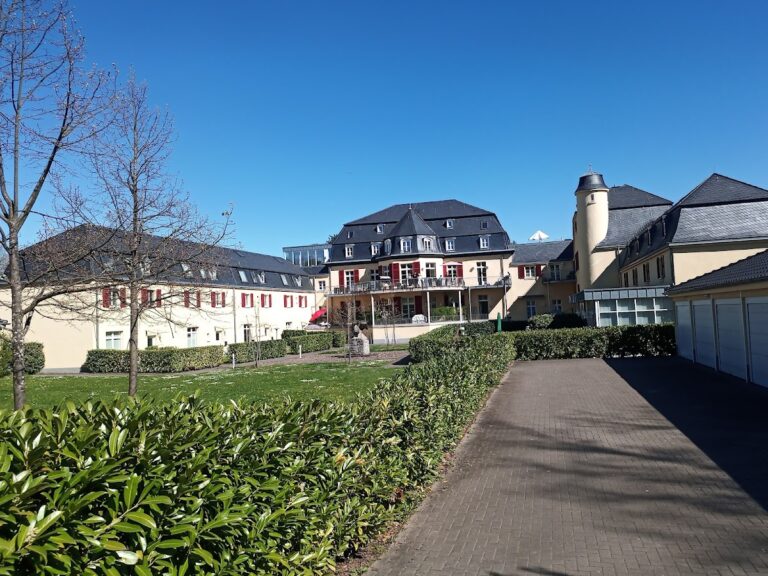
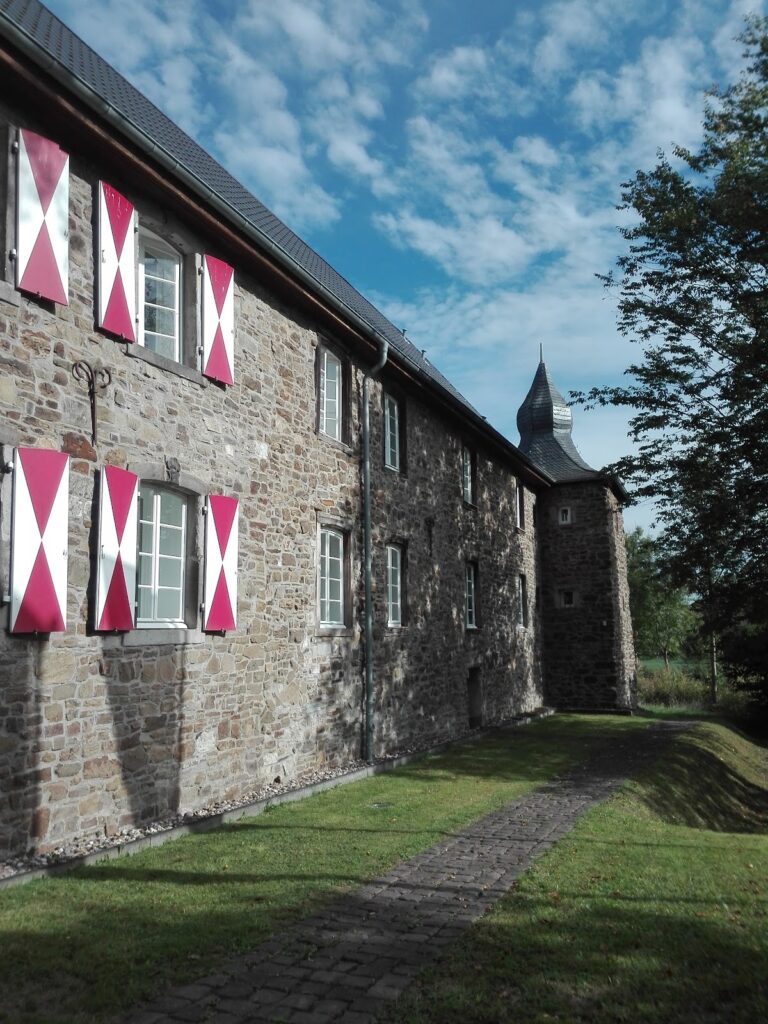
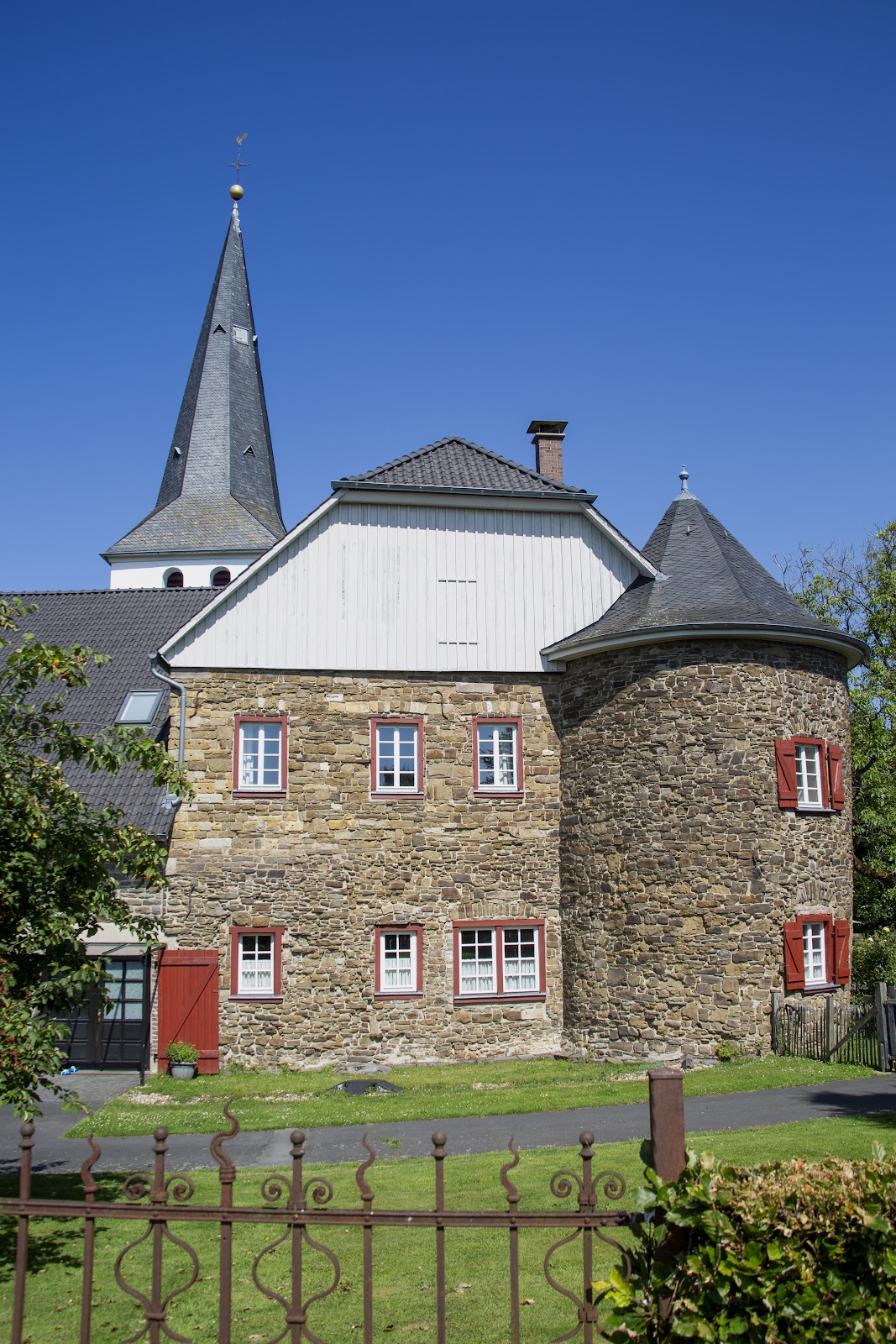
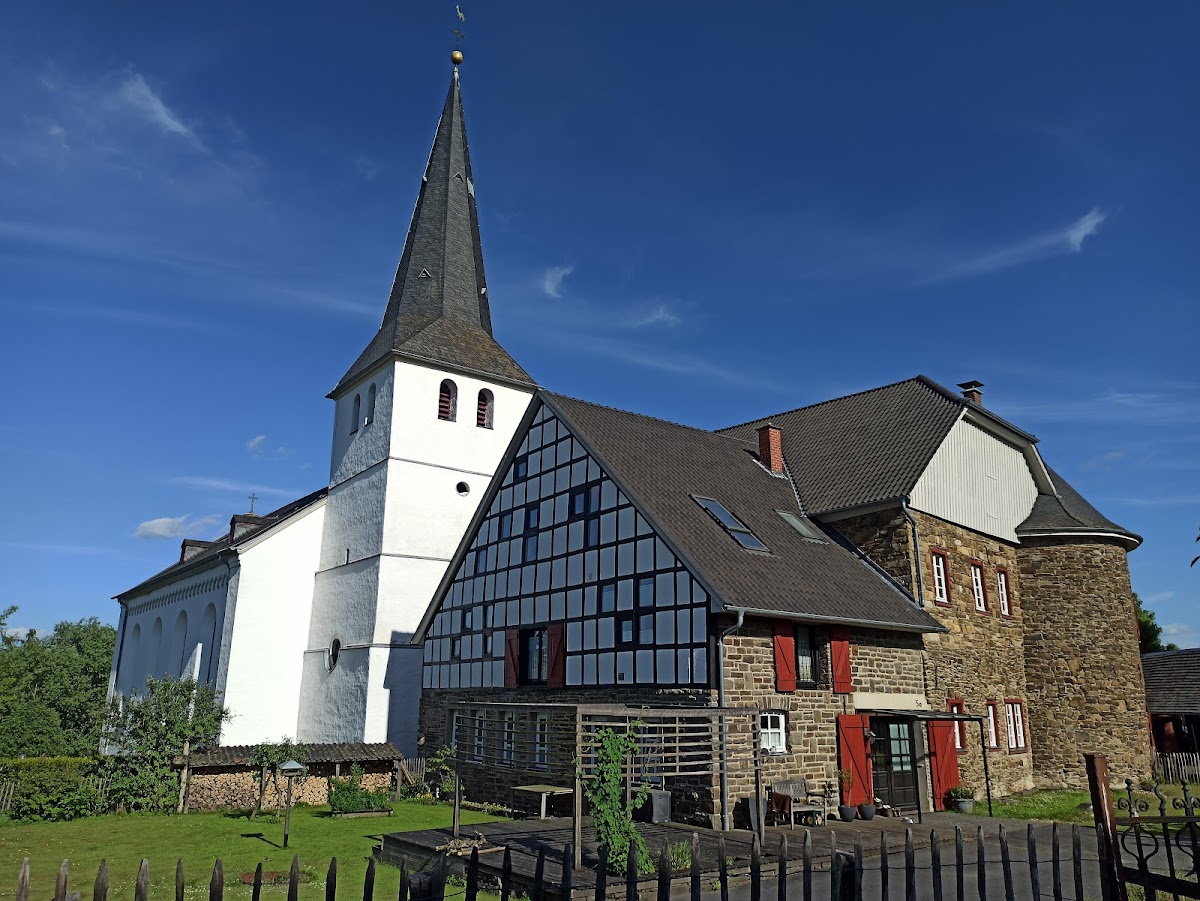
Burg Honrath is an almost completely preserved castle house in Honrath, now part of Lohmar, Germany. It forms the surviving structure of a former hilltop castle, whose present house dates from the sixteenth century and stands on Romanesque foundations. Together with the neighboring Protestant church, it is regarded as the oldest building in the village.
Medieval estate and church
The estate first appears in written records in 1117, when God(e)fried transferred his allod, a privately held hereditary estate, to Siegburg Abbey. The property, then recorded as “Hagenroth,” later passed through Theoderich of Hengebach to Arnold of Hückeswagen.
In 1209, Arnold donated the patronage of the church beside the castle, St. Margaret’s, to the Benedictine convent at Gräfrath near Solingen. A Benedictine convent was a women’s religious community following the Rule of Saint Benedict. The donation transferred rights connected with the church’s administration, including influence over the appointment of clergy, while Arnold retained the castle itself. The church became Protestant in the seventeenth century.
In 1259, the heirs of the Hückeswagen family sold the castle and the entire parish to the Counts of Sayn of Blankenberg. The estate later passed by inheritance to the Lords of Loen-Heinsberg. The Counts of Berg acquired it in 1363, and in 1393 it passed to the Düsseldorf collegiate foundation, a religious institution served by a college of clergy rather than by monks or nuns. Joist Lüninck is recorded as its owner in 1550.
Later ownership
After further changes of ownership, the Lords of Proff of Menden acquired the estate at the beginning of the eighteenth century. In 1825, the Barons von La Valette St. George purchased Burg Honrath together with 198 Morgen of land. A Morgen was a historical land-measurement unit whose exact area varied by region. From 1930 onward, the property passed into non-noble private ownership.
A local tradition associated with Lünigk of Niederpleis was mentioned in the mid-sixteenth century. It portrays him as a heavy drinker and womanizer who was persuaded to marry Giesel, the daughter of Herr von Etzbach, through a written promise exchanged for high-quality Malvasier wine. The tradition says that the marriage was happy and that Malvasier became a prized wine in the castle cellar.
Burg Honrath is listed as architectural heritage monument no. 2 by the city of Lohmar and is recognized as an architectural heritage monument of North Rhine-Westphalia.
Remains
The surviving complex occupies the middle of Honrath on a ridge that slopes gently toward the Agger valley. The castle house stands at an elevation of 162 metres above Germany’s Normal Height Datum, the national system used to report elevations. Its sixteenth-century structure combines rubble stone with timber framing, while the surviving towers retain a fortified appearance.
Castle house
The front part of the house has a timber-framed gable and remains privately inhabited. Behind it, the courtyard is enclosed by rubble-stone masonry and contains an art studio. Barrel vaults survive in the cellar, and part of the east wall of the present service building belongs to the earlier Romanesque predecessor. Romanesque architecture is associated with massive masonry construction and rounded arches.
Church tower
The Romanesque church tower beside the castle originally served both defensive and residential purposes. After several alterations, it functioned as a free-standing bergfried, a prominent medieval defensive tower used mainly for defense and refuge. An arched passage at upper level connected the tower with the castle.