Bidzar: A Marble Engraving Site in Cameroon
Site at a Glance
- Popularity
- Low
- Country
- Cameroon
- Primary era
- Iron Age
- Eras represented
- Iron Age, Classical, Medieval, Early Modern
- Civilizations
- Unclassified
- Site type
- Civic
- Remains
- Rock Art
History
Bidzar is an archaeological site of rock engravings near Bidzar village in Cameroon’s North Region. Radiometric estimates place different engravings between about 300 and 3,000 years old, although their precise ages have been difficult to establish.
A French researcher named Buisson discovered the site in 1933. During the twentieth and twenty-first centuries, quarrying marble for nearby cement and marble industries put the carvings at risk. On 18 April 2006, Bidzar was added to UNESCO’s World Heritage Tentative List, a preliminary list of places considered for possible nomination. This inclusion is not the same as World Heritage inscription, and it provided provisional protection.
Remains
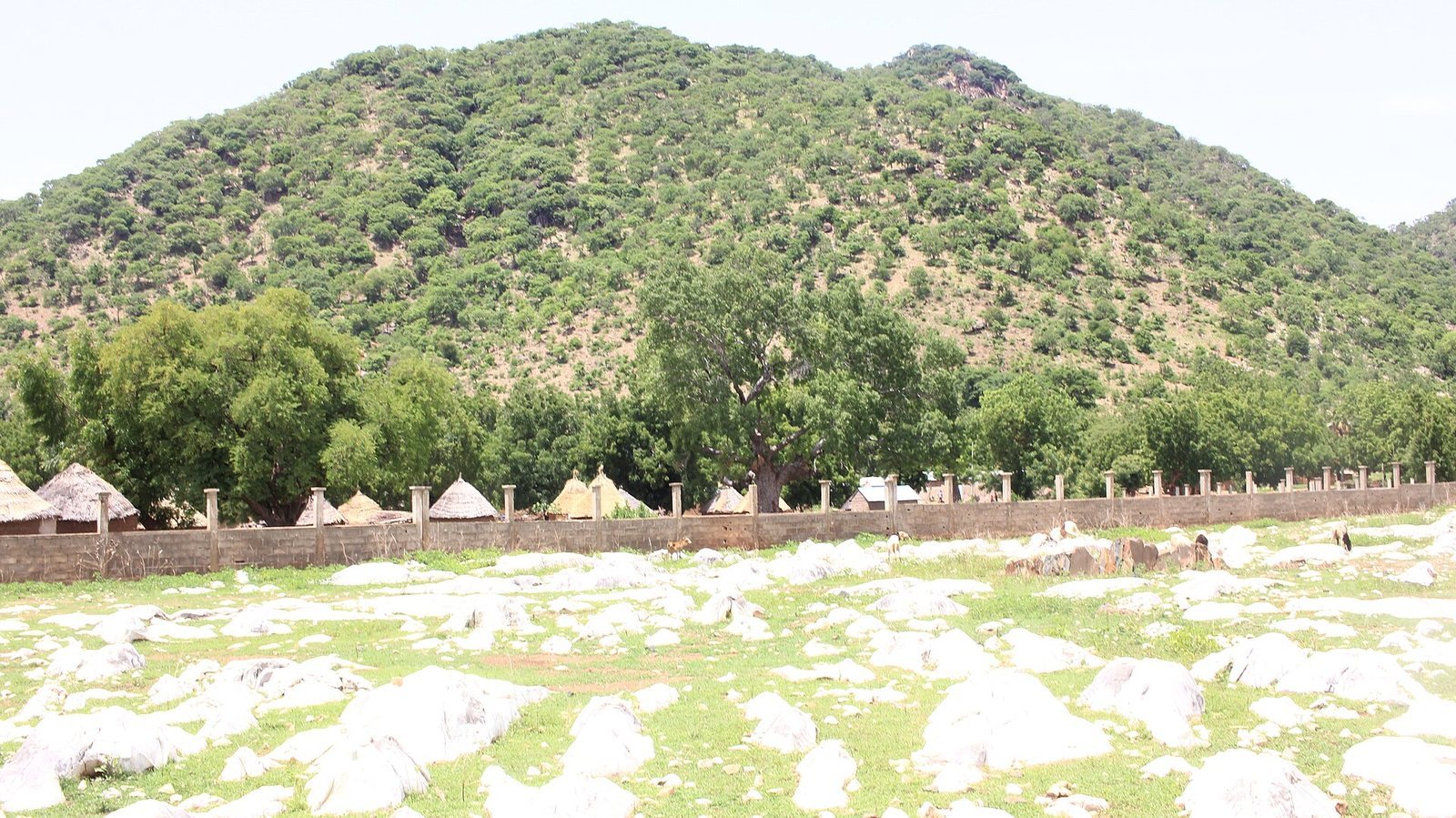
Engraved marble-bearing ground extends around Bidzar village for about 2.5 km from north to south and 1 km from east to west. Slabs bearing carvings are scattered across several hectares. About 500 figures appear on cipolin, a banded type of calcareous marble. The stone contains veins of chlorite schist, a metamorphic rock rich in chlorite. It wears readily under friction and can break into small pieces. Its relative ease of working compared with nearby granite may help explain its selection.
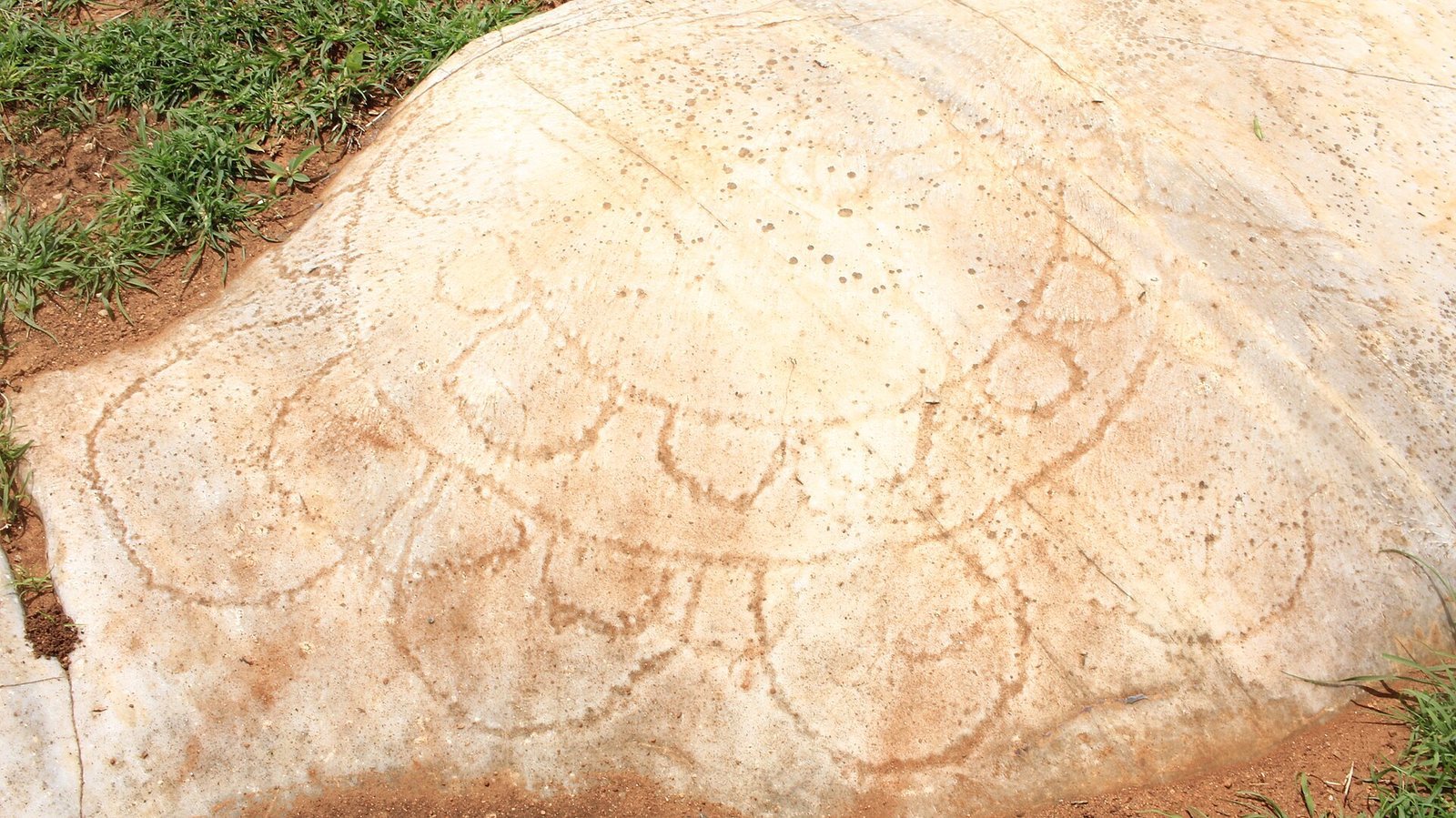
Most figures are geometric circles, either isolated or arranged in groups. They were made by striking the stone with a hammer and an engraving tool; granite or quartz tools could be used to work the slabs. The figures’ meanings are uncertain. They may relate to mythical stories or express ideas about the origin of the universe.