Batticaloa Fort: A Portuguese and Dutch Colonial Fortress in Sri Lanka
Site at a Glance
- Rating
- 4.1
- Popularity
- Medium
- Country
- Sri Lanka
- Primary era
- Early Modern
- Eras represented
- Classical, Early Modern
- Civilizations
- Dutch
- Site type
- Military
- Remains
- Fort
On this page12 sections
History
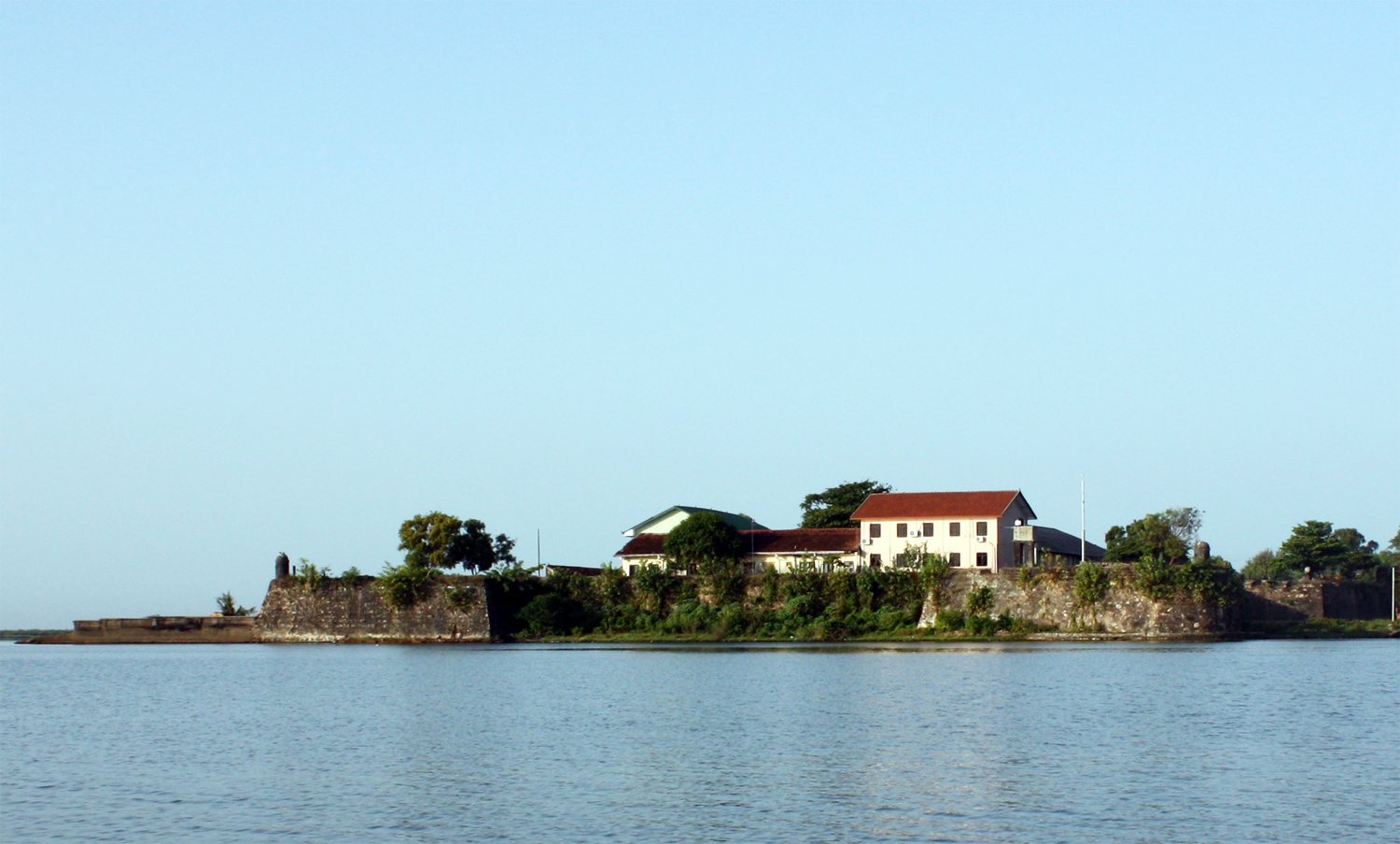
Batticaloa Fort is a Portuguese-built trading and administrative fortress in Batticaloa, Sri Lanka, constructed between 1622 and 1628 during the European colonial period. Its position on Batticaloa Lagoon supported commerce in cinnamon, pepper, and other goods, while also establishing Portuguese authority on the eastern coast.
Portuguese foundation and Dutch capture
Forces of the Dutch East India Company, a chartered Dutch corporation that maintained commercial, military, and colonial bases in Asia, captured the fort on 18 May 1638. They acted with the support of Raja Singha II, the ruler of the Kandyan kingdom in Sri Lanka’s interior, whose alliance opposed Portuguese control of Ceylon, the historical European name for Sri Lanka.
Fighting destroyed the Portuguese fort in 1639. The Dutch rebuilt it in the middle of the seventeenth century, after which it served as a military base and a center of Dutch authority along this part of the coast.
Dutch and British periods
Dutch control continued until the British takeover during the 1790s. The fort was captured in that decade and formally ceded to Britain with Ceylon in 1802. During the eighteenth century, it and the related fort at Trincomalee were not continuously occupied. They functioned mainly as frontier posts, while high maintenance costs, difficult resupply, disease, and their remote locations created continuing operational problems.
Later history and religious associations
Batticaloa Fort is protected as an archaeological monument of Sri Lanka and is associated with the country’s Portuguese colonial heritage. Natural disasters and the armed conflict between the Sri Lankan army and the Liberation Tigers of Tamil Eelam damaged the complex in recent decades, although much of the fort remains in reasonably good condition. New buildings inside the historic enclosure are used by local administrative departments of the Government of Sri Lanka.
The site also has religious importance because it contains a Buddhist stupa and a chatra, a ceremonial parasol-like object associated with Buddhist monuments and royal or sacred status. These features are traditionally linked to the first century BC, the Ruhuna kingdom, an ancient polity in southern and southeastern Sri Lanka, and King Kavantissa, an early ruler of Ruhuna.
Remains
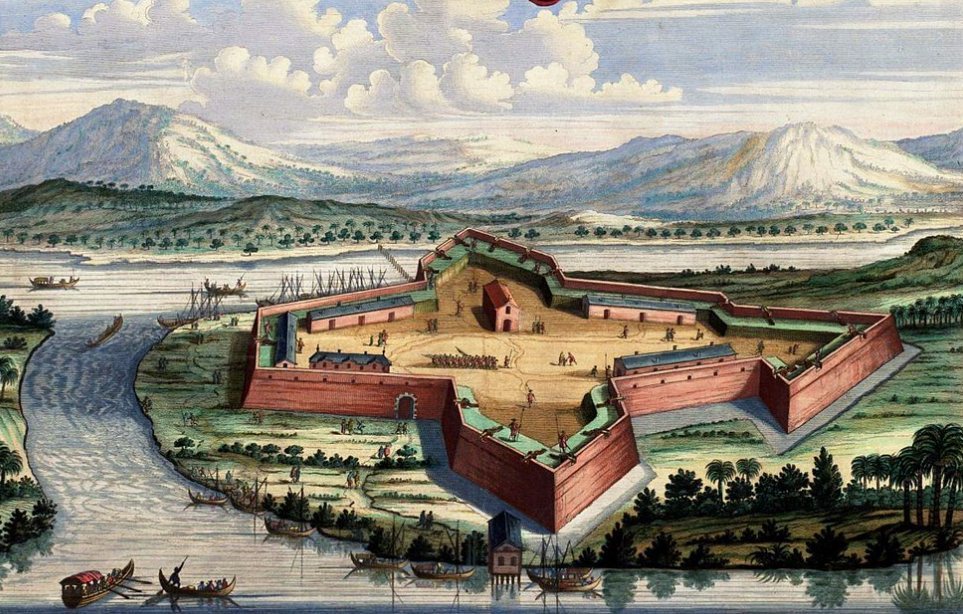
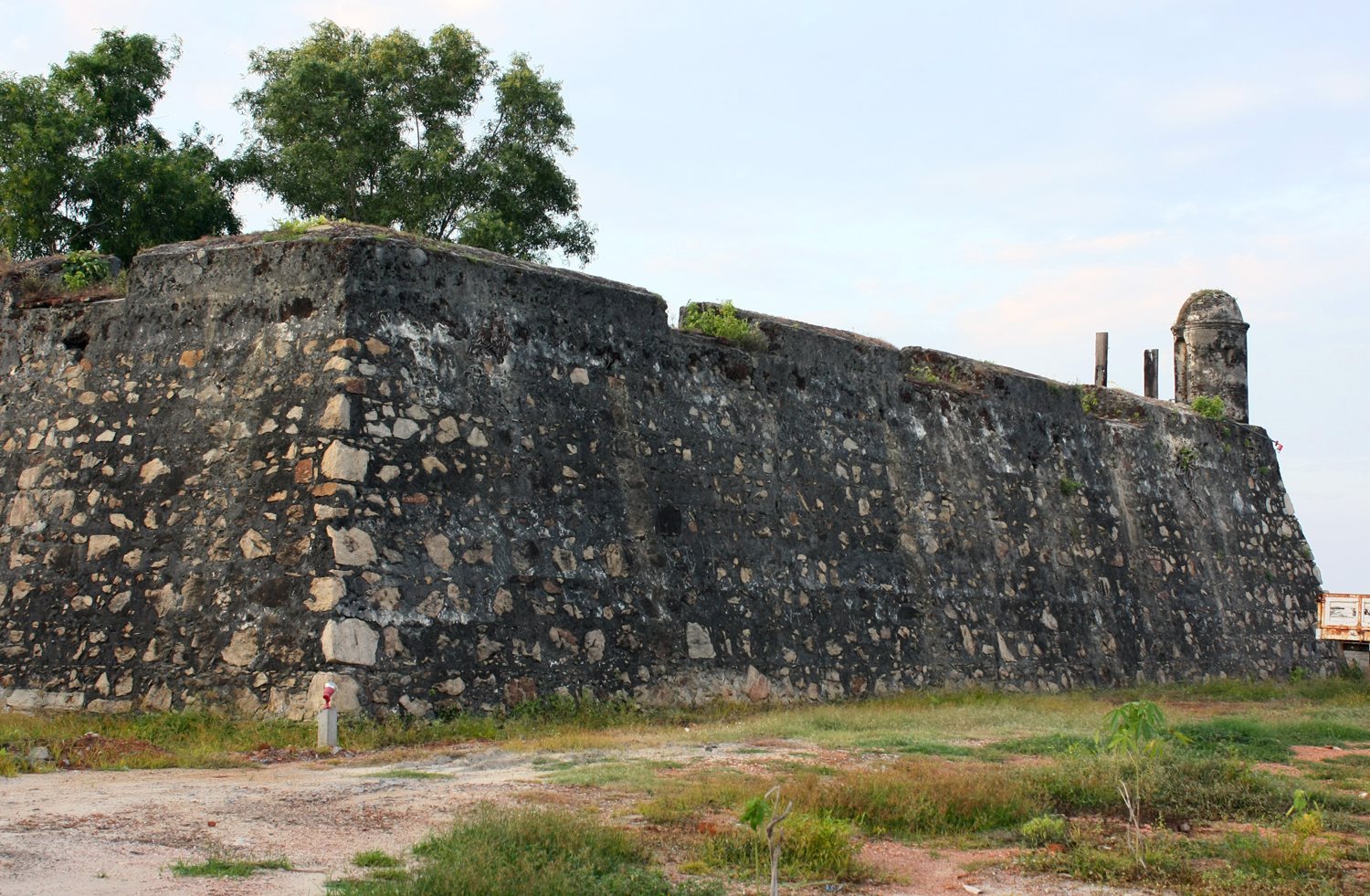
The fort occupies the western end of an island in Batticaloa Lagoon, close to a narrow outlet toward the sea. Water protects two sides of the site, while a canal protects the other two. The canal was formerly connected to the lagoon and was inhabited by crocodiles. The roughly quadrangular fort measures about 100 by 120 metres and was built with coral stone, granite, brick, and concrete.
Fortifications and entrances
Bastions and walls
Four corner bastions project from the fort’s walls. They are named Colombo, Galle, Amsterdam, and Haarlem. Bastion Colombo is the largest and guards the southwestern landward side together with the canal. Bastion Galle lies to the south, and a wall extends from Galle beside the lagoon toward Amsterdam. Stone guardhouses stand on the bastions, and Bastion Colombo also carries a clock tower.
Gates and water access
A water gate in the wall between Galle and Amsterdam bears the emblem of the Dutch East India Company and the date 1682. A separate small gateway beside Galle was sealed with brick, while a small land gate lies between Haarlem and Colombo. The Dutch company emblem also appears at the entrance, linking the surviving gateways with the fort’s period as a Dutch military and administrative center.
Interior and associated remains
Courtyard and colonial structures
The interior formerly contained houses, storehouses, and trees. Around 1700, a high stone gun platform known as a kat stood in the center of the courtyard. Warehouses stood outside the fort. A plan from 1721 depicts the Amsterdam and Colombo bastions together with the principal structures of the enclosure.
Buddhist monuments
A Buddhist stupa and a chatra stand within the fort. Their traditional association with the first century BC, the Ruhuna kingdom, and King Kavantissa gives the colonial military site an additional religious and historical dimension.
Cannons and museum collections
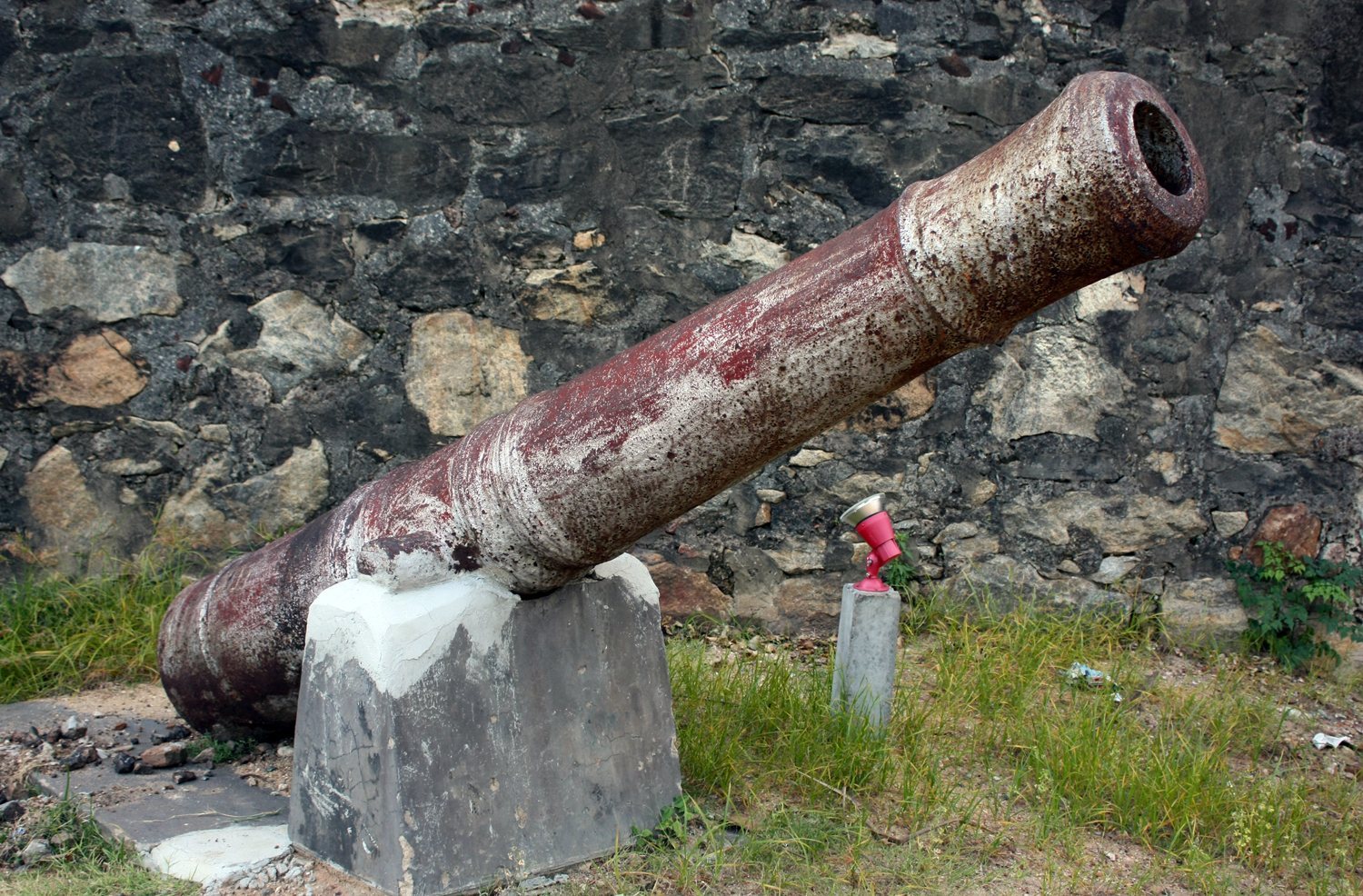
Several old cannons remain within the fort, and some retain symbols of the Dutch East India Company. A small museum in the complex contains objects from the British colonial period. The fort’s position also provides views across Batticaloa Lagoon toward the two bridges at Kallady.