Atiq Mosque, Awjila: A Twelfth-Century Friday Mosque in Libya
Site at a Glance
- Rating
- 4.5
- Popularity
- Low
- Country
- Libya
- Primary era
- Medieval
- Eras represented
- Medieval
- Civilizations
- Unclassified
- Site type
- Religious
- Remains
- Mosque
On this page6 sections
History
Atiq Mosque is a twelfth-century mosque in Awjila, Libya, within an oasis in the country’s east. It belongs to the Sunni tradition of Islam and is used for communal Friday prayers. The mosque is considered the oldest in the region and remains active.
Islam and Awjila
Awjila’s community has roots in classical antiquity. Islam reached the oasis in the seventh century and became central to local life. Arab Muslim expansion reached Cyrenaica in 644, and the area around Awjila was conquered under the command of Sidi ‘Abdullāh ibn Sa’ad ibn Abī as-Sarḥ. An early Muslim military commander, he died around 650 and was buried at Awjila.
In the eleventh century, the Arab chronicler al-Bakri described several mosques around the oasis, indicating that the area already had multiple places of Muslim worship before Atiq Mosque was built.
The mosque and its later history
The present mosque was built in the twelfth century. It underwent restoration during the 1980s and further renovation in 2006, in preparation for the solar eclipse on 29 March that year.
Remains
Setting and roof
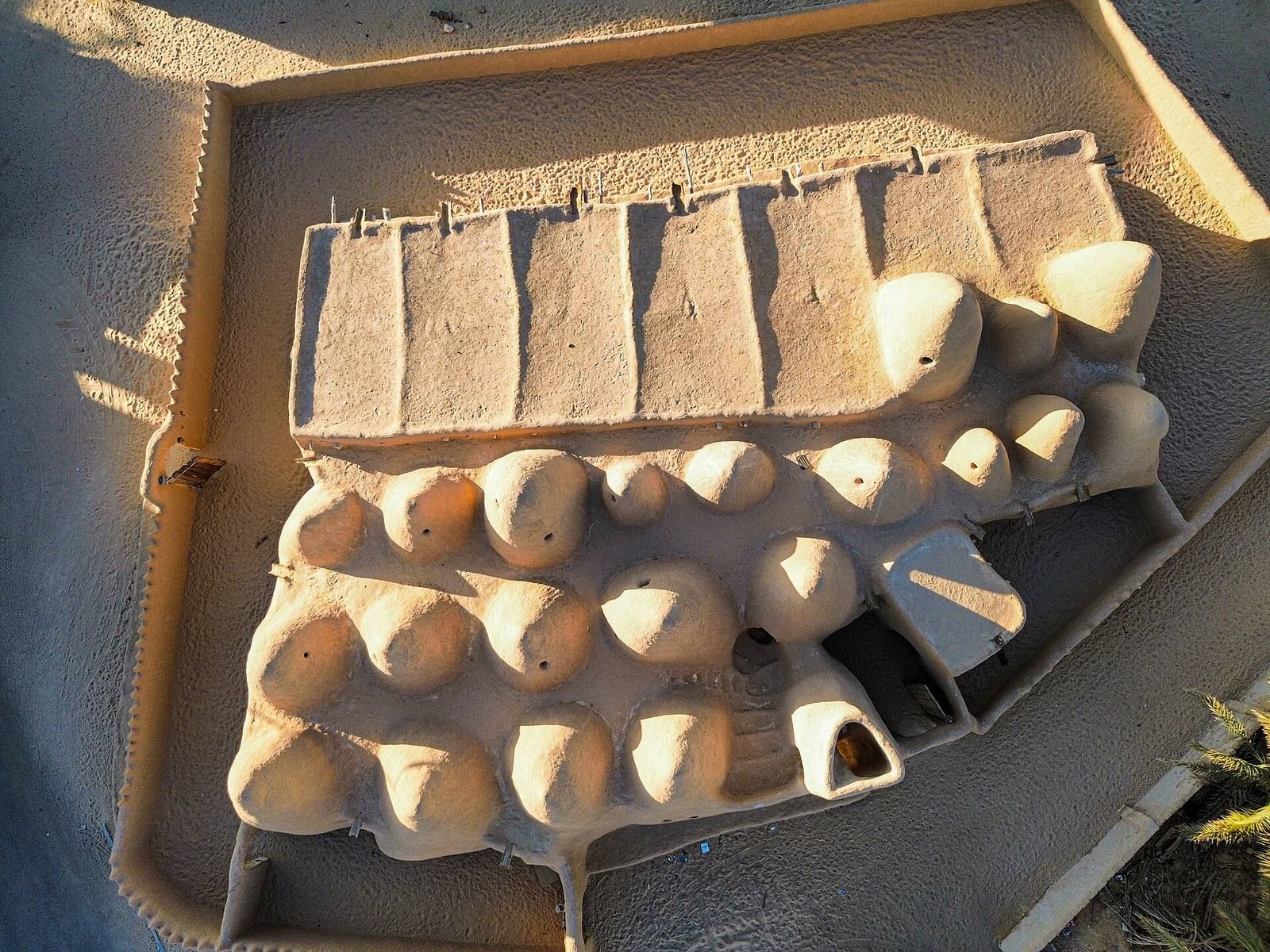
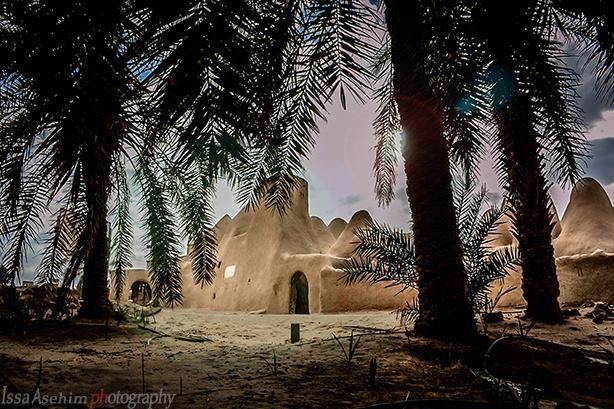
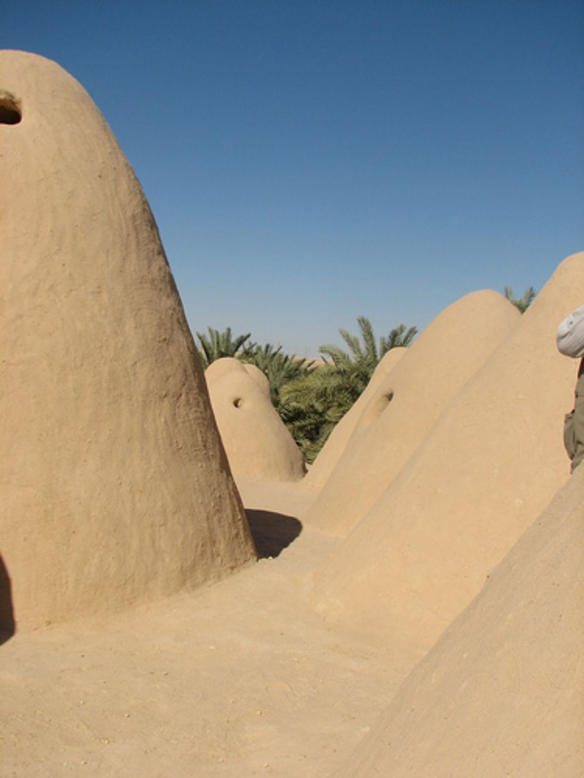
Atiq Mosque stands in Awjila’s old-city area, within the oasis, and covers about 400 square metres. Palm trees flank its entrance. Palm branches, mud brick, and limestone are among its construction materials. Twenty-one conical domes of mud brick and limestone form the roof. Small openings in each dome let in light, while the domes help cool the interior.
Interior and prayer features
The walls are about 40 centimetres thick. Nine doors open into an interior with numerous pillars and arches. A mihrab (a niche indicating the direction of prayer) is paired with a recessed niche for the minbar (the prayer leader’s pulpit). One minaret, or mosque tower, is also part of the building.
The recessed pulpit niche has parallels with features in mosques in Arabia and East Africa. Its design has been interpreted as a possible indication that the builders followed Ibadi Islam, a tradition distinct from Sunni Islam.