Oscarshall: A Gothic Revival Pleasure Residence in Oslo


Site at a Glance
- Rating
- 4.5
- Popularity
- Low
- Country
- Norway
- Primary era
- Modern
- External website
- Open
- Eras represented
- Modern
- Civilizations
- Swedish
- Site type
- Domestic
- Remains
- Palace
On this page6 sections
History
Oscarshall is a royal pleasure residence in Oslo, Norway, built from 1847 to 1852 for King Oscar I and Queen Joséphine of Sweden and Norway. Designed by the Danish architect Johan Henrik Nebelong, it is a Gothic Revival palace and a major expression of the National Romantic style, a movement that emphasized national history, folklore, and traditional artistic forms.
Royal ownership and public use
King Carl IV sold Oscarshall to the Norwegian state in 1863. The palace remains state property and is placed at the disposal of the King. In 1881, Oscar I’s successor, King Oscar II, opened it to the public as a museum.
In 1929, Oscarshall was considered as a residence for Crown Prince Olav and Princess Märtha. Financial difficulties and political opposition prevented the plan. The matter was later resolved when Fritz Wedel Jarlsberg sold his Skaugum estate to the royal couple.
Restoration and later cultural use
Between 2005 and 2009, Oscarshall underwent comprehensive renovation and restoration. The work returned its colours and furniture to their original 1859 style, and the palace then reopened to the public. In 2013, Queen Sonja opened the Queen Joséphine Gallery on the grounds.
Remains
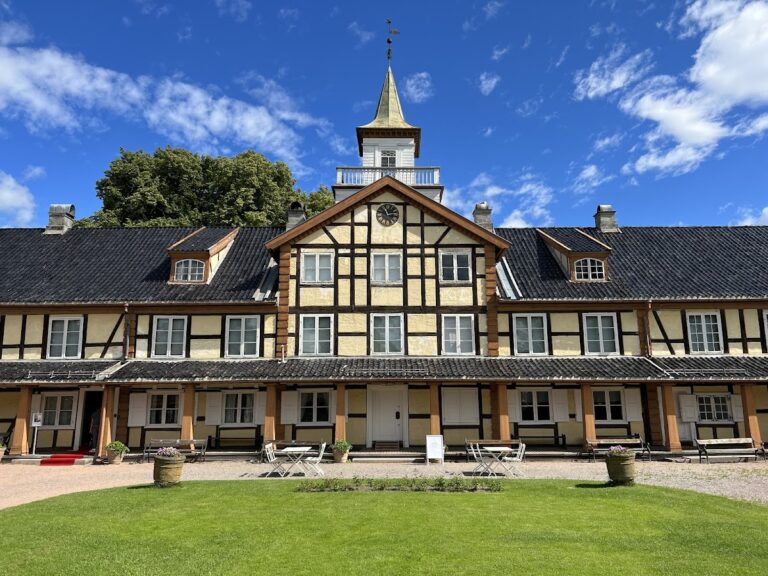
Oscarshall stands beside the small fjord of Frognerkilen on the Bygdøy peninsula. The property consists of the white main palace, secondary buildings, a park connected directly to the fjord, and an open pavilion. The palace has one tall tower and follows the Gothic Revival style, drawing inspiration from English neo-Gothic palaces. Its architecture is regarded as one of Norway’s finest examples of neo-Gothic design.
The palace and interiors
The entire interior was constructed and decorated by Norwegian artists and artisans. Paintings by Joachim Frich, Adolph Tidemand, and Hans Gude cover the walls of the dining hall. The drawing room has decoration and furniture that evoke an old Norwegian guildhall, a meeting and ceremonial building used by a craft or merchant guild.
Grounds and Queen Joséphine Gallery
The palace grounds combine the park, the open pavilion, and the secondary buildings with the shoreline setting at Frognerkilen. The Queen Joséphine Gallery displays graphic prints and other prints made by Queen Joséphine during its first season.
Nearby sites