Schloss Grumbach: A Fortified Residence and Town Hall in Germany


Site at a Glance
- Rating
- 4.5
- Popularity
- Low
- Country
- Germany
- Primary era
- Medieval
- External website
- Open
- Eras represented
- Medieval, Early Modern
- Civilizations
- Holy Roman Empire
- Site type
- Military
- Remains
- Castle
On this page16 sections
History
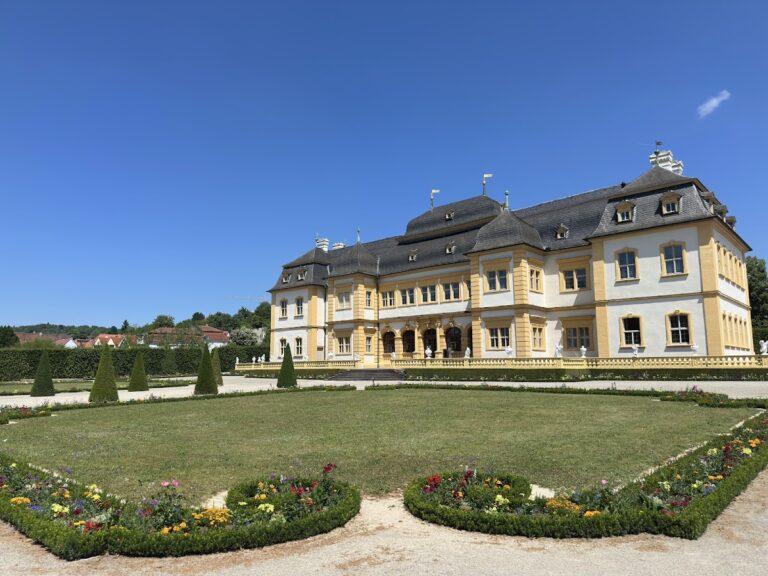
Schloss Grumbach is a fourteenth-century fortified residence in Rimpar, Germany, built by a branch of the Franconian noble family Wolfskeel. The family first used the name Wolfskeel von Grumbach and later shortened it to von Grumbach. The castle became the seat of the Rimpar branch and later served as a summer residence of the Würzburg prince-bishops before becoming Rimpar’s town hall and a museum complex.
The Lords of Grumbach and the Rimpar branch
Rimpar had originally belonged to the noble lords of Grumbach, whose family is first documented in the eleventh century. Their ancestral seat was Burggrumbach, now part of Unterpleichfeld, where they built a castle during the eleventh or twelfth century. The male line ended in 1243 with Albert II. Through the marriage of his daughter, the family’s possessions passed to the Counts of Rieneck.
In 1328, Count Ludwig of Rieneck sold two-thirds of Burggrumbach Castle and all his possessions in Burggrumbach, Rimpar, Kürnach, and Bergtheim to Eberhard, a knight of the Franconian Wolfskeel family. Eberhard and his descendants established the Rimpar branch, which adopted the Grumbach name and built Schloss Grumbach.
No surviving document records the construction of a castle at Rimpar. Its defensive wall contains loopholes, narrow openings through which firearms could be used, so construction is considered unlikely to have taken place before about 1370. A member of the von Grumbach family living in Rimpar is first documented in 1371. The castle itself appears in a written record from 1469, when Heinz and Eberhard von Grumbach divided their possessions.
The von Grumbach family in the sixteenth century
Two prominent members of the Rimpar line were Prince-Bishop Johann III von Grumbach and Wilhelm von Grumbach. Wilhelm was born at Schloss Grumbach in 1503. He served several princes as court marshal, a senior official concerned with court administration and ceremonial organization, as governor of a margravial territory, as colonel of the Crown, and in other offices.
Wilhelm became involved in the Grumbach Feud after the Ansbach margrave was placed under an imperial ban. An imperial ban was a formal exclusion from the protection of the Holy Roman Empire, which could remove legal protection and property rights and expose the condemned person to pursuit by imperial authority. Wilhelm was branded a peacebreaker, and Prince-Bishop Melchior Zobel von Giebelstadt ordered the confiscation of his possessions.
Wilhelm tried to recover his rights through the Imperial Chamber Court, the supreme judicial institution of the Holy Roman Empire, but his case failed. He later stated that he had lost 17,000 guilders in a single year, a sum described as equivalent to about three million euros today.
In 1558, Melchior Zobel von Giebelstadt was attacked on the road to Marienberg Fortress and shot by one of Wilhelm’s servants. The claim that the attack had originally been intended as an abduction, perhaps to help Wilhelm recover his possessions, remains unproven apart from Wilhelm’s confession under torture in 1567.
Wilhelm subsequently occupied Würzburg with about 1,300 men and compelled the cathedral chapter to return his possessions. The emperor then placed him under the imperial ban. Wilhelm fled to Gotha, where Duke Johann Friedrich the Middle refused repeated demands for his surrender. In 1567, an imperial army captured Gotha. The duke received a life sentence, while Wilhelm von Grumbach was tortured and then killed.
Transfer to the Würzburg prince-bishops
Wilhelm’s son, Konrad von Grumbach, paid 50,000 guilders to the Würzburg bishopric in 1569 to recover his father’s possessions. Rising debt, increased by expensive investments, eventually forced Konrad to sell Schloss Grumbach and the entire village of Rimpar to Würzburg in 1593 for approximately 250,000 guilders of debt.
Prince-Bishop Julius Echter von Mespelbrunn acquired the castle and Rimpar in the same year. A prince-bishop was both the religious ruler of a bishopric and its territorial secular ruler, so the Würzburg prince-bishops governed both church and territory. Before the Rimpar branch of the von Grumbach family ended with Konrad’s son Wilhelm in 1603, the castle and settlement had been converted into a summer residence for the Würzburg prince-bishops.
Julius Echter had Rimpar’s town hall built, renewed its church, and constructed a pleasure house below the castle. He also had numerous rooms within Schloss Grumbach newly furnished, including the surviving main hall with its stucco decoration. The residence could accommodate a substantial court retinue. Between 1698 and 1739, thirty-six episcopal stays are documented, including twenty-six with retinues of up to sixty-nine people and ten with retinues of up to 160.
The castle continued as a summer residence until the eighteenth century. In 1744, the newly completed rural residence at Werneck replaced Schloss Grumbach. The castle’s masonry then began to deteriorate. Between 1780 and 1793, the entire west wing was demolished. The French army entered the area in 1796, halting further demolition plans and probably helping the surviving structure remain in comparatively good condition.
Forestry office, municipal ownership, and museums
A renovation in 1800 replaced the earlier Welsch hoods, distinctive curved historical roof forms, with blunt caps. These compact tower roofs gave the castle its present external appearance. From the establishment of the Royal Bavarian Forestry Office of Rimpar in 1806, the office occupied the east wing. It remained there until the office was dissolved in 1971.
On 21 July 1980, the municipality of Rimpar bought Schloss Grumbach from the State of Bavaria. The Friends of Schloss Grumbach formed that year to preserve and research the building and to expose concealed remains. Edwin Hamberger was elected chairman. After alteration and renovation, the castle began serving as Rimpar’s town hall in 1984, and its inauguration took place on 18 May 1985. The municipality remains the owner.
The association was officially established on 16 September 1980 after preparatory meetings in April and July. It raised half a million Deutsche Mark in donations, created the castle museums, and organized events. Between 1996 and 2010, it established museums devoted to archaeology, baking, costume, masonry and carpentry, and crime. These institutions preserve and interpret the history of Schloss Grumbach and aspects of Rimpar’s local history.
Remains
Schloss Grumbach survives as a fortified residence whose defensive wall contains firearm loopholes. Its present form reflects both the demolition of the west wing in the late eighteenth century and the roof alterations of 1800. Rubble from the former wing was used to fill the lower levels of the towers, the area now occupied by the Archaeological Museum, and the castle moat. The surviving buildings contain Renaissance representative halls, a decorated main hall, former service spaces, towers, and rooms adapted for municipal and museum use.
Representative rooms and domestic spaces
Knights’ Halls
The Great and Small Knights’ Halls are Renaissance halls, grand representative rooms associated with Renaissance architecture and courtly display. The Great Hall contains a heraldic frieze made for the marriage of Konrad von Grumbach and Salome von Vellberg. It presents sixteen coats of arms for the ancestors of each spouse, representing their great-great-grandparents. Arranged as a formal proof of ancestry, the frieze demonstrates the noble lineage connected with the marriage.
Main hall
A surviving main hall retains stucco decoration, molded or applied plaster used for architectural ornament. The room was among those newly furnished when Julius Echter converted the castle into a residence for the Würzburg prince-bishops. Its decoration belongs to the physical evidence of that residential transformation.
Kitchen and wine cellar
The former large kitchen occupied approximately 118 square metres on the ground floor of the west wing, excluding its ancillary rooms. The pantry, scullery, kitchen chamber, Knights’ Chamber, and silver chamber added another 90 square metres. Beneath the kitchen, a wine cellar had an estimated capacity of 213,000 litres. The scale of this service complex corresponded to the residence’s use by prince-bishops and their large court retinues.
Archaeological remains and museum spaces
Archaeological Museum
The Archaeological Museum occupies six rooms and part of a stair tower, providing 130 square metres of exhibition space in a section that originally belonged to the west wing. Only parts of that wing, mainly at lower levels, survived its demolition. The entrance area contains the ticket desk, fully preserved seventeenth- and eighteenth-century sculptural works, and a large information panel about the museum’s creation and the castle’s history.
Displays include ceramic and glass vessels, tools such as sickles, drilling devices, and spindle whorls, as well as collections of stove tiles, stucco, paintings, historical lamps, keys, and coins. Stove tiles are shaped ceramic tiles used to build and finish tiled heating stoves. The material was recovered during clearance of the former west-wing area, where more than seventy boxes of finds were collected. Many pieces required restoration or repair before they could be exhibited.
Bakery Museum
Created between 1997 and 2003, the Bakery Museum occupies 150 square metres and presents the history of the baking trade. It forms part of the museum complex housed within Schloss Grumbach.
Costume Museum
The Costume Museum is housed in the Greiffenklau Hall, named after Prince-Bishop Johann Philipp von Greiffenklau. It displays substantial parts of the Friends of Schloss Grumbach’s Franconian costume collection and sometimes presents photographic exhibitions on historical subjects.
Masons’ and Carpenters’ Museum
The Masons’ and Carpenters’ Museum was established between 2008 and 2009 from an idea and plan by Edwin Hamberger. It occupies the structure known as the Water Tower. Nine display cases and exhibition panels present the occupations of mason and carpenter.
Crime Museum
The Crime Museum occupies the so-called Grumbach Prison, a tower containing three prison rooms arranged one above another. Its ground floor contains a small permanent exhibition on late-medieval jurisdiction. The tower and its rooms preserve a distinct part of the castle’s historical use and interpretation.
Nearby sites