Mountjoy Castle: An English Stronghold in Ulster
Site at a Glance
- Rating
- 3.8
- Popularity
- Very Low
- Country
- United Kingdom
- Primary era
- Early Modern
- External website
- Open
- Eras represented
- Early Modern
- Civilizations
- English
- Site type
- Military
- Remains
- Castle
On this page6 sections
History
Mountjoy Castle is a ruined fortification in the United Kingdom, near Brockagh and the village of Mountjoy in County Tyrone, Northern Ireland. Charles Blount, 1st Earl of Devonshire and 8th Baron Mountjoy, ordered its construction in 1602 as an English stronghold in Ulster, on territory associated with the O’Neill clan and then controlled by Hugh O’Neill, a leading Gaelic Irish lord who resisted English expansion.
English stronghold in O’Neill territory
The castle occupied a hill overlooking Lough Neagh, giving it a strategic position. Before construction began, a nearby O’Neill stronghold called Fuath na nGall, meaning “Hatred of Foreigners,” was destroyed. Hugh O’Neill left the hostile stronghold unopposed for tactical reasons, allowing supporters of English rule to establish Mountjoy Castle in the area.
Rebellion, destruction, and later use
Mountjoy Castle was attacked during the Irish Rebellion of 1641, a rising against English and Protestant rule in Ireland. Irish forces associated with Felim O’Neill of Kinard captured it under the command of Turlough Gruama O’Quinn. They held the castle until the defeat of the Protestant general Monro. The building partially burned in 1643, and after the rebellion was suppressed, Parliament ordered its destruction in 1648.
During the Jacobite, or Williamite, wars in Ireland, King William III used the castle for his army in 1690. After those conflicts, it was abandoned and remained in ruins. Mountjoy Castle is now a State Care Historic Monument, meaning that it is a protected historic site under the care of Northern Ireland’s government heritage authorities. A restoration project has been developed but has not been implemented. The site is also known by the Irish name Caisleán Mhuinseo.
Remains
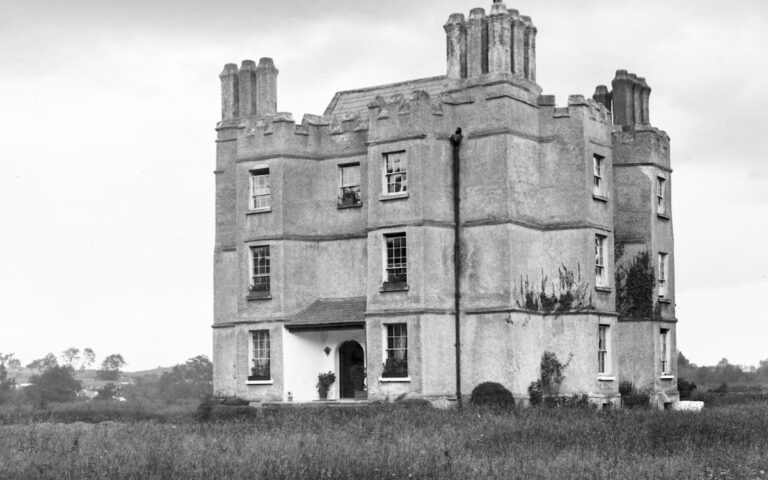
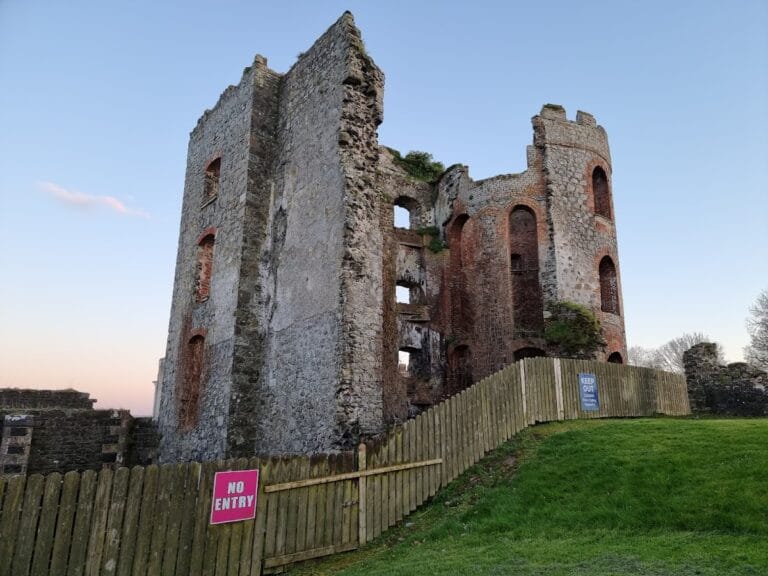
Mountjoy Castle is a two-storey brick fortification arranged around a central rectangular block and four corner towers. The towers are spear-shaped in form, while loopholes in the towers and walls provided openings for defensive fire. An earthwork rampart surrounded the castle and could shelter approximately 1,000 soldiers and 100 horses.
Building and defensive arrangement
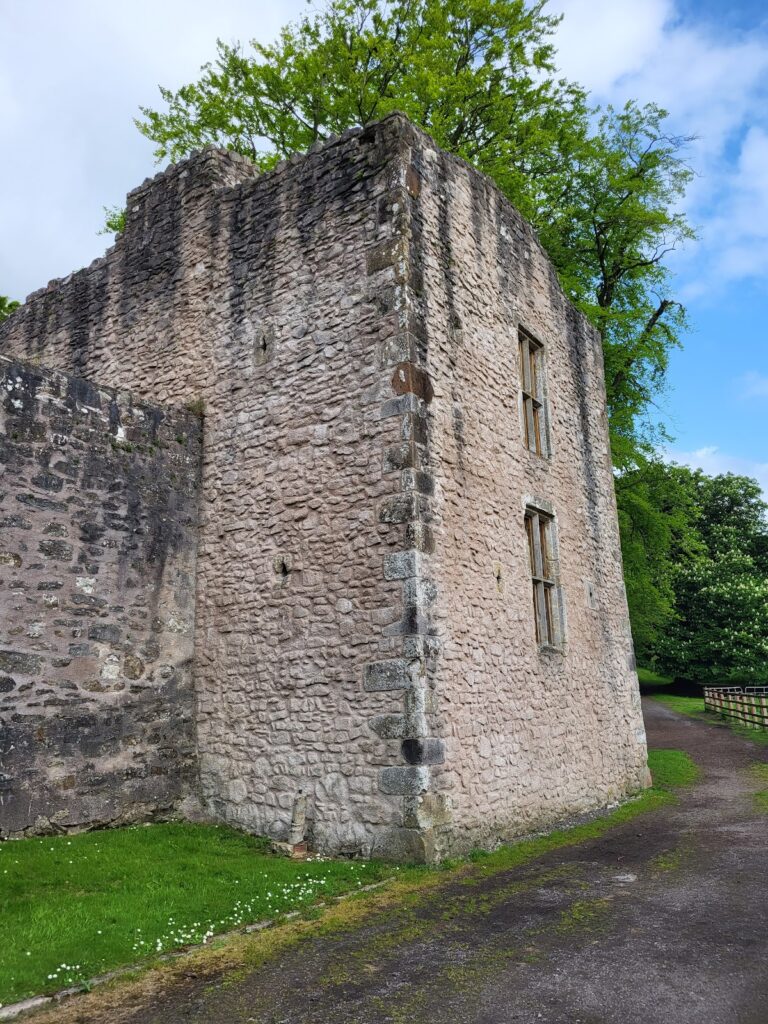
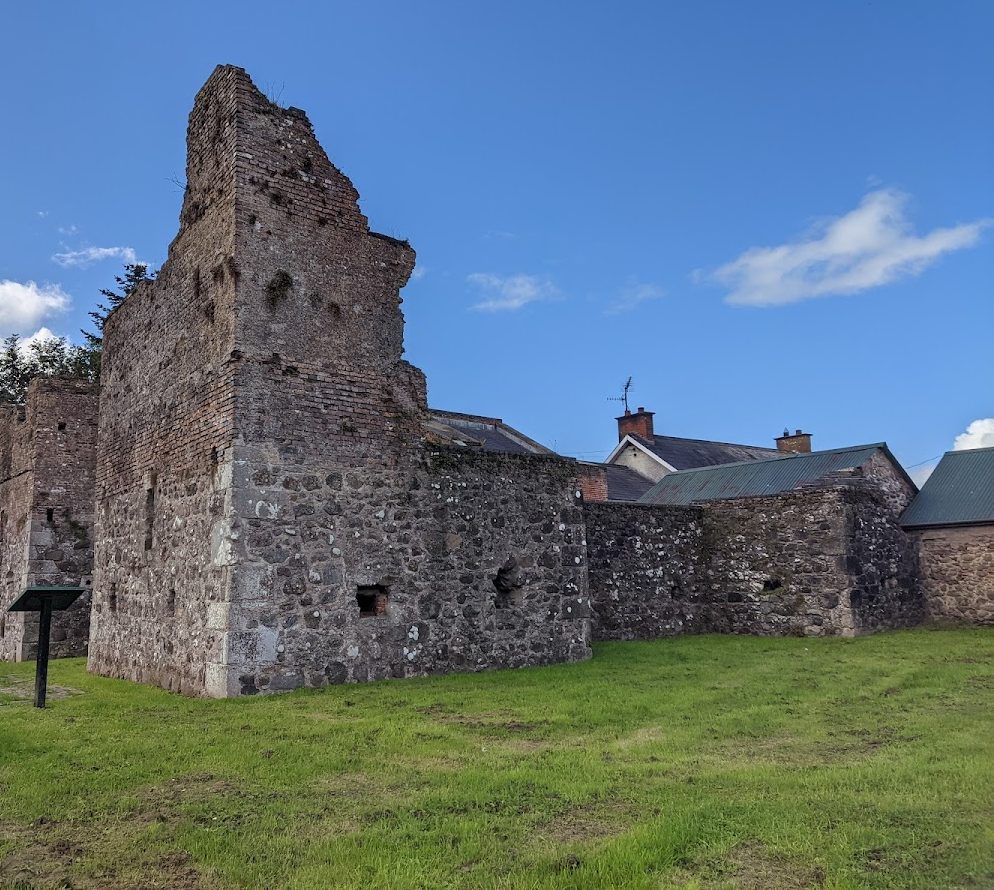
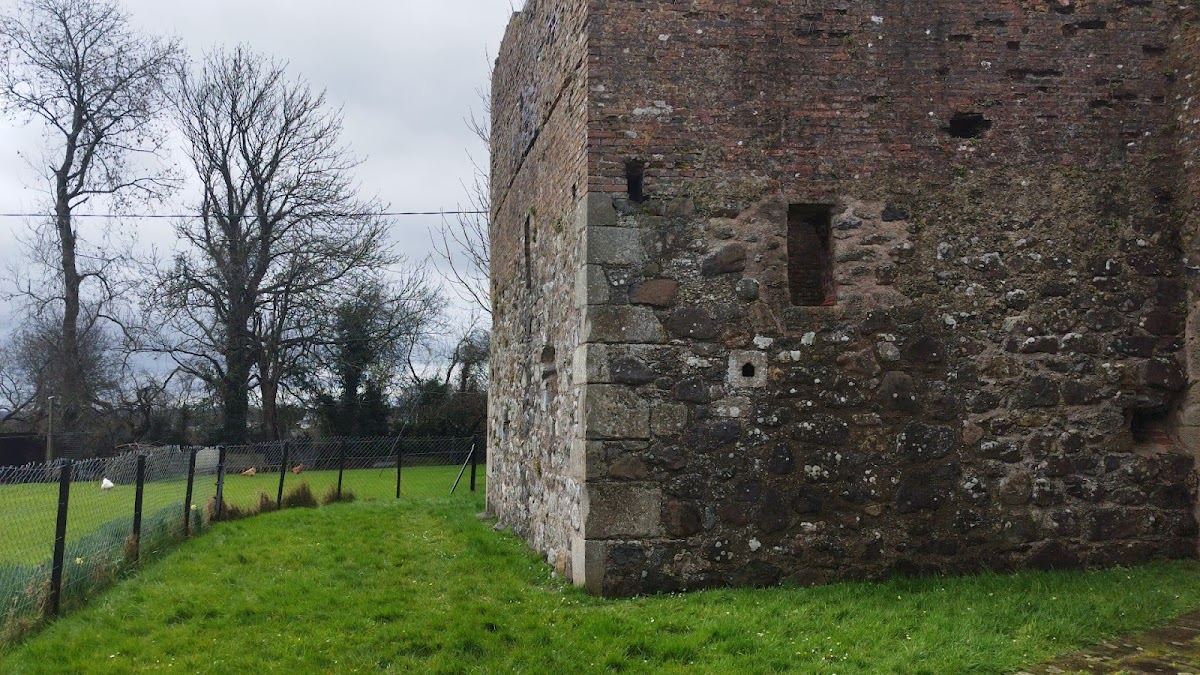
The brick was produced on lands at Coalisland, and the exterior of the lower storey was faced with roughly dressed stone. The entrance stood on the southern side of the eastern curtain wall, the main enclosing wall linking the fortified projections. Several broad windows survive in the upper storey, contrasting with the more defensive openings below.
Surviving structure
The castle remains a ruin. The north-western side and its tower are partly ruined or collapsed, while the western curtain wall is destroyed or partly destroyed. The surviving fabric still presents the central block, corner-tower plan, defensive openings, and the relationship between the stone-faced lower storey and the brick superstructure.