Castle of Hasznos: A Medieval Fortress in Hungary
Site at a Glance
- Rating
- 4.4
- Popularity
- Low
- Country
- Hungary
- Primary era
- Medieval
- Eras represented
- Medieval, Early Modern
- Civilizations
- Hungarian
- Site type
- Military
- Remains
- Castle
On this page7 sections
History
Castle of Hasznos, also called Cserteri Castle, is a medieval castle ruin in Hungary, above Hasznos in the municipality of Pásztó. It was built between 1300 and 1320 by Domokos of the Rátót kindred, a powerful noble family, who served as palatine, the king’s principal deputy and a senior judicial official. The castle’s first written mention dates from 1304, and a 1329 record calls its castellan Castellanus de Hasnos.
A Fortress on the Mátra Road
Hasznos formed part of a defensive system with Ágasvár and Óvár, protecting the military road through the Kövecses Stream valley. An earlier fortification stood on Ágasvár, a summit more than 700 metres high to the east, but it was abandoned when it no longer provided effective control of the valley. Cserteri Castle then assumed that strategic role.
The castle belonged to the Hasznosi family, which also ruled Tarn and Pásztó. Its position and ownership brought the site into the orbit of major political figures. Wenceslaus, a Bohemian prince who briefly held the Hungarian crown in the early fourteenth century, and Charles Robert, the Angevin king who later consolidated royal authority in Hungary, both visited the lord of Hasznos while seeking the friendship of the influential Rátót kindred. In 1454, the Pásztói family was recorded as the owner of the fortified castle and the village.
Ottoman Capture and Decline
In 1552, the village paid taxes to Eger Castle. During the Ottoman expansion into the Kingdom of Hungary, the forces of Ali Pasha of Buda captured Hasznos without a fight while marching toward Eger. The castle walls were demolished during the occupation and were later re-fortified after the site was recaptured.
The fortress changed hands several times. It remained in good condition in the fifteenth century, even as neighboring castles had already fallen into ruin, but it itself became a ruin during the eighteenth century. The last members of the Hasznosi family died at the Battle of Mohács, after which their estates passed through the female line to other kindreds, while part of the property went to the royal treasury. From 1720, the Koháry, Fáy, and Szalay families held the estate. After 1848, the landlords included the Almássy, Platthy, Zay, Orczy, and Gosztonyi families. As the castle deteriorated, local inhabitants reused its stones in construction.
Remains
Castle Layout and Surviving Walls
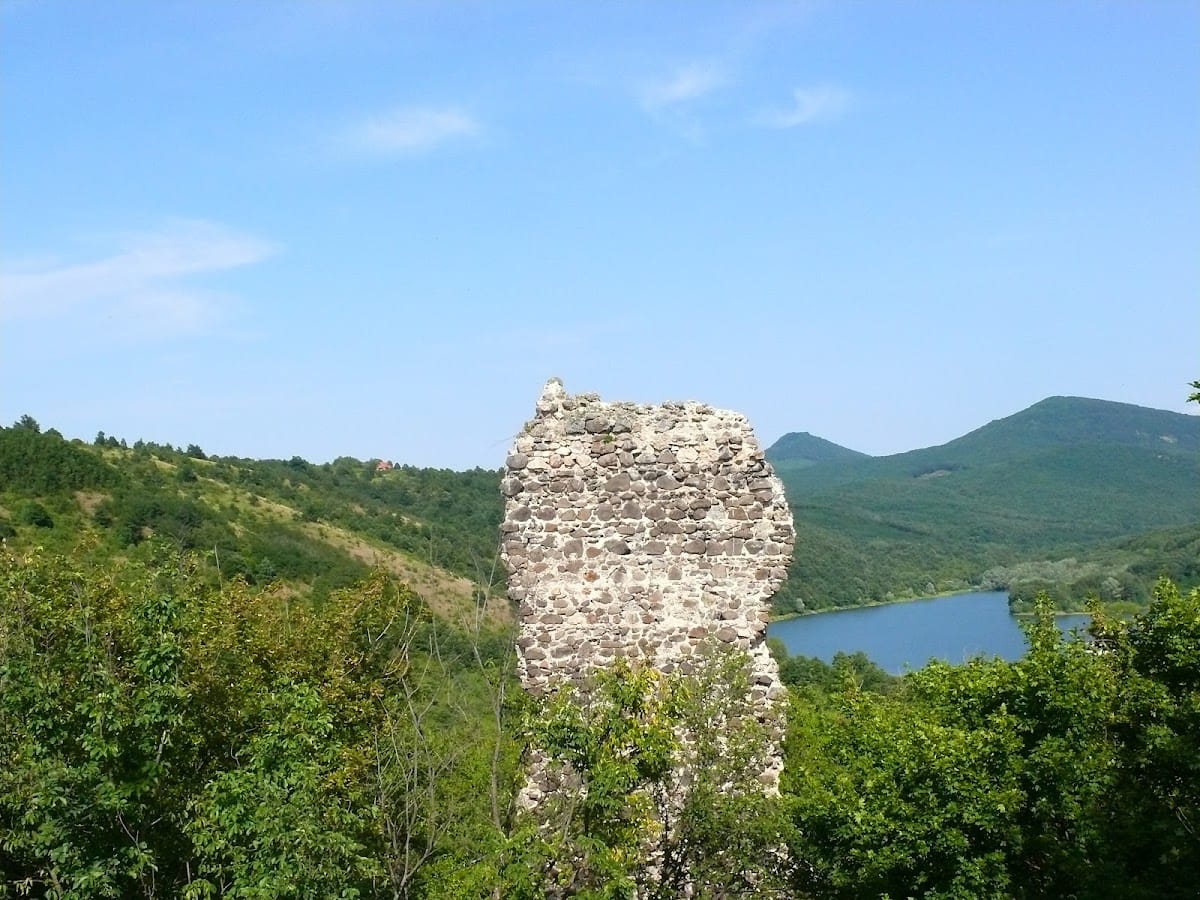
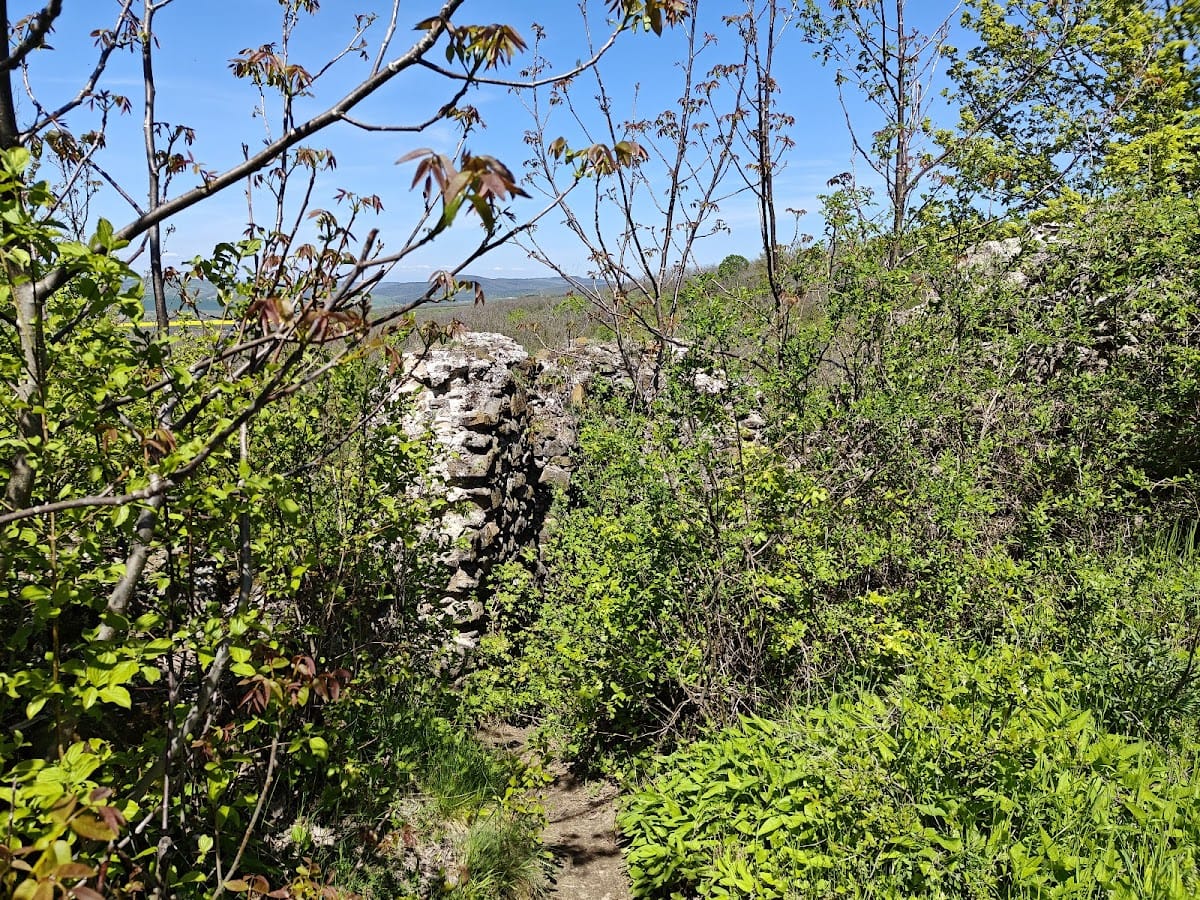
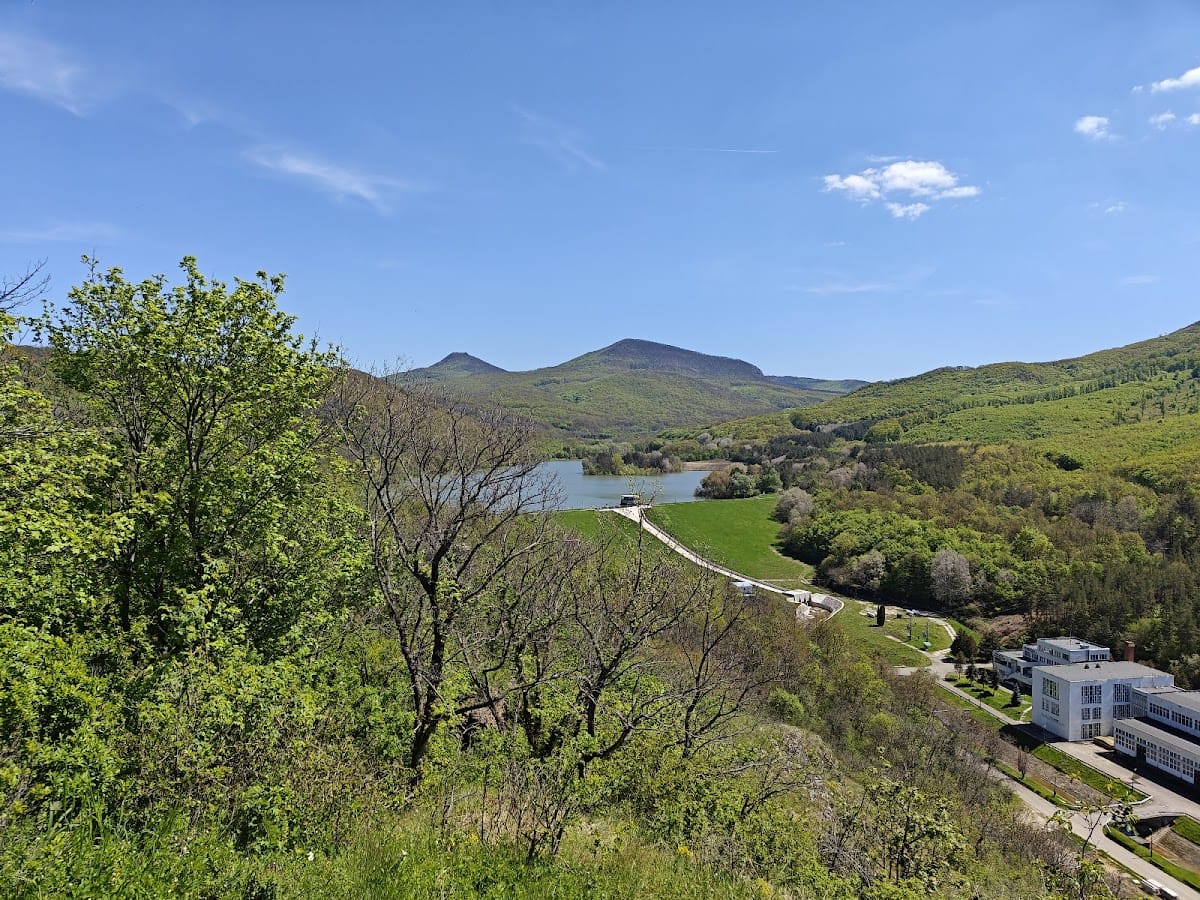
The ruin occupies a rocky summit 383 metres high in the Mátra, above Hasznos and the Hasznos Reservoir. The small fortress was arranged as an upper and a lower castle, divided by a dry moat, a defensive ditch without standing water. Visible remains include sections of the palace building and the foundations of a square tower. Two taller wall fragments rise above the surrounding vegetation, while much of the surviving fabric is concealed by plants.
Fossils of Castle Hill
The eastern side of Castle Hill is covered by light-colored diatomaceous earth, a porous sediment formed largely from fossilized microscopic algae. Turtle shells, teeth of an extinct deer, shrew and dormouse bones, and a molar from a fossil hamster species have been found in this deposit. The locality also produced a previously unknown hamster, described as Democricetodon hasznosensis.
Rocky Plant Habitat
Castle Hill covers about three hectares and forms a natural rock garden, where exposed stone, shallow soils, and local microclimates support specialized vegetation. From early spring to late autumn, flowering plants include woodland violet, early thyme, steppe spurge, yellow houseleek, and tassel hyacinth. The warm slope also supports grooved fescue, meadow bluegrass, blue moor-grass, little medick, burdock herb, peppery stonecrop, green strawberry, upright cinquefoil, sweet astragalus, crosswort, Hungarian yarrow, field geranium, Orlay’s chervil, and chamomile. Recorded trees and shrubs include black locust, service tree, Turkey oak, privet, gray blackberry, clematis, blackthorn, field maple, field elm, common buckthorn, and red dogwood.