Church of the Fifteen Martyrs of Tiveriopolis: An Orthodox Shrine in Strumica
Site at a Glance
- Rating
- 4.9
- Popularity
- Medium
- Country
- North Macedonia
- Primary era
- Medieval
- Eras represented
- Classical, Medieval, Modern
- Civilizations
- Byzantine, Roman
- Site type
- Religious
- Remains
- Sanctuary
On this page16 sections
History
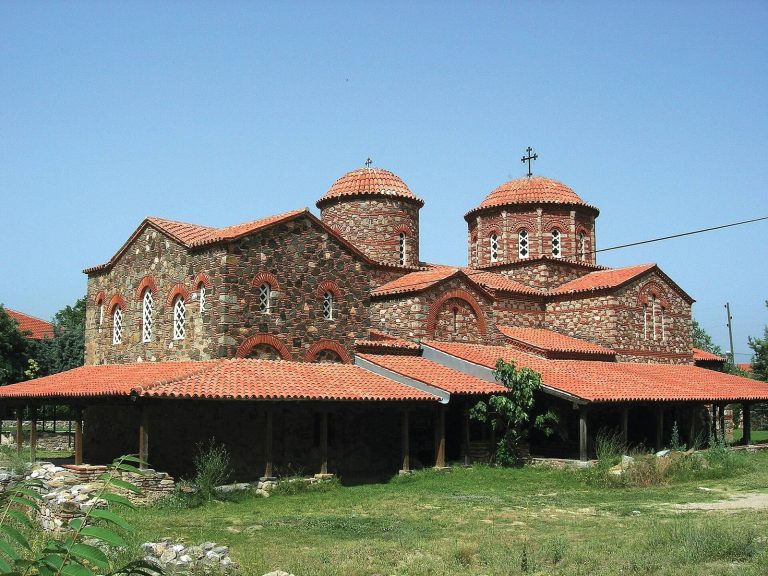
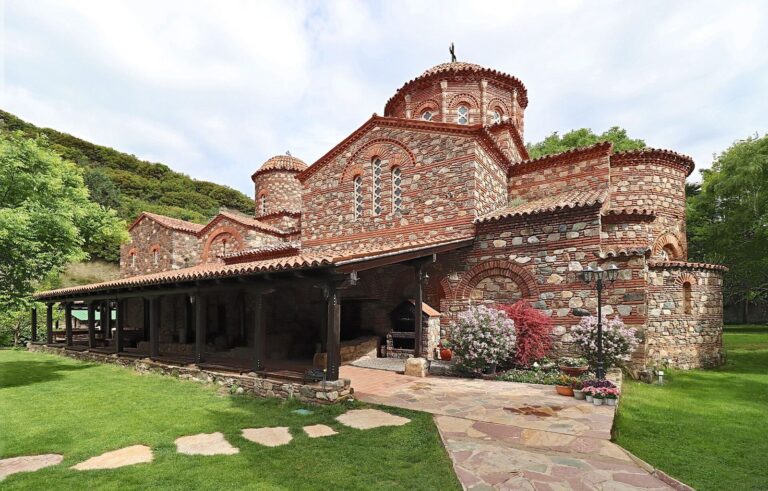
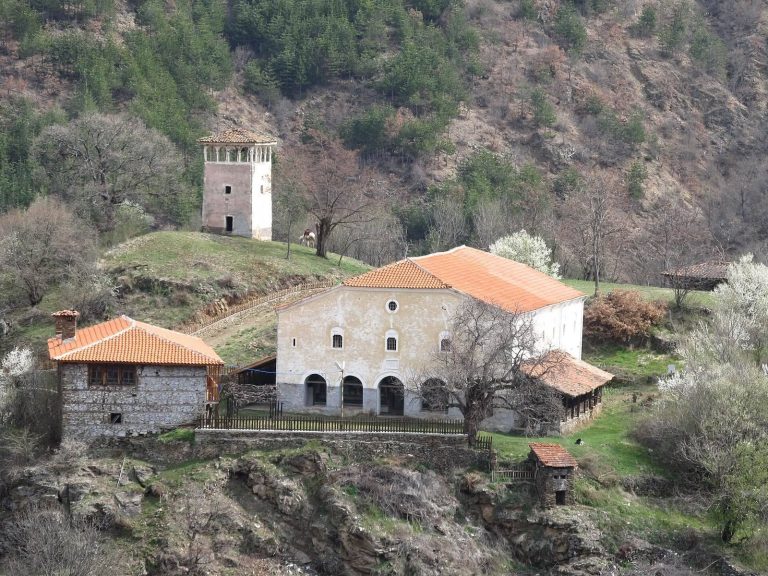
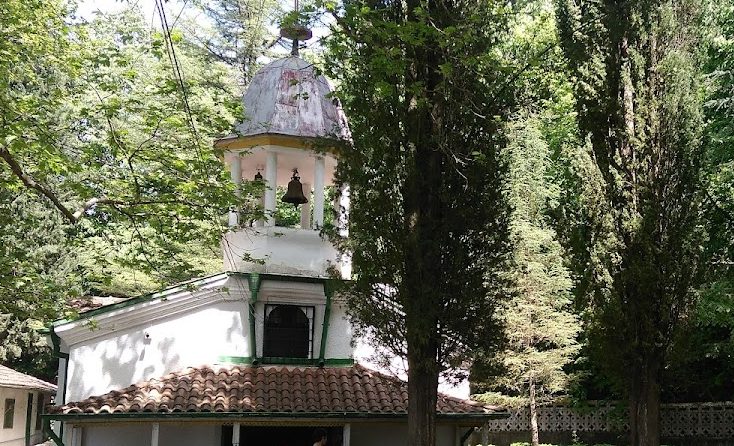
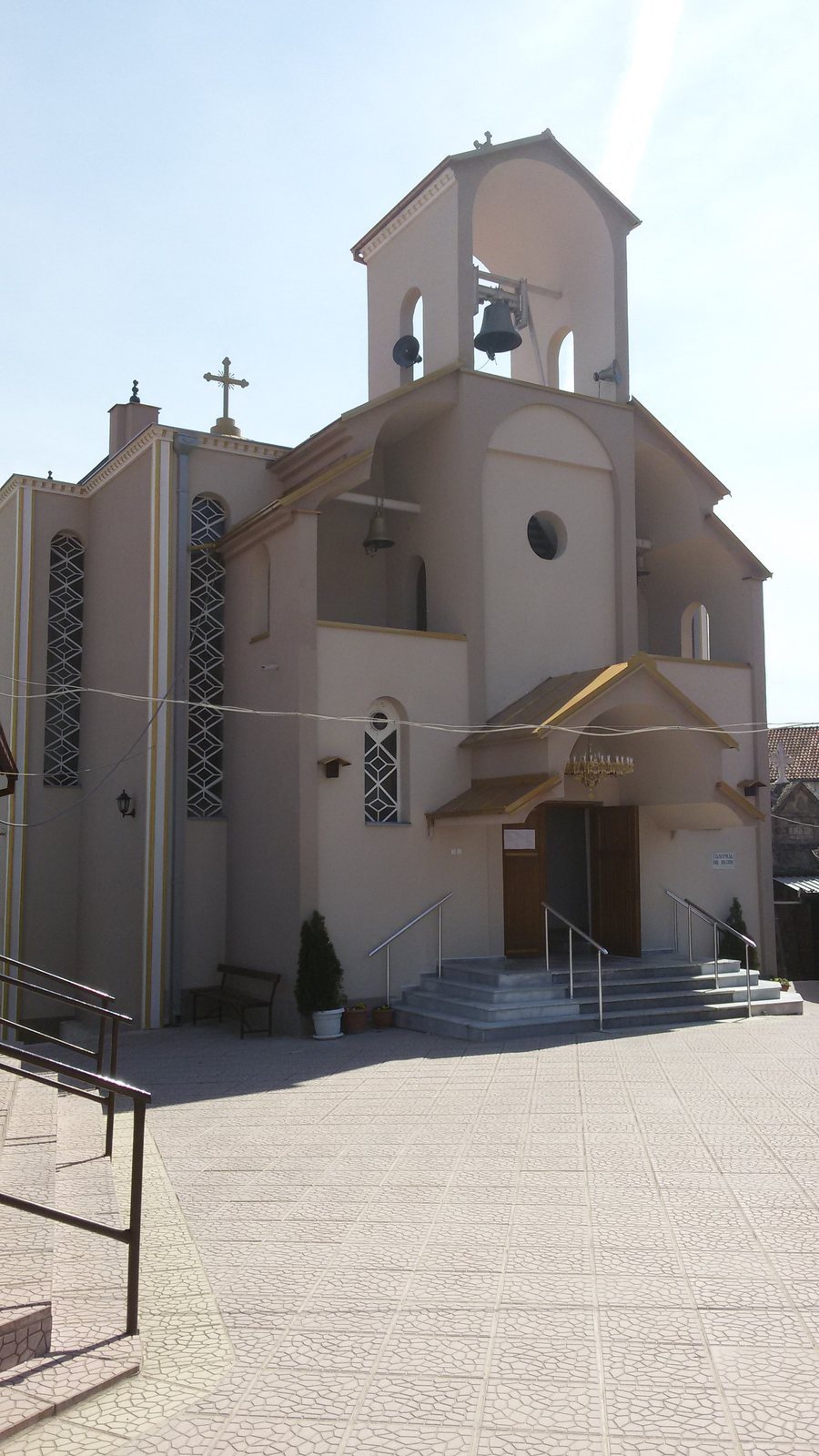
The Church of the Fifteen Martyrs of Tiveriopolis is an Orthodox monastery church in southern Strumica, North Macedonia, beside an archaeological complex on an ancient Christian burial ground. Tiveriopolis was the ancient name of Strumica. The present church was built in the early 1970s, while the surrounding site preserves a much older history tied to the veneration of fifteen Christian martyrs.
The martyrs and their early cult
A tradition about the saints’ lives places their execution on 28 November in either 361 or 362, during the reign of the Roman emperor Julian, who ruled from 361 to 363. It says that officials Valent and Philip ordered the Christians to sacrifice to pagan gods. When they refused, they were beheaded. The details of the trial narrative are uncertain.
The tradition names the martyrs as Timothy, Comasius, Eusebius, Theodore, Peter, John, Sergius, a second Theodore, Nicephorus, Basil, Thomas, Hierotheus, Daniel, Chariton, and Socrates. It presents Timothy as bishop of Tiveriopolis and Theodore as a bishop who attended the Council of Nicaea in 325. Comasius and Eusebius, along with Hierotheus, Daniel, Chariton, and Socrates, are described as monks. Peter, John, Sergius, the second Theodore, and Nicephorus are identified as priests; Basil and Thomas as deacons, ordained ministers who assist in church services.
According to the tradition, the martyrs were buried in separate graves in a Christian cemetery outside the ancient city. Their cult appears to have declined after Avar and Slavic incursions and the settlement of Slavic communities in the region. It revived from the mid-ninth century as Christianity spread among those communities.
Revival and movement of the relics
Nobleman Taridin is credited in local tradition with ordering an excavation in the second half of the ninth century, at a place where the martyrs were believed to appear. The coffins were said to have been covered with inscribed marble slabs bearing each person’s name and descriptions of appearance, way of life, rank, and facial features.
A tradition associated with Boris I, a ruler of medieval Bulgaria, says that the martyrs appeared at their burial place and worked cures. Boris ordered a church for their relics at the medieval Bregalnica bishopric. Local people resisted the relics’ removal, and the story holds that those of Timothy, Comasius, and Eusebius were transferred while those of Theodore and Socrates stayed in Strumica. During the reign of Simeon I, another Bulgarian ruler, Drister, identified as Taridin’s successor, transferred Theodore’s and Socrates’ relics to the Bregalnica church.
The relics were credited with miracles, including healings. Later tradition says a catastrophe destroyed Strumica and the relics there, but that a hand believed to belong to Peter survived. It was placed in a church dedicated to Saint Anastasia in Thessaloniki, then taken to Kukush in 1913, after the regional conflicts known as the Balkan Wars. A portion of the martyrs’ relics is held in the present Strumica church; their later disposition is uncertain.
The martyrs’ cult is associated with the spread of Christianity east of the Vardar River and its later acceptance among Slavic communities. A local tradition says that people built fifteen churches in protest after the executions. The feast is observed on 11 December in the Julian calendar and is Strumica’s patronal celebration.
Written accounts and the medieval church
In the late eleventh or early twelfth century, Theophylact, Archbishop of Ohrid and a medieval religious writer, composed an extended account of the martyrs’ lives. It became the principal written narrative of their cult, although its original Greek text has not survived. Two sets of liturgical hymns dedicated to the martyrs are attributed to Archbishop Constantine Kabasilas in the thirteenth century.
In a charter dated 1348 to 1352, Serbian ruler Stefan Dušan granted the church to the Monastery of the Holy Archangels Michael and Gabriel near Prizren. The church was probably destroyed after the Ottoman conquest.
Modern church and local memory
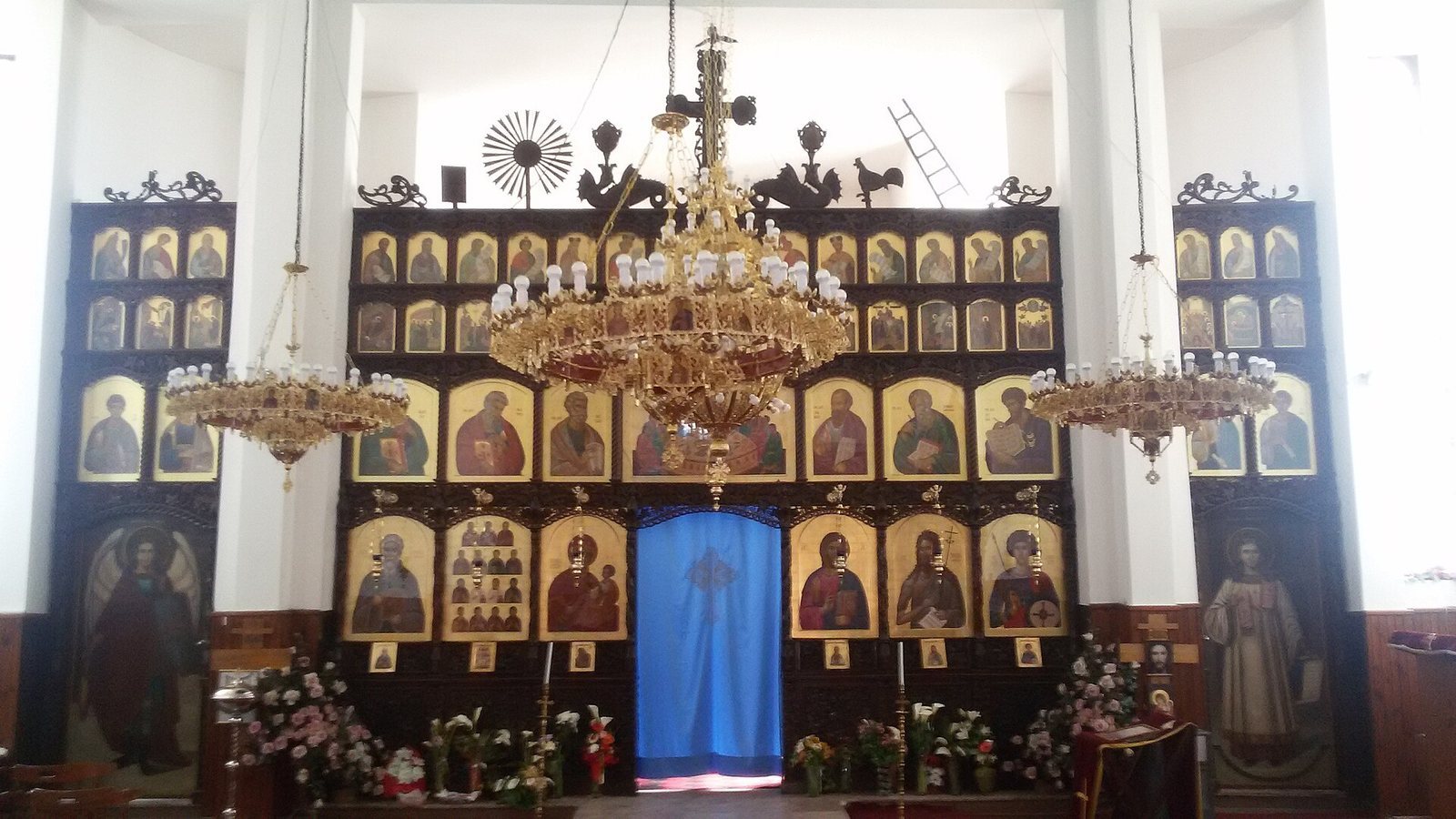
A small chapel was erected on the site in 1921. The present Orthodox monastery church was built in the early 1970s and belongs to the Strumica Diocese, the local jurisdiction of the Macedonian Orthodox Church–Ohrid Archbishopric. The church remains in active liturgical use, and the complex is included on North Macedonia’s cultural heritage list.
Local people once revered a tree in the church courtyard that was believed to grow above the martyrs’ graves. A local story says that a Turkish man who tried to cut it suffered a misfortune and then forbade its felling. Archaeological excavations damaged its roots; after the tree dried out, it was cut down, but its sacred reputation endured.
Remains
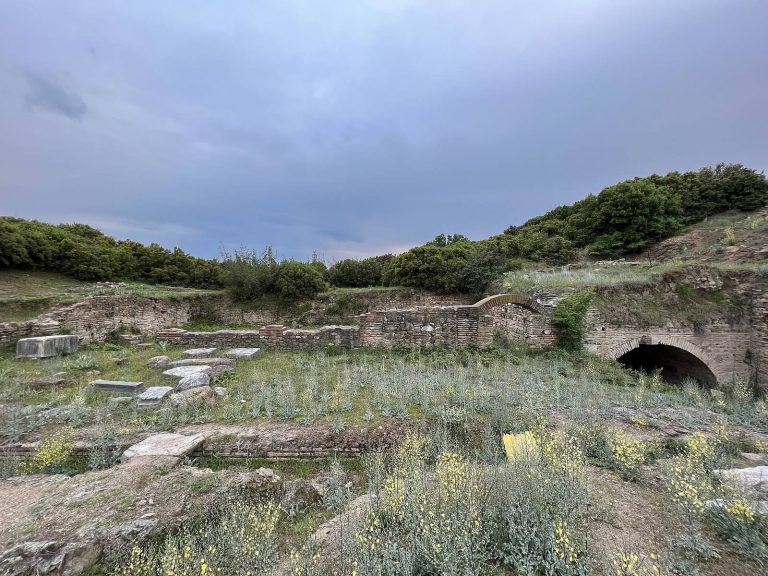
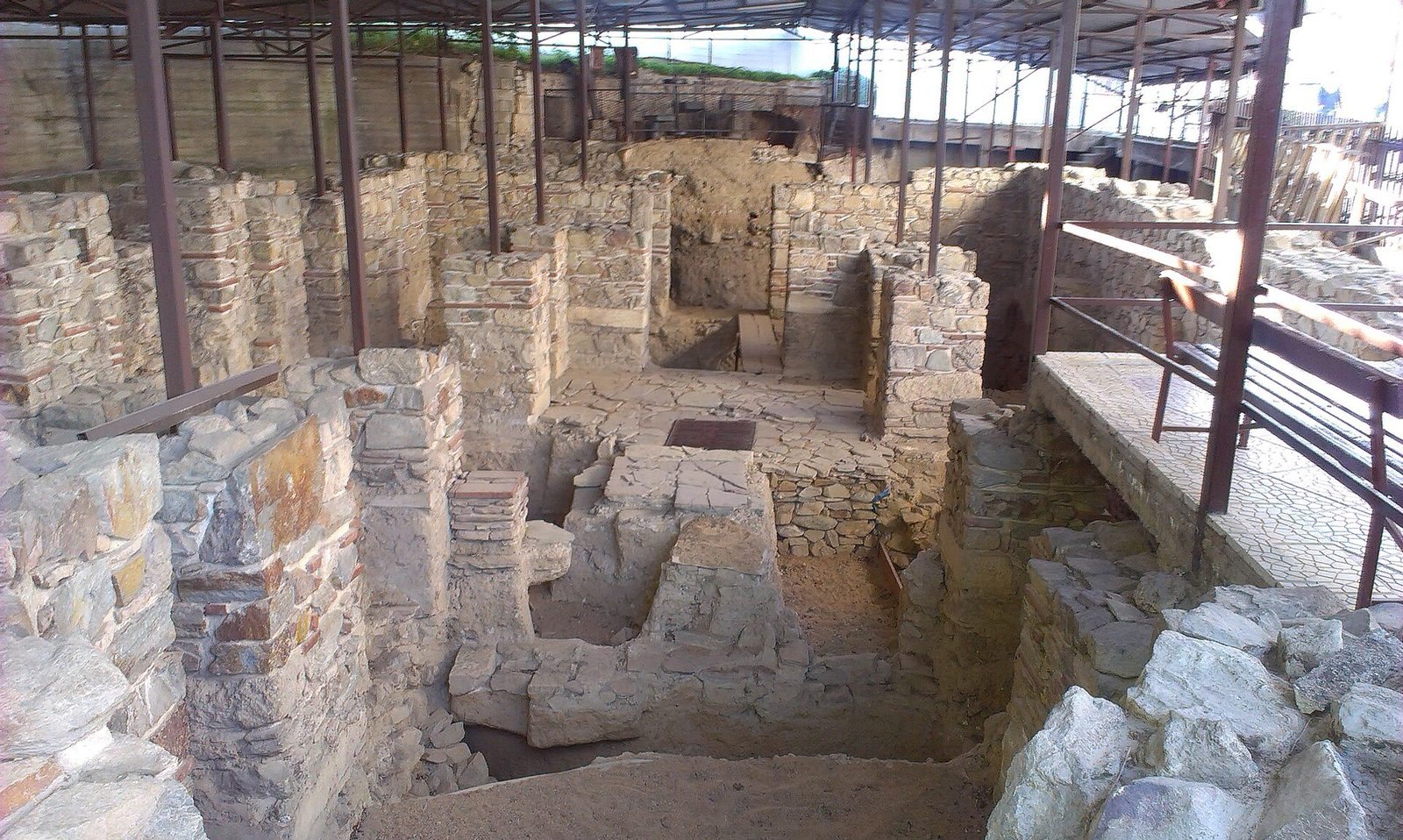
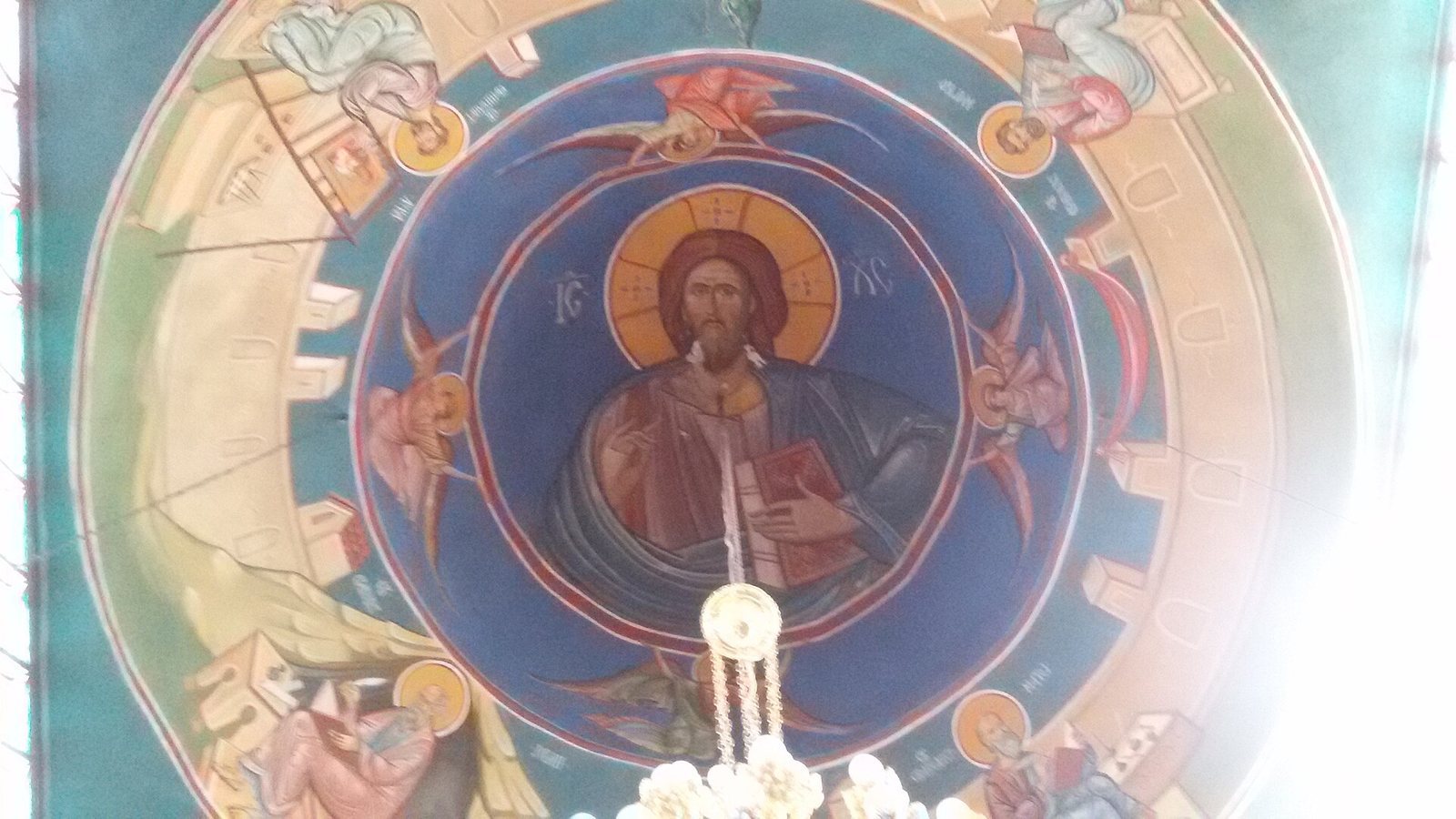
The archaeological complex lies outside the walls of ancient Tiveriopolis and preserves several layers of construction, including a pre-Christian temple, an early Christian basilica, cross-shaped churches, and tombs. The later buildings cover parts of the earlier remains. The present church stands northeast of the archaeological area and houses the Strumica Icon Gallery, which contains historic icons from several medieval churches in the region.
Earlier sacred buildings
Pre-Christian temple
Mosaics survive in the pre-Christian temple. Later tombs and church structures were built above the temple and the remains of the Christian basilica.
Early Christian basilica
The three-aisled basilica had a floor decorated with a multicoloured mosaic. Cross designs in the mosaic indicate that it was a Christian building. Surviving parts include the eastern apse, the rounded end of the church, the north perimeter wall, and the base of the north stylobate, the platform supporting a row of columns. Fragments of marble bases in the floor are thought to have belonged to an earlier ancient structure. A later cross-shaped church covers much of the basilica, limiting how much of it is exposed.
Cross-shaped shrines and medieval church
Earlier martyr shrine
A cross-shaped shrine for a martyr may have been built over the damaged basilica in the fifth or sixth century, more probably in the sixth. It may date to the reign of Byzantine emperor Justinian I. Another cross-shaped church was later built above it in the ninth or tenth century.
Five-domed church
The later church was a five-domed Byzantine building of a form associated with Constantinople, described as unique in Macedonia and rare in the Balkans. Its plan placed a cross within a rectangle, with one dome at the centre and four more at the inner corners formed by the arms of the cross. The building stood south of the basilica’s walls and occupied its central nave. An entrance vestibule and a second, outer vestibule were on its western side. Its massive stone-and-mortar walls and columns survive at foundation level. Portraits of the martyrs have also been identified in the medieval church.
Altar crypt
A cross-shaped chamber with equal arms was built into the altar apse, the sanctuary end of the church. Made of stone, brick, and mortar, it was intended to hold relics of a celebrated martyr or one with local significance. The cross measures 0.40 m, and the chamber is 0.60 to 0.80 m deep. The sanctuary floor was inlaid with fitted pieces of white and gray marble.
Martyr tombs
Central vaulted tomb
A large vaulted tomb occupies the centre of the complex, within the main body of the cross-shaped church. It measures 2 × 0.82 × 1.61 m and is built of rubble stone set in mortar, with a vault made from standard late-antique bricks. The interior was plastered, and dark-brown crosses with expanded arms were painted on its north and south sides.
On the tomb’s western gable, a collective portrait shows the fifteen martyrs as busts within a semicircular frame used for funerary images. Details of the figures correspond to Theophylact’s account, and the figures in the first row wear episcopal insignia. The portrait has been tentatively dated to the late fourth or early fifth century, although the tomb and church are dated to the ninth century. The painting is among the oldest wall paintings discovered in Macedonia.
Other tombs
Sixteen additional vaulted tombs were built above the earlier temple or basilica. Together with the central tomb, they form a group of burial structures within the archaeological complex.