Wandlebury Hill Fort: An Iron Age Settlement and Earthwork Enclosure
Site at a Glance
- Rating
- 5
- Popularity
- Very Low
- Country
- United Kingdom
- Primary era
- Iron Age
- Eras represented
- Iron Age, Early Modern
- Civilizations
- Celtic, English
- Site type
- Military
- Remains
- Fort
On this page8 sections
History
Iron Age foundations
Wandlebury Hill Fort is an enclosed settlement and defensive site on Wandlebury Hill, southeast of Cambridge in Cambridgeshire, England, United Kingdom. The Iron Age was the prehistoric period when iron came into widespread use. Communities of that era built Wandlebury’s first fort around 400 BC and added a second circuit in the 1st century BC. Two pottery sequences distinguish these construction phases. The site was also a border settlement. It was regarded as the most important of three hillforts in the downs, with Cherry Hinton among the others. Proposed explanations for its position include its tactical advantages or its place as the final fort in a line controlling the Thames-Stort-Cam Valley route.
Roman occupation
Wandlebury was occupied during the Roman period and may have remained inhabited into the 1st century AD. The Romans built a road from Worts Causeway to the site.
Anglo-Saxon and medieval traditions
Anglo-Saxons called the site Wendlesbiri, meaning Waendal’s fort, and used it as a meeting place for a Hundred council. A Hundred was a local district that could serve as a unit of government and assembly.
In 1214, the medieval writer and cleric Gervase of Tilbury referred to Wandlebria as a place outside Cantabrica, near the boundary of the diocese of Ely. He linked its name to a tradition that the Wandeli had camped there while ravaging Britain and killing Christians. Gervase also recounted a tale of a midnight challenge: a warrior who called for a knight to appear would face an armed rider. In the story, Osbert defeated the rider but was wounded in the thigh by a javelin as he left.
Sir Thomas Malory’s 1470 work Le Morte d’Arthur mentions a Wandesborow Castle, which may refer to Wandlebury Ring. Sir Walter Scott’s 1808 poem Marmion also presents King Alexander III of Scots, who reigned from 1249 to 1286, jousting with a goblin knight.
Royal estate
In 1685, a house, garden and racing stable were built within the fort’s boundaries for James II, the Stuart king who ruled England, Scotland and Ireland from 1685 to 1688. The work levelled the inner bank and ditch. The mansion later passed to the British nobleman Lord Godolphin and was demolished in 1956; the stable survives.
Remains
Earthwork enclosure
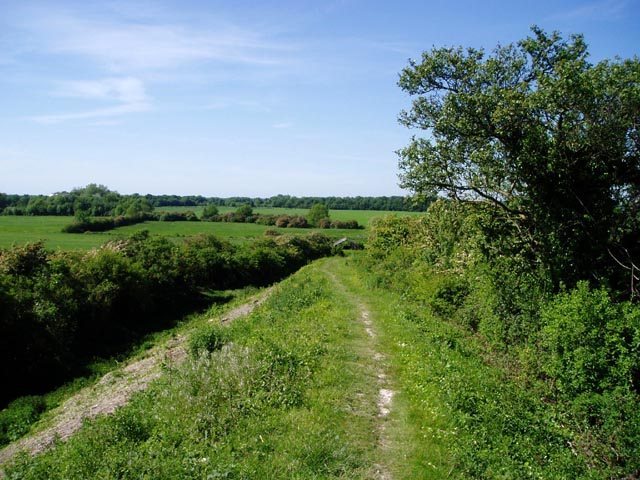
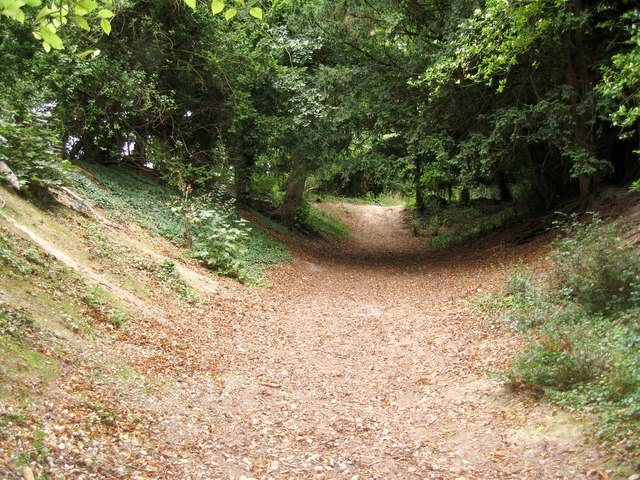
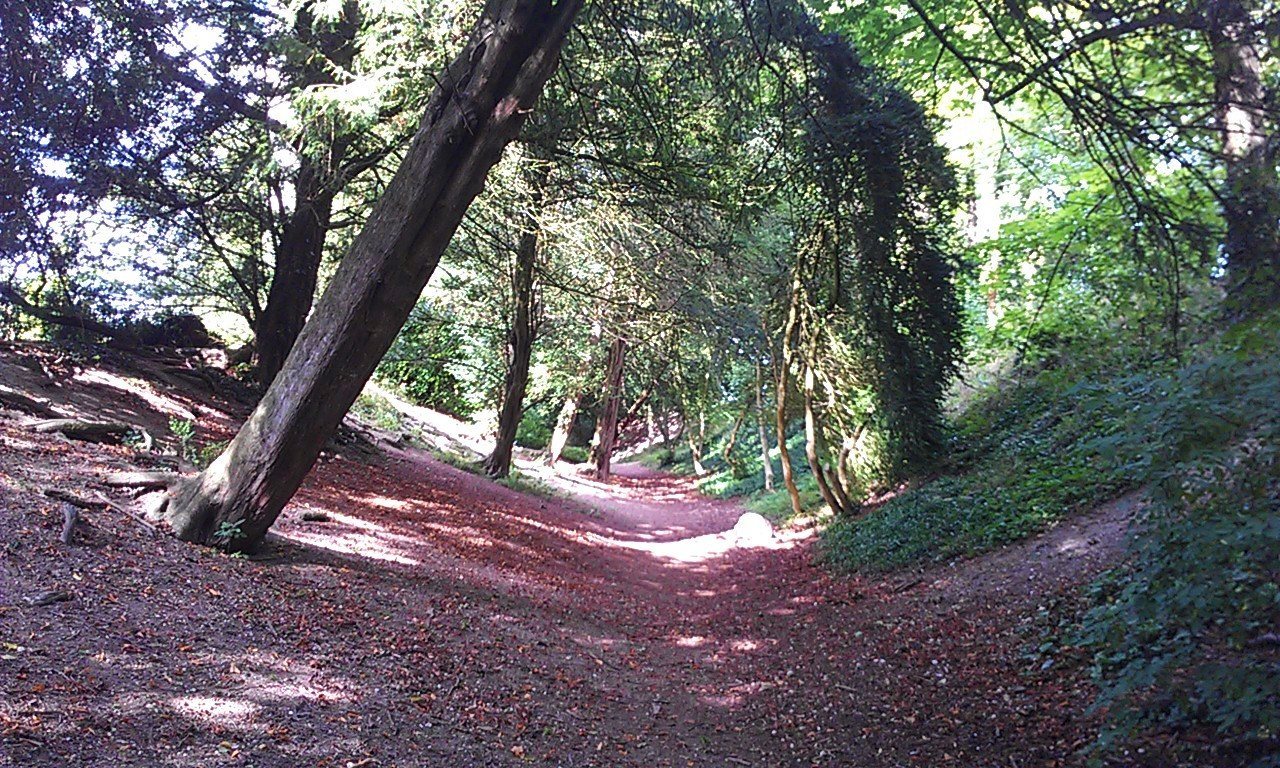
The roughly circular enclosure covered about six hectares on Wandlebury Hill, 62 metres above sea level. It overlooks the ancient Icknield Way, and the meeting point of the Thriplow, Chilford and Flendish Hundreds lies beside the site. The first circuit consisted of an outer ditch and an inner raised bank built from chalk rubble and soil. A second ditch-and-bank circuit was added inside the first bank. A low bank ran around the outer perimeter, while a wooden fence on the inner ring was intended to deter attackers. Gervase of Tilbury described the level interior as surrounded by earthworks, with a single entrance resembling a gate.
Proposed astronomical alignment
In 1976, C. A. E. O’Brien argued that the fort had been built over a much older structure and proposed that Wandlebury formed an astronomical complex, perhaps a large calendar. The theory included a proposed line of monoliths running from Wandlebury Ring to the earthworks at Hatfield Forest. O’Brien interpreted this as a loxodrome, a line crossing map meridians at a constant angle and therefore following a constant compass bearing. He suggested the complex might have been engineered by the same group of mathematicians and astronomers associated with Stonehenge and Avebury. An article in the Journal of Geomancy challenged these interpretations.