Church of St James, Cameley: A Medieval Parish Church
Site at a Glance
- Rating
- 4.8
- Popularity
- Very Low
- Country
- United Kingdom
- Primary era
- Medieval
- Eras represented
- Medieval, Early Modern, Modern
- Civilizations
- British, English
- Site type
- Religious
- Remains
- Church
On this page7 sections
History
The Church of St James, Cameley, is a medieval church in the United Kingdom, founded in 1101 at Temple Cloud with Cameley. Its building dates from the late 12th century. Dedicated to St James of Compostela, it honors James the Greater, the Christian apostle associated with the pilgrimage destination of Santiago de Compostela. Its heraldic decoration has been linked to possible royal patronage and a Knights Templar connection.
Medieval associations
The three lions of the Royal Arms of England, the heraldic arms of the English monarchy, are taken to suggest royal patronage. A coat of arms attributed to the St Maur family, later known as the Seymour family, has been interpreted as evidence of a connection between Cameley and Temple Cloud and the Knights Templar, a medieval religious-military order. Almeric de St Maur was master of the order in England and a signatory of Magna Carta, the 1215 charter that set terms on royal authority.
Rediscovery and continuing care
Wall paintings remained beneath whitewash until their rediscovery in the 1960s. The discovery prompted the English poet and writer John Betjeman to call the church Rip Van Winkle’s Church
. The church received Grade I listing, England’s highest listed-building category for buildings of exceptional interest, on 21 September 1960 and is included in the National Heritage List for England. It was declared redundant, meaning no longer required for regular worship, on 1 January 1980, then transferred to the Churches Conservation Trust, a charity caring for historic churches no longer in regular use, on 18 March 1981. It remains in the Trust’s care. The parish belongs to the benefice of Farmborough with Marksbury and Stanton Prior, Clutton with Cameley, within the Archdeaconry of Bath. A benefice is a church office serving one or more parishes, and an archdeaconry is an administrative division within a diocese.
Remains
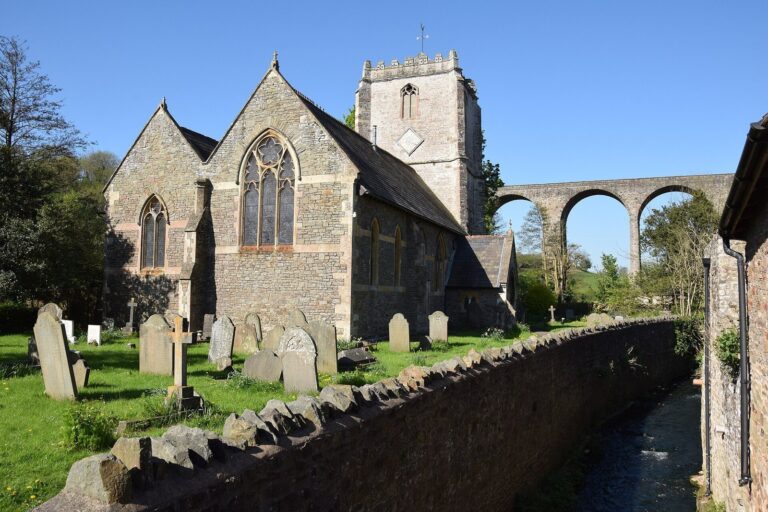
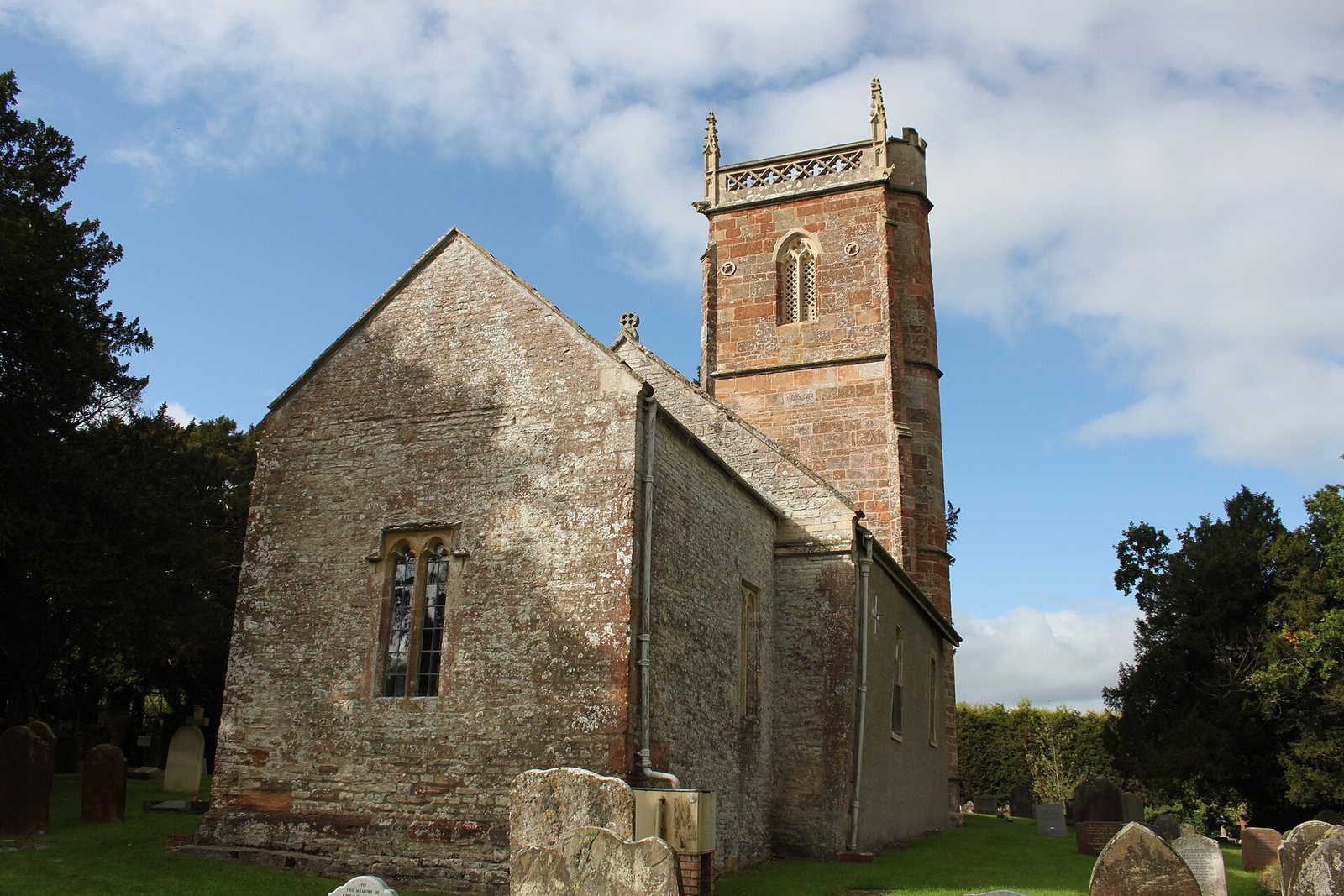
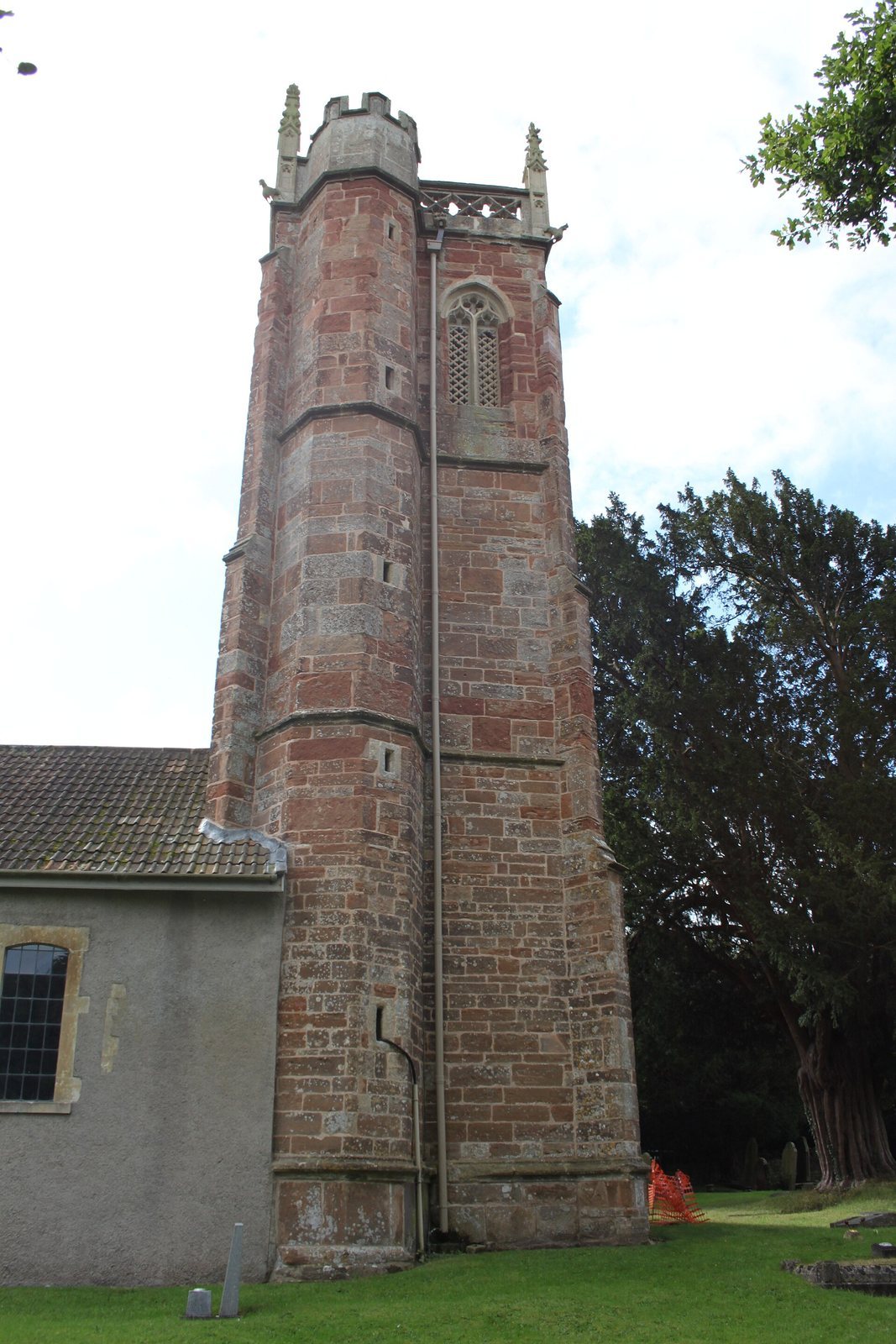
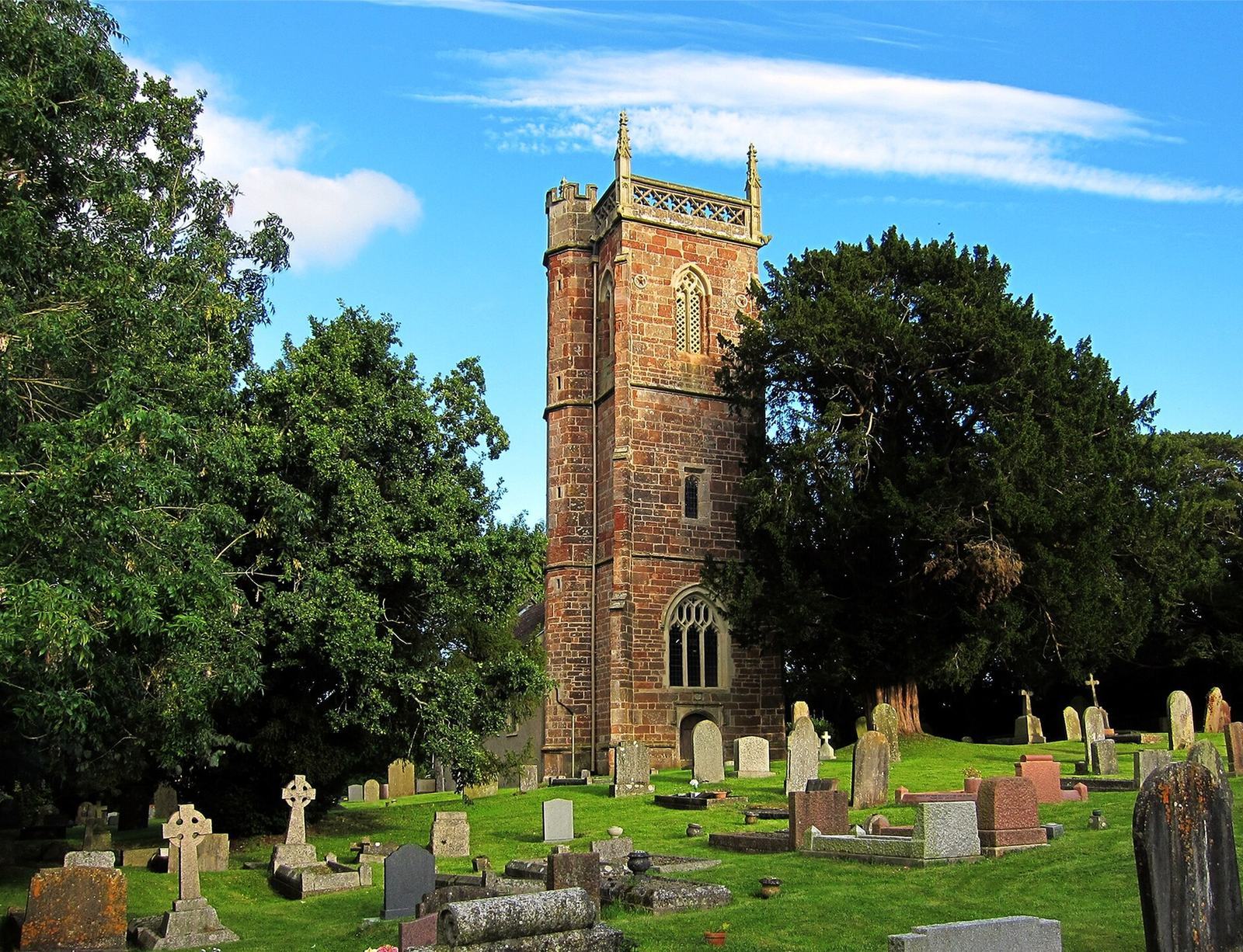
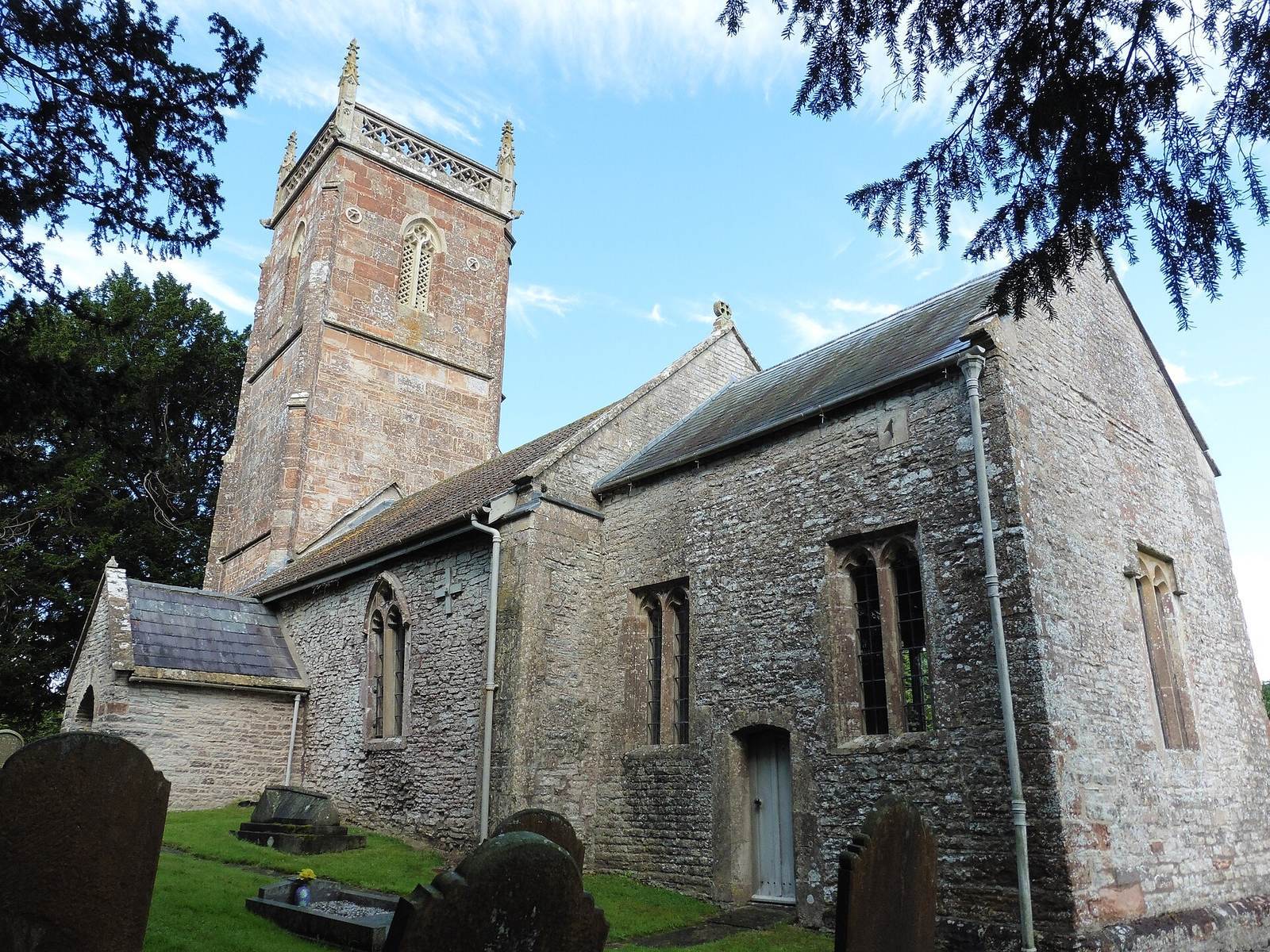
The church’s principal spaces are the nave, or main body, and the chancel, its sanctuary end, separated by a chancel arch. Most of the church is built from local blue lias limestone, while the tower is made of red Mendip stone. Trees surround the church.
Paintings and chancel arch
Fragments of wall paintings dating from the 12th to the 17th centuries survive on the nave’s north and south walls. One of the earliest, on the north wall, shows a jester or knave with a cleft lip and forked tongue, holding a scroll. The north post of the chancel arch bears the three lions of the Royal Arms of England; the south post displays a coat of arms with two red chevrons, attributed to the St Maur family. Above the arch is an early-17th-century depiction of the Ten Commandments, framed by twining leaves with cherub faces.
Galleries and memorials
The west gallery, a raised platform, is dated 1711. Its railing has upright supports called balusters in a Jacobean style associated with the reign of James I, and an attached coat of arms of Charles I. The south gallery is dated 1819. Two early-19th-century monuments to the Rees-Mogg family are set on the nave’s north wall. A brass plaque commemorates nine people from the village who died in the First World War.
Tower
The tower probably dates from the 15th century and underwent restoration in the 19th century. It contains a bell made in 1779 by William Bilbie, a member of the Bilbie family of bell founders.