Forte do Presépio: A Portuguese Colonial Fort in Belém
Site at a Glance
- Popularity
- High
- Country
- Brazil
- Primary era
- Early Modern
- Eras represented
- Early Modern, Modern
- Civilizations
- Portuguese
- Site type
- Military
- Remains
- Fort
On this page9 sections
History
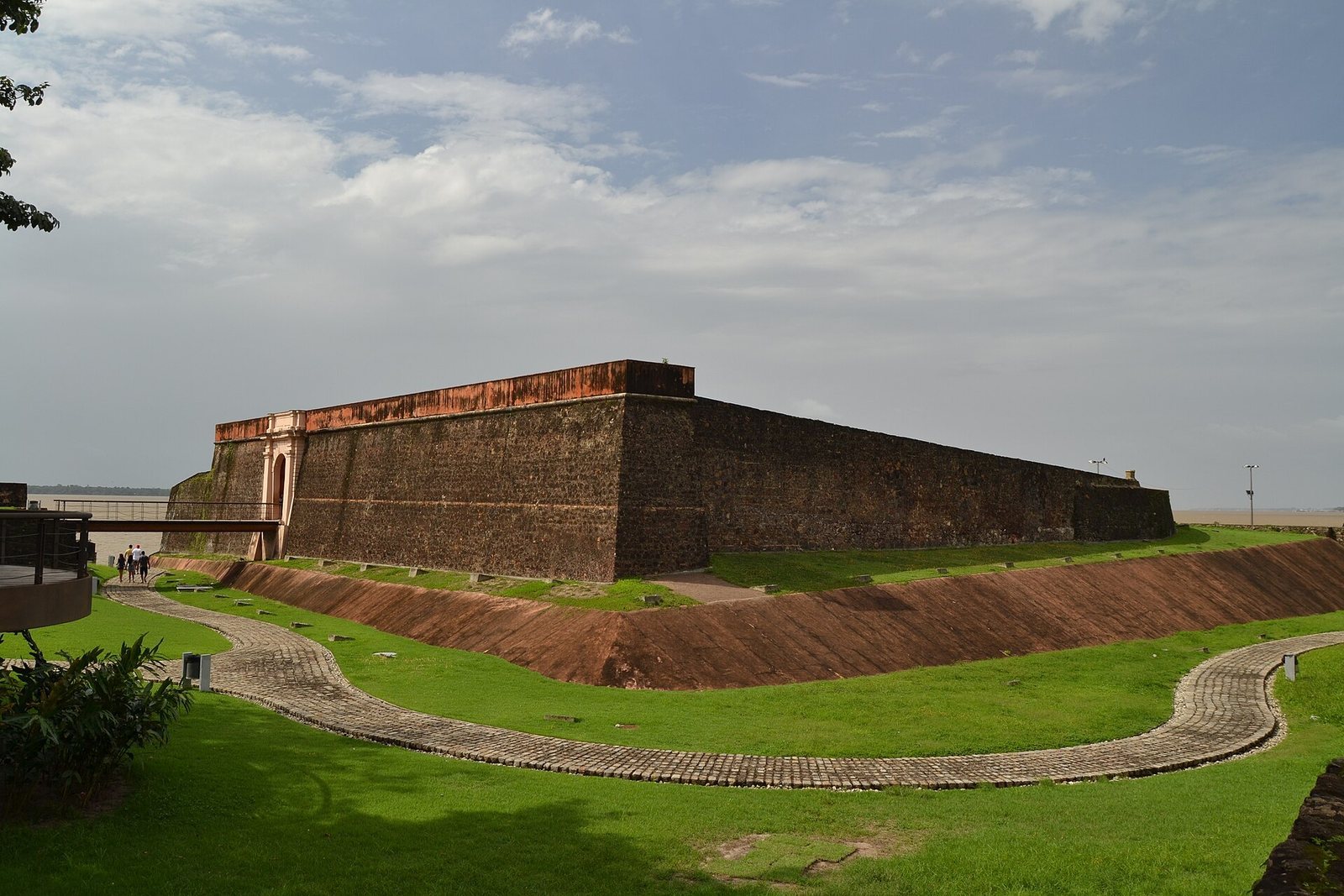
Forte do Presépio, formally named Forte do Castelo do Senhor Santo Cristo do Presépio de Belém, is a fort at Maúri Point in Belém, Brazil. Portuguese military officer Francisco Caldeira Castelo Branco built it in 1616 during the early Portuguese colonial presence in Brazil. The fort also contained Belém’s first chapel.
Foundation and chapel
The temporary chapel was dedicated to Our Lady of Grace, a title for the Virgin Mary. A few years after its construction, it was moved to Largo da Sé. In the eighteenth century, it became the Cathedral of Our Lady of Grace.
Renovation and military use
The fort underwent several renovations during the eighteenth century. It was decommissioned in 1832 because it had fallen into ruin, then received the name Castle of Saint George the following year. During the 1835 revolt, an imperial squadron partly destroyed it. Reconstruction began in 1850 and was completed in 1868.
A military arsenal was established at the fort in 1876. Later, the army altered the structure to accommodate the headquarters of the Belém Military Club, changing its original form.
Heritage protection and restoration
Brazil’s National Institute of Historic and Artistic Heritage listed the fort as a historic structure in the early 1960s. In 1978, an effort was made to remove the restaurant and club so that extensive restoration could proceed. Brazilian heritage-preservation bodies carried out conservation and restoration work in 1983.
Remains
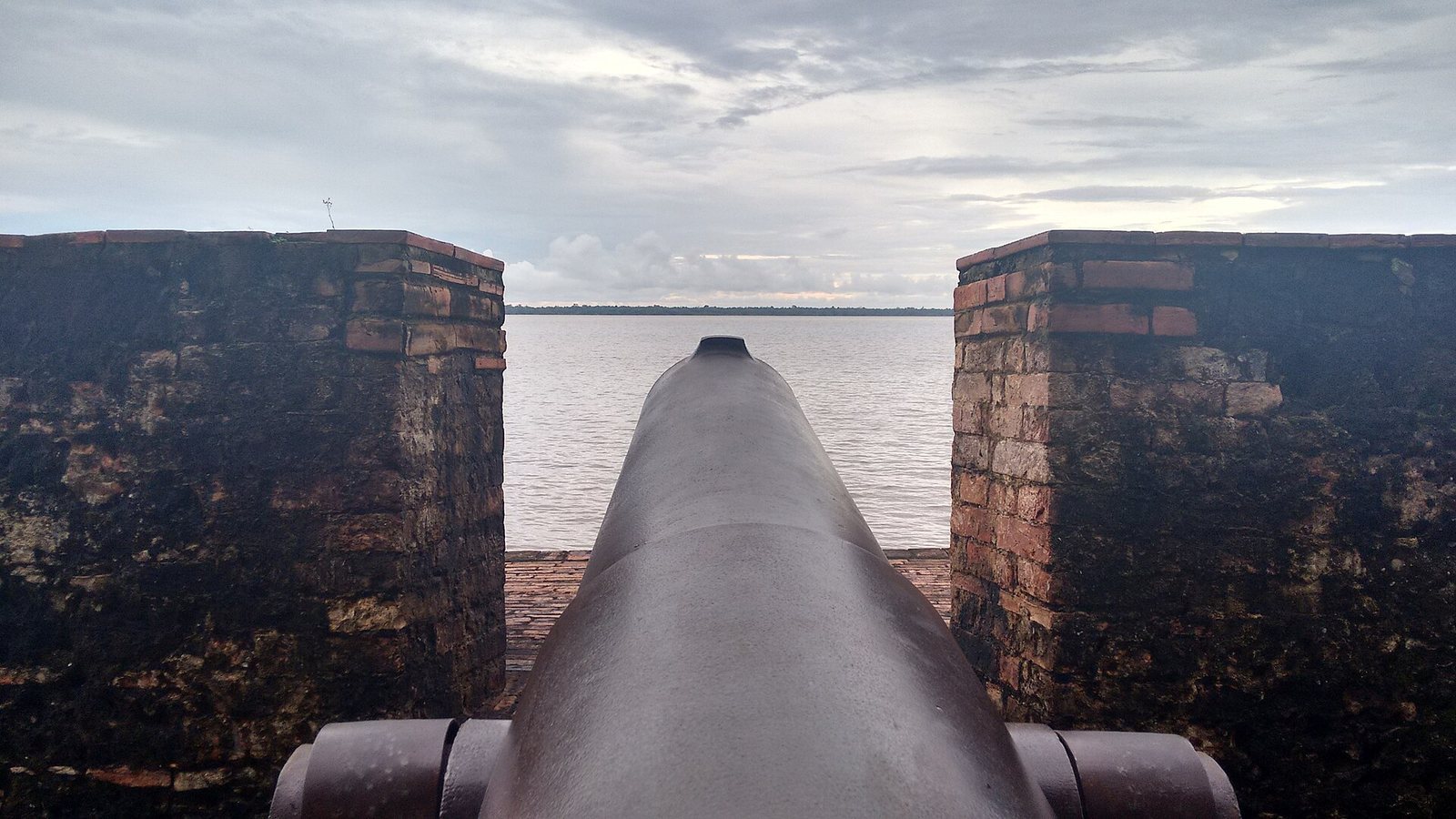
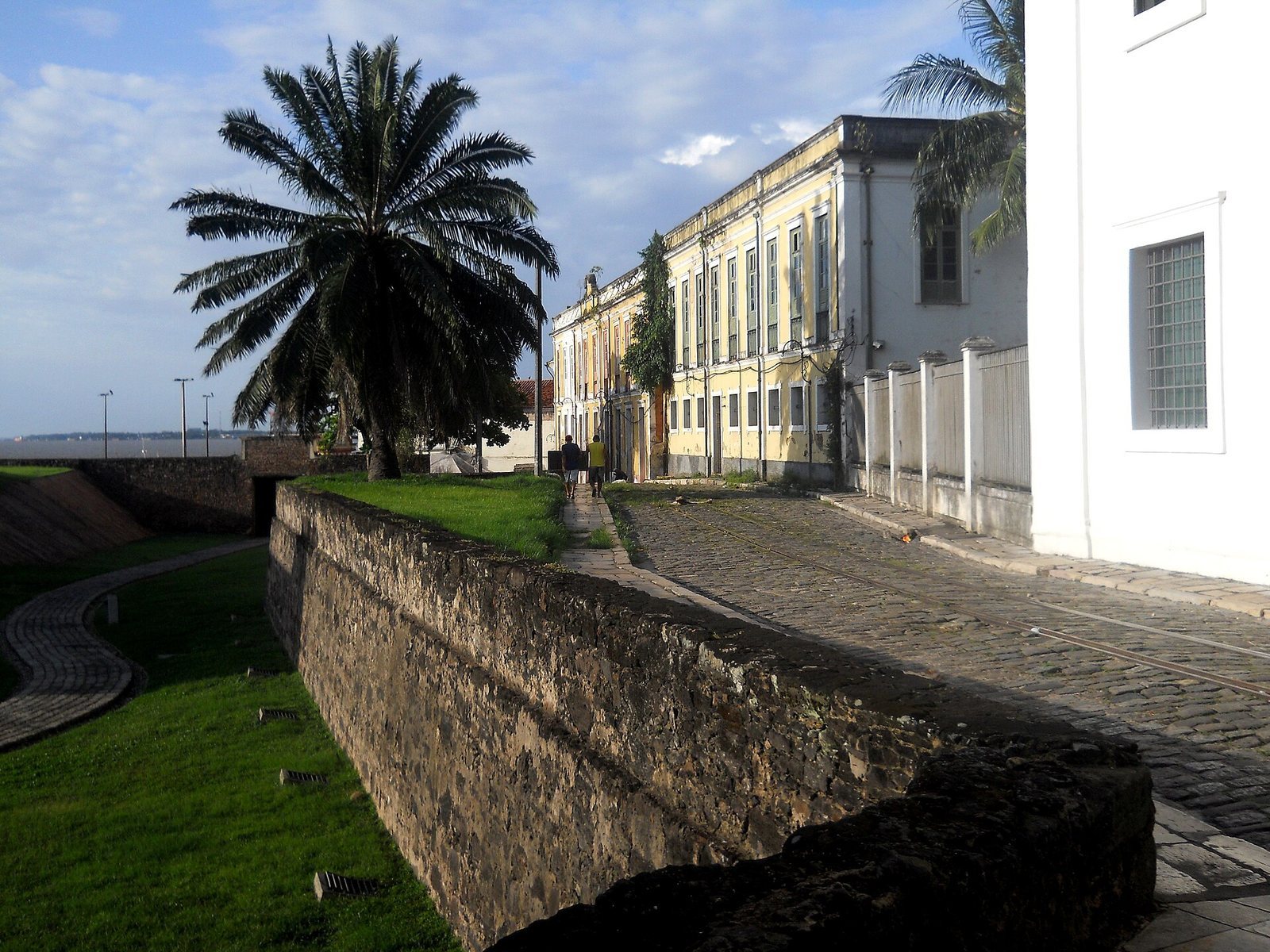
The fort occupied a promontory on the right bank at the mouth of the Guamá River, beside Guajará Bay. Its form changed from a timber structure with a thatched roof to a more durable, square-plan fort.
Fortifications
Early construction
The original fort was built of wood and roofed with thatch. A rebuilding that gave it a square plan and rammed-earth walls, made by compacting damp earth, is dated to 1622; archival records place the first rebuilding in 1632.
Later additions and surviving fabric
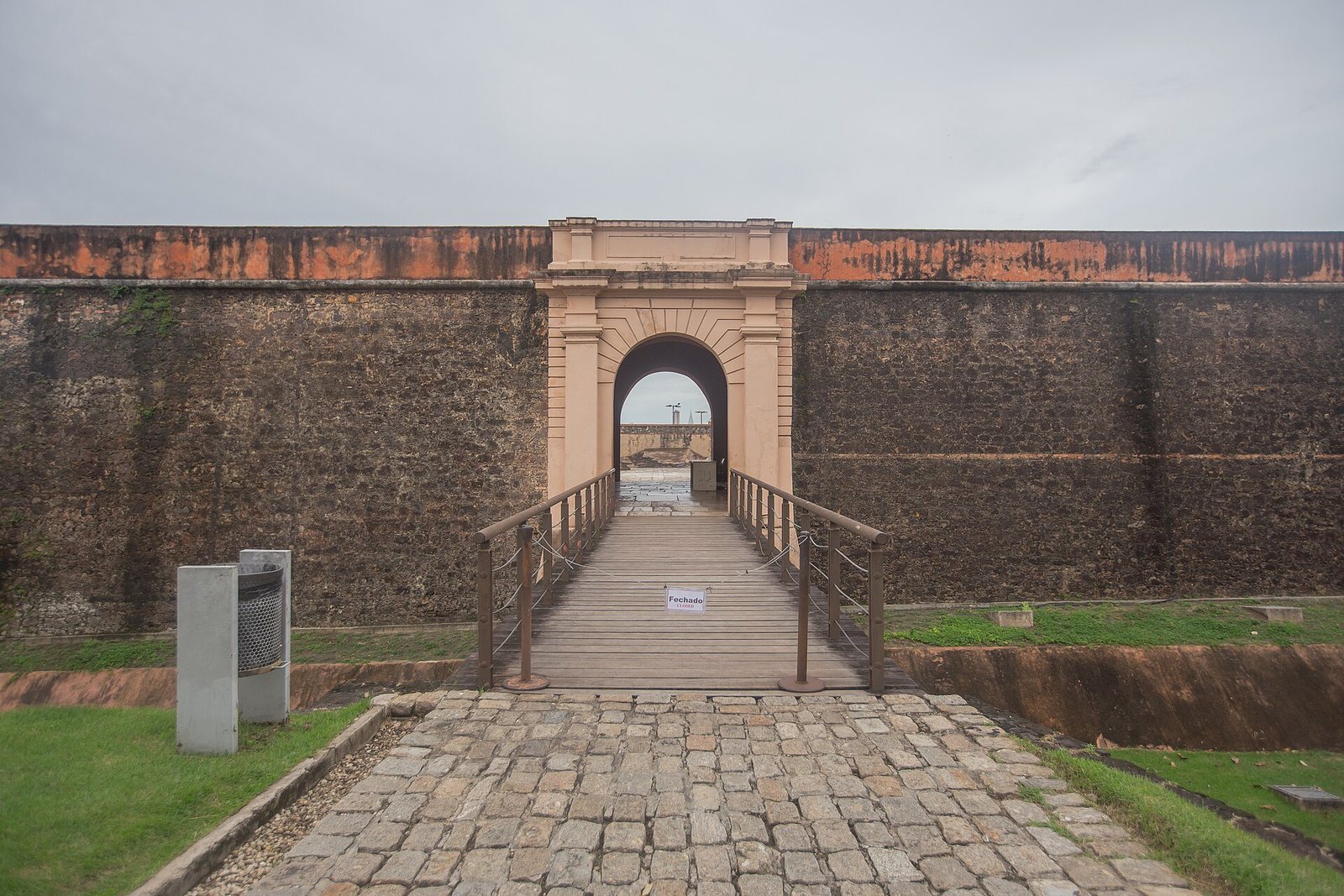
Later components included barracks, a house, a bridge across the moat, a gate, and a stone wall on the seaward side. The walls were partly destroyed, and emergency work in 1980 aimed to stabilize the remaining structure.
Chapel
The temporary chapel stood within the fort. Dedicated to Our Lady of Grace, it was part of the fort’s early physical layout before being moved to Largo da Sé.