Anan ben David Synagogue: A Karaite Place of Worship in Jerusalem
Site at a Glance
- Popularity
- Medium
- Country
- Israel
- Primary era
- Early Modern
- Eras represented
- Early Modern
- Civilizations
- Unclassified
- Site type
- Religious
- Remains
- Synagogue
On this page8 sections
History
Origins and Jerusalem’s Karaite community
The Anan ben David Synagogue is a Karaite place of worship in Jerusalem, Israel. Karaite tradition links its establishment in the eighth century to Anan ben David, a Jewish religious leader regarded as a spiritual forebear of Karaite Judaism, a Jewish movement distinct from rabbinic Judaism. He was said to have come from Babylon and lived in a Jerusalem cave, but the synagogue’s construction date is uncertain.
A Karaite community lived in Jerusalem from 880 and became influential within Eastern Judaism. Its earlier quarter was in the Ophel and Kidron Valley area, and was known as Samartaka, Zela ha-Elef, or the Quarter of the Easterners. The Ophel is an ancient area of Jerusalem, while the Kidron Valley runs along the city’s eastern side. In the fifteenth century, the community secured a site in the Old City’s Jewish Quarter, where the synagogue stands today.
A letter from the first half of the sixteenth century counted 20 Karaite families in Jerusalem. Written records also mention a cave revered by the city’s Karaites and an underground synagogue.
War, restoration, and continued use
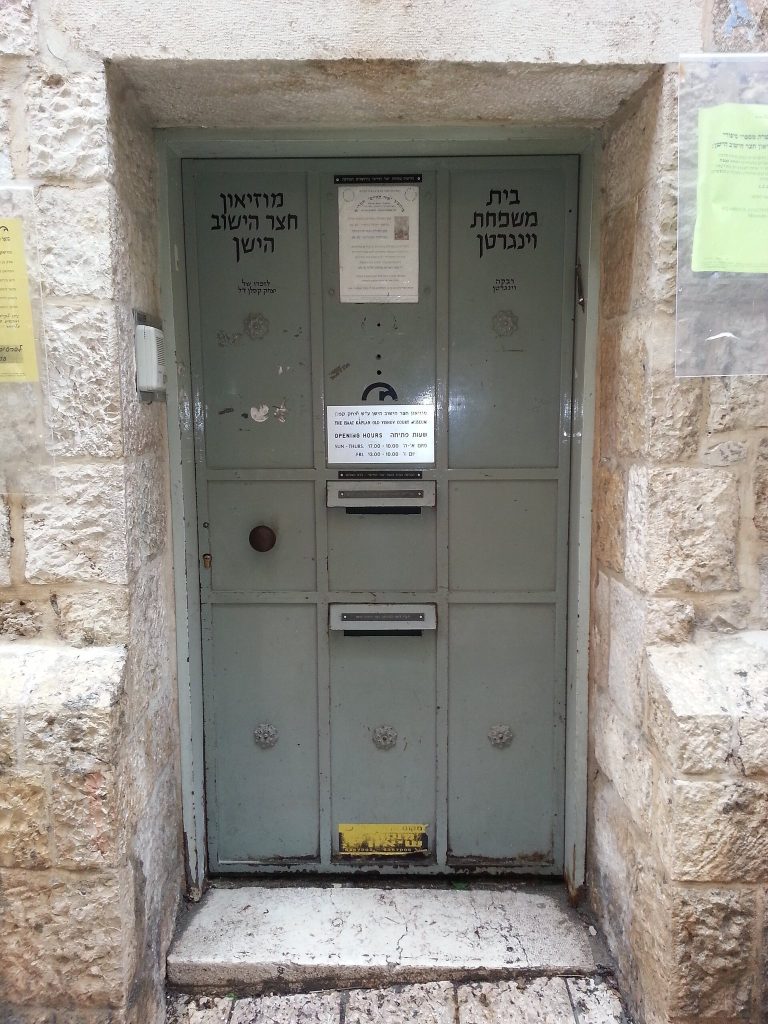
During the 1948 Israeli War of Independence, the synagogue courtyard was damaged and the building was looted, but it was not destroyed. The Karaite community in Egypt paid an Arab resident of the Old City a regular fee to maintain it. After the 1967 Six-Day War, the synagogue returned to the Karaite community. The courtyard was rebuilt, and the synagogue was restored in 1977. A small museum had been established by 1982.
The synagogue remains an active place of worship, used on holidays and festivals and on some Sabbaths. It is among the oldest synagogues still in use in Jerusalem’s Jewish Quarter.
Remains
Synagogue and courtyard
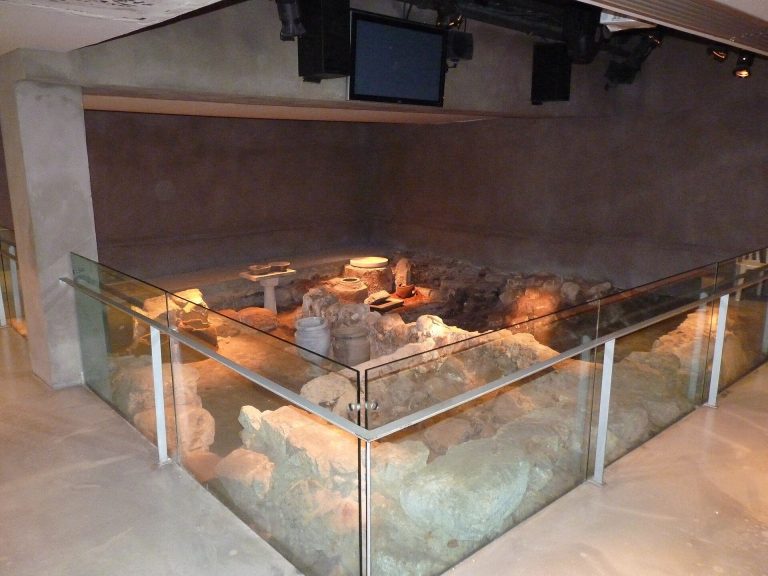
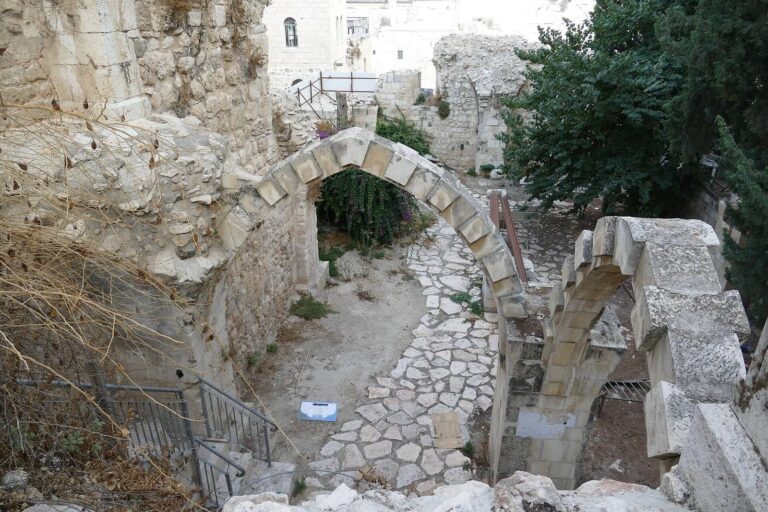
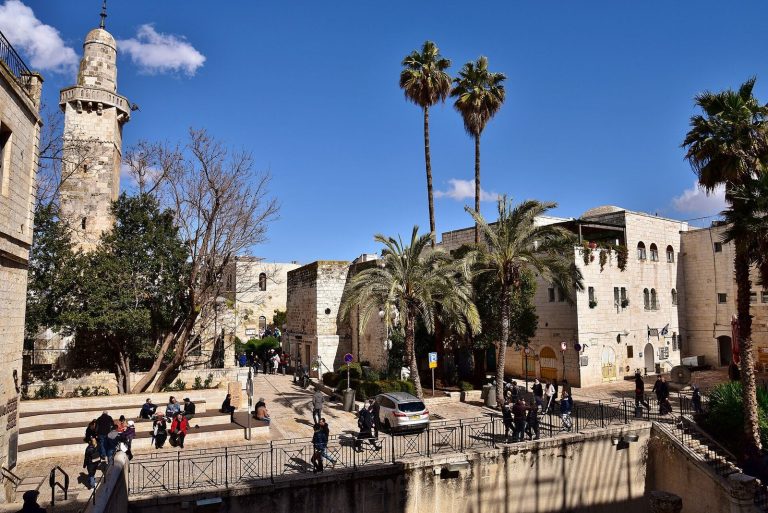
The synagogue stands on the eastern side of Hurva Square, with its entrance on Karaite Street, opposite the Tiferet Yisrael Synagogue. It occupies a courtyard that also included a water cistern and several residential rooms. The rectangular building lies several metres below today’s street level.
Prayer hall
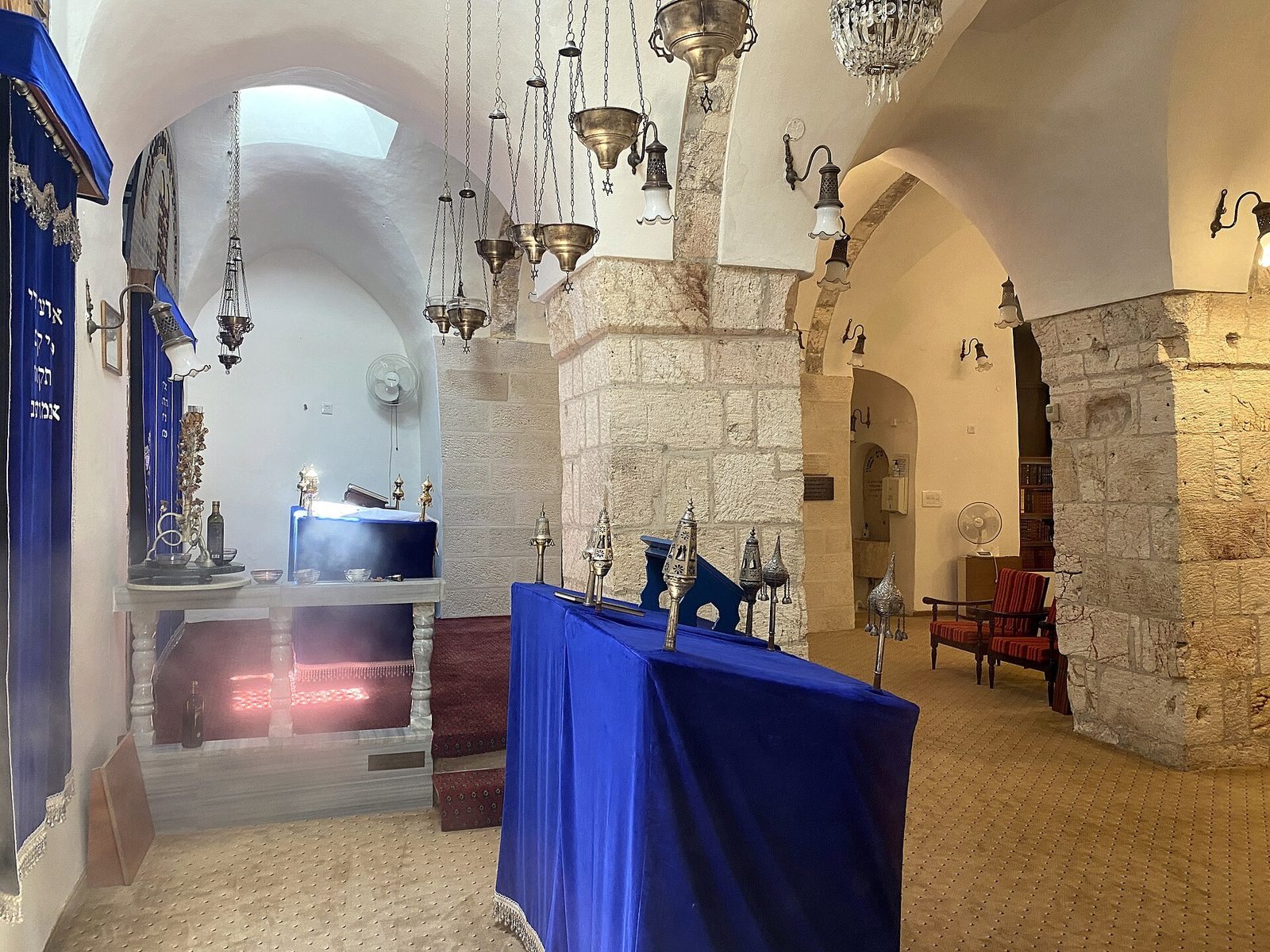
Two large pillars divide the prayer hall into a pair of aisles, covered by groin vaults, ceilings formed where two barrel vaults cross. Two glass-covered windows set into the ceiling bring daylight into the hall. Karaite tradition says a Muslim ruler permitted construction only on the condition that the building have no windows, so that prayers could not be heard outside.
Arks, prayer spaces, and inscriptions
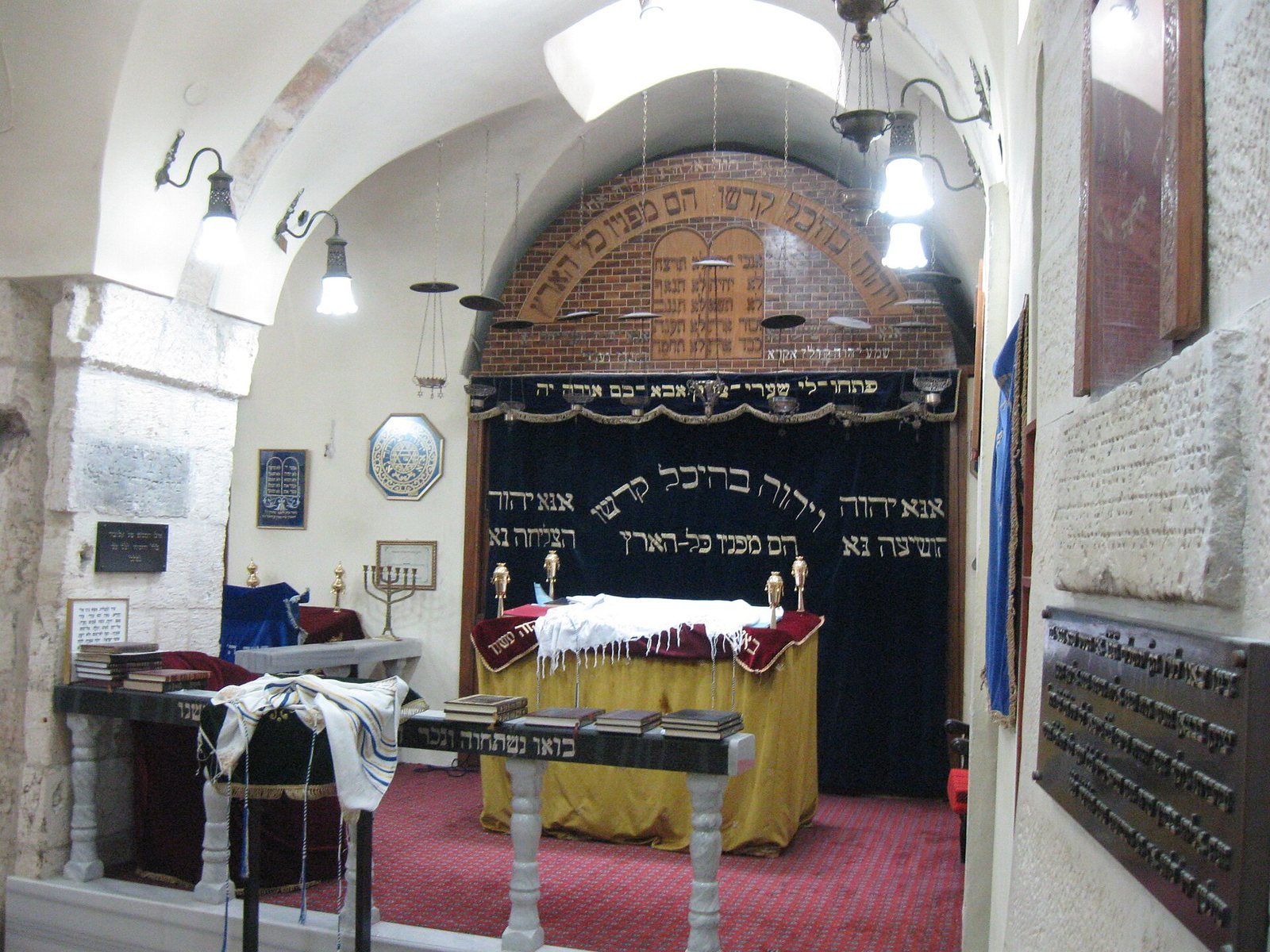
Each of the two spaces has a Torah ark, a cabinet or niche for Torah scrolls. The southern ark holds scrolls for ordinary worship; an ancient deer-skin scroll kept in the other is brought out once a year on Simchat Torah, the festival that marks the completion and renewal of the annual Torah-reading cycle. Niches for scrolls are set along the eastern sides of the aisles, while women pray behind a screen at the western wall.
Six ancient dedicatory inscriptions are carved into the hall’s walls. They form part of 13 inscriptions found there in 1928 by Israeli architect and architectural historian Yaakov Pinkerfeld.
Karaite heritage center
An adjacent heritage center presents the history and customs of Jerusalem’s Karaite community and its connection to the city. Its exhibition rooms are stacked vertically and linked by short flights of stairs leading toward the synagogue entrance, a layout intended to emphasize the synagogue’s underground position. Biblical verses appear on the stairwell walls, accompanied by a recording in Karaite cantillation, the traditional melodic recitation of biblical verses in Karaite practice. Exhibits include objects, documents, films, and recordings; a short film about the community and its customs is shown on the upper level.