Dreckburg: A Medieval Lowland Tower Castle in Salzkotten
Site at a Glance
- Rating
- 4.5
- Popularity
- Medium
- Country
- Germany
- Primary era
- Early Modern
- Eras represented
- Medieval, Early Modern
- Civilizations
- Holy Roman Empire
- Site type
- Domestic
- Remains
- Castle
On this page7 sections
History
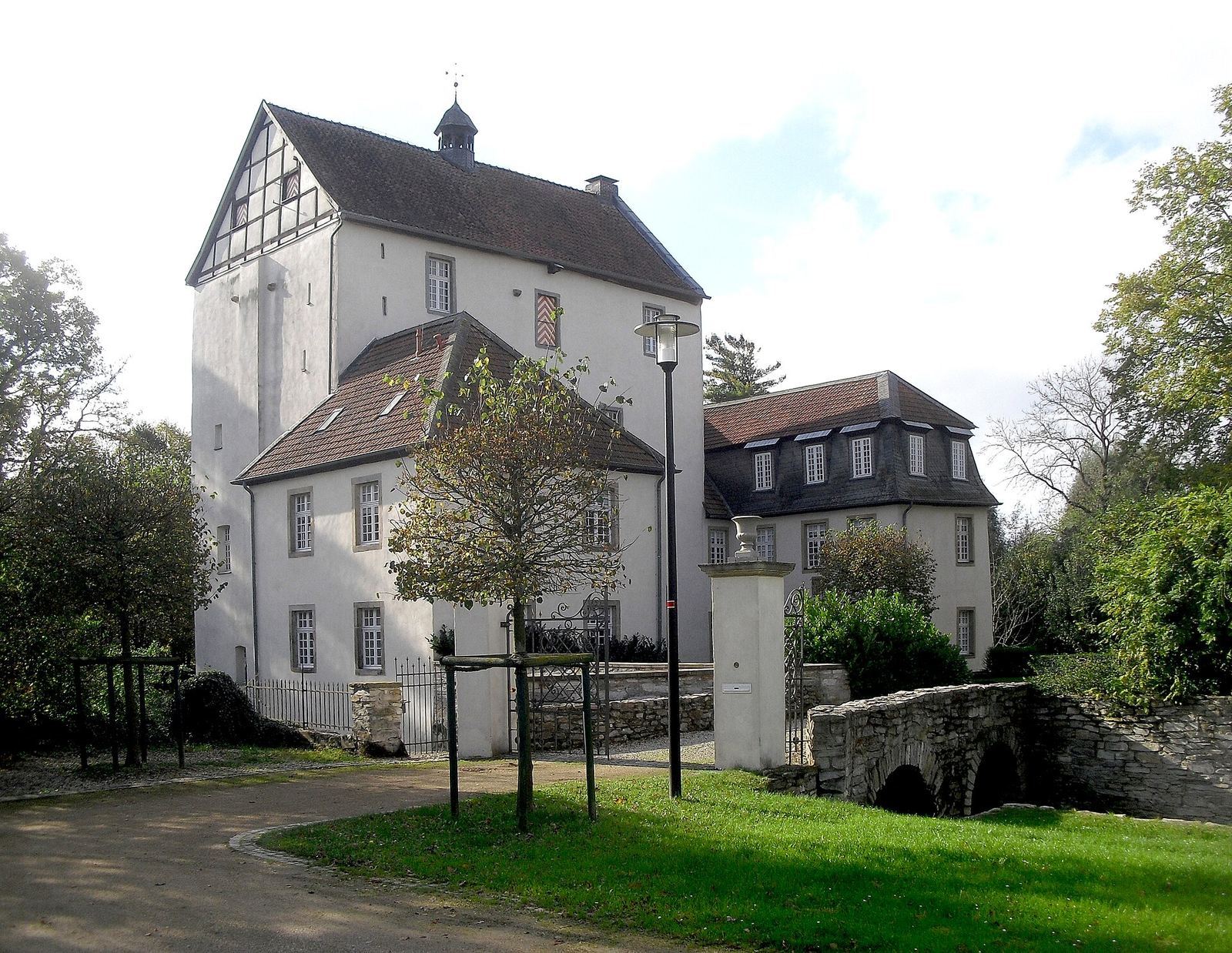
Dreckburg is a preserved lowland tower castle in Salzkotten, North Rhine-Westphalia, Germany. Its name is glossed as “Moor Castle.” It was probably built between 1347 and 1357 by Otto von Bentheim, a senior official of Paderborn Cathedral. The bishops of Paderborn established it to protect their lands at the western edge of the diocese and to control the border with the Electorate of Cologne, a territory ruled by the archbishops of Cologne, and the nearby Hellweg, a historic route across Westphalia. The castle later took on a Baroque form, a style associated with seventeenth- and eighteenth-century architecture.
Medieval stronghold and succession
Dreckburg first appears in a record from 1386 under the name “Drecborgh,” as a fief, or property held by grant from a superior lord, of cathedral provost Volmar von Brenken. Volmar probably strengthened the castle. It formed part of a group of Paderborn territorial strongholds that also included Oldenburg near Marienmünster and Lichtenau Castle.
The castle endured the Soest Feud, a regional conflict in fifteenth-century Westphalia, without damage. It passed to the Lords of Oeynhausen in 1444, to the von Hörde family in 1462, and to Wilhelm von Krevet for his lifetime in 1480. In 1516, the knight Franz Anton von Hörde ordered a second moat. Dreckburg also survived the Thirty Years’ War, a major European conflict of the seventeenth century, without damage. In 1676, it passed to Johann Wilhelm von Schilder, who had sections of its ring walls demolished.
Remodelling and later ownership
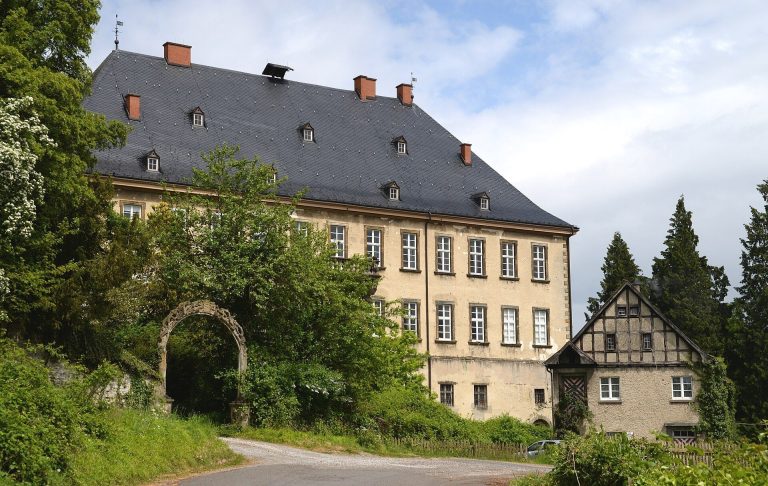
Wilhelm Anton von der Asseburg, a canon, or member of a cathedral chapter, at Osnabrück Cathedral, acquired Dreckburg in 1729 and had it remodelled through 1762. His nephew Friedrich Wilhelm von Westphalen inherited it in 1782. From 1802, the castle served as a manor estate. Beginning in 1896, the Counts of Westphalen administered the leased estate themselves. The city of Salzkotten acquired the castle in 2000 and sold it to Erhard Christiani in 2002. He used it privately and professionally until his death in March 2017.
Remains
The surviving complex combines a medieval defensive core with later residential additions in low-lying terrain. Its present appearance reflects the successive changes made to the castle over several centuries.
Medieval tower and enclosure
The earliest described structure was a residential tower with an entrance above ground level. The later complex included a ring wall around the castle courtyard and an outer bailey, an enclosed area beyond the central enclosure.
Moats
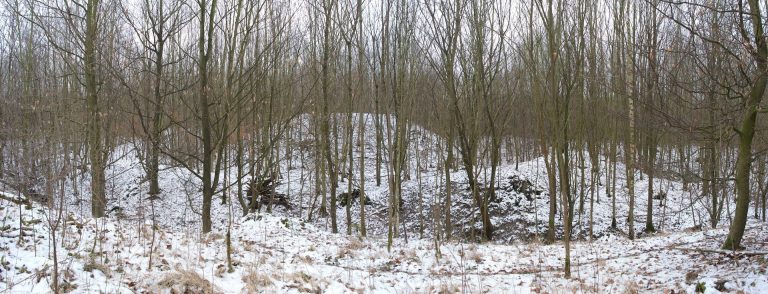
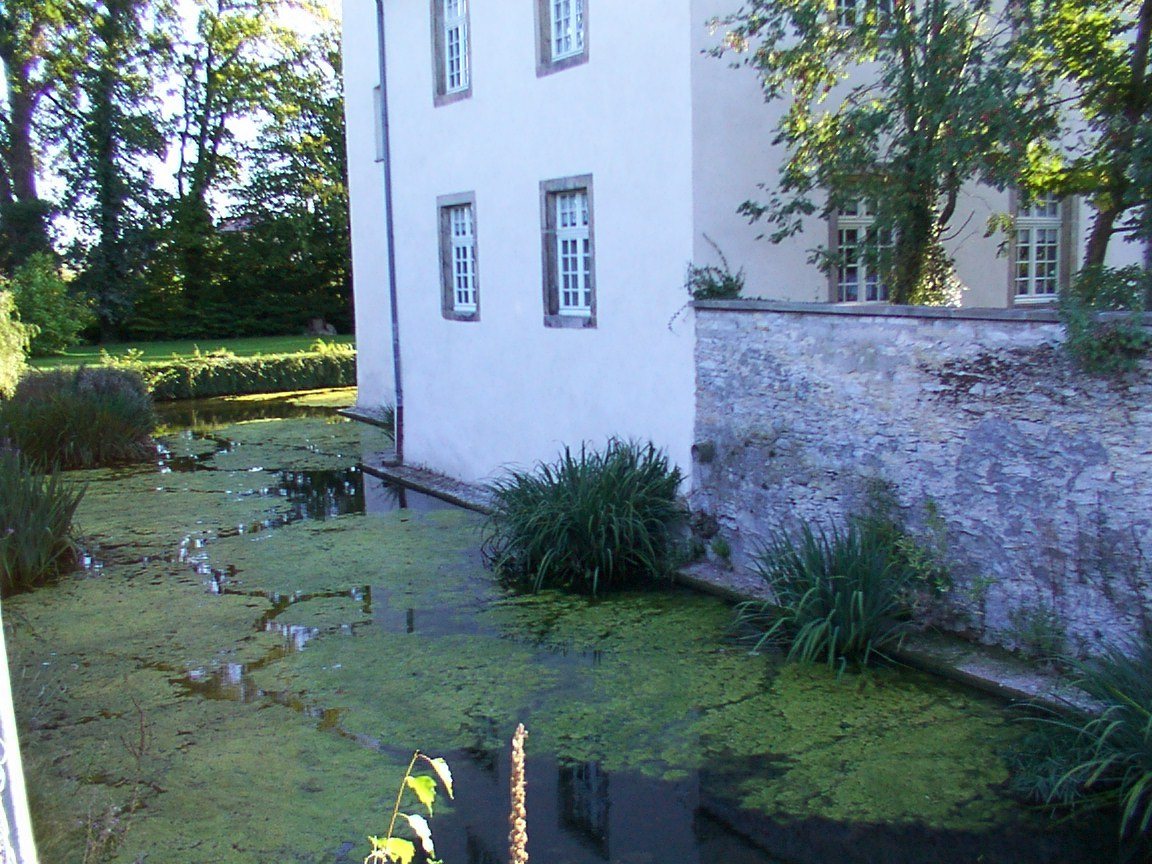
A water-filled moat surrounds the castle. A second moat was laid out at a considerable distance from the buildings.
Baroque wings
Two Baroque wings added during the remodelling gave Dreckburg its present appearance.