Kilifarevo Monastery: A Medieval Center of Bulgarian Learning
Site at a Glance
- Popularity
- Medium
- Country
- Bulgaria
- Primary era
- Modern
- Eras represented
- Early Modern, Modern
- Civilizations
- Ottoman
- Site type
- Religious
- Remains
- Monastery
On this page13 sections
History
Foundation and literary school
Kilifarevo Monastery, an Orthodox religious community in Bulgaria, was founded between 1348 and 1350 by Theodosius of Tarnovo with the support of Tsar Ivan Alexander. Theodosius became its abbot, and the monastery developed into a major center of Bulgarian learning and hesychasm, an Eastern Orthodox contemplative tradition focused on inner prayer.
By 1360, Theodosius had established a literary school with more than 460 pupils. Monks copied and translated religious books, composed saints’ lives, sermons, and secular chronicles, and studied the works of Thucydides, Plato, Homer, and Aristotle. The pupils included Euthymius of Tarnovo, who later became patriarch of the Bulgarian Orthodox Church; Cyprian, later Metropolitan of Kyiv; and the monk Romil of Vidin.
Destruction and relocation
As Ottoman forces advanced toward Tarnovo, the monastery was fortified. Ivan Alexander personally provided funds for a main tower and a new church. The monastery was destroyed when Tarnovo fell. In 1596, survivors of the Second Tarnovo Uprising, a revolt against Ottoman rule, took refuge there. The monastery was then burned, and its defensive walls were demolished. It was not rebuilt at that site.
In 1718, the monastery was re-established beside the Belitsa River, about 400 metres west and at a lower elevation than its former location. A church dedicated to the Nativity of the Virgin, the feast celebrating Mary’s birth, and two chapels were built and painted. Part of the complex was damaged during late-18th-century Kardzhali raids, attacks by armed bands during a period of upheaval in Ottoman lands, but it was soon restored.
Rebuilding and the present community
In 1840, the prominent Bulgarian master builder Kolyo Ficheto began work on the present Church of St Demetrius, named for an early Christian martyr venerated in Eastern Orthodoxy. The church was completed in 1842. The monastery became a women’s community in 1950, when it received the Russian-born nun Justina. It remains active within the Bulgarian Orthodox Church’s Veliko Tarnovo diocese.
Remains
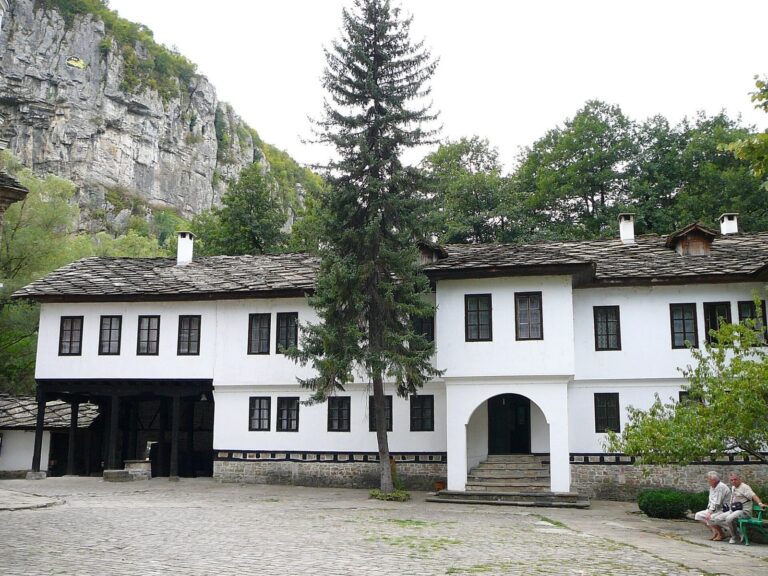
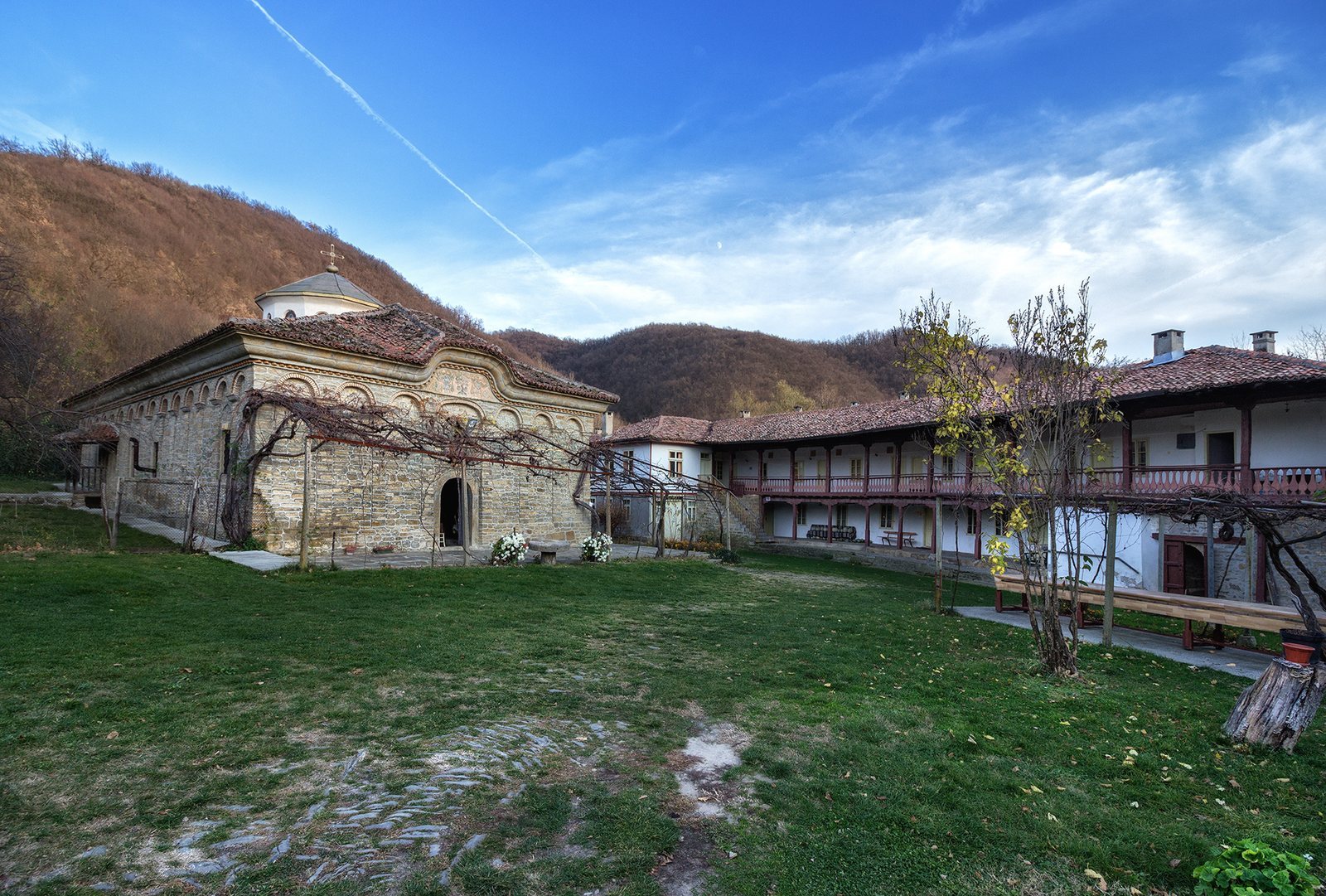
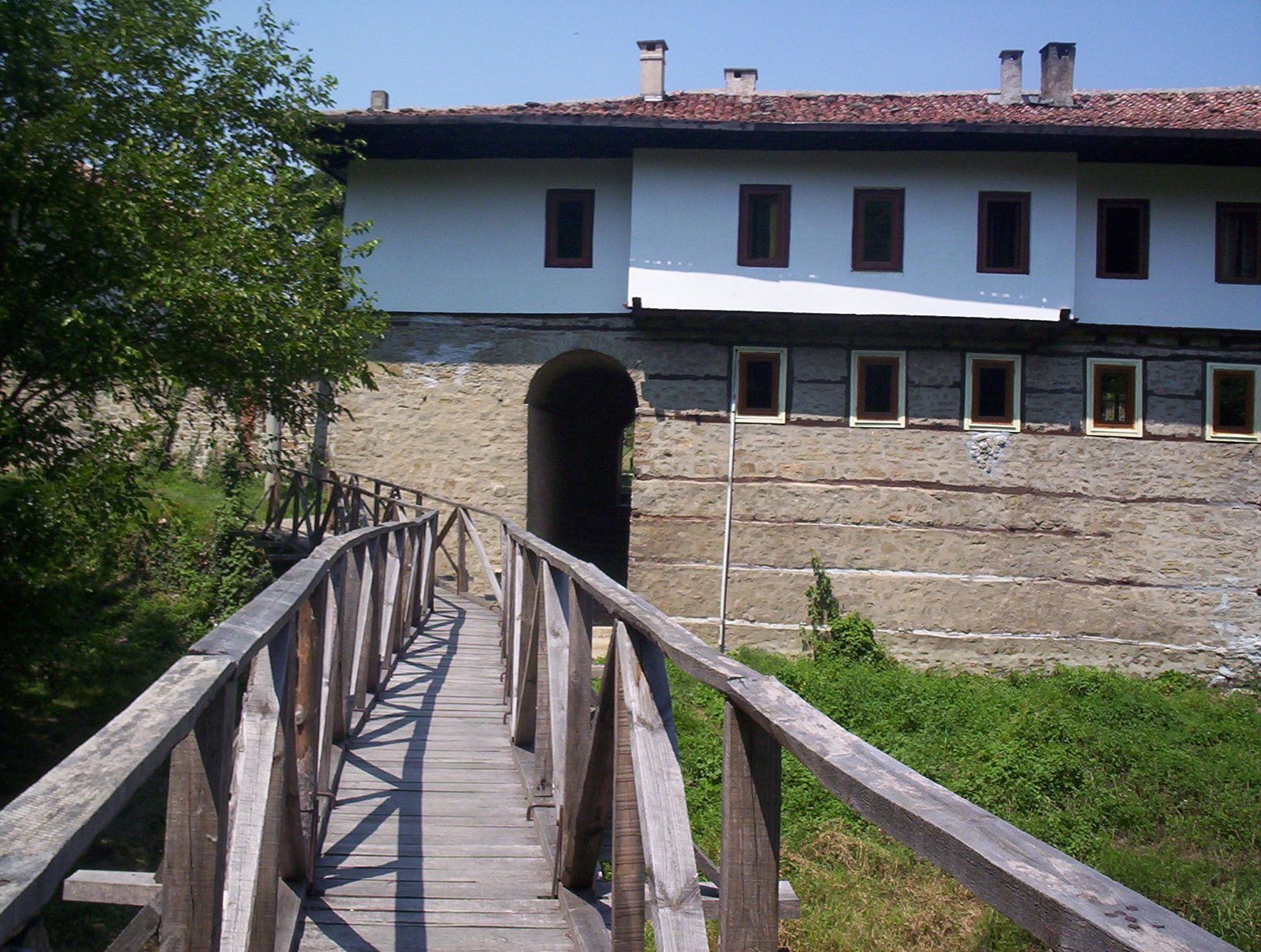
The present monastery lies in the Belitsa River valley and includes a church, residential buildings, and service buildings. The surviving complex brings together the Church of St Demetrius, painted chapel interiors, carved church furnishings, and two-storey residences.
The present monastery
Church of St Demetrius
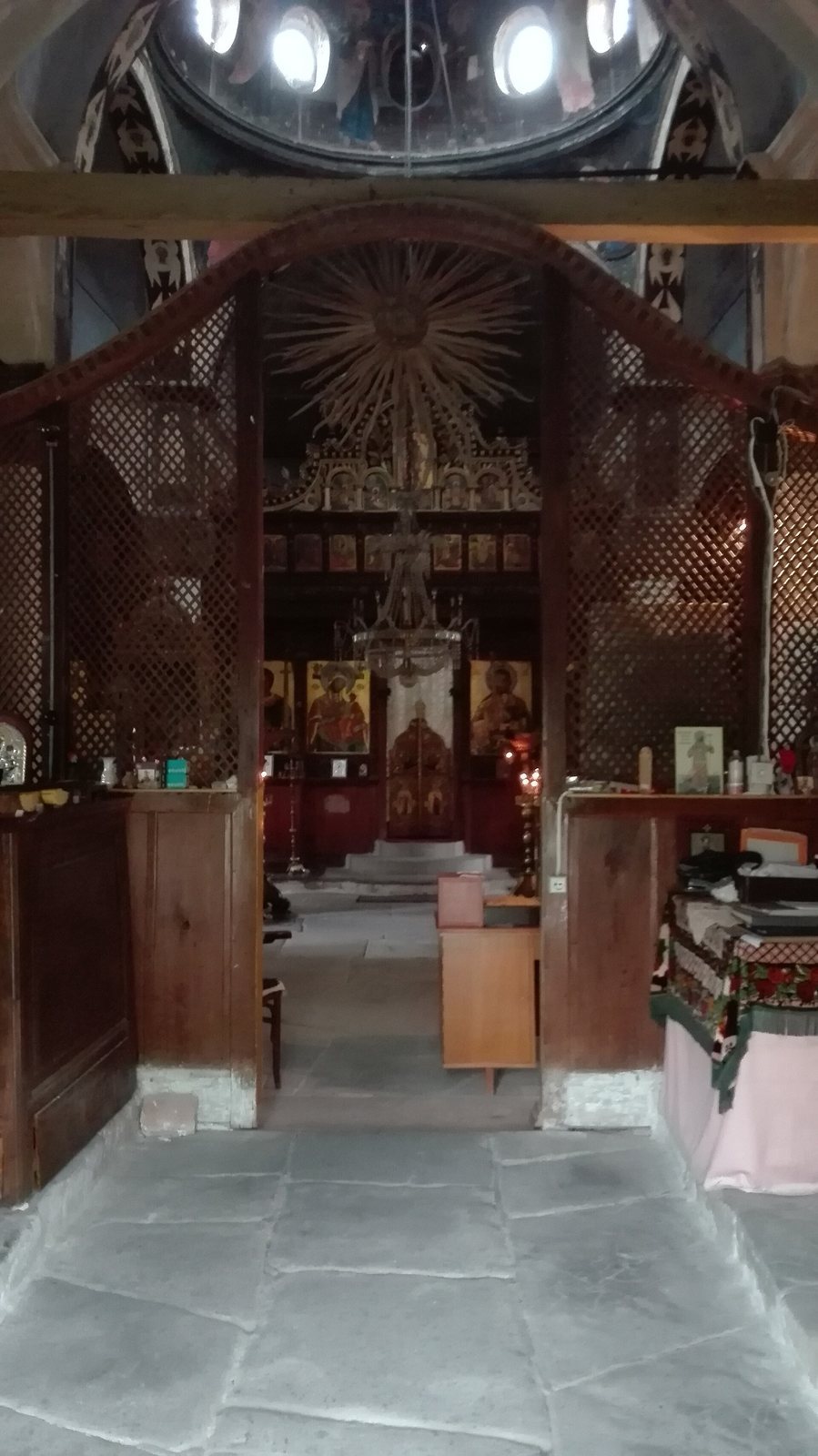
The church has a square plan, one nave, and one dome. Its interior is arranged in the shape of a cross, with four stone columns supporting the dome and marking the arms of the cross. Part of an older altar wall and the chapels dedicated to St Theodosius of Tarnovo and St John of Rila were incorporated beneath a shared roof to form the present building.
Frescoes
Most of the frescoes are in the chapels and date to 1718. Gospel scenes fill the upper horizontal bands, with full-length figures below. The divine messenger Gabriel and Mary, the mother of Jesus, appear on either side of the altar. The curved sanctuary end depicts Mary with the infant Jesus in her womb in an image known as “Wider than the Heavens.” The lowest band shows the Adoration of the Sacrifice. The paintings have stiff poses and gestures, and some figures are unevenly proportioned.
Iconostasis and icons
A gilded, carved iconostasis, an icon-bearing screen that separates the sanctuary from the main worship space, dates to 1843. It was made by Tsonyu and Simeon Vasilevi, a father and son from Tryavna, a Bulgarian town known for woodcarving and icon painting. The monastery also holds several icons by Tryavna painters Yonko Popvitanov and Dosyo Koyuv, as well as an image of St John of Rila with scenes from his life, painted by Krastyo Zahariev.
Residential and service buildings
The complex includes two two-storey residential buildings constructed in 1849 in Bulgarian Revival style, associated with a period of cultural renewal in Bulgaria under Ottoman rule. Service buildings are also part of the monastery.
Earlier structures near the monastery
Fortified monastery
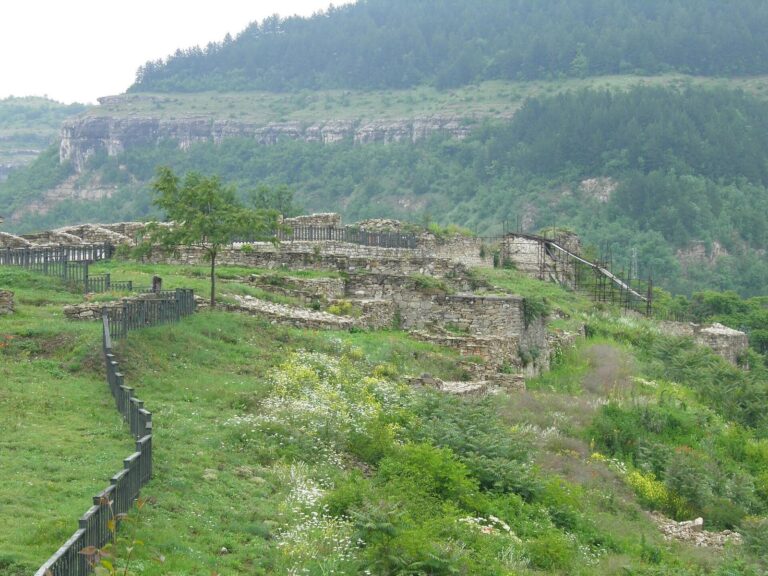
The earlier monastery was laid out as a fortress. Defensive walls enclosed an inner courtyard, where a multi-storey observation tower stood. These features formed part of the fortified complex that preceded the monastery’s relocation.
Late Antique basilicas
Two three-aisled basilicas have been found near the present monastery. Each was a church with a central nave and side aisles. They date to Late Antiquity, the transition from classical antiquity to the early Middle Ages.