Presidential Palace of São Tomé e Príncipe: The President’s Official Residence
Site at a Glance
- Popularity
- Medium
- Country
- Sao Tome and Principe
- Primary era
- Modern
- Eras represented
- Medieval, Modern
- Civilizations
- Portuguese
- Site type
- Domestic
- Remains
- Palace
On this page7 sections
History
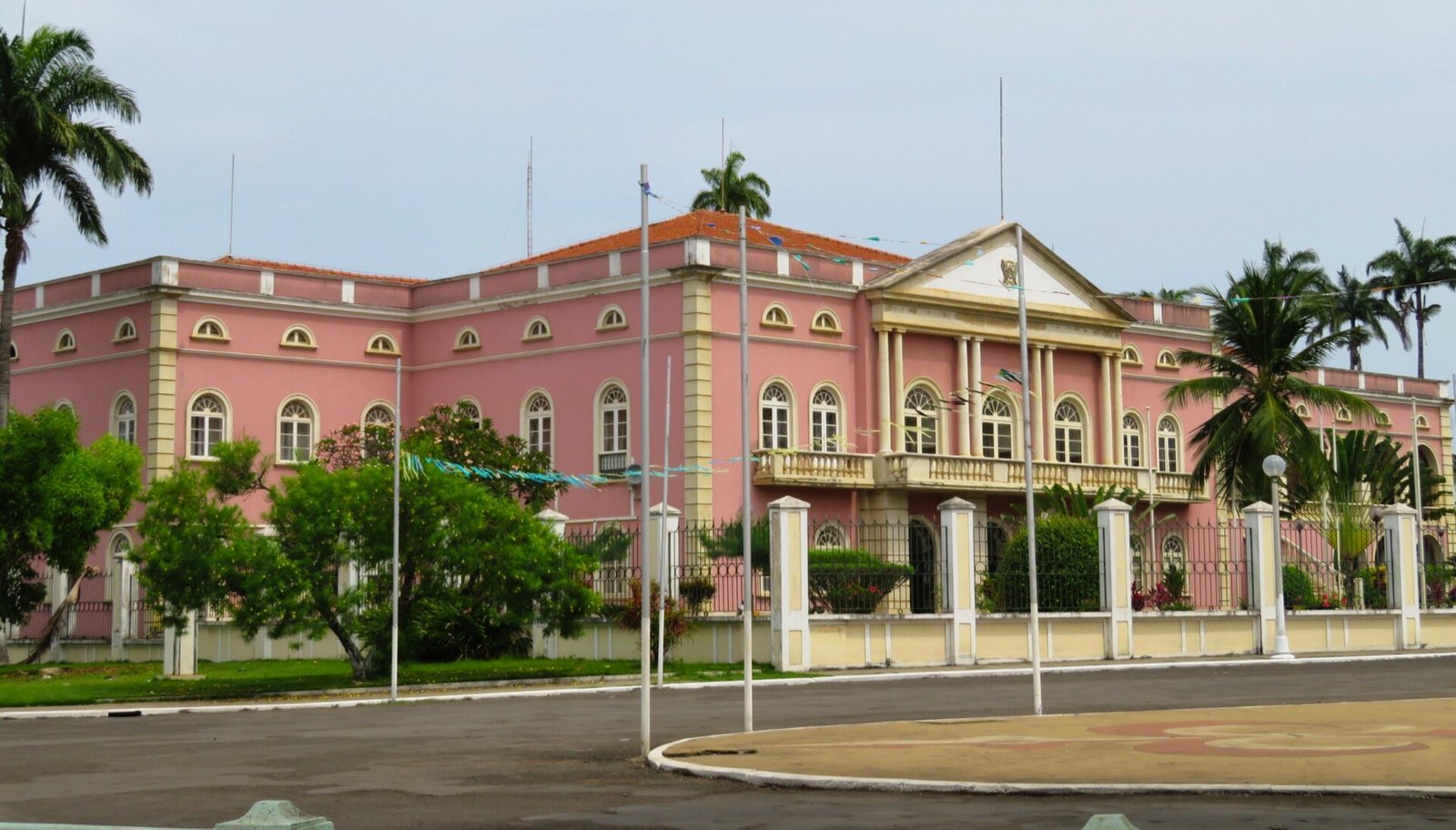
The Presidential Palace of São Tomé e Príncipe, in the island country of the same name, is the president’s official residence. The present building is a large mansion in Portuguese colonial style, probably constructed between 1844 and 1885. It was the governor’s residence during Portuguese colonial rule and continued in official use after the country became independent in 1975.
The site before the present palace
Before later government buildings occupied the site, it held the Captain’s Tower, commissioned by colonial administrator Álvaro Caminha between 1492 and 1493. The tower eventually fell into ruin. In 1835, Portuguese military officer and historian Cunha Matos described a spacious but poorly furnished government building there. A drawing made in 1844 shows another government building on the site, though its design differs from the present palace. The current structure appears in an 1885 photograph, and its construction is placed in the intervening years.
Colonial palace and presidential residence
The building was first called the Palace of the Government of São Tomé, or the Government Palace, and was also known as the People’s Palace. In 1954, during Portugal’s Estado Novo, an authoritarian regime that lasted from 1933 to 1974, it underwent an upgrade intended to give it greater monumentality. The project was carried out through the Portuguese Office for Overseas Urbanization, a government body responsible for planning and construction in overseas territories. A wall enclosure was added around the building in 1962.
After independence in 1975, the palace became the official residence of the president of São Tomé and Príncipe.
Remains
Architecture and grounds
The palace
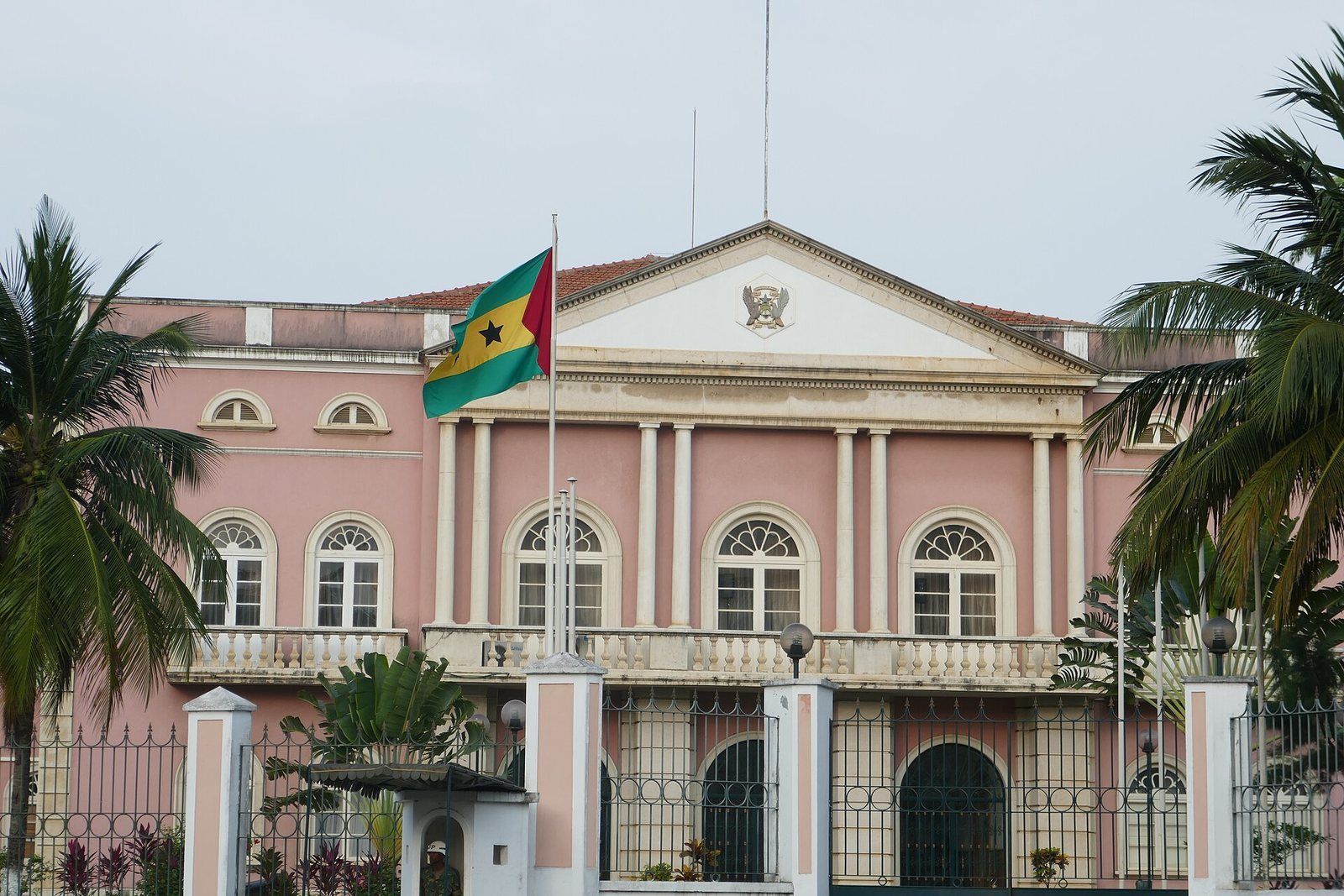
The two-storey mansion has an L-shaped plan and a rose-pink façade with simple neoclassical details, drawing on ancient Greek and Roman forms. It stands beside Praça do Povo, or People’s Square, between Avenida da Independência and Avenida 12 de Julho. Its principal façade faces Rua de St. António do Príncipe. Our Lady of Grace Cathedral is nearby, and Ana Chaves Bay lies about one block away. The 1954 renovation added decoration around the windows, columns along the building’s long sides, and a main staircase at the entrance.
Garden and enclosure
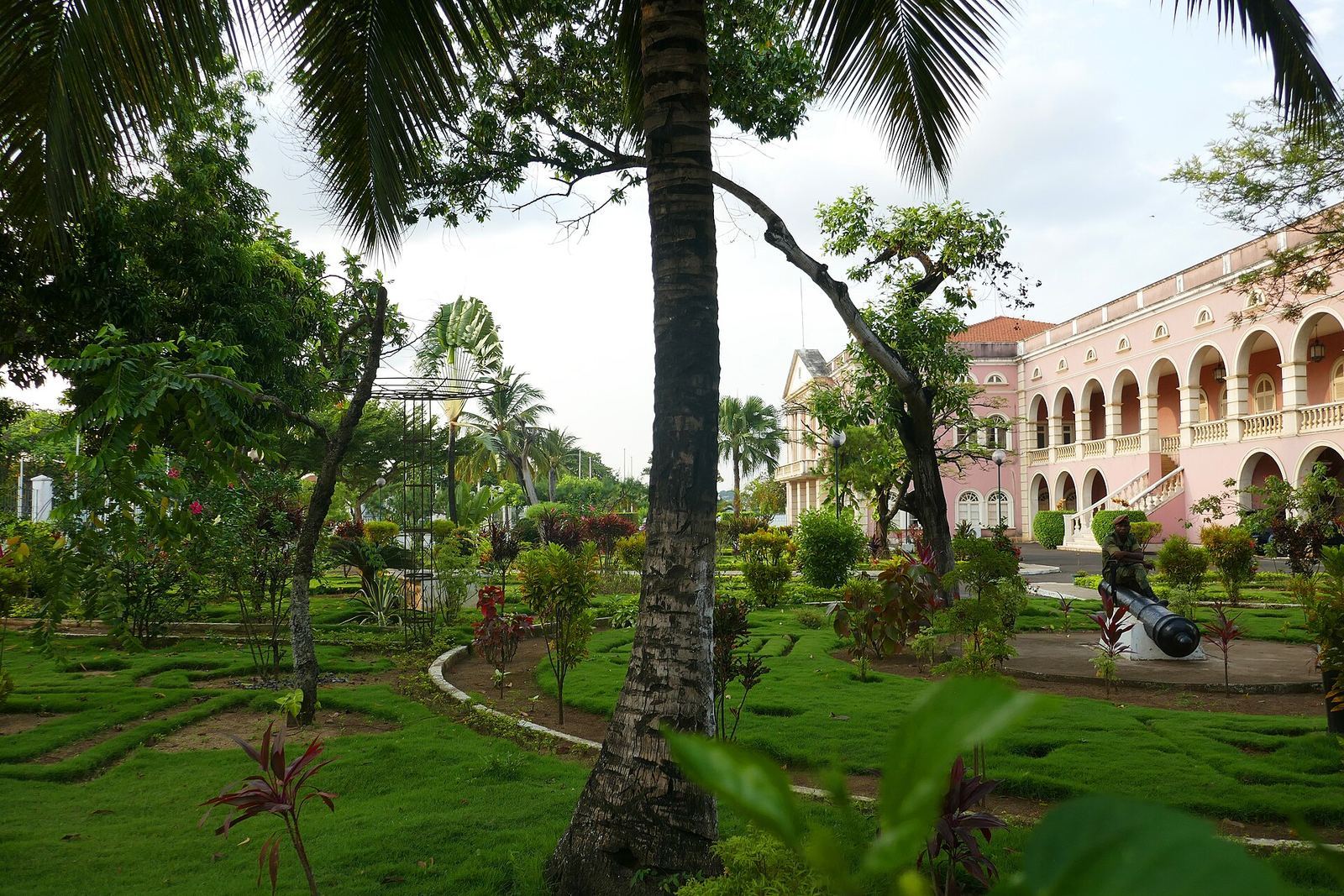
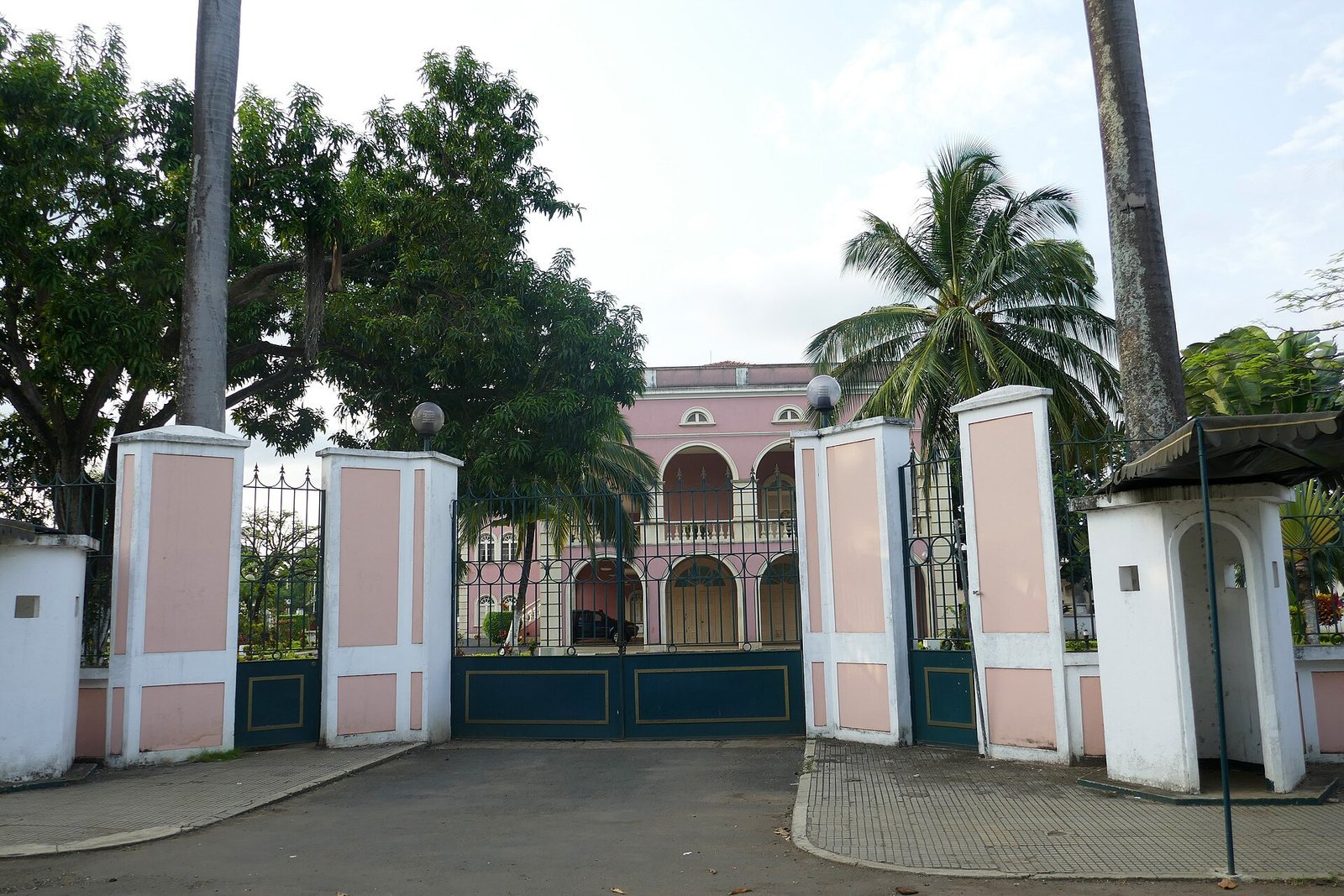
The palace stands within a large garden enclosed by high iron fencing set between pink concrete pillars. A wall enclosure also surrounds the building.