Dolmen Gehrden: A Neolithic Megalithic Tomb in Germany
Site at a Glance
- Popularity
- Very Low
- Country
- Germany
- Primary era
- Stone Age
- Eras represented
- Stone Age
- Civilizations
- Unclassified
- Site type
- Burial
- Remains
- Burial Mound
On this page6 sections
History
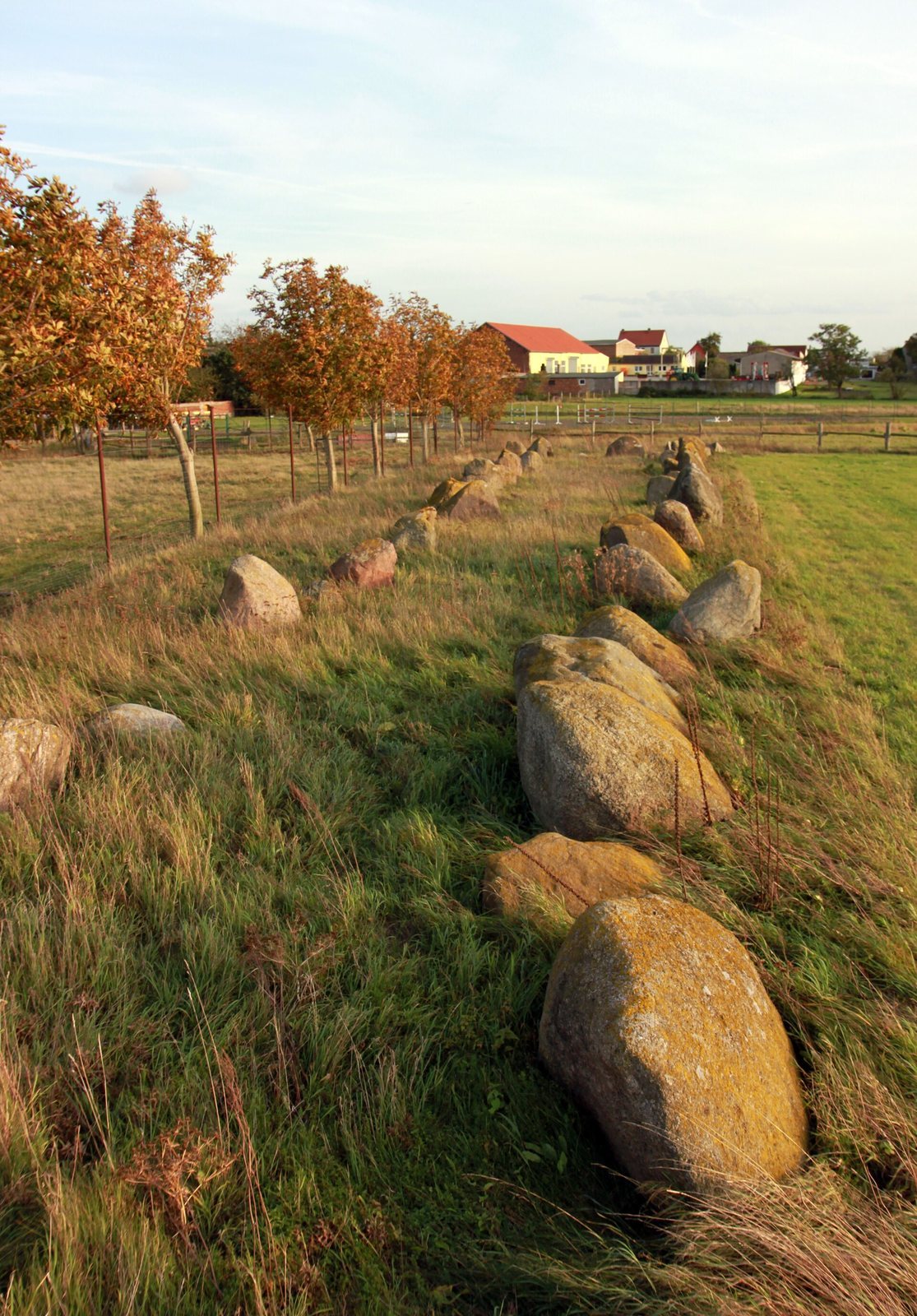
Dolmen Gehrden is a megalithic tomb from the Neolithic, the later part of the Stone Age when farming communities used stone tools, on a meadow at the northwestern edge of Gehrden in Germany. It is the surviving member of a group of three tombs dated to 3500–2800 BCE.
The tomb group and its destruction
The smaller of the two other tombs stood west or southwest of Gehrden, on a sandy rise near the boundary with Gödnitz. By the time pastor Joachim Gottwalt Abel examined it, sand extraction had toppled or displaced many of its stones. The third tomb stood immediately south of Gehrden, in a meadow west of Neue Reihe. A windmill was built over it, badly damaging its north–south-aligned long barrow. Abel counted 15 stones in its southern half, nine along the eastern side and six along the western side. Both tombs were destroyed during the eighteenth or early nineteenth century.
Early descriptions
Johann Christoph Bekmann first described the tombs in his 1710 history of Anhalt, a historic German principality. Abel, pastor in Möckern between 1755 and 1806, later wrote a more detailed account in handwritten notes. Megalithic-tomb researcher Ernst Herms published the notes in 1928 after investigating the surviving tomb.
Remains
The surviving long barrow
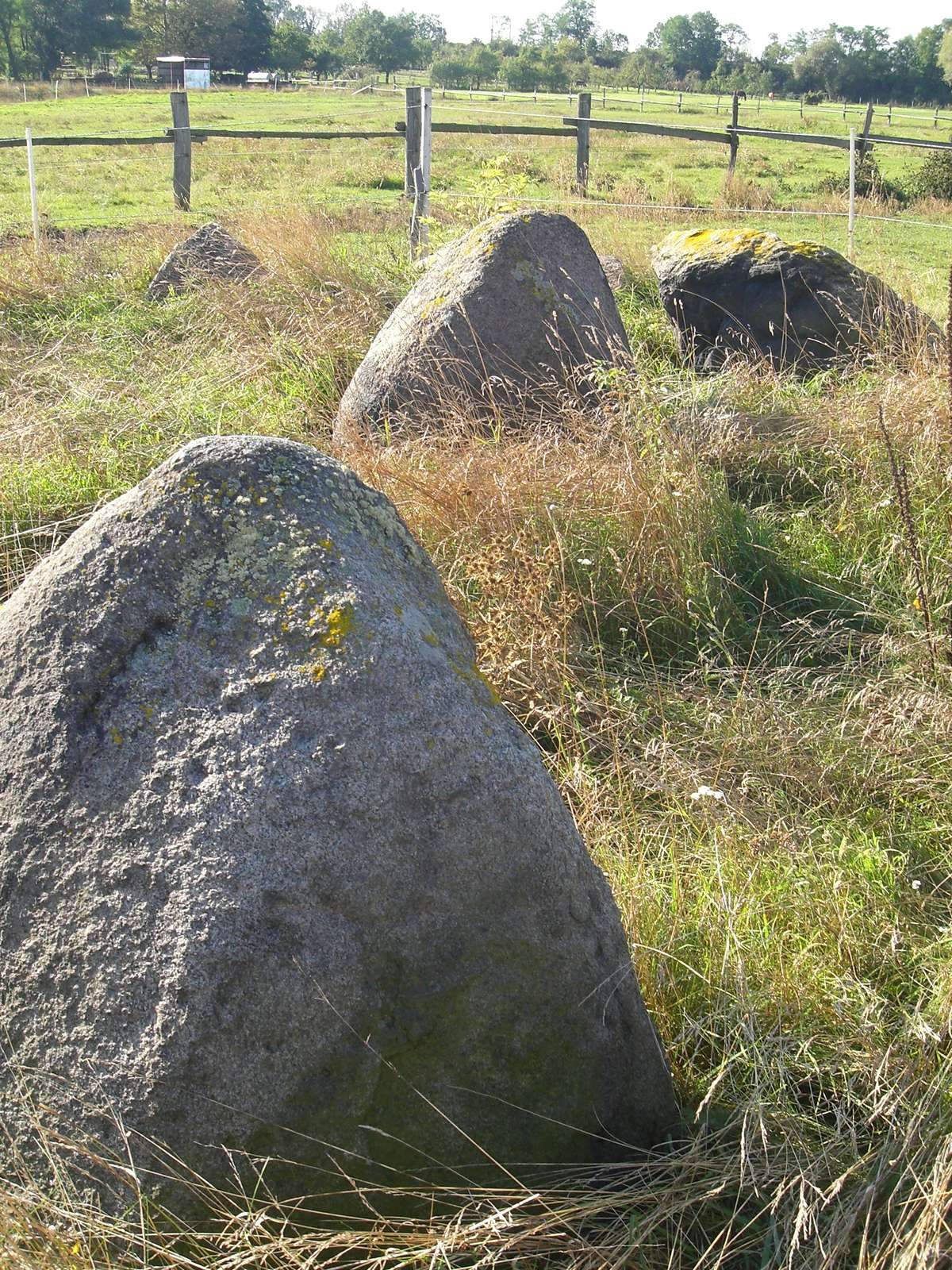
The tomb is a chamberless long barrow, an elongated megalithic burial structure without a stone chamber. Its rectangular stone setting runs southeast to northwest, unlike the east–west alignment usual in the area. It measures 51 m long and 5.8 m wide, and is the only surviving megalithic tomb of this type in Saxony-Anhalt.
Of the original 65 stones, 58 remain. Eighteen project more than a metre above ground. A large corner stone has toppled; it measures 2.8 m long and 1.3 m wide. Pottery from the Globular Amphora culture, a Neolithic archaeological culture named for its rounded pottery, was found in the tomb.
Stone in the cemetery memorial
After the First World War, a stone from the tomb’s enclosure was incorporated into the war memorial in Gehrden cemetery.