Tustrupgravpladsen: A Neolithic Monument Group in Denmark
Site at a Glance
- Popularity
- Low
- Country
- Denmark
- Primary era
- Stone Age
- Eras represented
- Stone Age
- Civilizations
- Unclassified
- Site type
- Burial
- Remains
- Necropolis
On this page6 sections
History
Tustrupgravpladsen is a group of four Neolithic monuments in northern Djursland, Denmark. Dating to approximately 3500–2800 BCE, the group belongs to the New Stone Age, a period when farming and settled communities spread through much of Europe. It comprises two dolmens, tombs built from large stones, a passage grave, whose burial chamber is reached through a distinct passage, and the remains of a cult building. The monuments are interpreted as expressions of Neolithic culture and belief, as well as evidence of social development. The group is regarded as one of Denmark’s important prehistoric monument sites.
In the Neolithic, the Hevring Å valley was a fjord connected to the Kattegat. Northern Djursland consisted of islands, separated from the Jutland mainland by the Kolindsund and Randers fjords. This landscape formed the setting for the monument group.
The cult building was the first structure of its kind discovered in Jutland, in 1953. Similar buildings were subsequently identified in northern Jutland and at sites including Engedal, Ferslev, Foulum and Herrup. The building’s precise purpose remains uncertain, but it may have been used for offerings or rites concerning the dead. Structures of this type may have been dismantled or burned after funerary ceremonies, with their destruction forming part of the ritual.
Remains
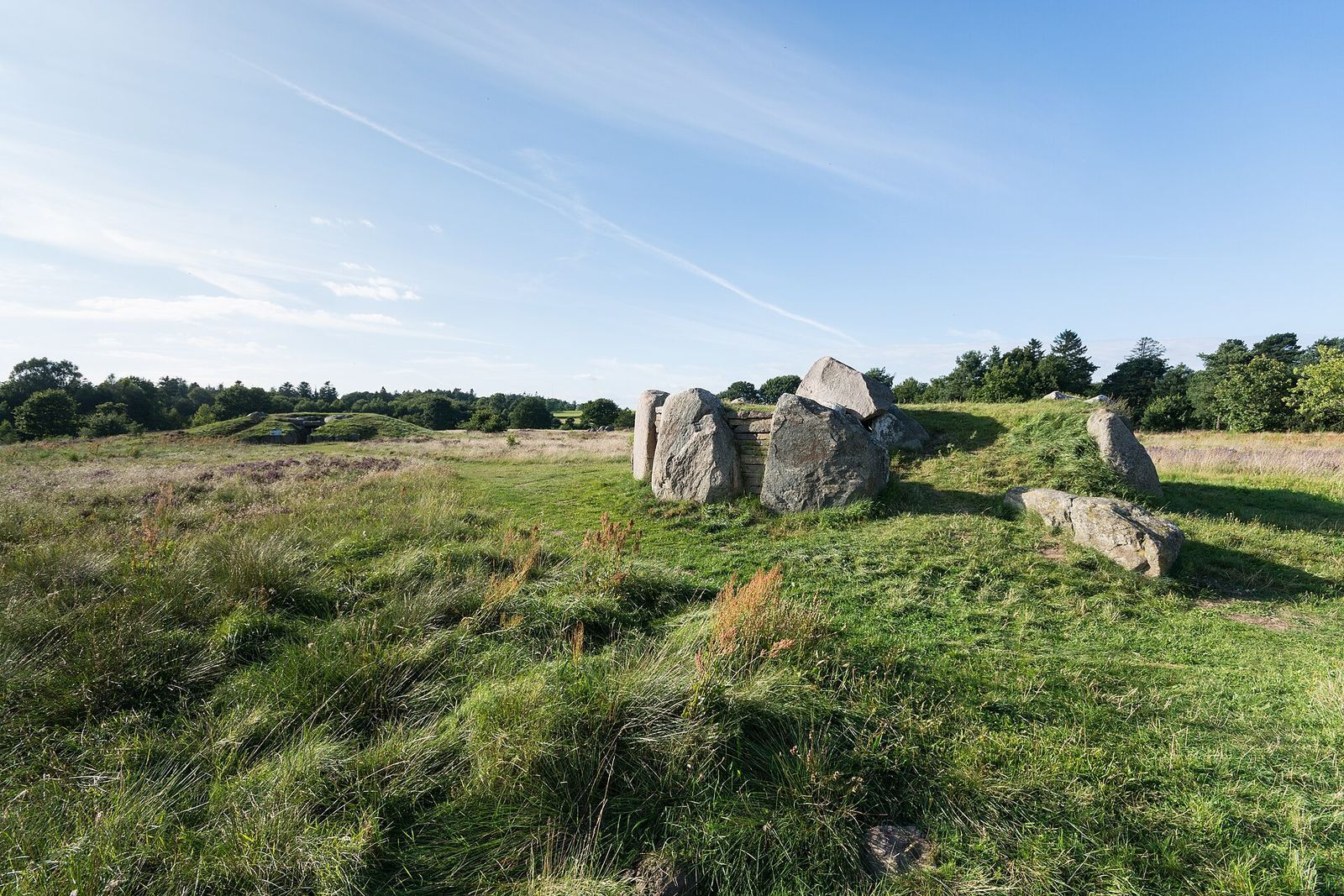
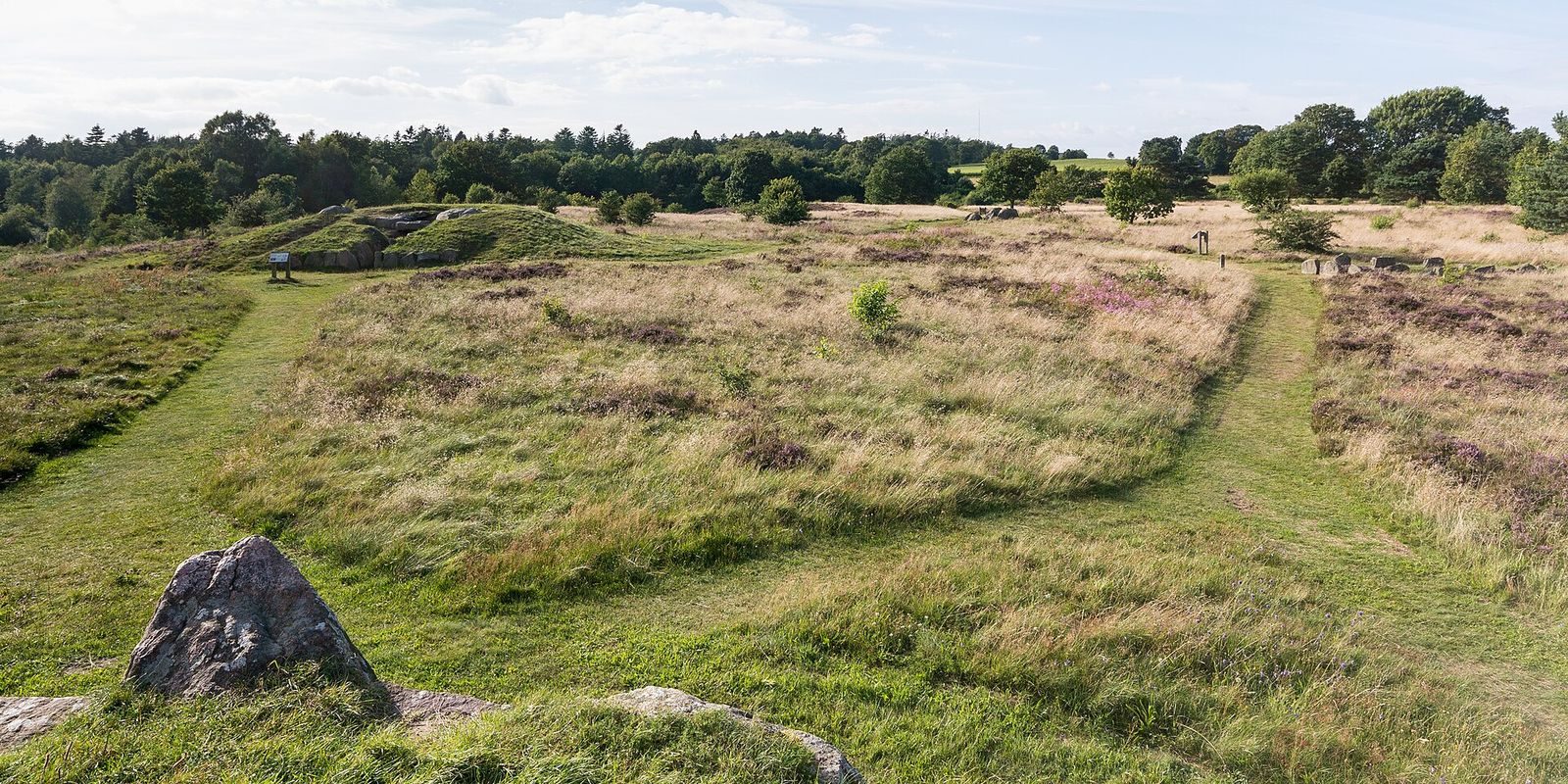
The four monuments occupy a plateau above the Hevring Å valley. The group consists of two dolmens, a passage grave and the remains of the cult building, with another dolmen described in a field across the valley.
Tombs and cult building
Dolmens
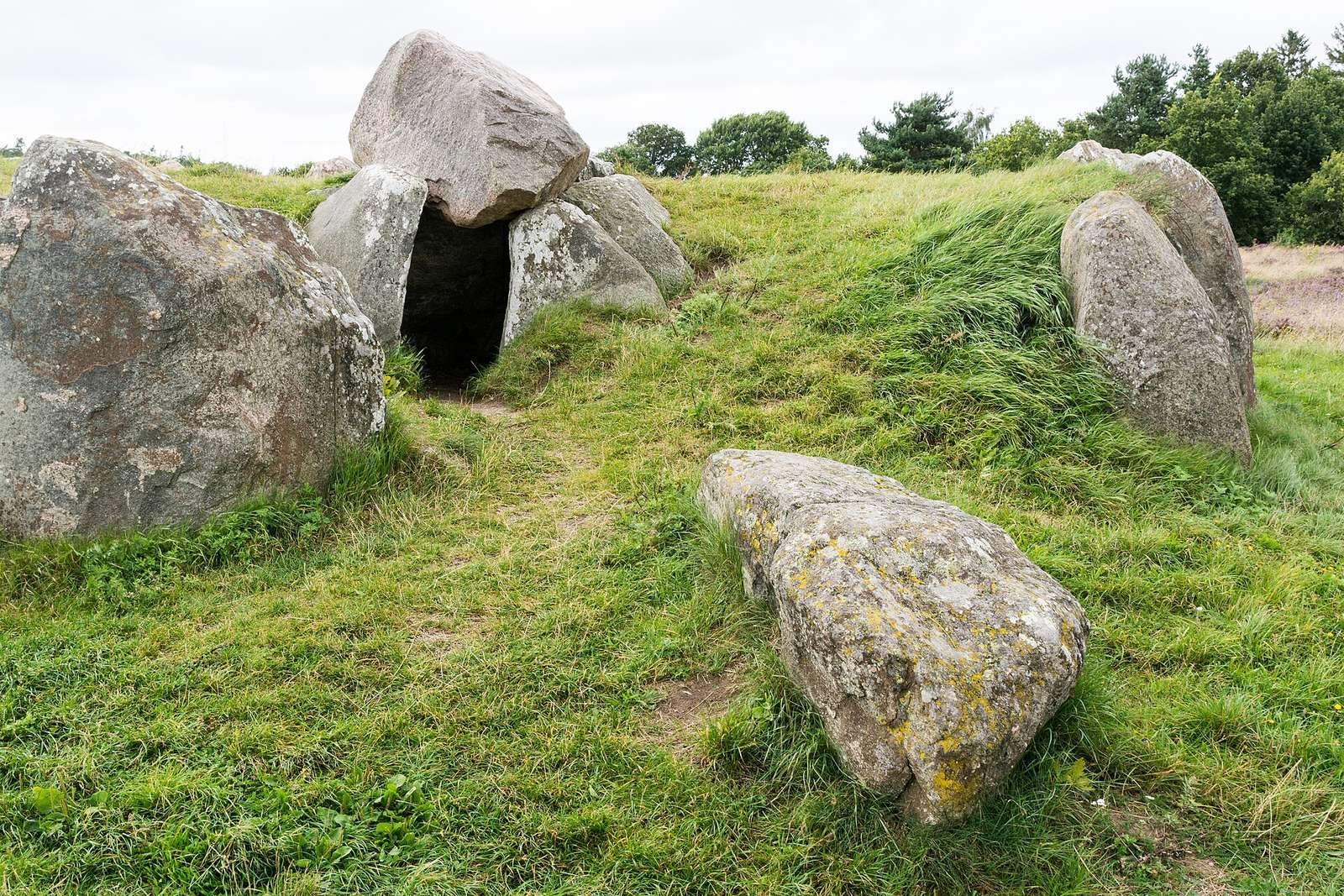
A small, round dolmen has been reconstructed. Thirteen stones form a ring about eight metres across around its chamber, with an opening for entry. Red sandstone was used to fill the gaps between the stones. The original covering stone was missing and has been replaced. A dolmen in the northern part of the site had a chamber with a short entrance passage; its covering stones and one supporting stone are missing. Another dolmen lies in a field north of Skovgårdevej, about 50 metres across the valley.
Passage grave
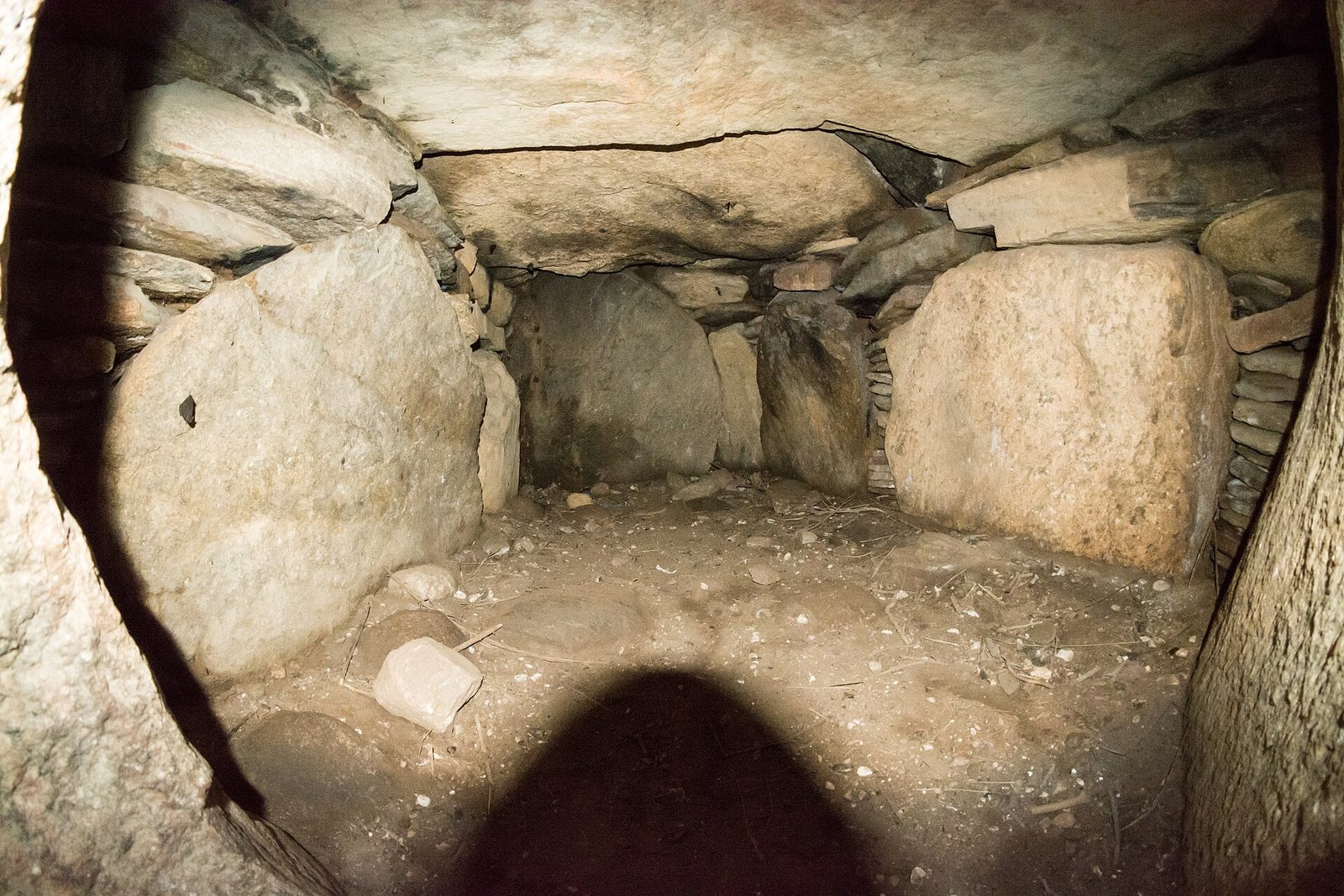
The passage grave has a burial chamber measuring about nine by three metres, an entrance room measuring two by two metres, and an interior height of roughly two metres. Its access passage is six metres long. The passage’s covering stones and the burial chamber’s roof are missing. Forty stones were used in the structure, the heaviest weighing about 20 tonnes.
Cult building
The cult building measures approximately six by five metres. Its walls were made from vertical split planks and stone, and divided the interior into a main room and a smaller entrance room. Funnel Beaker pottery, associated with a Neolithic culture named for its distinctive funnel-shaped vessels, was found there. A reconstruction of the building stands in the park of the Moesgård open-air museum near Aarhus.