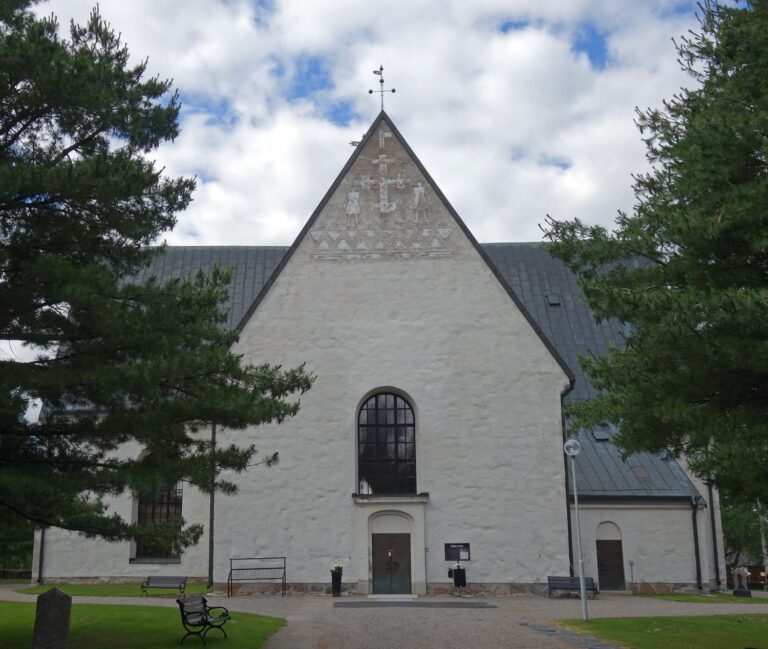
Skellefteå Rural Parish Church: A Medieval Church Remodeled in Neoclassical Style
Site at a Glance
- Popularity
- Medium
- Country
- Sweden
- Primary era
- Early Modern
- Eras represented
- Medieval, Early Modern, Modern
- Civilizations
- Swedish
- Site type
- Religious
- Remains
- Church
On this page12 sections
History
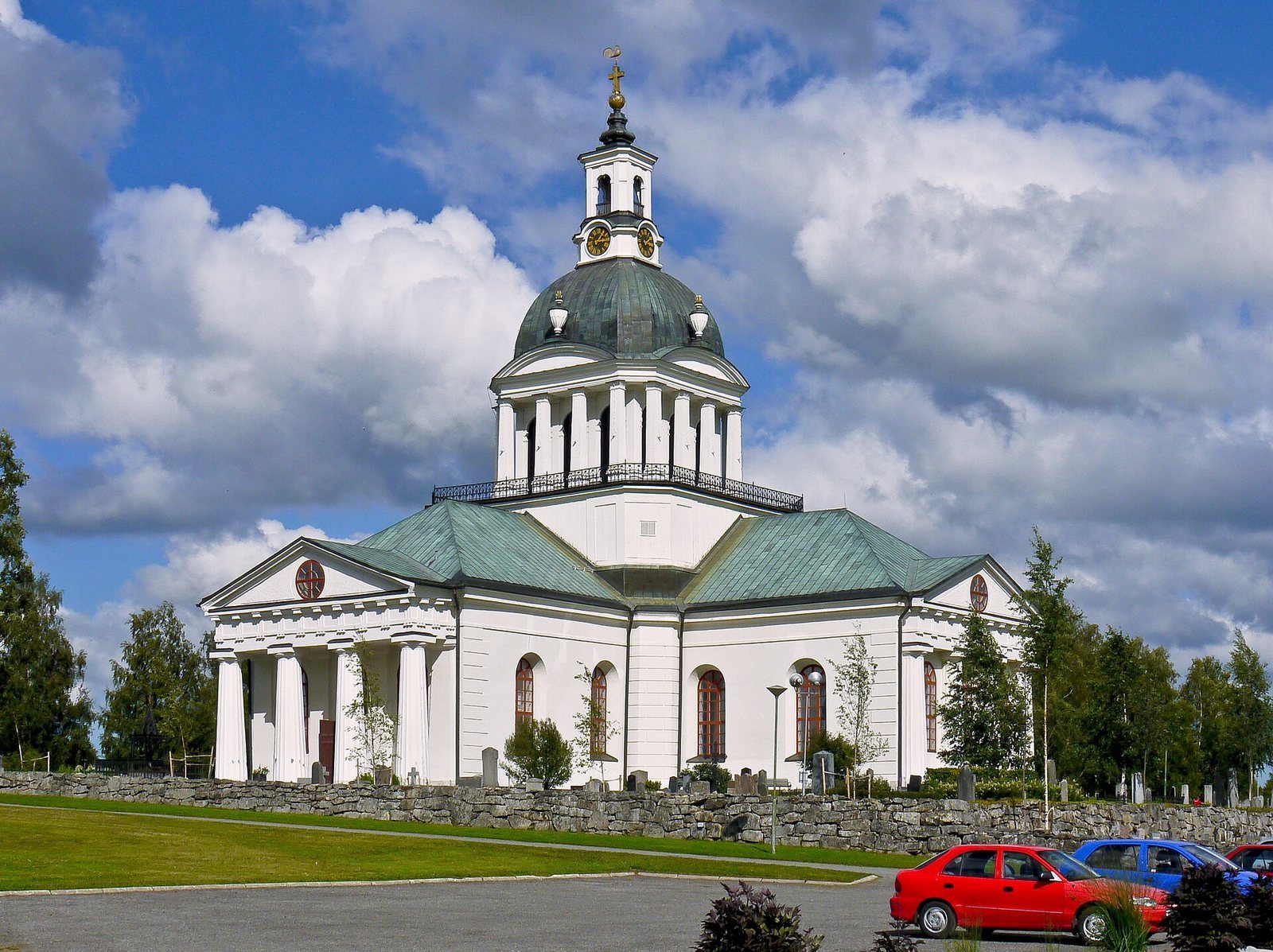
Skellefteå Rural Parish Church is the principal church of Skellefteå rural parish in Sweden. Its structural core was built around 1500, in the late Middle Ages. It was enlarged and remodeled in Neoclassical style during the second half of the eighteenth century, establishing its present form, and was consecrated around 1800.
Medieval origins and parish landscape
The church belongs to the Church of Sweden, Sweden’s Evangelical Lutheran church, and the Diocese of Luleå, a regional ecclesiastical jurisdiction. It forms part of Skellefteå Parish Center, an area recognized in Swedish heritage planning for its national importance. The area also includes Bonnstan, Nordanå, Storholmen, Rovön, and Lejonströmsbron. Its historical character reflects the development of a church town and market place along the old coastal road, associated with the region’s religious, social, and commercial life since the Middle Ages.
Eighteenth-century rebuilding
Jacob Rijf, an eighteenth-century church architect and builder, designed the enlargement and remodeling. His design for the church, like his design for Alatornio Church, was influenced by Adolf Fredrik’s Church in Stockholm.
Organ history
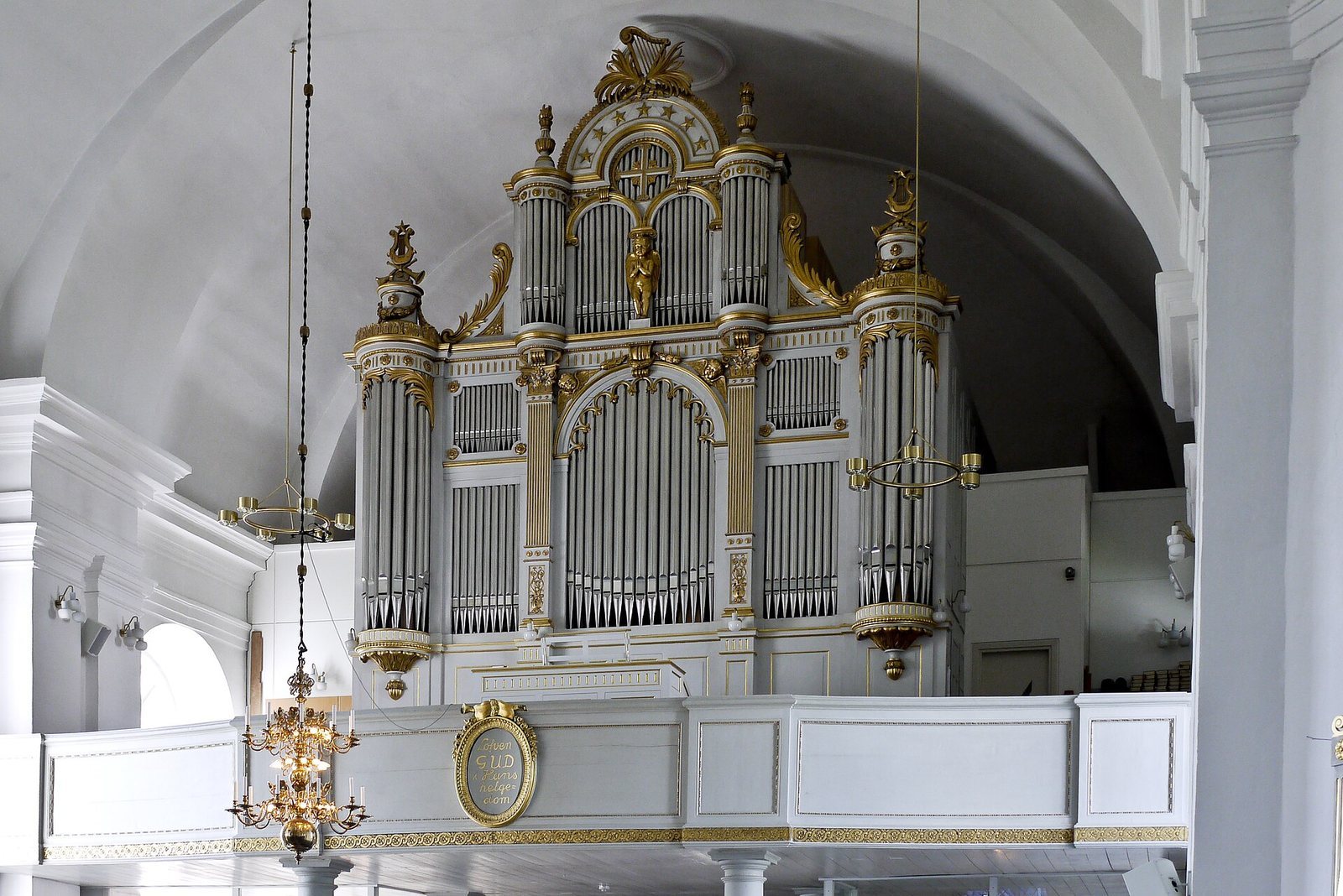
Petter Hansson Thel of Gävle installed a ten-stop organ in 1647, with two bellows. A stop controls a set of pipes. P. Qvarnström of Sundsvall built another organ in 1784. In 1872, Per Larsson Åkerman installed a mechanically operated organ with 30 stops and a front. In 1915, it gained two stops and its operation was changed to an air-pressure system.
A. Mårtenssons Organ Factory in Lund rebuilt the instrument in 1953 and 1954, retaining much of Åkerman’s material. The rebuilt organ had 59 stops, three manuals, or hand-played keyboards, and a pedal keyboard played with the feet. A 1977 renovation added a fourth manual and further stops, bringing the total to 67, and changed the mechanism from a combined electrical and air-pressure system to electric control. Grönlunds Organ Builders made the present organ in 2008, returning to the sound and technical design of Åkerman’s 1872 instrument. The work reused old pipes and three air-distribution boxes from an organ of the same construction period in Växjö Cathedral.
Remains
Plan and exterior
The church stands about 1.5 km west of Skellefteå’s center, near the Skellefte River. Its largely Greek-cross plan has four arms of roughly equal length meeting at a central crossing, where a wooden tower rises. At the gable ends, roofed porticoes supported by Doric columns sit below triangular fields. The well-preserved exterior is among Sweden’s notable examples of Neoclassical sacred architecture. The sacristy, a room used by clergy to prepare and store liturgical objects, dates from 1507. The altar originally stood at the southeastern corner of the crossing. The organ once occupied the eastern arm, where the choir is now located, and was moved to the western arm in 1915.
Interior furnishings and artworks
Medieval sculptures and carvings
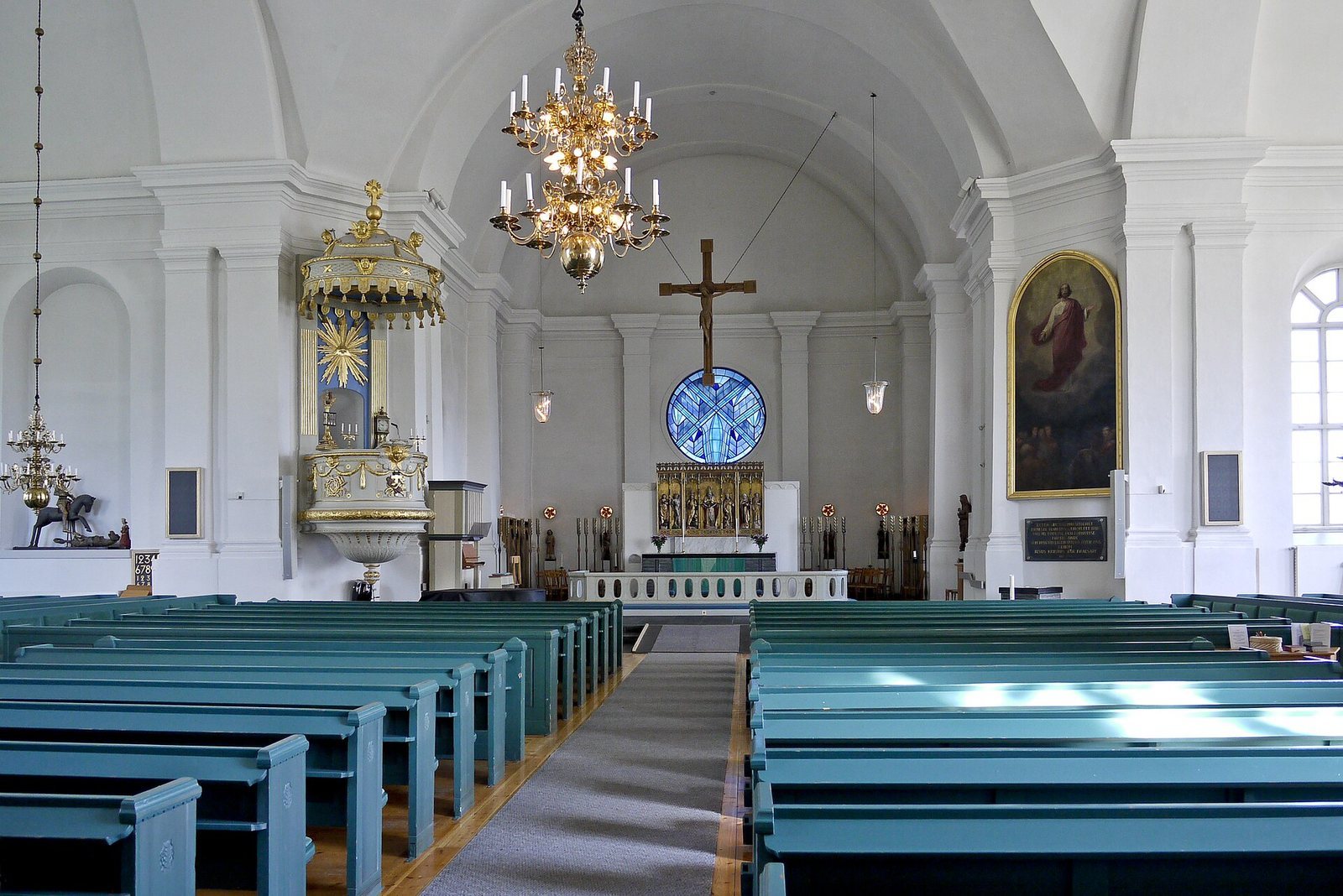
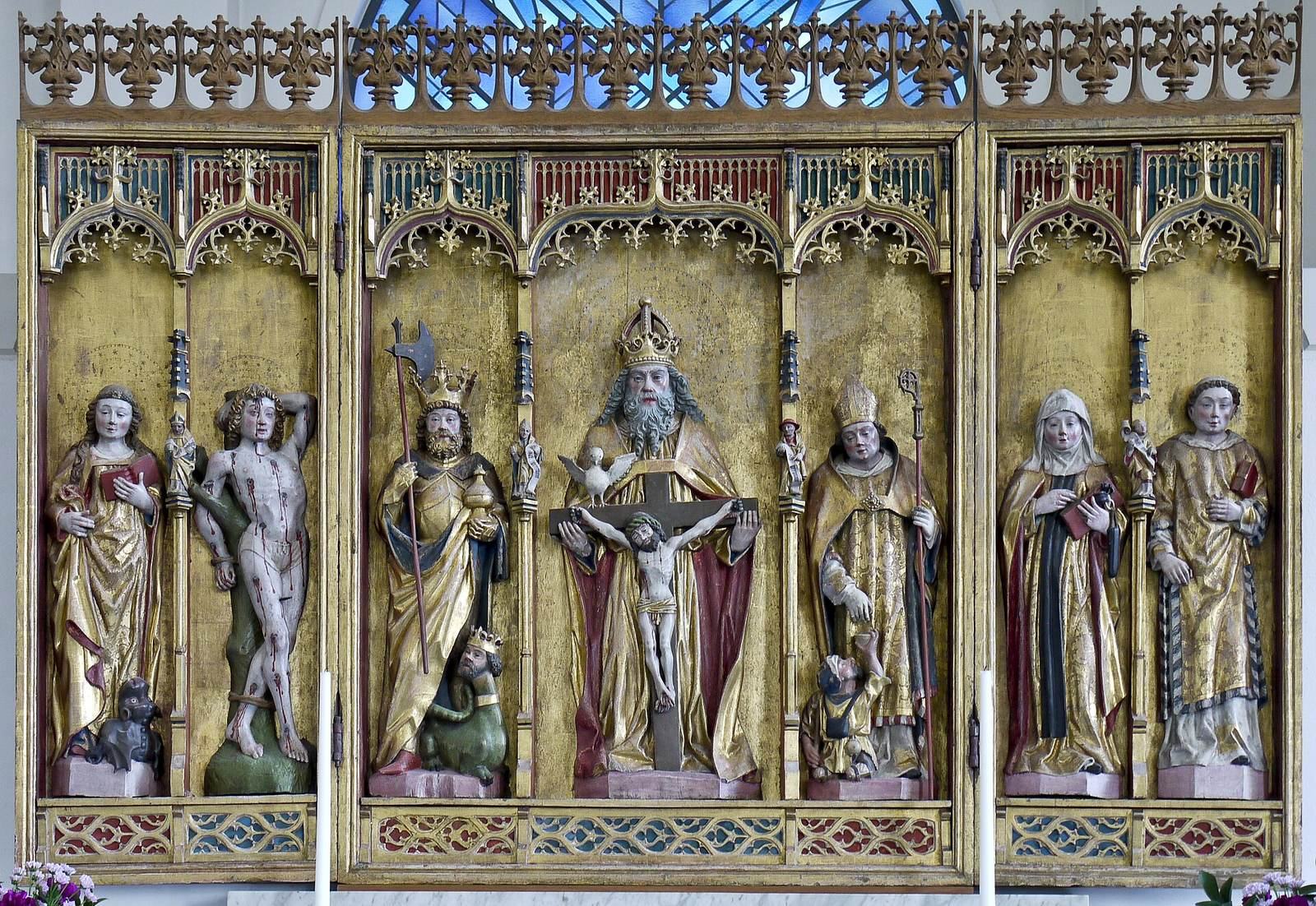
The Skelleftemadonna, a sculpture of Mary with the infant Jesus, dates to the 1160s; the figure of Jesus is missing. A fifteenth-century altarpiece depicts Saint Margaret, Saints Sebastian and Lawrence, early Christian martyrs, Saint Olaf, a medieval Norwegian king venerated as a Christian saint, Saint Martin of Tours, a fourth-century bishop, Saint Bridget of Sweden, a medieval religious visionary, and the Holy Trinity, the Christian doctrine of Father, Son, and Holy Spirit. Other medieval works include a fifteenth-century triumphal crucifix, a cross bearing the figure of Christ, and a carved Saint George and dragon in the Norrland woodcarving tradition. Saint George is traditionally associated with the dragon legend shown in the sculpture. Further sculptures depict Saint Anne, traditionally regarded as Mary’s mother, around 1500, and Mary with the child Jesus in a work from the early fifteenth century.
Altar and baptismal furnishings
The present altar, made from horizontally laid slate, dates to 1964. The slate baptismal font comes from Offerdal and refers to Titus 3:5-6. A baptismal bowl from 1964 is credited to Sven Arne Gillgren.
Ascension altarpiece
Carl Theodor Staaf’s painted altarpiece depicting the Ascension was donated in 1851 by the Clausén couple for their silver wedding anniversary. It was moved to the crossing in 1916.
Pulpit and clock
The pulpit was donated to the church in 1648. Its clock, dated 1759, is the oldest in Sweden.
Organ
The present organ has 41 stops, three hand-played keyboards, and a pedal keyboard. Its visible front dates from 1872, while its interior dates from 2008.