Santi Gervasio e Protasio Church: The Parish Church of Spirano, Italy
Site at a Glance
- Popularity
- Very Low
- Country
- Italy
- Primary era
- Early Modern
- Eras represented
- Medieval, Early Modern, Modern
- Civilizations
- Austrian Empire, Habsburg, Italian, Venetian
- Site type
- Religious
- Remains
- Church
On this page15 sections
History
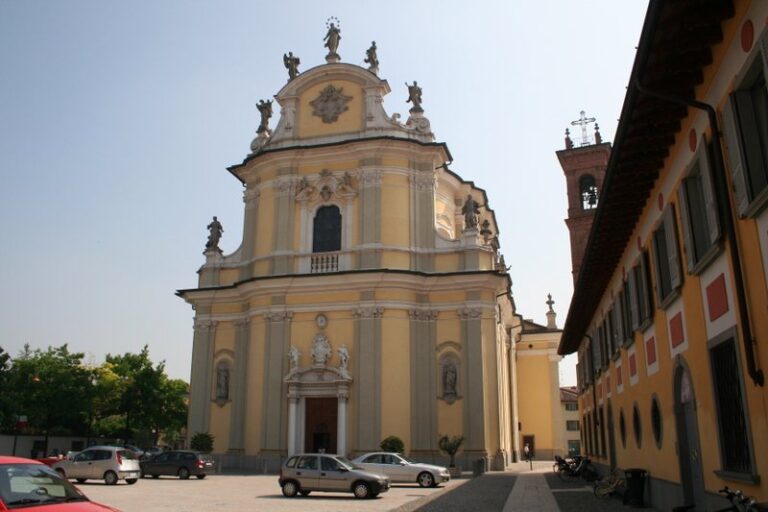
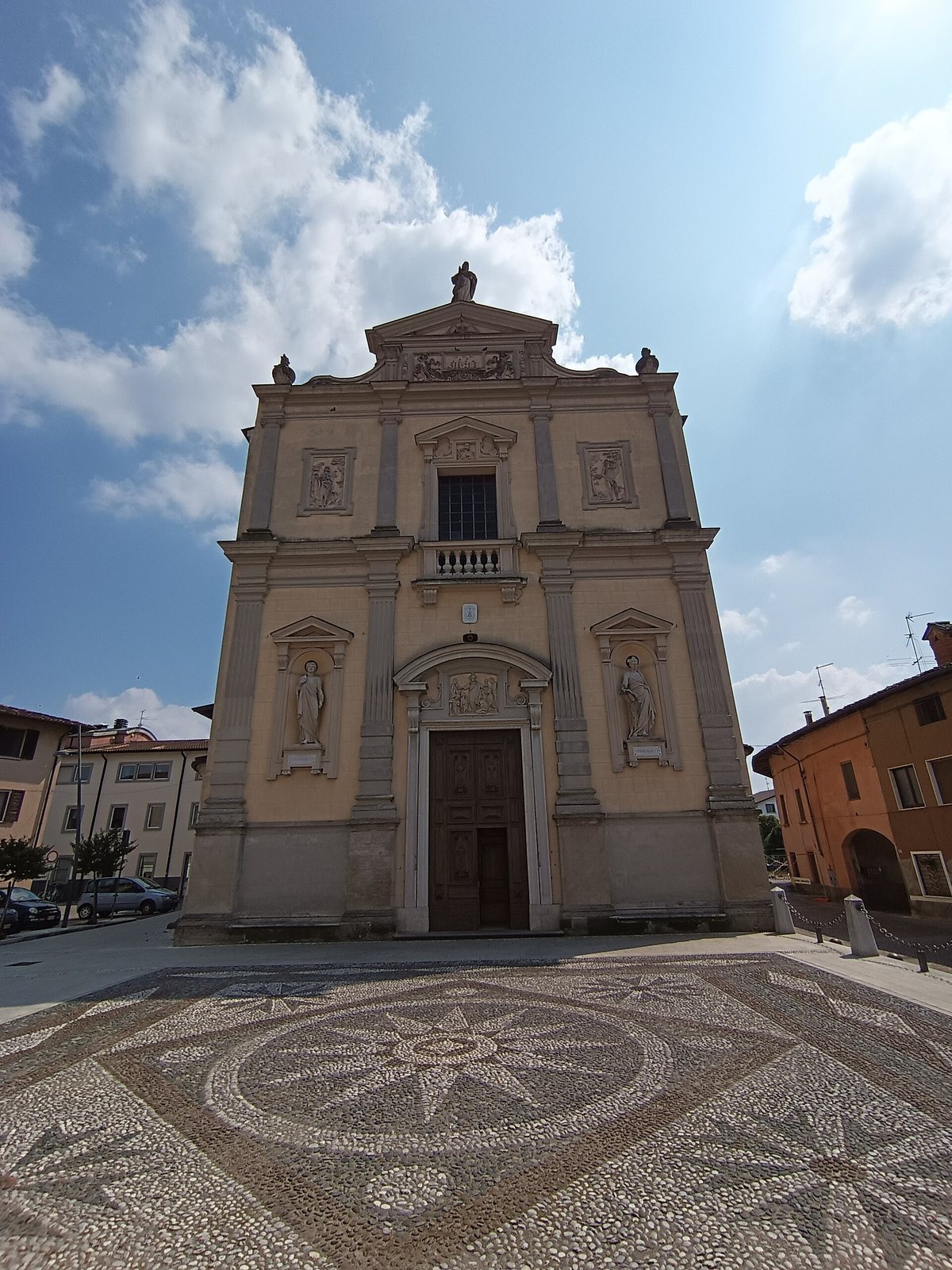
Santi Gervasio e Protasio Church is a Catholic parish church in Spirano, Italy. A church stood there by at least the 12th century, while the present building was begun in 1605, completed in 1633, and consecrated in 1667. Dedicated to Saints Gervasius and Protasius, early Christian martyrs, it has served the local Catholic community through successive changes to its buildings and ecclesiastical organization.
Medieval parish
In 1260, a church dedicated to the two saints was listed among those required to pay a due to the Holy See. It was then under the ecclesiastical jurisdiction of Ghisalba. A record from 1291 identifies Vassallo Raviccia as its rector. In 1360, a church revenue and tax survey commissioned by Bernabò Visconti, lord of Milan, again placed it under Ghisalba’s jurisdiction.
Rebuilding and the 17th-century church
The church was rebuilt in the 15th century. During a pastoral visit in 1575, Charles Borromeo, archbishop of Milan and a major Catholic reformer, found a parish of 676 faithful.
Work on a new parish church began with the laying of its foundation stone on 21 April 1605. The building was completed in 1633 and consecrated on 3 September 1667 by Daniel Giustiniani, Bishop of Bergamo.
Parish development
From 1734, the church headed a vicariate, a grouping of parishes within a diocese. Bishop Marco Molin raised it to the status of a provost church, one headed by a provost, on 9 February 1776. The parish counted 1,460 faithful at the beginning of the 19th century and 1,976 in 1861.
In 1971, Spirano’s Catholic parish became part of Pastoral Zone XVII, a diocesan grouping. In 1979 it was incorporated into the newly formed Spirano-Verdello vicariate.
Remains
The church’s interior includes chapels and altars with painted and sculpted decoration, as well as an organ with a decorated outer case. Its bell tower contains a bell chamber supported by a wooden structure.
Bell tower
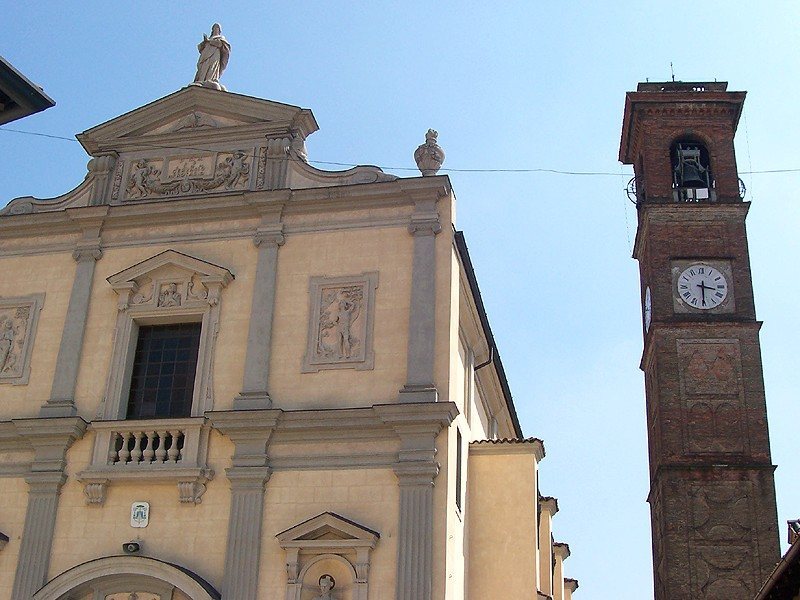
At the church’s 1667 consecration, the bell tower was considered unsafe and in poor condition. After nearly a decade of appeals, work began and was completed in 1681. The bell chamber first held three bells, with a fourth added in 1703. The arrangement was reconstructed in 1772; bells bear manufacture dates of 1773 and 1784. Repairs to the damaged wooden bell supports began in 1845, but the problem returned and the tower was rebuilt. It reached its final arrangement in the second half of the 19th century. During the Second World War, the two smallest bells were lowered. In 1950 they were replaced by the great bell and the sixth bell; in 1961 the peal was recast and another bell added.
Interior furnishings and artworks
High altar
The earlier Baroque altar, in a style associated with dramatic forms and ornament, gave way to a Neoclassical altar, drawing on classical antiquity. In the early 1950s, that altar was dismantled and replaced with an all-marble one. Its gilded tabernacle door was the only part retained. Giuseppe Piazzi, Bishop of Bergamo, consecrated the new high altar in 1954.
Altar of Our Lady of Patronage
One chapel altar combines antique green and yellow marble, African breccia, and Carrara statuary marble. White-marble figures of John the Evangelist, traditionally identified as an apostle and Gospel author, and Moses, an Israelite prophet and lawgiver, stand before the columns supporting the arch. Seated statues of Esther, a Jewish queen in the Hebrew Bible, and Judith, the heroine of a book in the Catholic tradition, occupy the outer corners of the pediment. Above a central statue of Mary holding Jesus is an inscription meaning “I will protect you with my right hand,” framed by two floral garlands. The title Our Lady of Patronage invokes Mary’s protection.
Saint Sebastian altar
Built around 1835 and formally approved on 6 May 1837, this altar has a central painting of the martyrdom of Saint Sebastian, an early Christian martyr. Pairs of columns in red Verona marble flank the painting.
Redeemer altar
Built and approved in 1839, this altar has a central painting of the Redeemer with Mary and Saint Anne, traditionally identified as Mary’s mother. Statues of Saint Joseph, traditionally regarded as Mary’s husband, and Saint Joachim, her father, stand on either side.
Chapel of Our Lady of Sorrows
Between 1846 and 1857, an altar formerly dedicated to Saint John the Baptist was modernized and rededicated to Our Lady of Sorrows. The chapel’s central wall holds an altarpiece of Our Lady of Sorrows, while the side walls carry paintings of Saint Anthony of Padua, a Franciscan preacher, and Saint Lucy, an early Christian martyr.
Altarpiece of Saints Gervasius and Protasius
Francesco Polazzo painted the altarpiece depicting the martyrdom of the church’s patron saints in 1743.
Commemorative plaque
A black-stone plaque inside the church commemorates the townspeople’s construction of the building and its consecration. Its inscription calls for the anniversary to be observed each year.
Organ
The organ present when the church was consecrated was soon replaced. The successor instrument was refurbished and tested in 1830, then restored again in 1890–91. Its outer housing is decorated.