Vladimirskaya Tower: A Defensive Passage in the Novgorod Kremlin
Site at a Glance
- Popularity
- Low
- Country
- Russia
- Primary era
- Medieval
- Eras represented
- Medieval, Early Modern
- Civilizations
- Novgorod Republic, Russian
- Site type
- Military
- Remains
- Tower
On this page5 sections
History
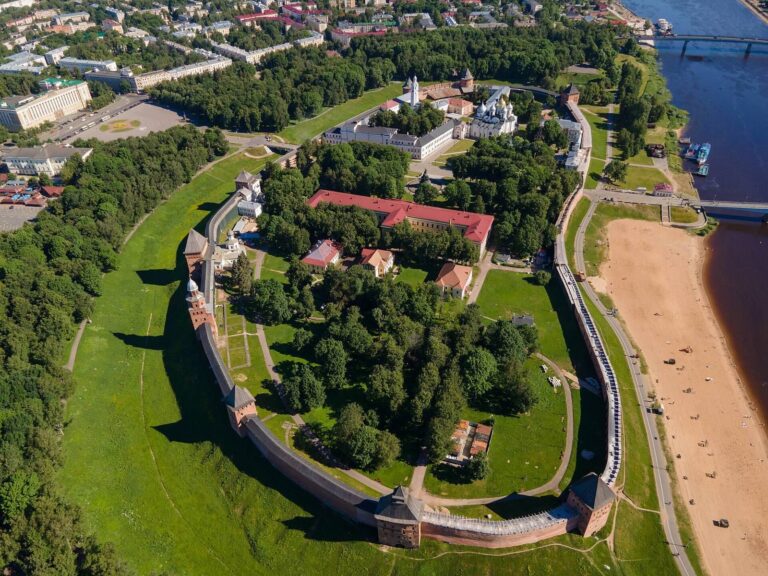
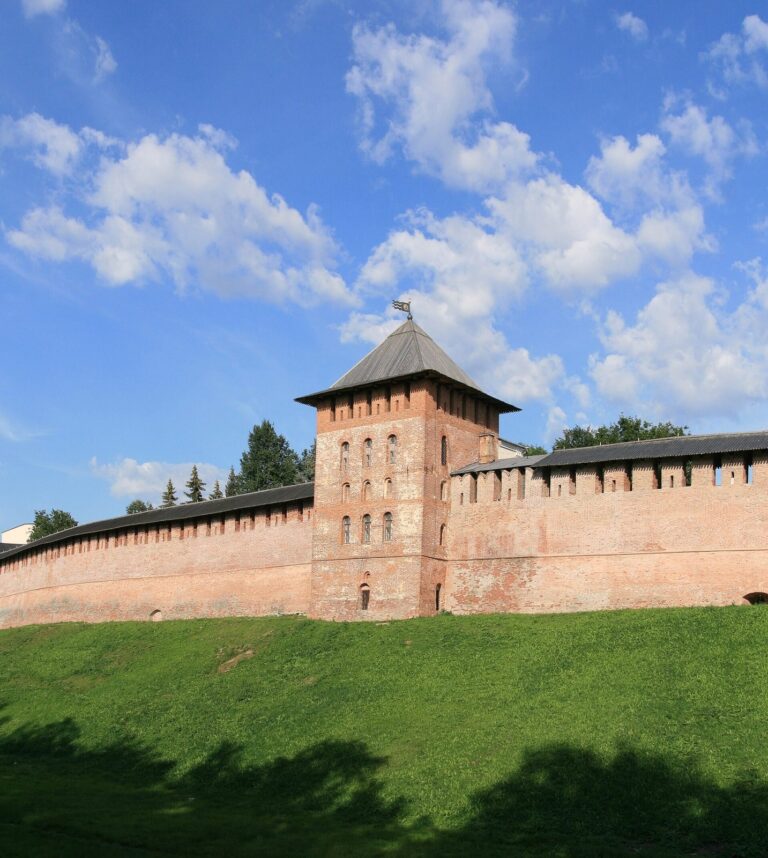
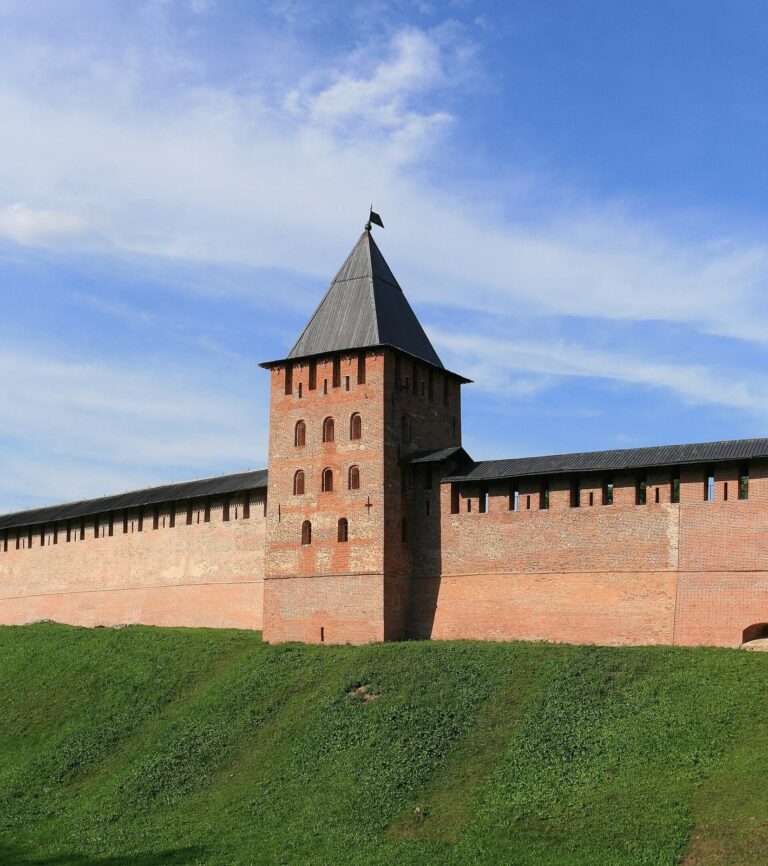
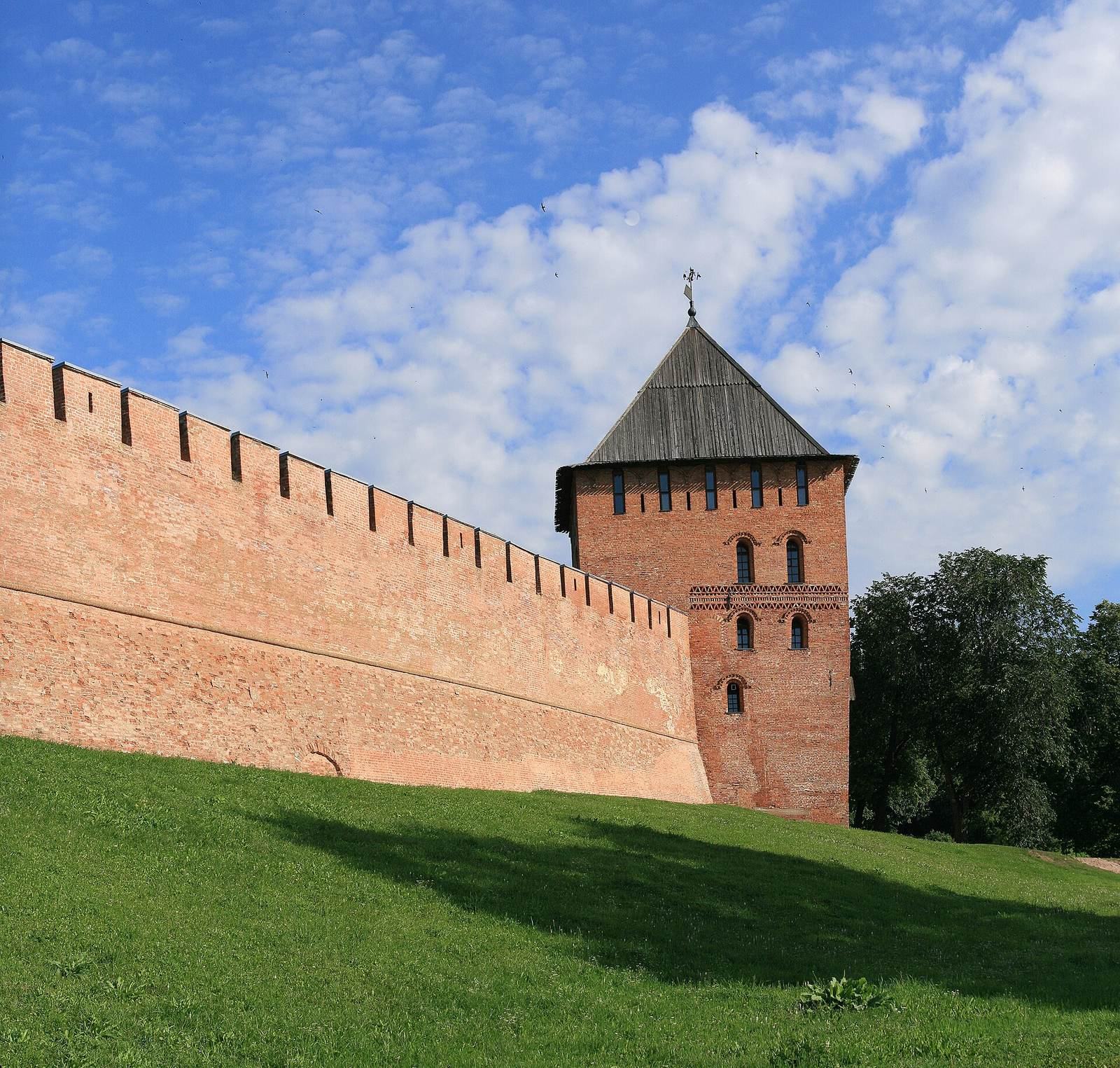
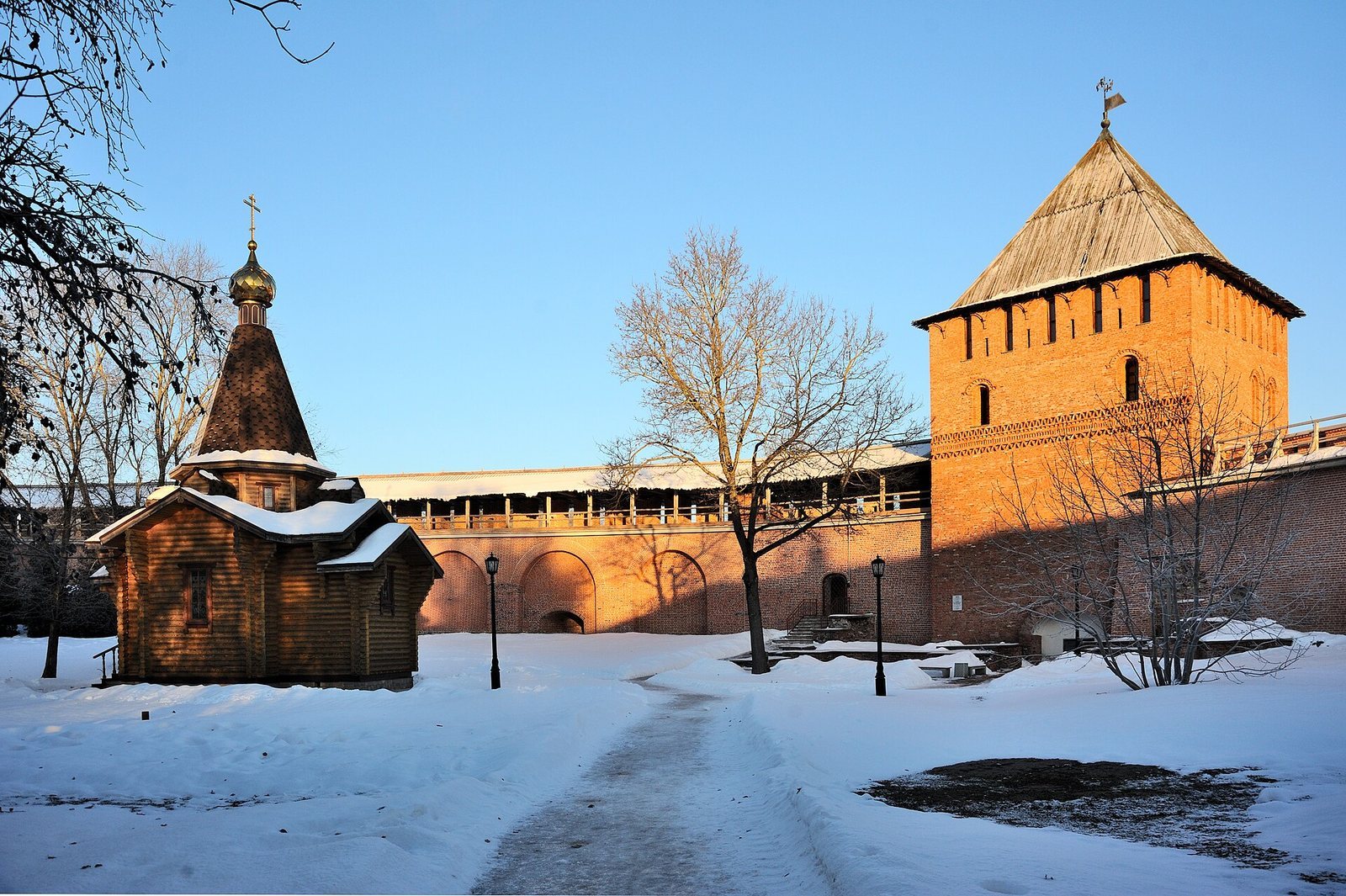
The Vladimirskaya Tower is a late-fifteenth-century defensive passage tower in the northeastern part of the Novgorod Kremlin in Veliky Novgorod, Russia. It stands on earlier foundations and provided a road through the Kremlin rampart.
Medieval origins and use
The tower takes its name from a gate church built in 1311 on the order of Archbishop David, Novgorod’s senior bishop. A road through the tower led toward Nerevsky End, a historic district on the Sofia Side of Novgorod. Before the tower was built, the route from the Kremlin passed through Fedorov Tower.
In 1461, Archbishop Iona ordered the Vladimir gate church rebuilt and a communal dining room added. The tower was probably rebuilt around the same time. A painting of St Nicholas the Wonderworker, an early Christian bishop revered as a saint in Eastern Christianity, was placed on the exterior in the sixteenth century, giving the tower the alternative name St Nicholas Tower. Its defensive openings were altered during that century and again in the 1660s.
Later alterations and restoration
The tower was repaired in the late eighteenth century. The church’s attached dining room was taken down, and a two-storey St Nicholas Chapel was built in its place. A passage connected the chapel with the Bishop’s Garden and the Volkhov River.
The tower suffered serious damage during the Second World War. From 1959 to 1961, a restoration returned it to its fifteenth-century form. The chapel was dismantled, lost upper levels were rebuilt, and work begun in the 1930s to strengthen the foundations was completed, preventing further subsidence. The Novgorod Kremlin ensemble received state protection in 1960 and was added to UNESCO’s World Heritage List, which recognizes places of outstanding cultural or natural importance, in 1992. The tower is also a federal cultural heritage site.
Remains
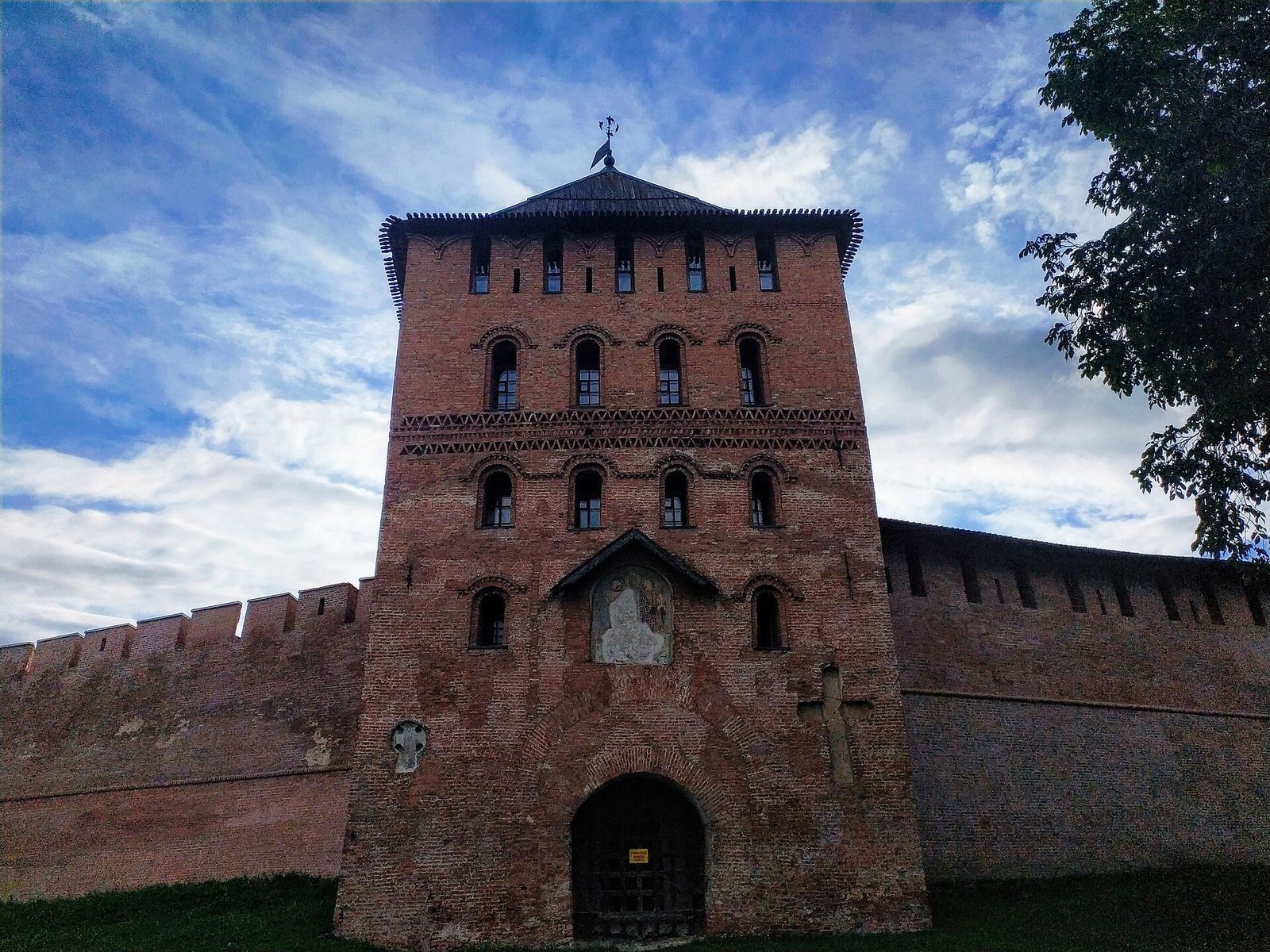
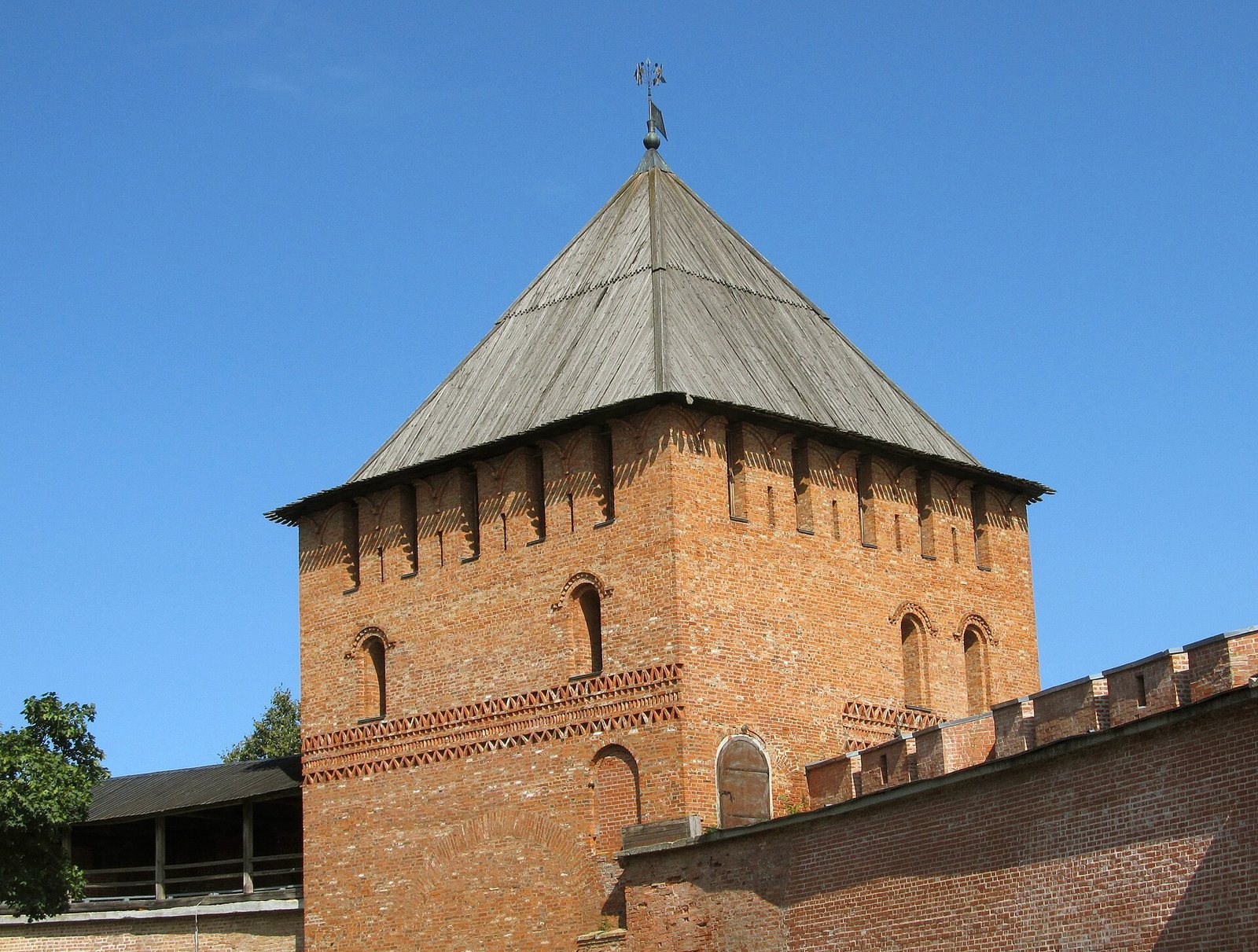
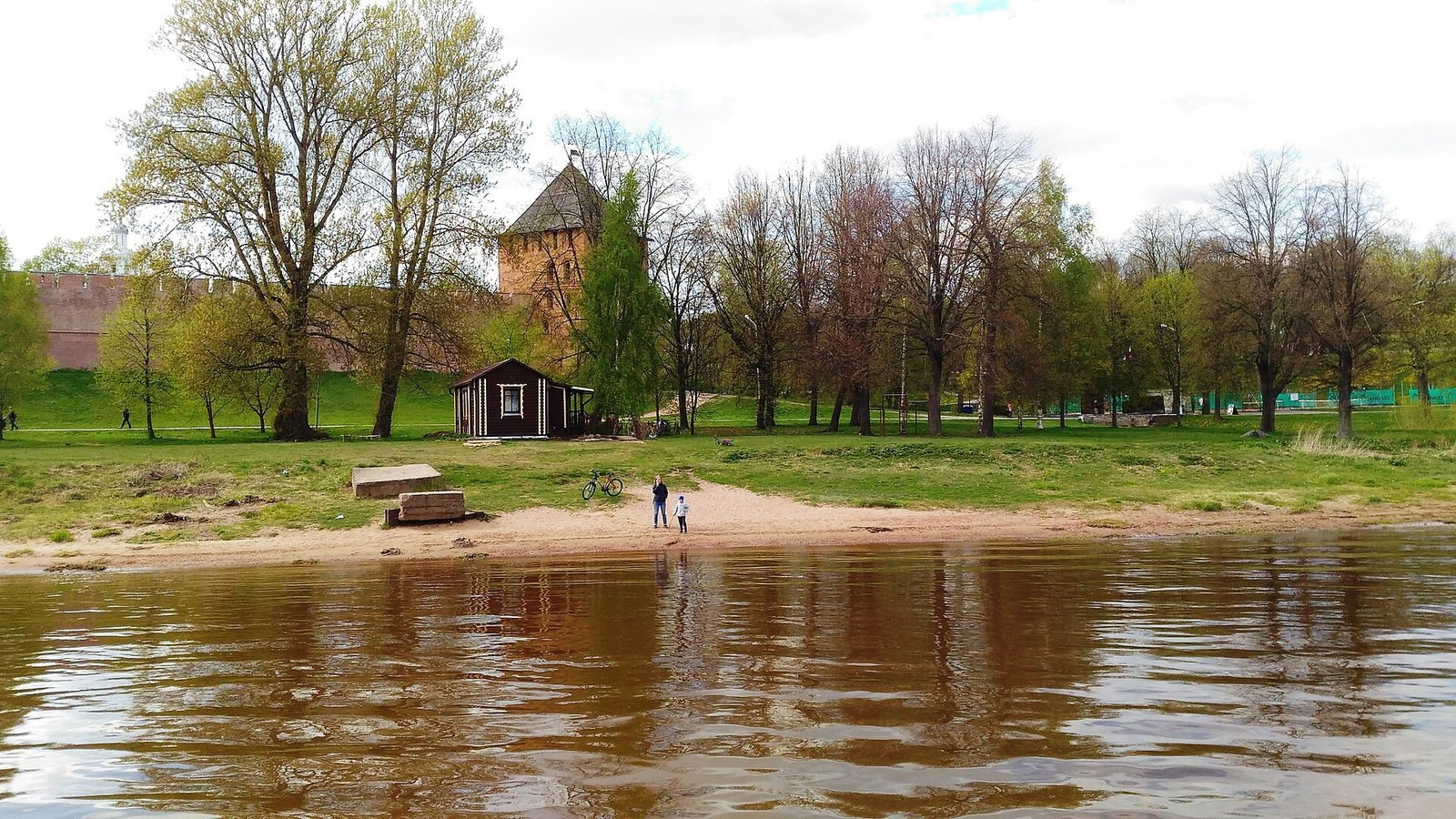
The five-tiered tower occupies the Kremlin rampart beside the Volkhov River. Its four-sided plan measures about 12.8 by 13 metres. The total height is 27.8 metres, including a 10-metre tent roof, a steep roof that narrows toward its peak. The structure reaches 17.8 metres to the battlements, and its walls are two metres thick at the second tier.
Passage and defensive features
A fresco, a wall painting on plaster, depicting St Nicholas survives above the passage on the eastern façade. Two stone crosses flank the opening. The larger cross to the north bears an inscription stating that Simeon, a monk of Arkazh Monastery, erected it in the second quarter of the thirteenth century. The southern cross dates to the sixteenth or seventeenth century.
On the Kremlin-facing west side, an arch was formed after the adjoining gate church was destroyed. The tower’s fifteenth-century defensive openings have brick arches around their upper sections. Their shape resembles windows and differs from the openings in the Kremlin’s other towers.