Syandem Dormition Hermitage: An Orthodox Monastery in Karelia
Site at a Glance
- Popularity
- Medium
- Country
- Russia
- Primary era
- Early Modern
- Eras represented
- Early Modern
- Civilizations
- Russian
- Site type
- Religious
- Remains
- Monastery
On this page13 sections
History
Syandem Dormition Hermitage is an Orthodox monastery near Syandeba in Karelia, Russia, founded in the second half of the sixteenth century as a men’s community. Its name refers to the Dormition, the Orthodox observance of Mary’s death and assumption into heaven. The founder, Athanasius of Syandem, was a disciple of Alexander of Svir, a revered Orthodox monk, and established the monastery with the blessing of Pimen, archbishop of Novgorod, a senior church official.
Foundation and early history
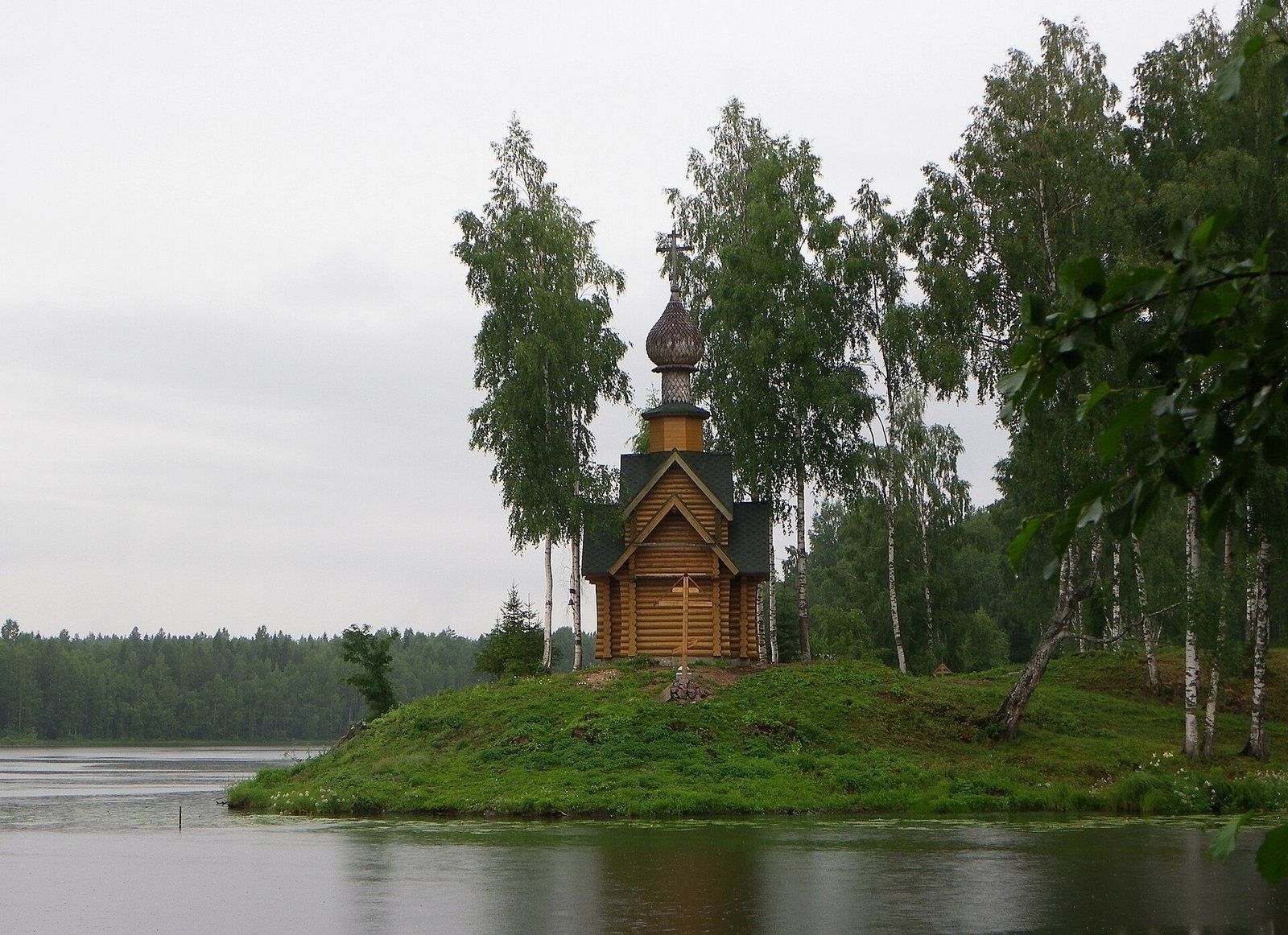
Local residents disputed the monastery’s claim to its lands, arguing that they belonged to the estate of the archbishop of Novgorod. Athanasius temporarily moved to Alexander of Svir Monastery. In 1577, a land-grant charter issued by Metropolitan Alexander of Novgorod, a senior bishop, secured the monastery’s holdings. Athanasius returned and remained there until his death. He was buried on a cape of Roshchinskoye Lake.
In 1582, Swedish forces attacked the monastery during the Livonian War, a conflict over Livonia involving Russia and neighboring powers, including Sweden. The attackers burned the Trinity church and killed the newly appointed abbot. By 1628–1629, the church had been rebuilt, and the monastery maintained a small community and a livestock yard.
Closure and restoration
The monastery burned in 1720 and was rebuilt. Three years later, the Andrusov and Zadne-Nikiforov hermitages were attached to it. In 1764, Catherine II’s secularization reform, which transferred church lands and institutions to state control, brought the monastery’s activities to an end.
In 1802, the churches of the closed monastery were assigned to Tuksinsky parish church; in 1821, they were assigned to Andrusov Monastery, enabling monastic life to resume. Abbot Innocent of Valaam Monastery, an Orthodox center on Lake Ladoga, helped fund the restoration and obtained land for the community from the Committee of Ministers in 1827. That year, Emperor Nicholas I provided money to rebuild the Dormition church. Countess Anna Orlova-Chesmenskaya paid for improvements to its sacristy, the room where church vestments and sacred objects are kept. Innocent acquired a Vladimir icon, a painted devotional image of Mary and the infant Jesus. In 1852, the monastery received an icon of Sergius and Herman of Valaam, revered in Orthodox tradition as wonderworkers.
From men’s to women’s monastery
In 1879, the community had nine monks and held 75 desyatinas, a traditional Russian measure of land. The monastery became independent in 1902. Because its income remained modest, it was converted into a women’s monastery in 1909. The women’s community aimed to educate the local Karelian population; 18 people lived there in 1911.
Revolution, wartime destruction, and revival
The monastery closed after the 1917 Revolution, and its land and property passed to a livestock state farm. Some of the sisters joined an Orthodox community in Syandeba. The church of Saints Athanasius and Cyril closed in 1939 and was transferred to the Nurmolsky rural council for use as a club.
During the Soviet-Finnish War of 1941–1944, fought between the Soviet Union and Finland, the front line ran near the monastery and its buildings were destroyed. The community was later revived as an active women’s monastery within the Russian Orthodox Church’s Petrozavodsk Diocese. In 2014, the remains of three Soviet soldiers killed during the war were found on the grounds and reburied there. The monastery is a cultural heritage site of federal significance in Russia.
Remains
Near Syandeba, the monastery lies by Roshchinskoye and Syandebskoye lakes. Its buildings have included timber churches and cells, as well as a stone church. The earliest church and cells stood on the shore of Syandebskoye Lake.
Early monastic layout
The original wooden Trinity church stood with eight cells that housed ten monks. By 1628–1629, the rebuilt church was accompanied by three cells, occupied by the monastery’s builder Joseph and seven elders, and by a livestock yard.
Churches and devotional features
Trinity church
The wooden Trinity church was rebuilt in the early seventeenth century after its destruction in the 1582 attack. A wooden Trinity church was reconstructed at a different site in the mid-2000s.
Church of Saints Athanasius and Cyril
A stone church dedicated to Saints Athanasius and Cyril, two early Christian leaders of Alexandria revered as saints in Orthodox tradition, replaced an earlier wooden church that burned in 1720. During construction, Athanasius’s remains were found and placed beneath a covering. When the church was rebuilt in 1865, they were placed beside the wall behind the right-hand choir area, the section used by singers. The church was destroyed during the Second World War.
Dormition church and chapel
The wooden Dormition church had a porch and a bell tower. A separate wooden Dormition chapel also stood at the monastery in the early twentieth century.
Icons
The Vladimir icon of Mary and the infant Jesus had a silver covering. Another devotional image depicted Sergius and Herman of Valaam.
Revived monastery
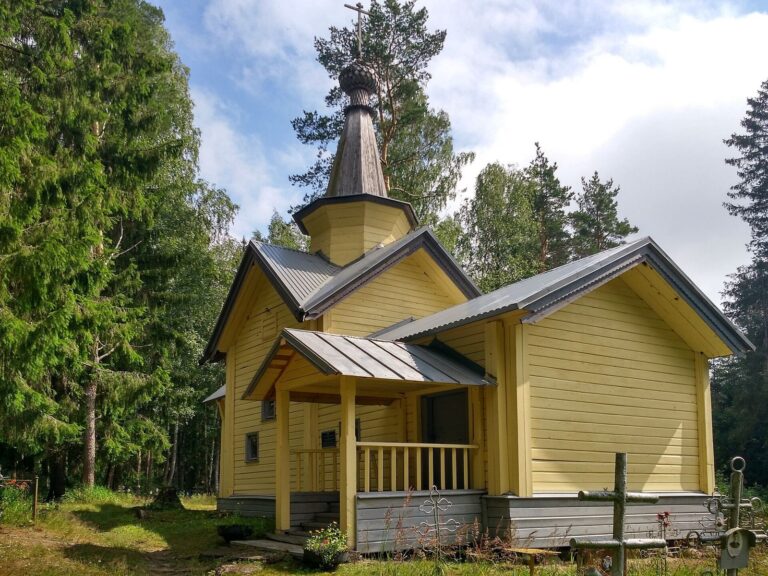
The revived monastery has a wooden Trinity church, along with residential and service buildings. In 2013, Metropolitan Manuel of Petrozavodsk and Karelia consecrated the foundation of a new Dormition church, then under construction.