Kanozero Petroglyphs: Ancient Rock Carvings on Russia’s Kola Peninsula
Site at a Glance
- Popularity
- High
- Country
- Russia
- Primary era
- Bronze Age
- Eras represented
- Stone Age, Bronze Age, Modern
- Civilizations
- Russian
- Site type
- Civic
- Remains
- Rock Art
On this page23 sections
History
The Kanozero Petroglyphs are rock carvings on islands in Lake Kanozero and a coastal rock on Russia’s southwestern Kola Peninsula. A petroglyph is an image engraved or pecked into rock, with repeated strikes used to make a pecked design. The carvings are generally dated to the third and second millennia BCE and are interpreted as expressions of hunter-fisher-gatherer beliefs and lifeways over an estimated 600 to 800 years.
Discovery and documentation
People living in the area knew of the carvings before archaeologists began investigating them. On 5 July 1997, expedition member Yuri Ivanov found carvings on Kamennyi Island during a journey organized by the Revda local-history museum. A survey in 1998 recorded 250 images across three islands and at Odinokaya rock. The Kola Archaeological Expedition returned in 1999, 2002, 2005, and 2007; its 1999 work identified 400 figures. Researchers involved included V. Likhatchev, Evgenii Kolpakov, Vladimir Shumkin, Väino Poikalainen, and Abram Stoljar. The University of Tromsø joined a documentation expedition in 2005.
Kolpakov’s 2009 review counted 1,140 figures in 18 groups. By 2014, more than 1,000 carvings had been documented across the islands and coastal rock. The site now comprises about 1,300 images in those 18 groups.
Dating and interpretation
The images’ meanings remain undeciphered, although some groups appear to arrange figures into sequences. Their dates are usually estimated from style and subject matter. Shoreline changes are less useful for dating: land uplift, the gradual rise of the ground as the Earth’s crust rebounds after the weight of ice is removed, has altered the local landscape during the Holocene, the current geological epoch that began about 11,700 years ago.
Norwegian archaeologist Jan Magne Gjerde proposed that carving began around 3700 BCE. He compared the Kanozero images with rock art beside the Vyg River, dated to 3700–2500 BCE. Similar boats and whale-hunting scenes have led to the suggestion that communities around the Kola Peninsula and Vyg River may have been in contact. Kanozero carvings also resemble rock art at Alta, Nämforsen, and the Ponoi River, as well as Finnish rock paintings. Their closest parallels are at Vyg, while the carvings at Onega differ most.
The end of the carving period is uncertain. Elk images in the Kamennyi-7 group have been compared with large elk figures at Old Zalavruga, dated to 2500–2000 BCE. Shumkin also suggested that some Kanozero images could be only a few hundred years old.
Protection
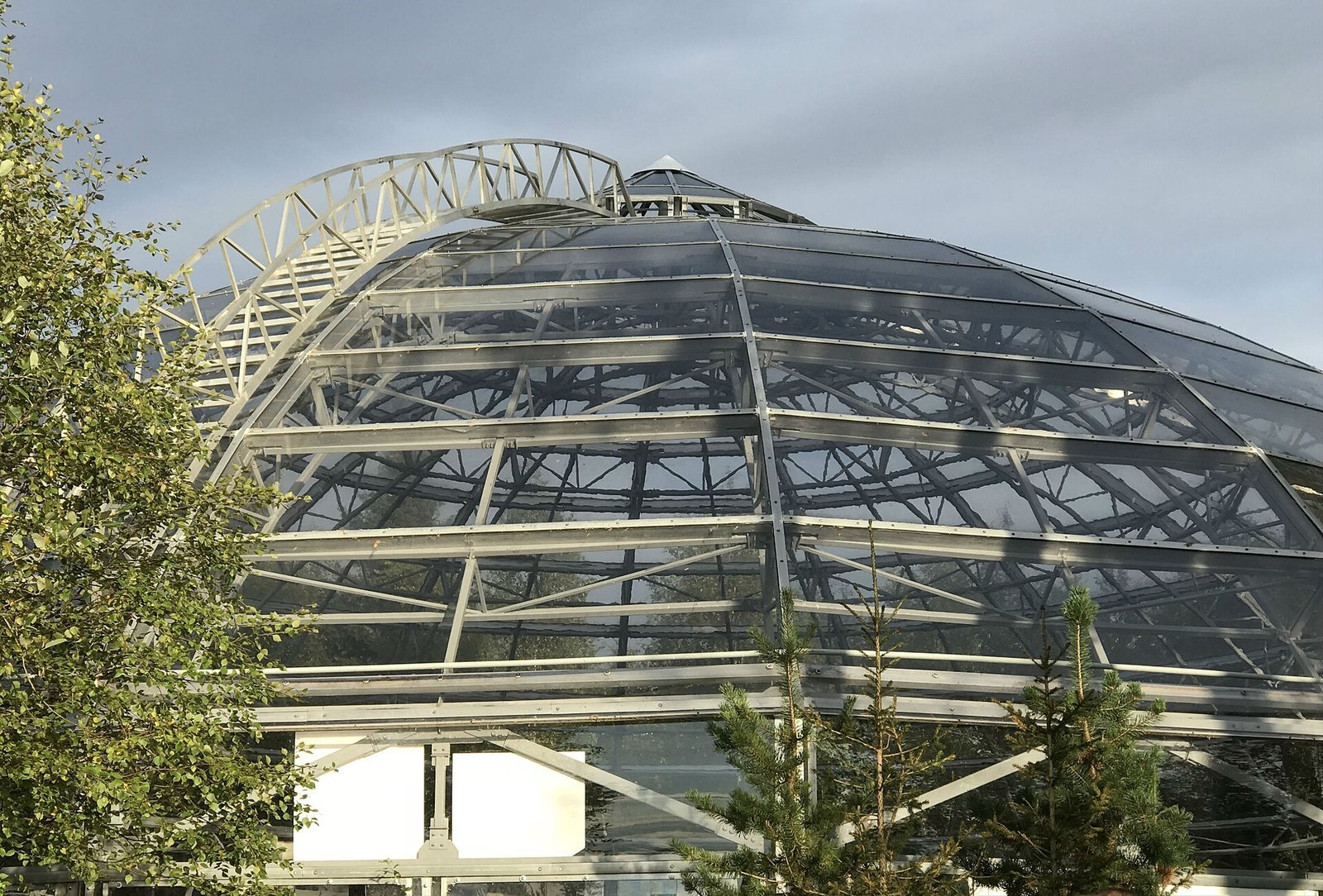
Before the islands were protected as a natural and historical monument, tourist routes crossed the area. Visitors scratched inscriptions into the rock, bringing the carvings close to destruction. A transparent protective dome was erected over the images in December 2014. In 2020, the site was designated a cultural heritage property of federal significance.
Remains
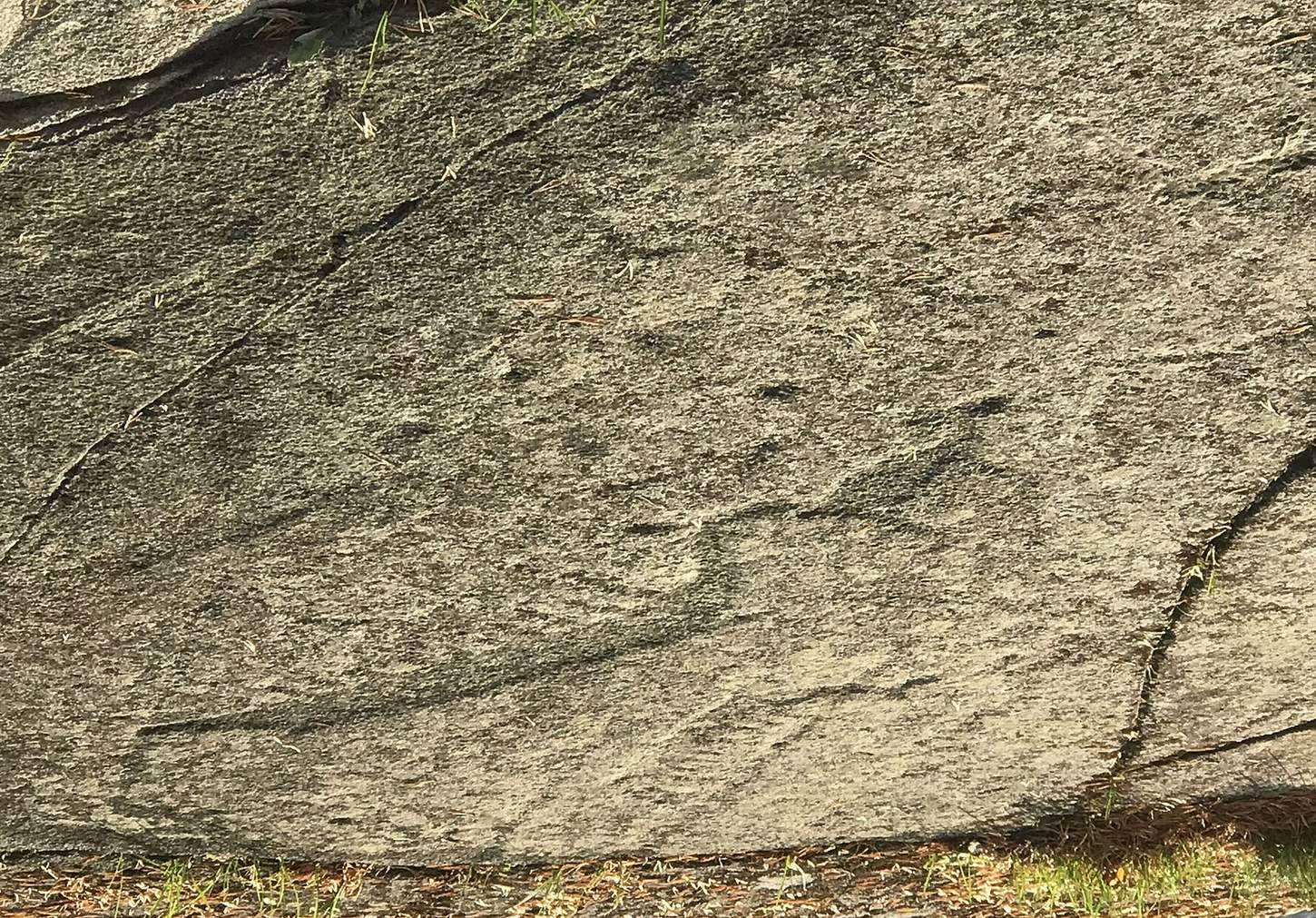
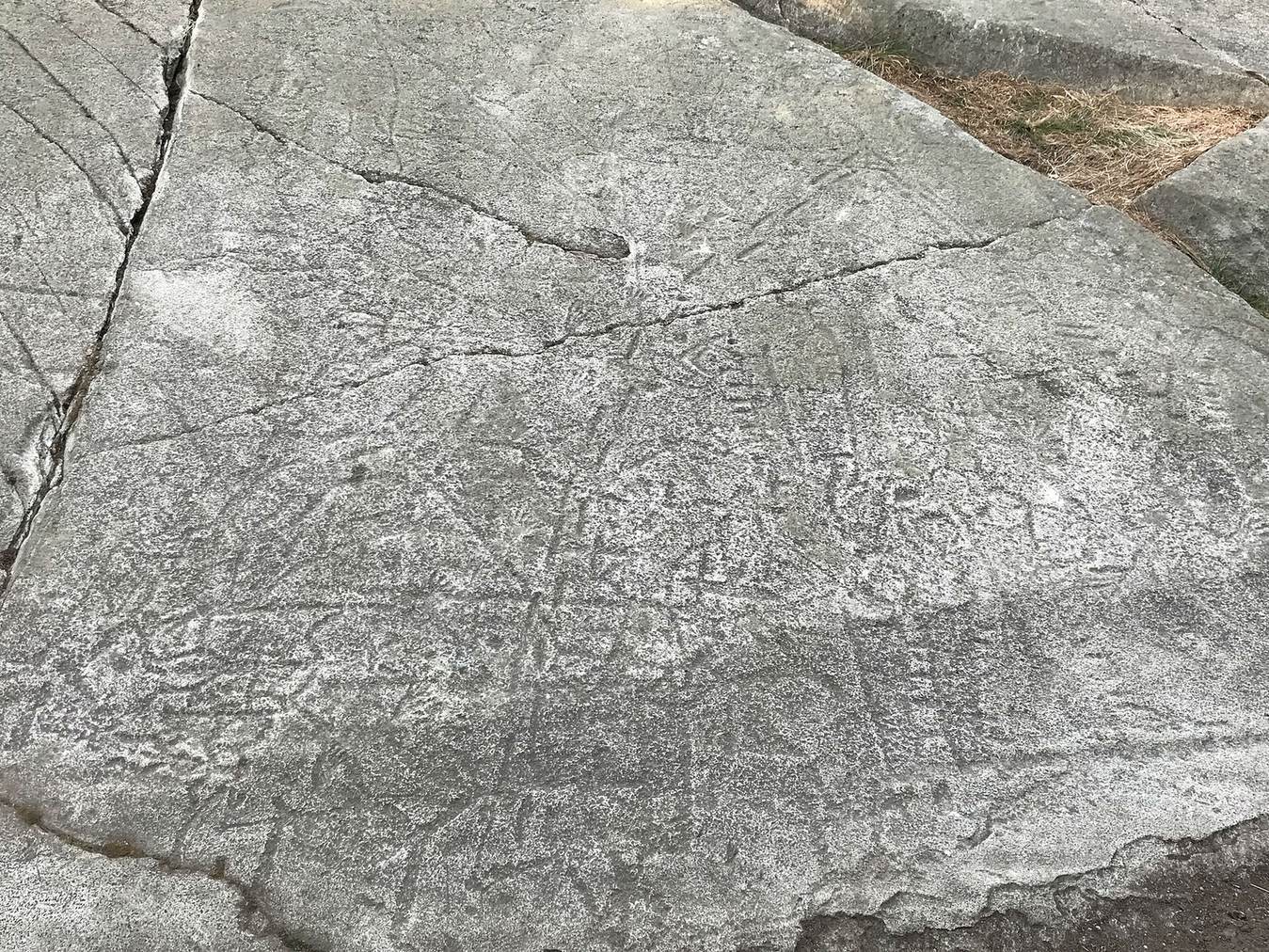
The carvings occupy exposed bedrock, where repeated striking and, in some cases, long engraved lines form images of people, animals, boats, and tracks. Some later figures were pecked across older, weathered designs; carvers also incorporated natural grooves in the rock into their compositions. Waves and spring ice have worn many of the panels.
Island and shoreline setting
The groups are spread across Kamennyi, Elovyi, and Gorelyi islands, as well as Odinokaya rock. The Umba River enters Lake Kanozero from the north, and Odinokaya lies about 3 km south of its mouth. Kamennyi Island is about 4 km from the mouth of the Muna River; Elovyi and Gorelyi lie beside one another about 6 km south of Kamennyi. Of the 18 groups, seven are on Kamennyi, six on Elovyi, four on Gorelyi, and one at Odinokaya. The panels average about 53 m above sea level. Because of land uplift, that elevation was a shoreline about 8,600 years ago. Carvings occur near the present lake edge and on higher surfaces 4.3–8 m above the water. Local geologists have proposed that the lake once fell about 4 m after sudden erosion at its outlet. If so, the higher panels at Elovyi-6 and Kamennyi-1, -2, -3, and -7 may predate the change, while other panels may postdate it.
Elovyi Island
Low and marshy, Elovyi measures about 300 by 300 m. Its rocky outcrops form a narrow strip along the northwest shore, where six groups contain 279 carvings.
Elovyi-1
The southernmost panel near the island’s western end covers 16 by 8 m and contains 71 figures, including boats, whales, elk or reindeer, and human-like forms. The images appear as separate figures rather than a recognizable narrative. Two people hold staffs, one resembling an elk’s head and another held at its center like a bow; the figure with the bow-like staff also has horns. Other carvings include a long-tailed figure that may combine human and lizard features, a damaged figure with a ring-shaped head, and a cross enclosed by a line. A circle with a thick central dot and a staff-like form with a widened or ring-shaped end also appear. The cross has parallels at Kåfjord in Norway, while the staff-like figure resembles some forms at Onega.
Elovyi-2
Twenty-six metres north of Elovyi-1, this 2-by-4-metre surface lies where waves wash over it. Water and ice have worn the rock, and some carvings may have been eroded. Its 135 closely spaced images include boats, people, whales, elk or reindeer, and a cross-like design similar to one on Elovyi-1. Two carving methods appear together: some images are made from long lines and curves, while others are pecked more fully. The line-based figures occupy a small central area surrounded by the more fully pecked images, a layout compared with rock art at Amtmannsnes in Norway. Seven scenes show whale hunting, with a line running from a boat to a whale. Boats carry two to four people; some may have elk-head ornaments at both ends.
Elovyi-3
At the island’s northern tip, a smooth, low rock slopes toward the water and has been polished by waves and ice. Fifty-three scattered carvings extend across about 17 m. Three wheel-like figures, each with a ring-shaped hub and five to ten spokes reaching an outer rim, lie less than a metre apart.
Elovyi-4
South of Elovyi-3, this panel is about 6 m wide and 0.2 m above the water. Its five carvings include a deer, three abstract forms, and a large human figure with highly stylized limbs and emphasized sexual features.
Elovyi-5
On a narrow rock point beside Elovyi-1, this small panel has three images: a deer, a possible bear, and a person skiing.
Elovyi-6
Set on a higher slope, 19 m above Elovyi-2, this 2.5-by-2.5-metre panel has 12 figures, including a deer, a person, a boat, and geometric forms. The boat has an elk-head prow and a crew of 11. A human figure with five fingers has a phallus.
Kamennyi Island
Higher than the other islands, Kamennyi extends northwest to southeast and measures about 330 by 130 m. A long, narrow peninsula projects from its southeastern end. Its 669 carvings are concentrated mainly at the western end, in seven groups.
Kamennyi-1
About 8 m from the water, this panel measures 17.5 by 6.5 m and lies 4.5–5.3 m above the lake. Its 87 carvings include human-like figures, animals, birds, boats, and depictions of people, arranged in four denser clusters. In the northern cluster, four large boats carry crews of about four to eight. Three large footprints with five toes lie between them, with six smaller impressions resembling snowshoes below. The tracks lead toward other figures and a five-fingered handprint. Farther north, a skier raises a spear or bow; the figure has an unusually large hand and an exaggerated phallus.
Other clusters bring together a cross like the one at Elovyi-1, a person reaching for an animal’s tail, and outlined human figures marked by lines or dots across the abdomen and between the legs. A smaller southern group includes five boats in different positions and a reindeer. The largest boat has an elk-head form and 11 crew members; a person at the front reaches forward with what may be a rope or spear. In the southernmost cluster, one whale swims toward two people, while four boats follow four whales. Other figures show a person fishing for a large fish from a boat followed by four birds. Spherical forms are carved between some figures.
Kamennyi-2
At the water’s edge, this group consists of a human figure and a half-metre-high spirit-like image. The latter has a hole in its abdomen and a four-pointed crown in place of a head.
Kamennyi-3
This 15-by-4-metre panel lies on a smooth, convex rock 8 m from the water, with carvings 4.3–6.5 m above the lake. Its 73 figures include people, animals, boats, and depictions of people. A trail of footprints runs about 7 m from the panel’s lower edge toward carvings on the rock’s top; it appears to pause twice and ends beside two pairs of prints. Boats encircle whales, and two scenes show a harpoon cast from a boat into a whale. Four same-sized deer walk in a line. Among the unusual human-like figures are one with a ball inside a hole in its head, two with heart-shaped heads, and a large figure with a tail.
Kamennyi-4
Nine metres from the water, this group includes a ring and five footprints leading to a long-tailed human-like figure holding a spear. Nearby are a heavy-set figure with a smaller person on its abdomen, possibly representing a pregnant woman, and a person holding a long staff with an object at its end. The staff resembles elk-head forms shown elsewhere at the site.
Kamennyi-5
This shore panel contains 20 carvings, including five boats. One scene shows a harpoon cast from a boat into a whale; another depicts a pole or spear directed toward an elk. A man and woman face one another with their legs opposed, and their sexual features are emphasized.
Kamennyi-6
More scattered carvings occupy higher rocks. The group includes two sets of footprints, six recognizable elk tracks, and seven less clear impressions. An elk or reindeer beside a four-sided shape is struck by a person’s spear. A five-spoked wheel-like image lies nearby.
Kamennyi-7
The largest group occupies a 14-by-12-metre area on Kamennyi’s highest exposed rock, about 33 m from the water and 6.5–8 m above the lake. Its 446 densely arranged carvings include 28 whales, 90 boats, 45 human figures, 50 animals, five birds, and 23 human footprints. The panel has southern, northern, and eastern sections. In the south, later carvings cross older, eroded images. A sequence of about 70 elements depicts a bear hunt: a skier follows the bear’s tracks uphill, pursues it as it turns downhill, uses a ski pole on the lower slope, then removes the skis and walks to spear the bear in the chest. The scene uses the rock’s contours and was carved across earlier boat and bird images.
Boats and whales are plentiful in this group, but six scenes clearly show whale hunting. One boat has caught two whales, possibly with another crew sharing in the catch of one. Elk or reindeer appear throughout, alongside a bird resembling a capercaillie and a flying bird resembling a crane. A nearly metre-tall man stands beside the capercaillie, holding a long elk-head staff. The eastern section includes a large elk, more than ten boats and hunted whales, and an elk-like animal speared from a boat. Nearby, a person holds a staff with a cross-shaped form hanging from it and touches hands with a crane-like bird.
The northern section shows an intensive whale hunt, with six lines attached to a large whale. Some apparent lines may instead be natural grooves, which the carvers incorporated into images elsewhere in the group. A boat hunts a beaver, and lines also connect some boats. Two people hold staffs with widened lower ends, resembling forms shown on Sámi ritual drums. The Sámi are Indigenous people of northern Fennoscandia, and their traditional drums were used in religious and ceremonial practices.
Gorelyi Island
Gorelyi is an elongated island about 250 by 500 m, oriented north to south. Its four groups lie near the shore along a 100-metre stretch at the southwestern corner and contain 14 carvings. Gorelyi-1 has two people and an antlered deer between them; one person’s knees are unusually rendered. Seventeen metres north, Gorelyi-2 shows a wheel with a ring-shaped hub and eight spokes arranged in four pairs, beside a person, a deer, and a small animal. Gorelyi-3 has a single boat image. Gorelyi-4 lies at the water’s edge near a stream and includes a cup-shaped depression, an animal, and two uncertain forms.
Odinokaya rock
Odinokaya is a rounded, smoothed rock at the tip of a small peninsula opposite Kamennyi Island, about 3 km south of the Umba River’s mouth. Waves and spring ice have heavily worn its surface, while lichen grows in hollows and grooves. Its single panel, measuring 15 by 15 m, contains 74 carvings: reindeer, whales, people, a footprint, boats, and geometric signs. Scenes include a man and woman holding hands, three encounters between people and deer, and four encounters between people and unusual spirit-like figures. Three intricate designs are grouped together.