Fort Ripley: A United States Army Post in Minnesota
Site at a Glance
- Popularity
- Medium
- Country
- United States
- Primary era
- Modern
- Eras represented
- Modern
- Civilizations
- Unclassified
- Site type
- Military
- Remains
- Fort
On this page8 sections
History
Establishment and land policy
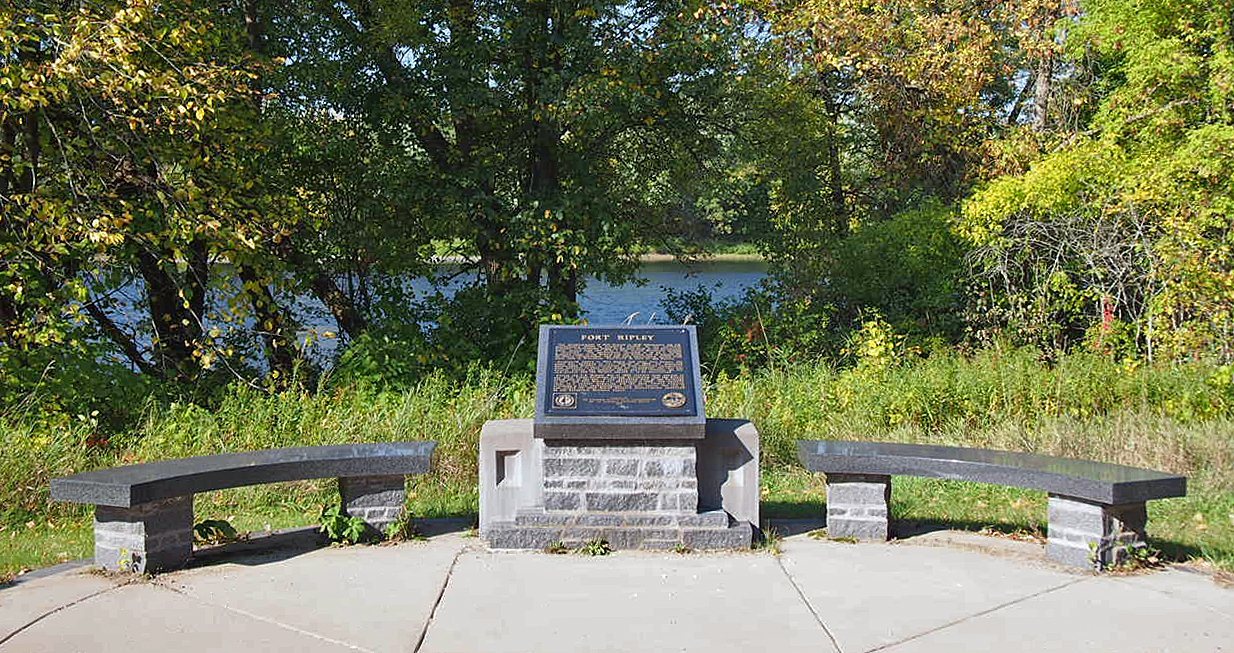
Fort Ripley was a United States Army post on the upper Mississippi River in the community of Fort Ripley, Minnesota, United States. Built in 1848–49, it remained in military use until 1877. Construction began in November 1848 under General Dana’s supervision. The post was first called Fort Marcy, then Fort Gaines, before it was renamed in 1850 for Brigadier General Eleazer Wheelock Ripley, an officer in the War of 1812, the conflict between the United States and Britain from 1812 to 1815.
The Army established the post in connection with the relocation of the Ho-Chunk, who arrived in 1848 while construction was underway. They had previously been moved from Wisconsin to the Neutral Ground, a designated relocation tract in northern Iowa, and were then transferred to a reservation east of Long Prairie, Minnesota. A nearby military post had been stipulated in an 1846 treaty with the Ho-Chunk. The Army was expected to oversee the reservation and administer annuities, recurring payments or supplies under a government agreement. Officials also intended the post, together with the Ho-Chunk presence, to serve as a buffer between the Santee Dakota and Ojibwe, who were then in conflict.
The reservation was established on land made available by the Ojibwe, and the arrangement assumed that Indigenous people, rather than white settlers, would inhabit the area. A separate land transfer in 1847 was intended for the Menominee, Stockbridge-Oneida, and other groups described at the time by the collective label “New York Indians.” None agreed to move from eastern Wisconsin.
Fort Ripley was the second major military reservation established in what became Minnesota. It covered nearly 90 square miles east of the Mississippi and one square mile west of the river for the garrison. In 1857, an attempted auction of the eastern lands was annulled after bidders colluded to keep their offers low. People had already begun building and farming in the area, and disputes and litigation over the lands continued for about 20 years.
The post’s presence encouraged immigration to ceded land east of the Mississippi. In the 1850s, an Ojibwe agency was established at Crow Wing, about 6.75 miles north. Treaties made at Fond du Lac and Leech Lake in 1847 had called for an agency there. The trading settlement of Crow Wing grew into a town on an island in the Crow Wing River. Congress authorized five military roads in 1850, including the Fort Ripley Military Wagon Road. It ran from Point Douglas through settlements such as St. Paul and St. Anthony Falls to Crow Wing, about seven miles beyond the fort. The road distance from St. Paul to Fort Ripley was 150 miles. A railway survey crossed the reservation in 1853. In the 1880s, the Saint Paul, Minneapolis and Manitoba Railway built a line across former fort lands, using a right of way previously held by the St. Paul and Pacific Railroad.
Garrison service and the 1862 Dakota conflict
Company A of the 6th Infantry arrived from Fort Snelling in April 1849 under Captain John Blair Smith Todd, the post’s first commander. A detachment of the 1st Dragoons, led by Lieutenant John W. T. Gardiner, arrived with it. Company C of the 10th Infantry took over the garrison in 1855. After the Ho-Chunk were forcibly moved again, this time to a reservation in Blue Earth County, the Army withdrew the garrison in 1857, believing the post was no longer needed. Disturbances between settlers and some Ojibwe soon prompted the Army to reactivate Fort Ripley with a company of the 2nd Infantry. From 1857 to 1861, companies of the 2nd Artillery were posted among Forts Snelling, Ridgely, and Ripley.
In January 1861, Companies C and K of the 2nd Infantry went south to fight the Confederacy. Companies A and E of the 1st Minnesota replaced them, followed by Companies A and F of the 2nd Minnesota. During the Civil War, Minnesota troops served at the post in place of federal regulars.
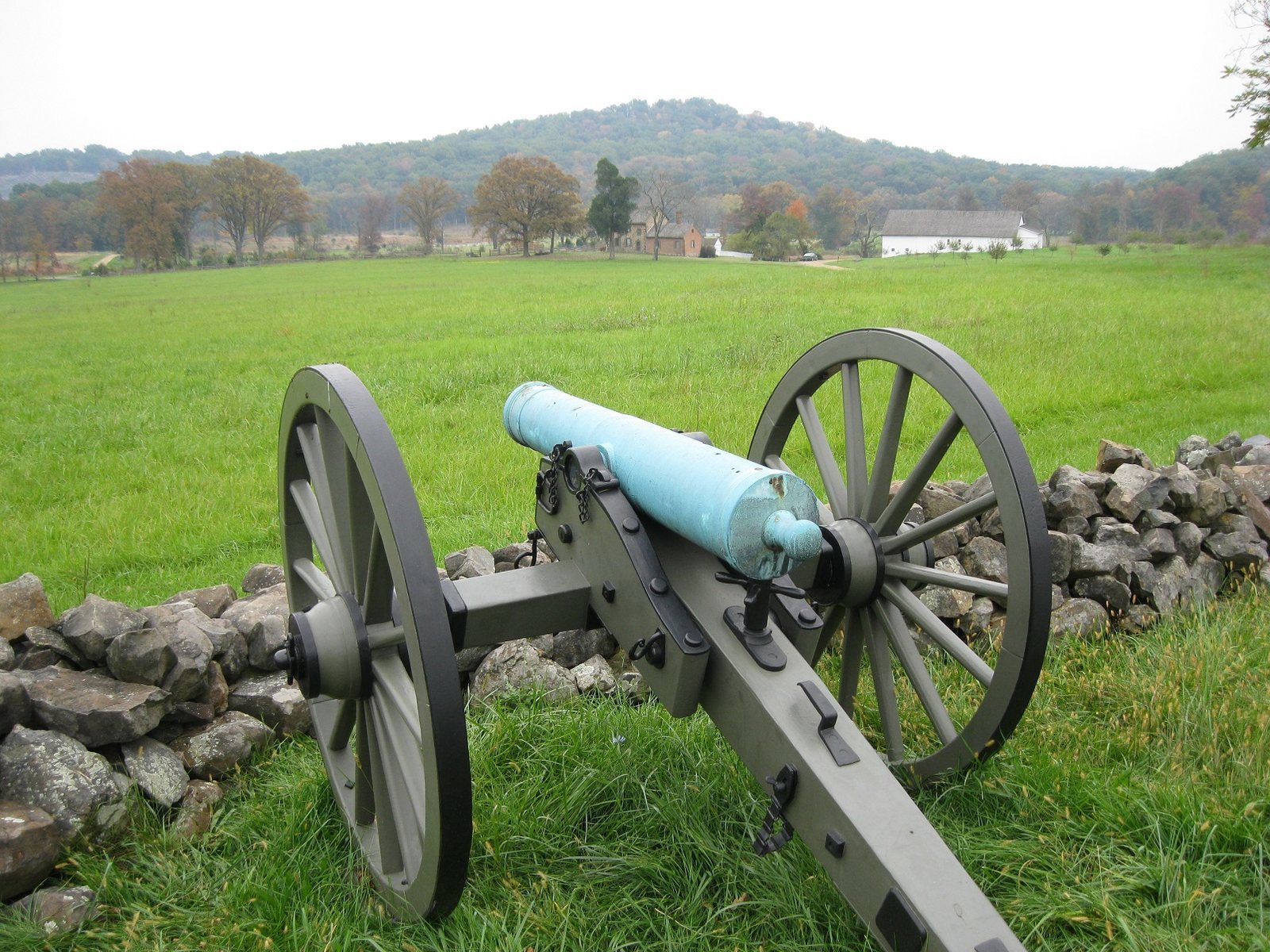
The 1862 Dakota conflict was an armed struggle in Minnesota between Dakota people and the United States. Fort Ripley’s commander, Captain Francis Hall, was away on leave when it began, leaving the small garrison under Lieutenant Frank B. Fobes. First Lieutenant Timothy J. Sheehan took 50 men of Company C to the Upper Sioux Agency with two of the fort’s four 12-pound howitzers, artillery pieces. Their orders were to find Dakota leader Inkpaduta, but they did not locate him. At the agency, Sheehan persuaded the agent to distribute food to nearly 4,000 Sisseton and Wahpeton people. The detachment was returning to Ripley to escort a treaty commission when a messenger reported attacks at the Lower Sioux Agency and Redwood Ferry. The men hurried to Fort Ridgely. After its commander, Captain Marsh, was killed, Sheehan took command and led the fort’s defense.
At Ripley, Indian agent Lucius C. Walker, a government official who handled relations with Indigenous nations, asked Fobes to arrest Ojibwe Chief Hole-in-the-Day because he feared an attack. The chief had already left. On returning, Hall declared martial law in the region and advised settlers to evacuate. Militia companies from St. Cloud, Stillwater, and Olmsted County joined the post. Rumors of a possible attack by Hole-in-the-Day brought settlers seeking refuge, although relations between settlers and Ojibwe in northern Minnesota had generally been peaceful.
Ojibwe leaders and groups offered to assist against the Dakota. Chief Qui-We-Sain-Shish, also known as Bad Boy, went to the post independently. On September 8, 1862, a Mille Lacs chief and 75 to 100 warriors were stopped at Watab, north of St. Cloud, while traveling to join government forces. Hall invited them to Fort Ripley as guests while their offer was considered. Mille Lacs civil chief Shaw-Bosh-Kung then led 700 to 750 warriors to the post to defend it and volunteer for the campaign. Indian Commissioner Dole, the federal official responsible for Indigenous affairs, told them to return to their reservation and gave them a written assurance that they could remain there for 1,000 years.
War chief Mou-zoo-mau-nee and 300 warriors stayed to help defend Fort Ripley: 200 were from the Mille Lacs Band and 100 from the Sandy Lake, Snake River, and Chippewa River bands. Mou-zoo-mau-nee reportedly sent 150 warriors to protect Little Falls, 15 miles downriver, after the town requested help. The townspeople welcomed them with a meal and a peace-pipe ceremony. President Abraham Lincoln later repeated the assurance concerning the Mille Lacs reservation. It appeared in Article 12 of a treaty and was reiterated in a 1864 treaty, which also required presidential approval before the Sandy Lake Band could be moved. The bands that had assisted were designated “non-removable.”
Campaign base and closure
In fall and winter 1862–63, Fort Ripley served as headquarters for the 8th Minnesota, with four companies posted there. In January 1863, Captain Samuel McLarty and Company D were sent to Pomme de Terre and Chippewa Station. At Pomme de Terre, they received orders to build a defensive barrier of upright stakes nine feet high. The post became the largest garrison point between St. Cloud and Fort Abercrombie on the Red River Trail. Other companies were posted at Manannah, Little Falls, Chippewa Station, and Fort Abercrombie. In 1864, the 8th Minnesota lost more men to continuing hostilities arising from the uprising than Henry Hastings Sibley’s expedition lost in Dakota Territory.
For the next three years, Ripley served as a staging point for western military campaigns. Its troops included the 8th Minnesota, sections of the 3rd Minnesota Light Artillery, and the 2nd Minnesota Cavalry. Company G of the 1st U.S. Volunteer Infantry was posted there in May 1864. Activity peaked in winter 1863–64, when 400 cavalrymen and 500 horses were at the post. Captain James L. Fisk also began his second expedition to the Montana Territory gold fields from Fort Ripley in 1863.
In June 1865, Companies A, F, G, and I of the 1st U.S. Volunteers gathered at the post for discharge but were instead assigned to Kansas. Companies A and I of the 10th Infantry also served there. Companies A and G of the 20th Infantry arrived on April 20, 1869. Company A left for Fort Totten in May, while Company G remained at Ripley until its closure in December 1877.
A fire in January 1877 destroyed three buildings. The War Department chose to close the post rather than rebuild, judging that it had outlived its purpose. The troops left that summer, and the buildings were abandoned. In 1879–80, the House of Representatives passed a bill to return part of the military reservation to the public domain, except for land occupied by the railroad. Minnesota established Camp Ripley as a National Guard training facility in 1929; it includes the historic fort site and takes its name from the old post. Fort Ripley was added to the National Register of Historic Places, the federal list of properties recognized for historical importance, in 1971 for its state-level importance in historical archaeology and military history.
Remains
Site layout and construction
The fort followed the plan of a remote mid-nineteenth-century Army post, with timber buildings facing an open square. The archaeological site has one standing building. Its defenses included a partial stockade, with the river-facing side open except for two of the three blockhouses, small fortified buildings.
Timber buildings and defenses
The timber structures arranged around the square formed the main built group. The partial stockade and blockhouses provided the post’s defensive elements. Their surviving arrangement is understood through the archaeological site.
Stone powder magazine
The gunpowder magazine was built of stone. By 1910, its ruins were the only remains of the abandoned fort noted as still standing. The magazine’s stone construction distinguishes it from the timber buildings that formed the rest of the post.