Fuerte Bulnes: A Chilean Fort on the Strait of Magellan
Site at a Glance
- Rating
- 4.7
- Popularity
- High
- Country
- Chile
- Primary era
- Modern
- External website
- Open
- Eras represented
- Modern
- Civilizations
- Unclassified
- Site type
- Military
- Remains
- Fort
On this page5 sections
History
Fuerte Bulnes is a Chilean fort founded in 1843 on Punta Santa Ana beside the Strait of Magellan in southern Chile. Established by a Chilean expedition, it asserted the country’s territorial claim to the strait.
Expedition and foundation
In 1842, President Manuel Bulnes ordered an expedition to the strait. Domingo Espiñeira Riesco, the intendant, or senior regional administrator, of Chiloé, arranged for a schooner to be built for the voyage. It was first named Presidente Bulnes, but the president rejected the name. The vessel was renamed Goleta Ancud, after the town where it was built.
Twenty-three men sailed from Ancud on 22 May 1843 under naval officer Juan Williams. They reached Punta Santa Ana on 21 September, and Williams took possession of the Strait of Magellan and adjacent territories on Chile’s behalf. Fuerte Bulnes was formally founded there on 30 October and named after the president.
A French paddle-wheel steam frigate, the Phaeton, arrived about a day later. In Chile, its arrival was understood as potentially connected to competing territorial claims. The ship may instead have been travelling to Talcahuano to obtain coal.
Decline and destruction
The severe climate made it difficult to sustain a large settlement at Punta Santa Ana. After years of hardship, residents moved in 1848 to Punta Arenas, founded at the more sheltered Sandy Point to the north. Fuerte Bulnes subsequently declined.
During an attempted revolution in Chile in 1851, artillery lieutenant Miguel José Cambiaso, who led a mutiny, set fire to the fort’s ruins.
Reconstruction and later management
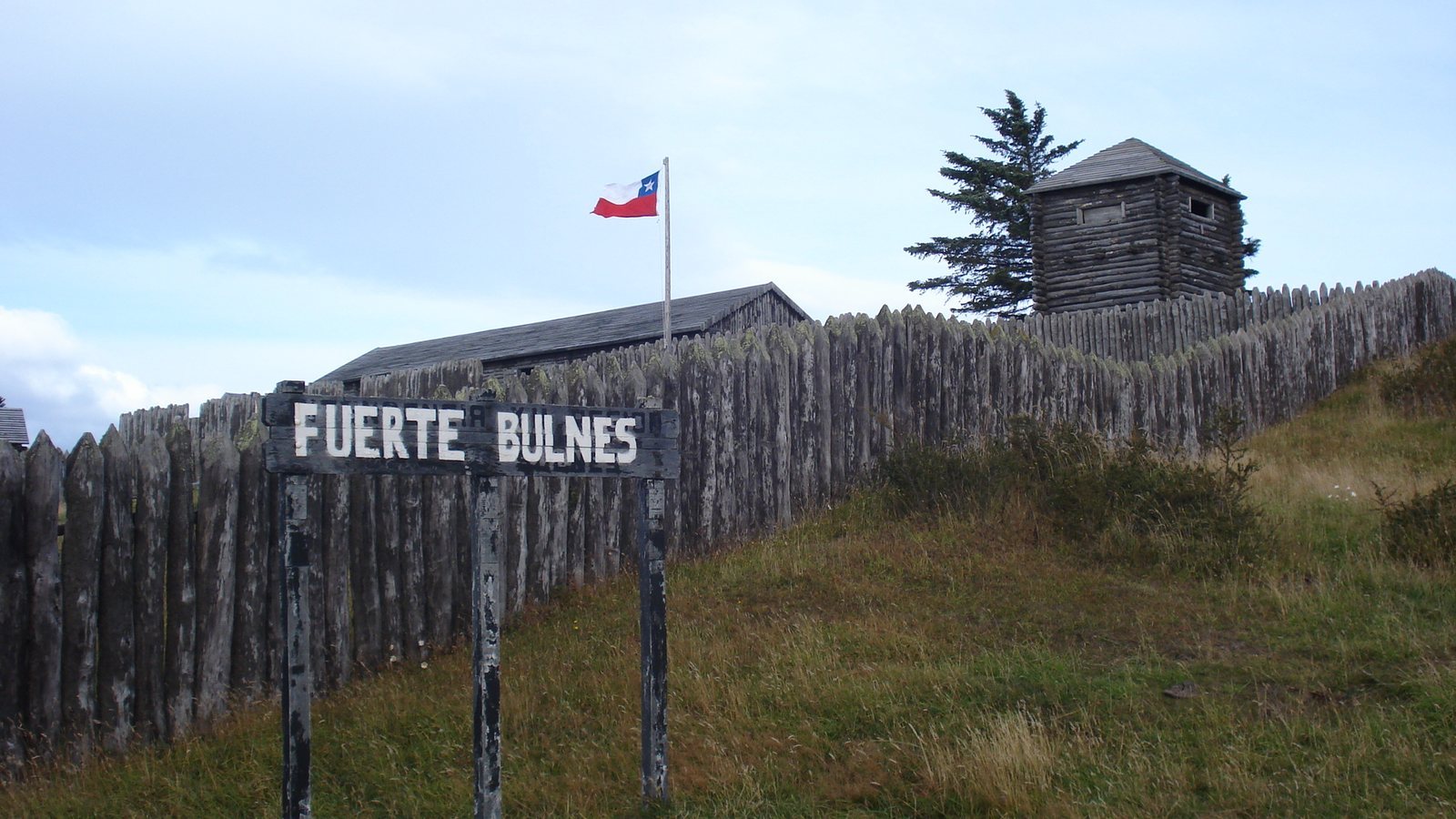
Fuerte Bulnes was rebuilt between 1941 and 1943 and reopened as a site museum in 1943. Chile declared it a National Monument in 1968, a designation for places recognized as nationally important. Management later passed from Chile’s National Forestry Corporation (CONAF) to private management and then to the municipality of Punta Arenas. The site experienced deterioration and restoration during these changes.
Since 2008, the 250-hectare Punta Santa Ana area, including Fuerte Bulnes and nearby Puerto del Hambre, has been part of Parque del Estrecho de Magallanes under concession. In 2009, the fort and Puerto del Hambre were placed under joint administration through Chile’s Ministry of National Assets, and the historic Rey Don Felipe Park was created. Work in 2013 included repairs to the fort and archaeological restoration and reconstruction at the historic Rey Don Felipe site.
Remains
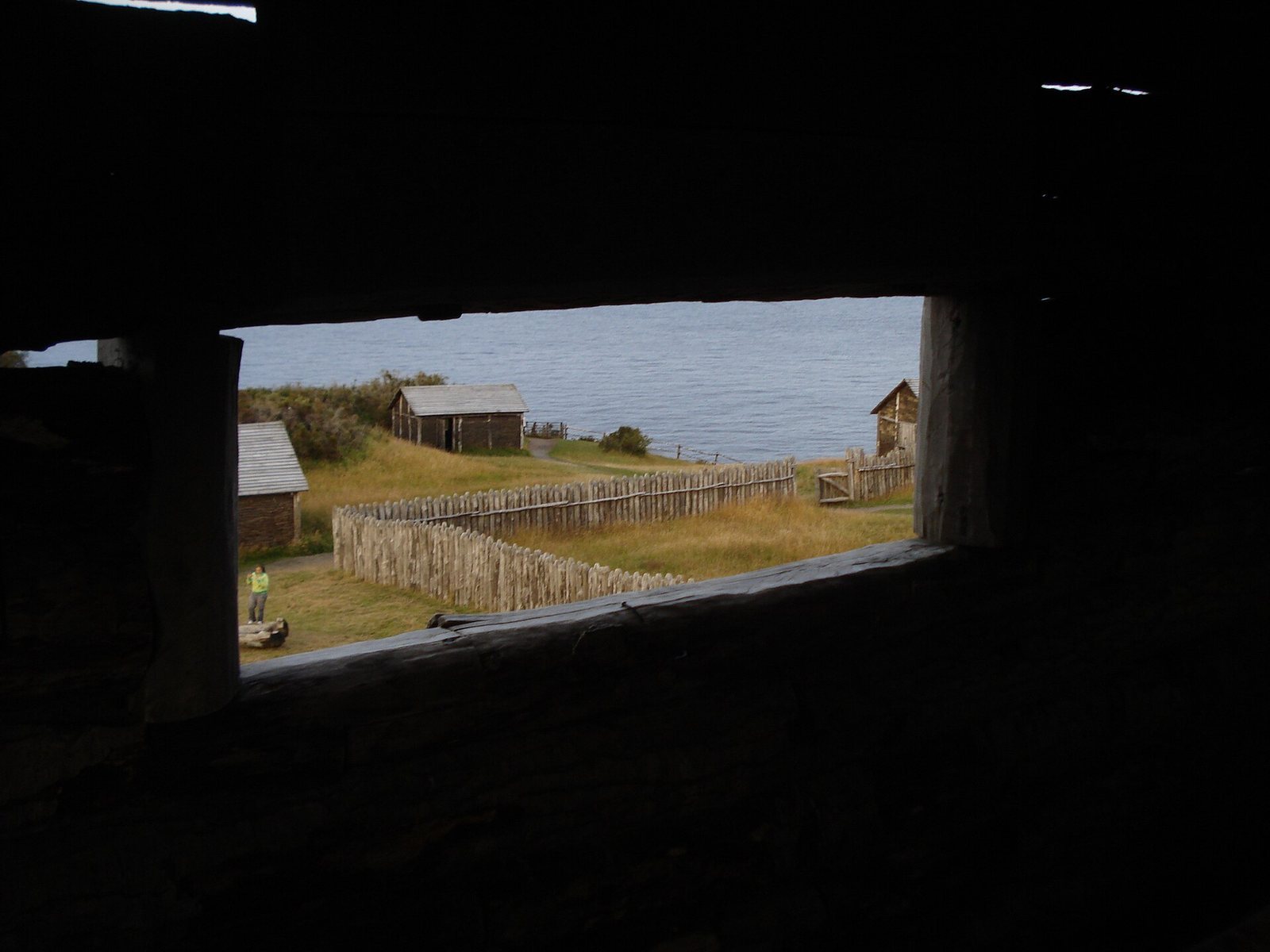
The fort stands on the rocky promontory of Punta Santa Ana beside the Strait of Magellan, about 60 kilometres south of Punta Arenas and a few kilometres north of Cape Froward. Puerto del Hambre lies roughly two kilometres away.
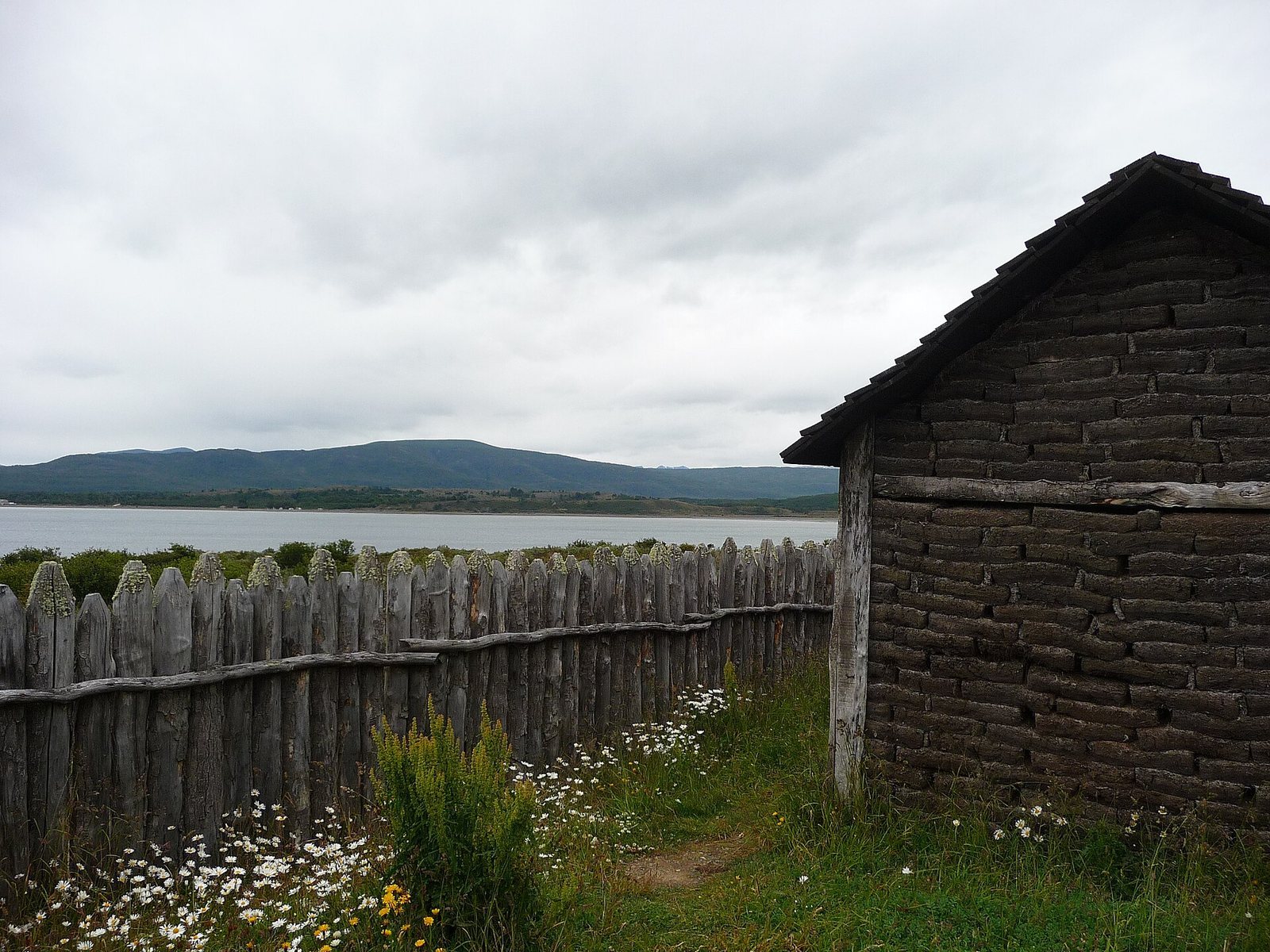
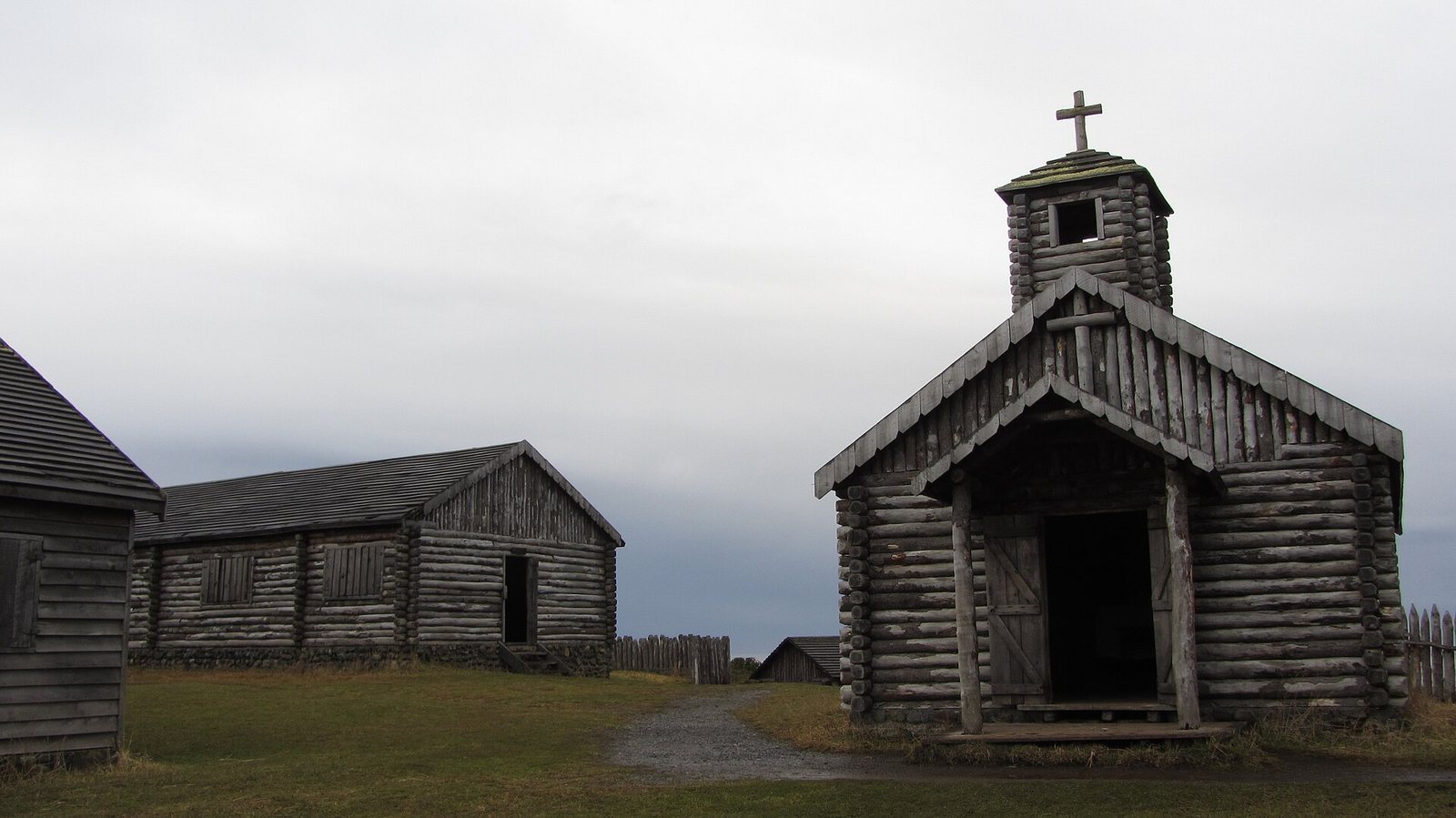
The original fort was built mainly from roundwood logs and blocks of turf. After its destruction, the rebuilt fort took the form of a replica. The standing structure is the reconstruction completed in the early 1940s.