Krabbesholm: A Danish Manor House and Estate
Site at a Glance
- Popularity
- Low
- Country
- Denmark
- Primary era
- Modern
- Eras represented
- Bronze Age, Modern
- Civilizations
- Danish
- Site type
- Domestic
- Remains
- Manor House
On this page9 sections
History
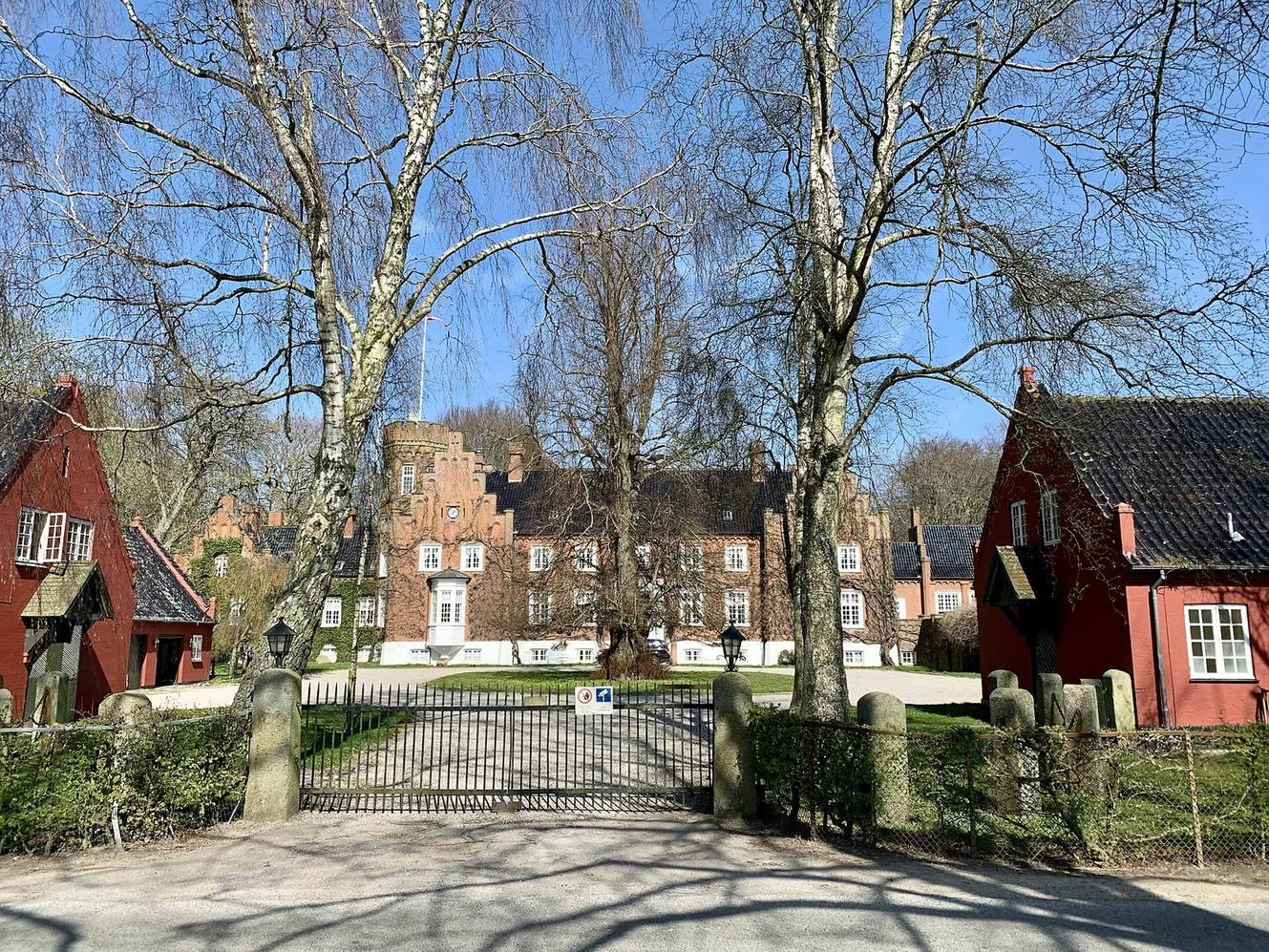
Krabbesholm is a manor house and estate on the Hornsherred peninsula at Kirke Hyllinge, Denmark. It was established as a separate manor in 1647, and its first main building was erected in 1853 in the Gothic Revival style, a nineteenth-century approach to forms associated with medieval Gothic architecture.
Vindeby and the manor’s foundation
The village of Vindeby once stood on the site and belonged to Egholm Manor. It was destroyed during the First and Second Dano-Swedish Wars, seventeenth-century conflicts between Denmark and Sweden. In 1647, Oluf Rosenkrantz received royal permission to create a manor from part of Egholm’s land. He had expanded Egholm’s tenant farms until they impeded efficient management. He named the new estate Krabbesholm, meaning “Krabbe’s Isle,” in tribute to his wife, Birgitte Krabbe.
Changing ownership and the Rosenkrantz entail
Oluf fell from favor at court after opposing absolute monarchy, a form of government in which the monarch holds supreme political authority. He was compelled to transfer his estates to his daughters and sons-in-law. Egholm and Krabbesholm passed to Mogens Skeel, who sold them to Otte Skeel in 1685. After Otte’s death, Krabbesholm went to his son-in-law Otto Krabbe. Otto’s wife, Birgitte Skeel, held the estate from 1719 to 1737, when Iver Rosenkrantz inherited it. After Iver died in 1745, Charlotte Amalie Skeel, who was married to a Rosenkrantz, held it until Frederik Christian Rosenkrantz inherited it in 1763.
Frederik Christian placed his estates in Niels Rosenkrantz’s hands with the obligation to establish an entail, a legal arrangement restricting inheritance or transfer to preserve property within a family. The Rosenkrantz entail comprised Ryegaard, Barritskov, and Trudsholm. Krabbesholm was detached from Egholm in 1783, although the two estates remained under the same owners until 1806. In 1804, Niels sold both to his brother Marcus Gjøe Rosenkrantz. Two months later, Marcus sold them to Christian Conrad, Count of Danneskiold-Samsøe, and Lars Lassen. They divided the estates in 1806, leaving Danneskiold-Samsøe as Krabbesholm’s sole owner.
Nineteenth- and twentieth-century changes
Nicolai Abraham Holten acquired Krabbesholm in 1810. He lived at his other estate, Lindegården, and did not build a main house at Krabbesholm. He established the first school in Sæby and died in 1850. The estate was auctioned in 1852 and bought by Lars Trolle, who sold it to Frederik Vilhelm T. Treschow in 1871. Treschow’s daughter Clara Sophie inherited Krabbesholm in 1876 and married Niels Joachim Christian Gregers Juel, who died in 1938.
The estate was sold at auction in 1939 to De Forenede Kulimportører, an importer of coal, coke, and cinders. In 1979, the company became a property company called Ejendomsselskabet D.F.K. A/S.
Remains
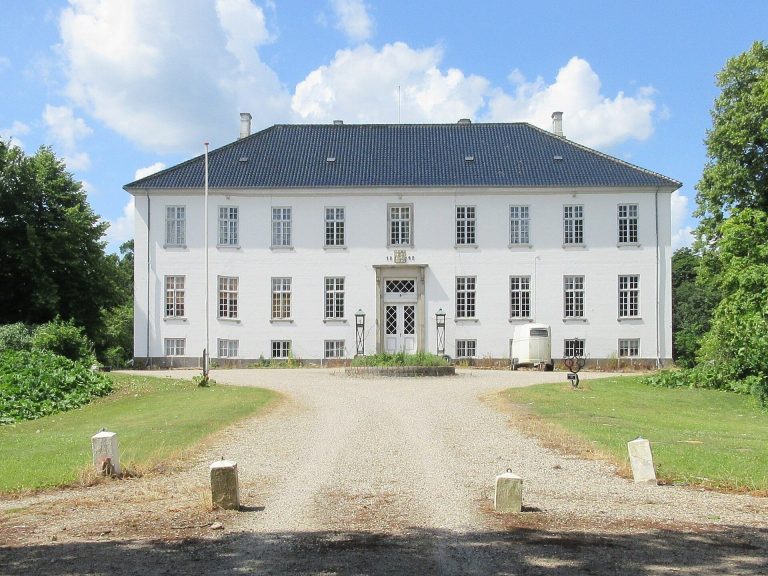
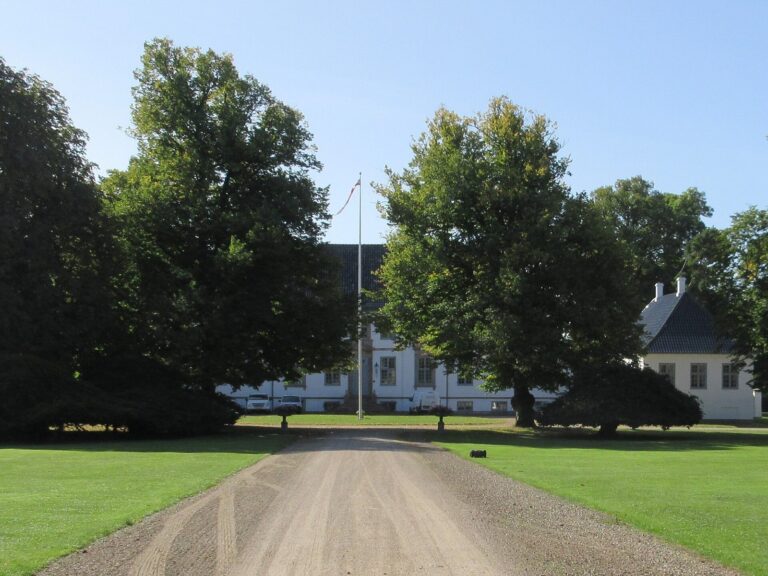
Krabbesholm covers 488 hectares between Skibby and Sæby. Its main building stands within a large garden, with woodland to the north and tree-lined avenues extending in three directions. The estate also includes a Bronze Age burial mound called Sofiehøh.
Buildings and grounds
Main building
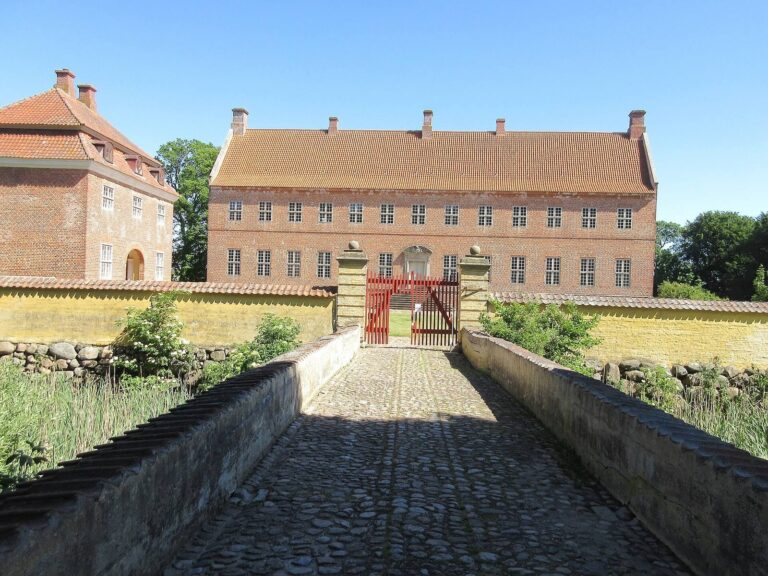
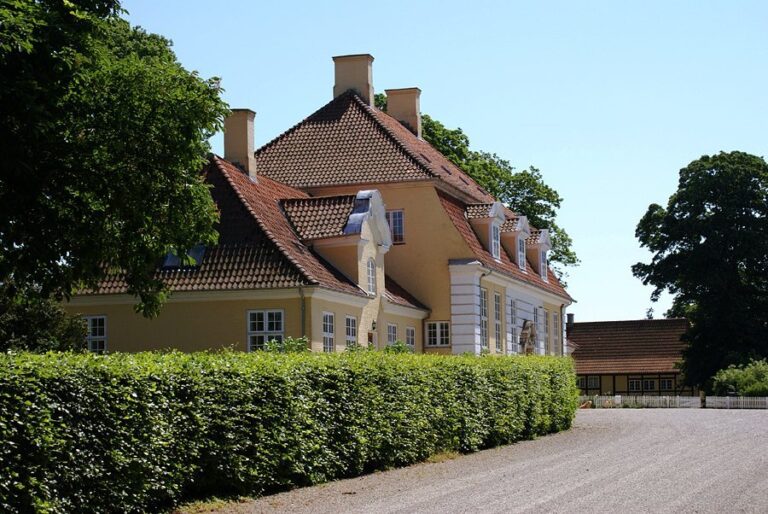
Lars Trolle built Krabbesholm’s first main building in 1853. It is in the Gothic Revival style and is set within the estate’s large garden.
Garden and avenues
The grounds include a large garden around the main building, woodland on its northern side, and avenues bordered by trees that extend in three directions.
Sofiehøh
Sofiehøh is a Bronze Age burial mound on the estate.