Musawwarat es-Sufra: A Meroitic Sanctuary Complex in Sudan
Site at a Glance
- Popularity
- High
- Country
- Sudan
- Primary era
- Classical
- Eras represented
- Classical, Modern
- Civilizations
- Kushite
- Site type
- Religious
- Remains
- Sanctuary
On this page9 sections
History
Early Meroitic sanctuary
Musawwarat es-Sufra is a major sanctuary complex in western Butana, Sudan, whose principal construction dates to the third century BC. It belongs to the early Meroitic period, a phase of the Kingdom of Kush, an ancient Nubian kingdom centered politically and culturally at Meroë.
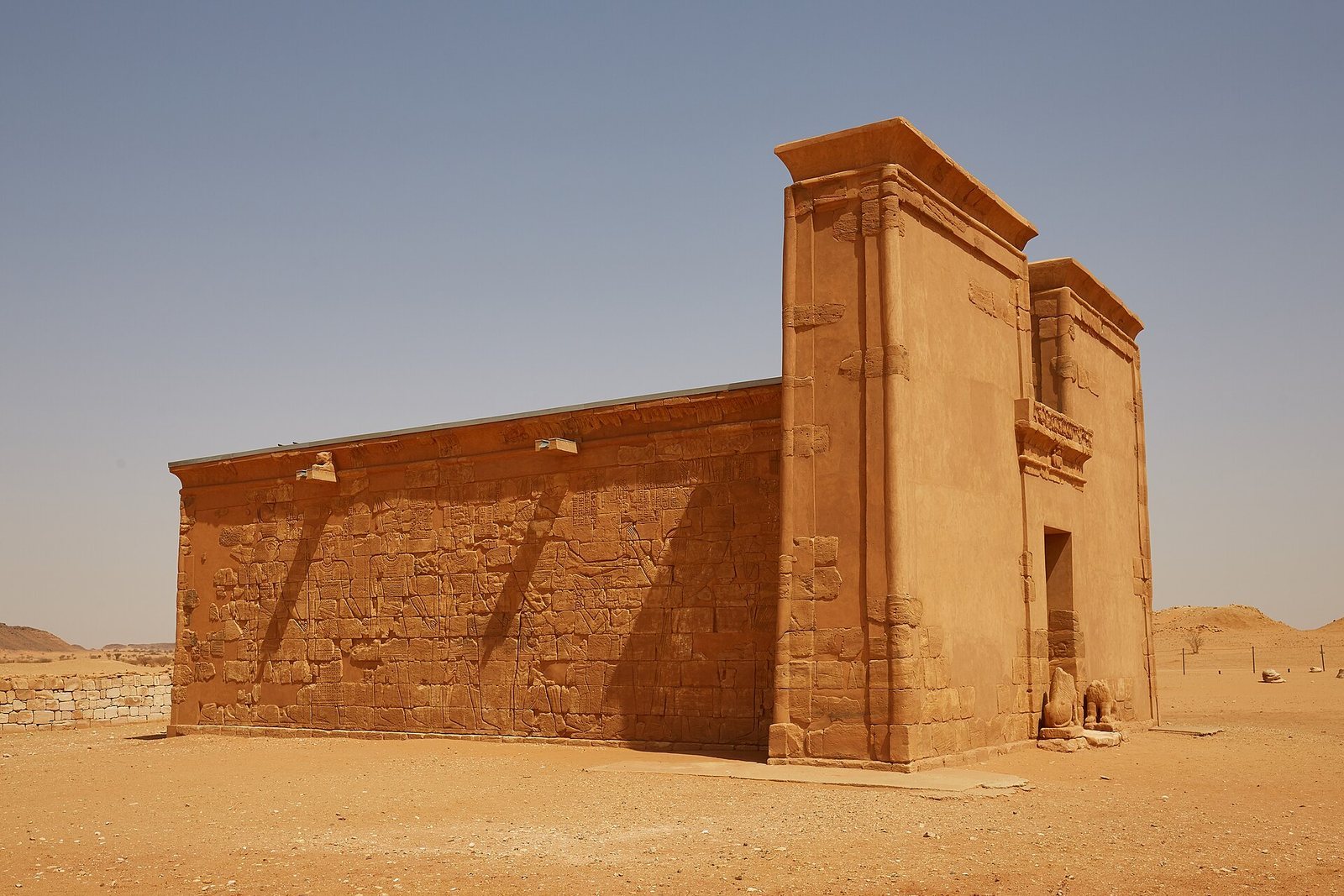
The Lion Temple was erected by King Arnekhamani and dedicated to Apedemak, a major Kushite deity associated with lions. The Great Enclosure, the complex’s principal structure, was also substantially built during the third century BC. The sanctuary appears to have served mainly religious purposes. Numerous visitor inscriptions have also led to the suggestion that it attracted pilgrims.
The Great Enclosure’s precise purpose remains uncertain. It has been proposed as a school, college, hospital, or elephant-training camp. At least four Kushite queens, Amanirenas, Amanishakheto, Nawidemak, and Amanitore, probably spent part of their lives at Musawwarat es-Sufra. A small number of graves dating to the period after Meroitic rule have also been found.
Exploration and research
Linant de Bellefonds mentioned the site in 1822, and Frédéric Cailliaud referred to it soon afterward. Carl Richard Lepsius later prepared its first detailed description. Excavations by Humboldt University of Berlin began in 1960 under Fritz Hintze and continued through 1968. Archaeological work resumed in 1995 under Steffen Wenig, followed by a research project directed by Claudia Näser from 2005 to 2015.
In 2009, the Zamani Project used ground-based laser scanning to create a record of the Great Enclosure and Lion Temple. Musawwarat es-Sufra is part of the UNESCO World Heritage property “Archaeological Sites of the Island of Meroe,” inscribed in 2011 together with Meroë and Naqa.
Remains
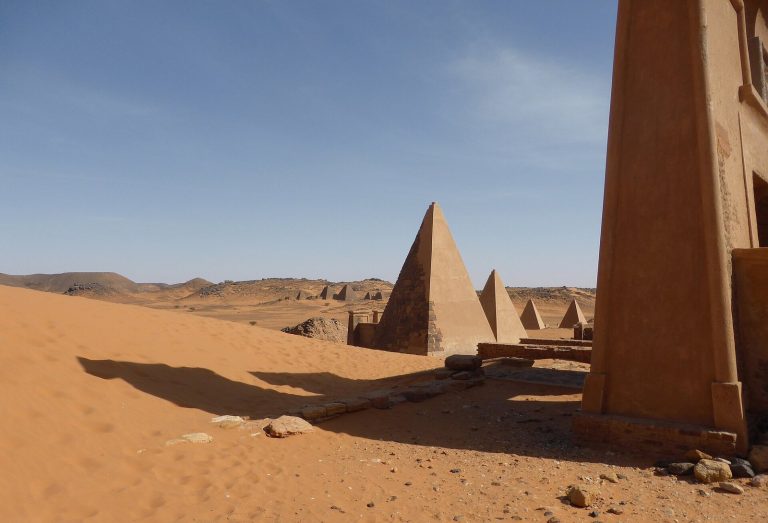
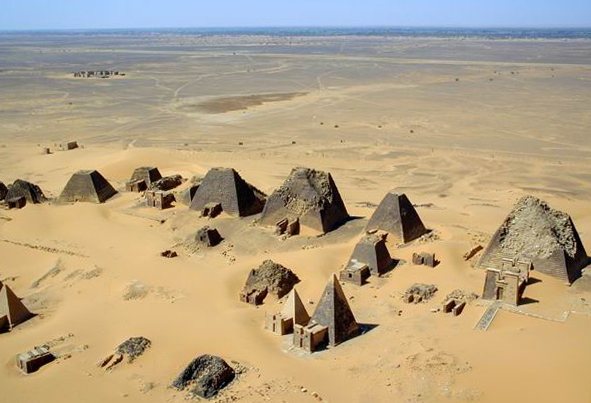
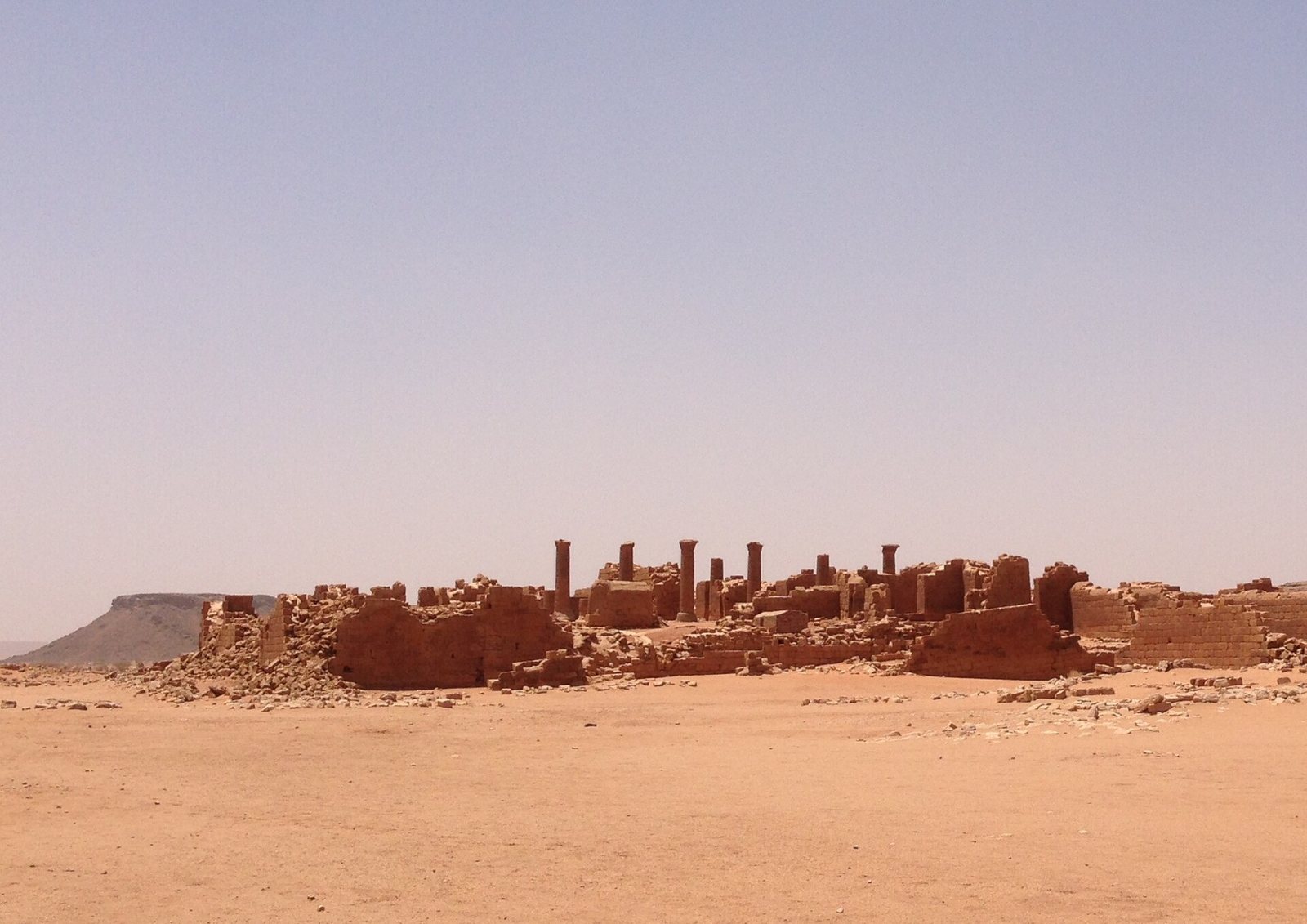
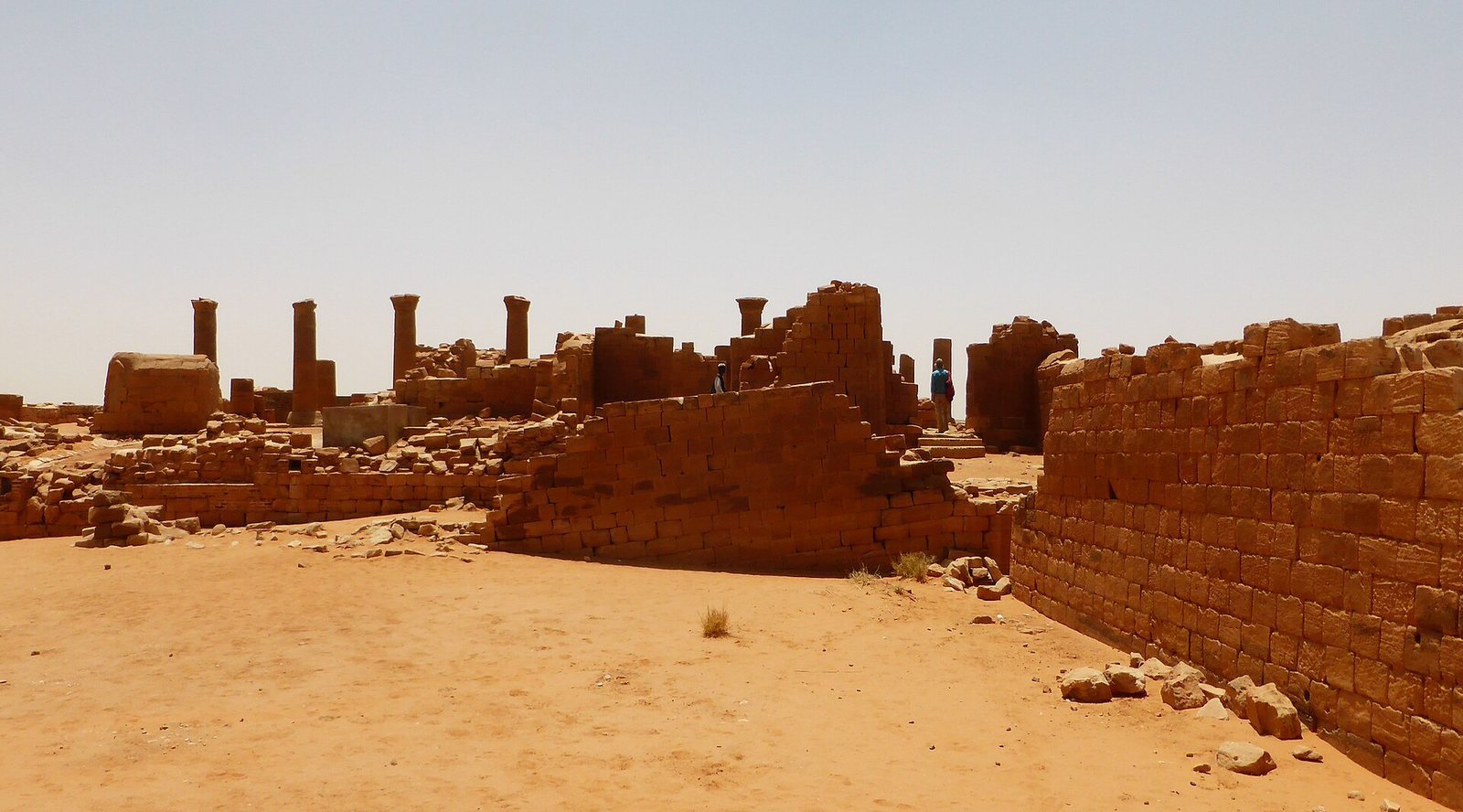
The complex lies in a broad basin ringed by low sandstone hills, about 180 km northeast of Khartoum and 25 km southeast of the Nile. Its principal buildings are made of sandstone, and the extensive Great Enclosure forms the central architectural group.
Sanctuary buildings
Lion Temple
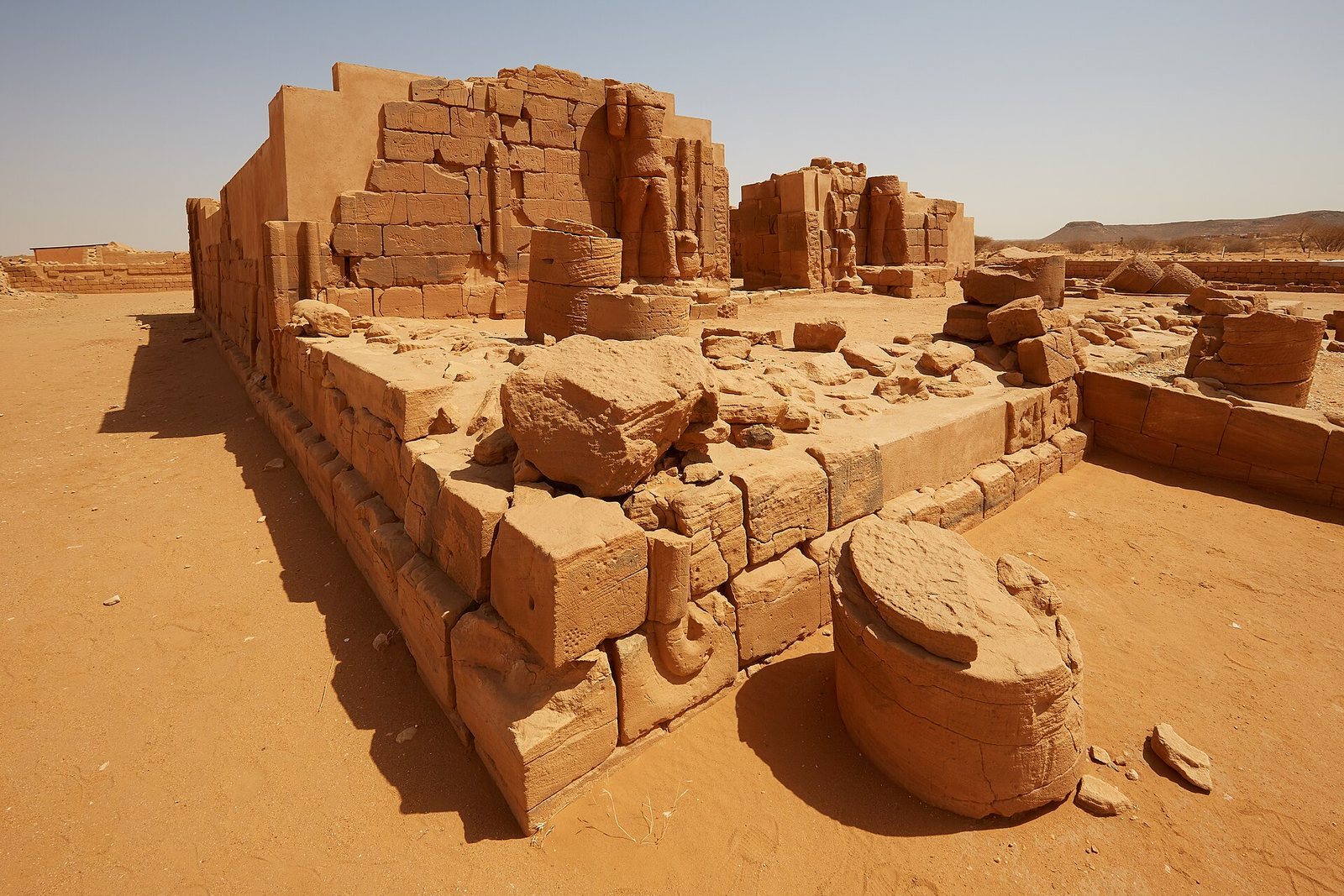
The rectangular Lion Temple has a single chamber and measures 14.21 m long, 9.13 m wide, and 4.7 m high. Its entrance has a pylon, or monumental temple gateway, and the interior includes six columns assembled from stacked stone drums, which are cylindrical sections. Egyptian hieroglyphic inscriptions appear inside. The rear interior wall shows elephants and lions, while reliefs on the exterior depict Apedemak as a three-headed god. After the temple collapsed in antiquity, it was re-erected in 1969–70 under Fritz Hintze and Karl-Heinz Priese, and a new roof was added.
Great Enclosure
Covering about 45,000 m², the Great Enclosure is a large, maze-like arrangement of courtyards. Its plan includes passages, ramps, low walls marking a division from the surrounding area, about 20 columns, two reservoirs, and three possible temples. A central temple is surrounded by columns, with smaller temples nearby. Temple 300 was adorned with two colossal figures.
Sculpture and inscriptions
Animal sculptures, including elephants, are found across the complex, and elephant imagery is especially numerous. Ancient visitor inscriptions and marks left by masons and pilgrims include both pictures and writing in Meroitic, the script used in the Kingdom of Kush, and Greek. Among these texts is the only Latin inscription known from Nubia. A carved mark associated with Hermann von Pückler-Muskau, a nineteenth-century German prince and travel writer, is also present.
Water storage
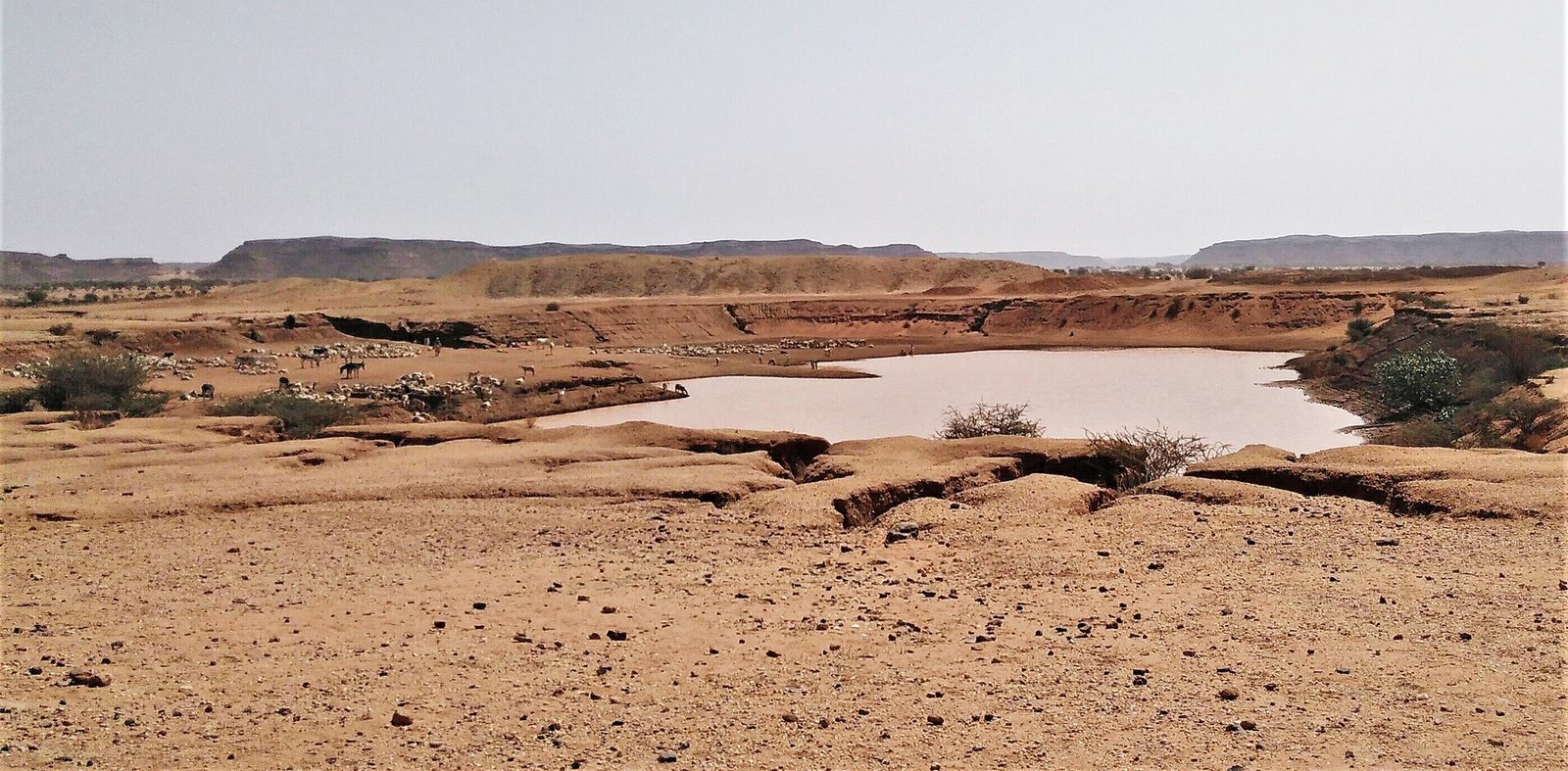
The Great Reservoir is a rainwater basin cut into the ground to collect water during the short wet season. It measures 250 m across and reaches 6.3 m below ground level.