Räsüliä Madrasa: An Islamic School in Troitsk, Russia
Site at a Glance
- Popularity
- Medium
- Country
- Russia
- Primary era
- Modern
- Eras represented
- Modern
- Civilizations
- Russian
- Site type
- Religious
- Remains
- Madrasa
On this page6 sections
History
Origins and foundation
The Räsüliä Madrasa was an Islamic school founded in 1883 in Troitsk, in present-day Chelyabinsk region of Russia. Troitsk then belonged to Orenburg Governorate, an administrative province of the Russian Empire. Construction had begun on July 3, 1880, and the institution opened in 1884. Zainulla Rasulev and the merchant Saifulla Gabbasov are regarded as its founders. Before the madrasa was built, Saifulla’s son Habibulla provided a private house for worship. A maktab, a more elementary school, and a madrasa opened in the house in 1872.
Rasulev led the school as a teacher from 1884. Two years later, Kazakh educator and philanthropist Ibray Altynsarin funded a wooden teaching building and dormitory. He supported Räsüliä because he worried that Muslim students otherwise had to choose between older madrasa teaching and education in the Russian language and culture.
Educational reform and curriculum
At first, the school concentrated mainly on religious instruction. Rasulev supported Jadidism, a Muslim reform movement that promoted modernized education, and challenged the scholastic methods common in religious schools. Students studied the Quran and hadith, religious doctrine, and traditional logic, a formal discipline in Islamic scholarship. Their reading also included works by the Muslim scholars Gabdennasyr Kursavi and Shigabutdin Marjani.
In 1893, Rasulev introduced sound-based teaching, organized lessons into classes, and added secular subjects. By the early twentieth century, Räsüliä had developed into a partly secular institution with an eleven-year course. From 1905, his son Gabdrakhman Rasulev led the madrasa. Lessons, taught in Tatar, covered religious doctrine, languages, calligraphy, reading, Quranic and hadith memorization and interpretation, mathematics, history, theology, Muslim law, ethics, hygiene, geography, natural sciences, physics, chemistry, zoology, and teacher training. Students also studied Tatar history and literature.
A center of Muslim learning
In 1905, donations enabled the acquisition of two main buildings. Zainulla Rasulev contributed 19,000 rubles. Tuition in the early twentieth century was eight rubles a year. The library held a large collection, and Rasulev left it his books and a waqf, a charitable endowment, of 3,500 rubles.
Tatars, Bashkirs, and Kazakhs studied at Räsüliä. An early twentieth-century estimate placed enrollment at 311; in 1913, there were 240 students and 13 teachers. The school became an important center of Muslim learning in the Russian Empire, a base for the spread of the Khalidiyya branch of the Naqshbandi Sufi order, a focus of religious life for Trans-Ural Bashkirs, and a center of Tatar culture. French historian Alexandre Bennigsen described it as one of the best academic institutions in the Muslim world. Its printing press was the first in Troitsk and printed the first Kazakh newspaper, Aikap (Dawn).
Closure and restoration
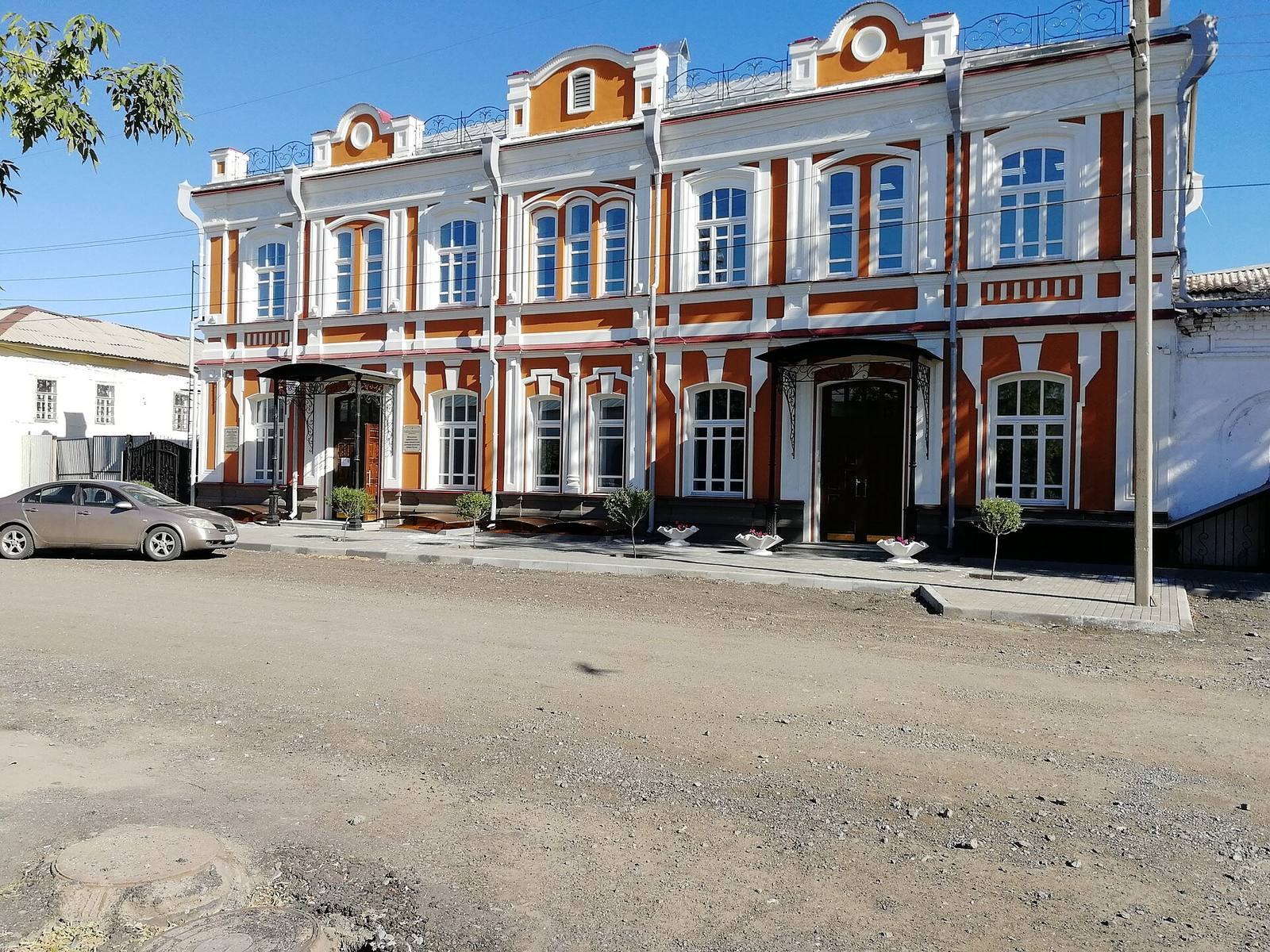
Following the October Revolution, the Bolshevik seizure of power in Russia in 1917, the madrasa closed around 1919. Its premises were converted into a Tatar-Bashkir teacher-training technical school. A decision to restore Räsüliä was made in 2015.
Remains
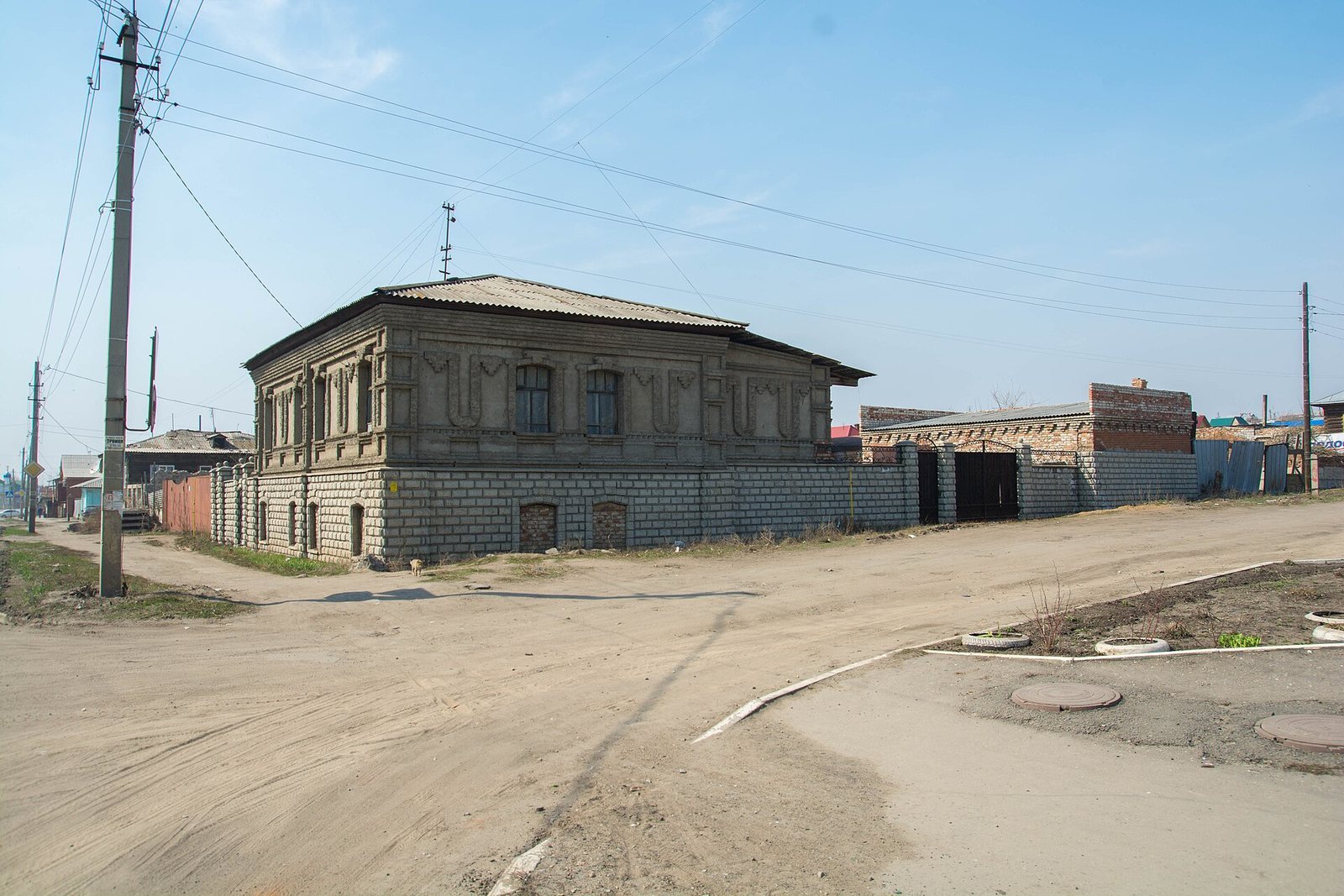
The madrasa stood at the Fifth Congregational Mosque and is described as having Islamic architectural style. Its teaching building and dormitory were wooden; the site also included a library and printing press. Restoration work aimed to return the building to a color scheme of red-brick-colored walls with white architectural details.
The restoration revealed metal shutters that had closed ground-floor window openings. A mechanism wound them around a metal shaft concealed in the wall above the windows. Work also uncovered ceramic air ducts from the heating system and an opening used to load coal into the basement.