Fort Caroline: A French Colonial Fort in Florida
Site at a Glance
- Country
- United States
- Primary era
- Early Modern
- Eras represented
- Early Modern
- Civilizations
- French
- Site type
- Military
- Remains
- Fort
On this page5 sections
History
Fort Caroline was a French colonial fort on the St. Johns River near present-day Jacksonville, Florida, in the United States. Founded on June 22, 1564, under French leader René Goulaine de Laudonnière, it served as a Huguenot settlement. Huguenots were French Protestants of the Reformed tradition. The fort became the center of a struggle between France and Spain for control of Florida’s Atlantic coast. Its name honored King Charles IX of France.
French expeditions and settlement
France’s effort to establish a foothold in Florida began in 1562, when French Protestant admiral Gaspard de Coligny organized an expedition led by navigator Jean Ribault. Near the May River, now the St. Johns River, Ribault encountered Timucua people led by Chief Saturiwa. Timucua communities extended across parts of what are now north Florida and south Georgia. Their population was estimated at about 200,000.
Ribault took about 28 men north to establish Charlesfort on present-day Parris Island, South Carolina, leaving a garrison before returning to Europe for settlers and supplies. He was arrested in England during the French Wars of Religion, conflicts between Catholics and Protestants in sixteenth-century France, and could not return promptly. After roughly a year without supplies or leadership, and amid hostility from Indigenous communities, all but one of the colonists set out for Europe. Those who survived the open-boat journey had resorted to cannibalism before English authorities rescued them in English waters.
Laudonnière, Ribault’s second-in-command on the earlier expedition, brought about 200 settlers to Florida and founded Fort Caroline on June 22, 1564. The colony was predominantly Huguenot. Its survival depended heavily on food and trade from Timucua communities, who initially welcomed the French. French expeditions through Timucuan territory encountered the Yustaga and searched unsuccessfully for gold and silver. Chief Outina twice persuaded the French to attack villages belonging to his rivals, the Potano, to obtain extra corn. French deserters also raided Timucua settlements, worsening relations. When Outina refused another request for food in spring 1565, the French took him hostage. Skirmishes continued for two weeks, followed by a major battle, after which they released him.
On July 20, 1565, English adventurer John Hawkins arrived seeking fresh water. He traded his smallest ship to the French for four cannons and supplies of gunpowder and shot, helping the colony prepare to return to France. The French introduced Hawkins to tobacco, which he later carried to England.
Pedro Menéndez de Avilés later wrote that free Africans were living in the French settlement before Spanish settlers established St. Augustine. Fort Caroline also used enslaved Black labor. Together, Fort Caroline and the St. Augustine area belong to the early history of Black and Black Catholic communities in what became the United States.
Spanish attack and later occupation
Ribault returned with a large fleet and hundreds of soldiers and settlers in late August 1565, taking command of the colony. Menéndez, newly appointed Spanish governor of Florida and ordered to remove the French, arrived at about the same time. After a brief naval clash, he withdrew roughly 35 miles south and founded St. Augustine on September 8.
Ribault sailed after the Spanish with most of his troops and several ships. A violent storm lasting several days caught his fleet at sea. While it raged, Menéndez marched overland and attacked Fort Caroline at dawn on September 20. The garrison numbered about 200 to 250 people. Spanish forces captured about 50 women and children. Laudonnière and a few other defenders escaped; the remaining people at the fort were killed.
Ribault’s ships sank or ran aground south of St. Augustine, and many French sailors died. Menéndez’s forces found Ribault and the shipwreck survivors and demanded their surrender. Ribault capitulated, apparently believing his men would be treated well. On September 29, Menéndez had him and several hundred Huguenots executed at Matanzas Inlet, treating them as heretics. The killings shocked Europeans and halted French attempts to colonize the southeastern Atlantic coast of North America for a time.
The Spanish destroyed Fort Caroline and built a fort called San Mateo on the site. In April 1568, French commander Dominique de Gourgues captured and burned it, then killed Spanish prisoners in retaliation for the 1565 massacre. The Spanish rebuilt the fort but abandoned it permanently the following year.
Location and commemoration
The fort’s location has remained disputed. In 1953, the National Park Service established Fort Caroline National Memorial on the St. Johns River. In 2014, researchers Fletcher Crowe and Anita Spring proposed that the original fort stood on Georgia’s Altamaha River rather than the St. Johns. They cited period French maps, including one from 1685, and argued that Indigenous people in the area spoke Guale rather than Timucua. Archaeologist Robert Thunen questioned their documentary case and considered the proposed site implausibly distant from St. Augustine in light of the Spanish overland march during the hurricane. Archaeologist Chuck Meide raised similar objections. The memorial was added to the National Register of Historic Places in 1966.
Remains
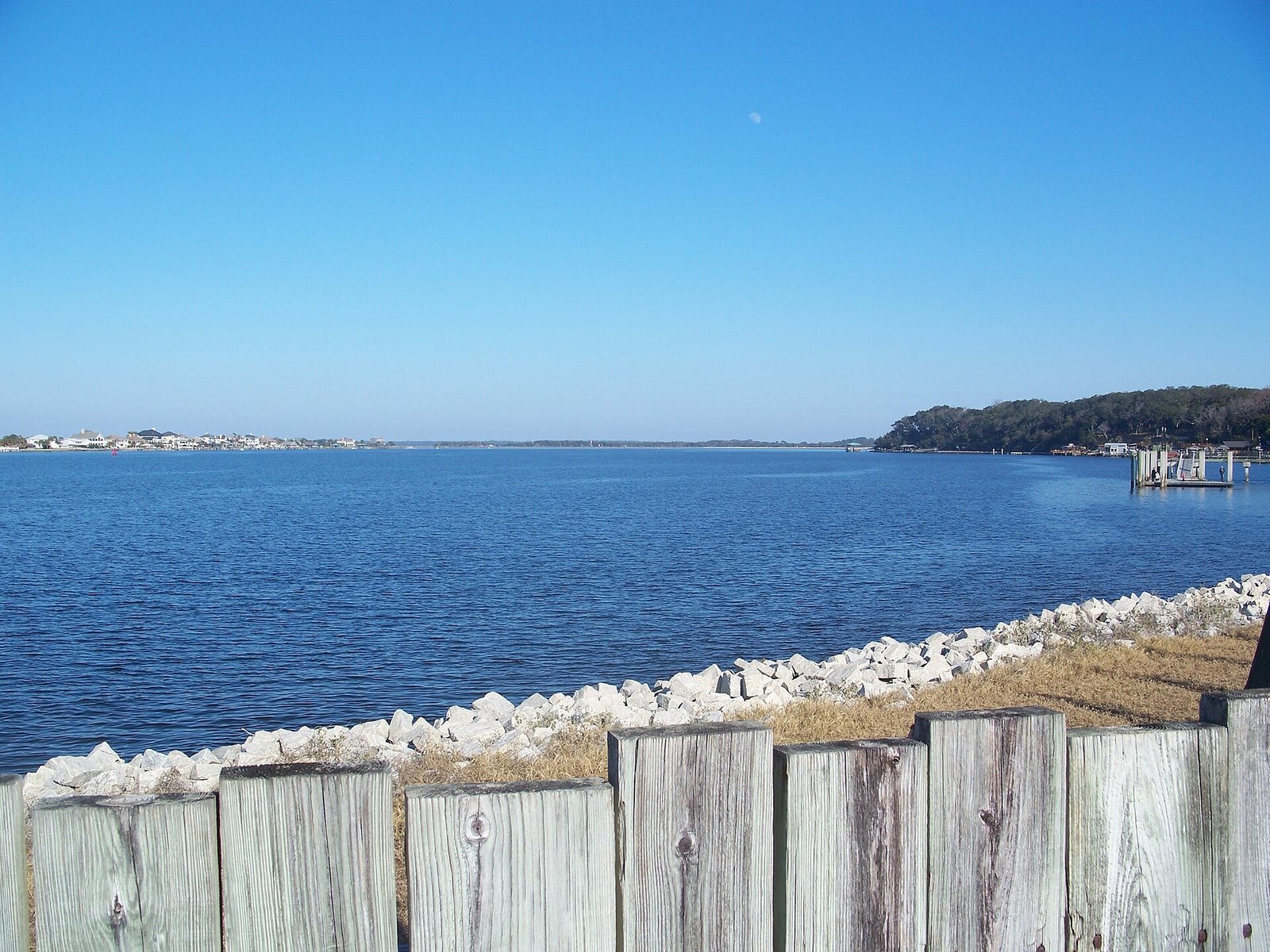
Fort Caroline was triangular and stood on a small plain formed by the western slope of a high, steep bank later called St. Johns Bluff. Timucua people helped build it, and Laudonnière is identified as its architect. The original fort’s precise position has not been confirmed. The memorial lies on the river’s south bank near the point associated with Laudonnière’s first landing, in the vicinity generally considered to be near the fort.
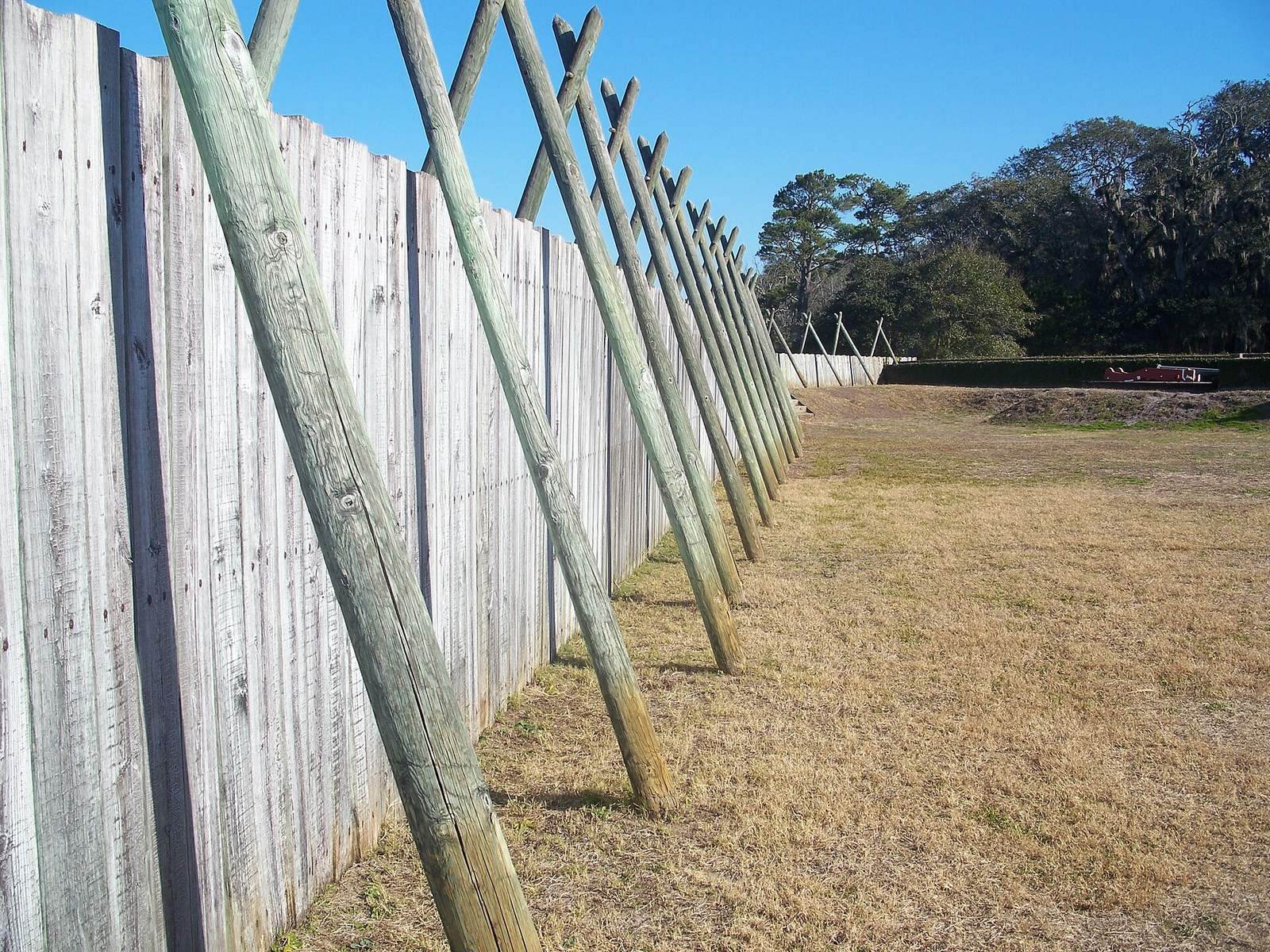
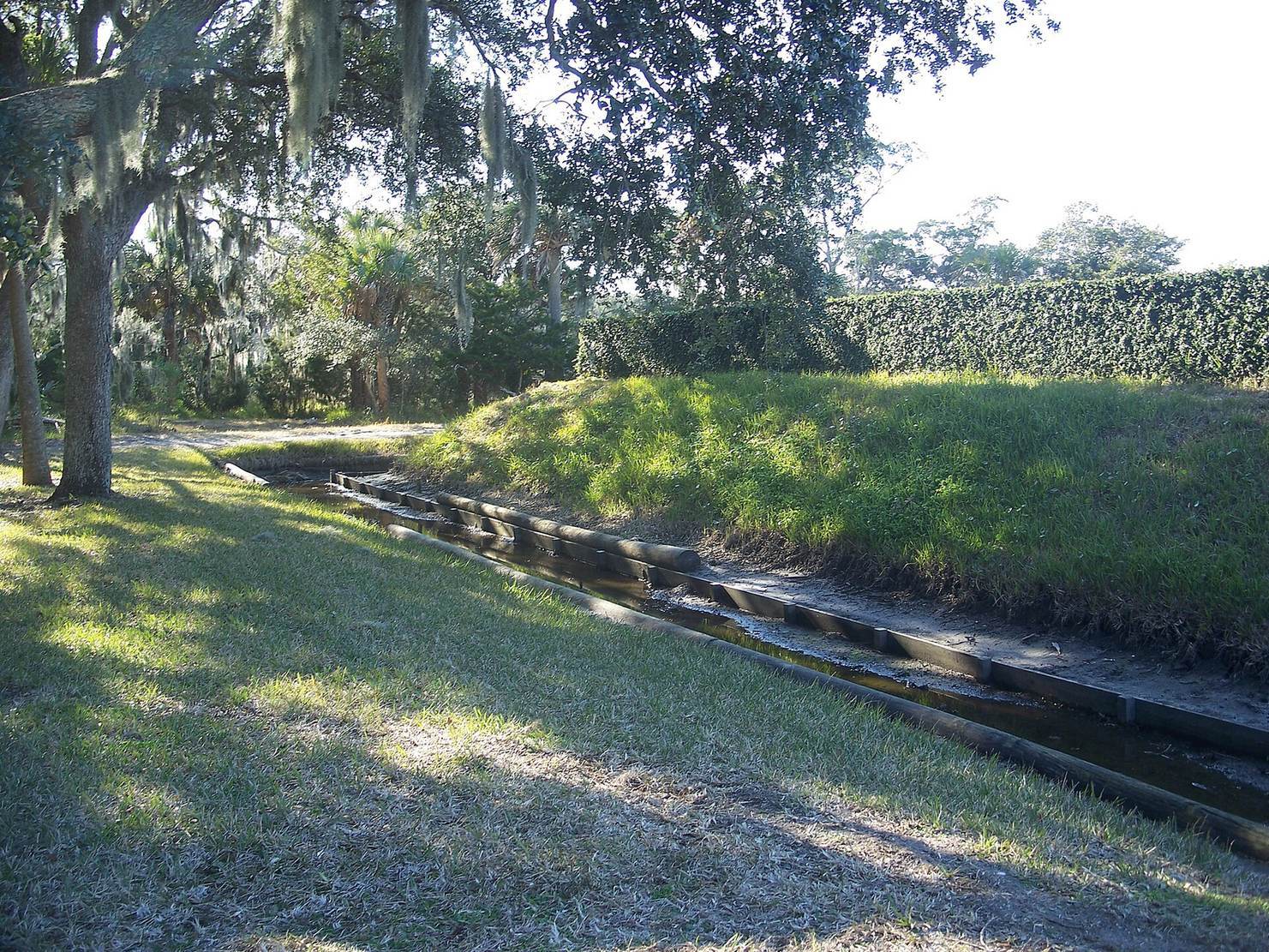
The memorial includes a replica interpretive model that depicts the fort’s modest defenses, along with a small museum. An outdoor reconstruction built by the National Park Service in 1964 was destroyed by Hurricane Dora that year; a later replica was made as an interpretive model.