Jukkasjärvi Church: A Lutheran Parish Church in Swedish Lapland
Site at a Glance
- Country
- Sweden
- Primary era
- Early Modern
- Eras represented
- Early Modern, Modern
- Civilizations
- Swedish
- Site type
- Religious
- Remains
- Church
On this page15 sections
History
Foundation and early visitors
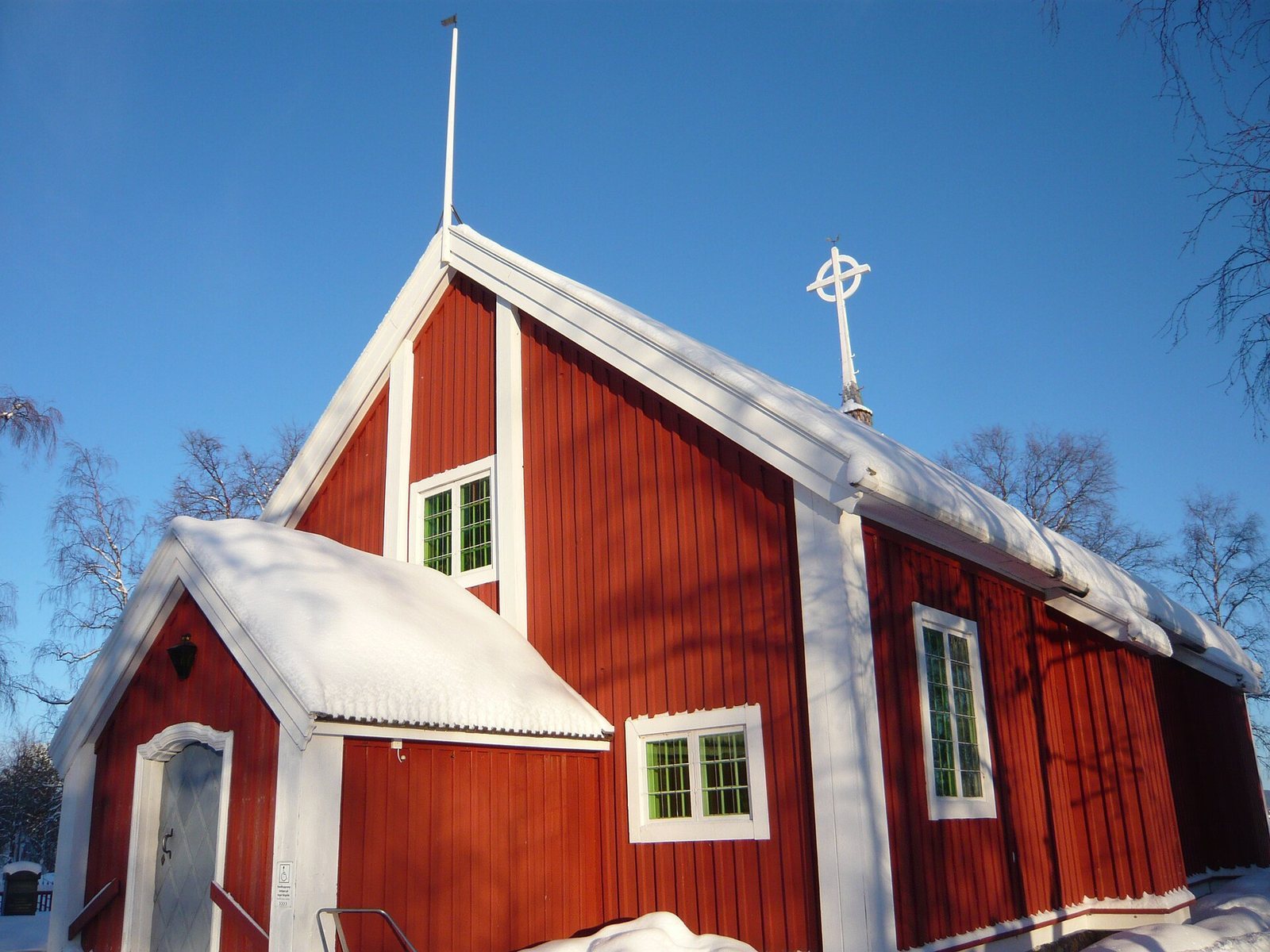
Jukkasjärvi Church is a wooden Lutheran church in Jukkasjärvi, Sweden, founded by Charles IX, king of Sweden. Built in 1607–1608 and consecrated in 1608, it is the oldest surviving church in Swedish Lapland. It remains an active Church of Sweden parish church, part of Jukkasjärvi Parish in the Diocese of Luleå, a regional church jurisdiction.
Three French travelers, including playwright and traveler Jean-François Regnard, came to the church in 1681. They described their journey through Lapland as a passage to the edge of the world. Aubry de La Mottraye, a French traveler and writer, visited in 1718 and composed a Latin hymn associated with the church.
Rebuilding and completion
The church was rebuilt in 1726, when its present chancel and porch were added. A detached bell tower followed during the 1740s. Work on the building complex continued until 1785, when the organ loft was completed.
Twentieth-century additions
Grönlunds Orgelbyggeri built a mechanical organ for the church in 1954, replacing a harmonium. Bror Hjorth’s altarpiece, donated by the Swedish mining company LKAB, was presented in 1958 for the church’s 350th anniversary. Before its unveiling, Hjorth asked for a baptismal font and gave its construction to local resident Vilhelm Isaksson. The present organ, also made by Grönlunds, was inaugurated in 1997 by Archbishop Gunnar Weman. A boat sculpture made in 2006 was acquired in connection with the church’s 400th anniversary.
Remains
The church complex is made of wood and consists of the main church and a detached bell tower. Its buildings include the church’s rectangular nave, porch and north-side rectory, as well as a tower passage connecting the cemetery enclosure with a route toward the church.
Church buildings
Main church
The main building has a rectangular nave, a small porch and a rectory attached on its north side. Its roof is tiled and has two sloping sides. Fragments of the original building survive within the complex.
Bell tower
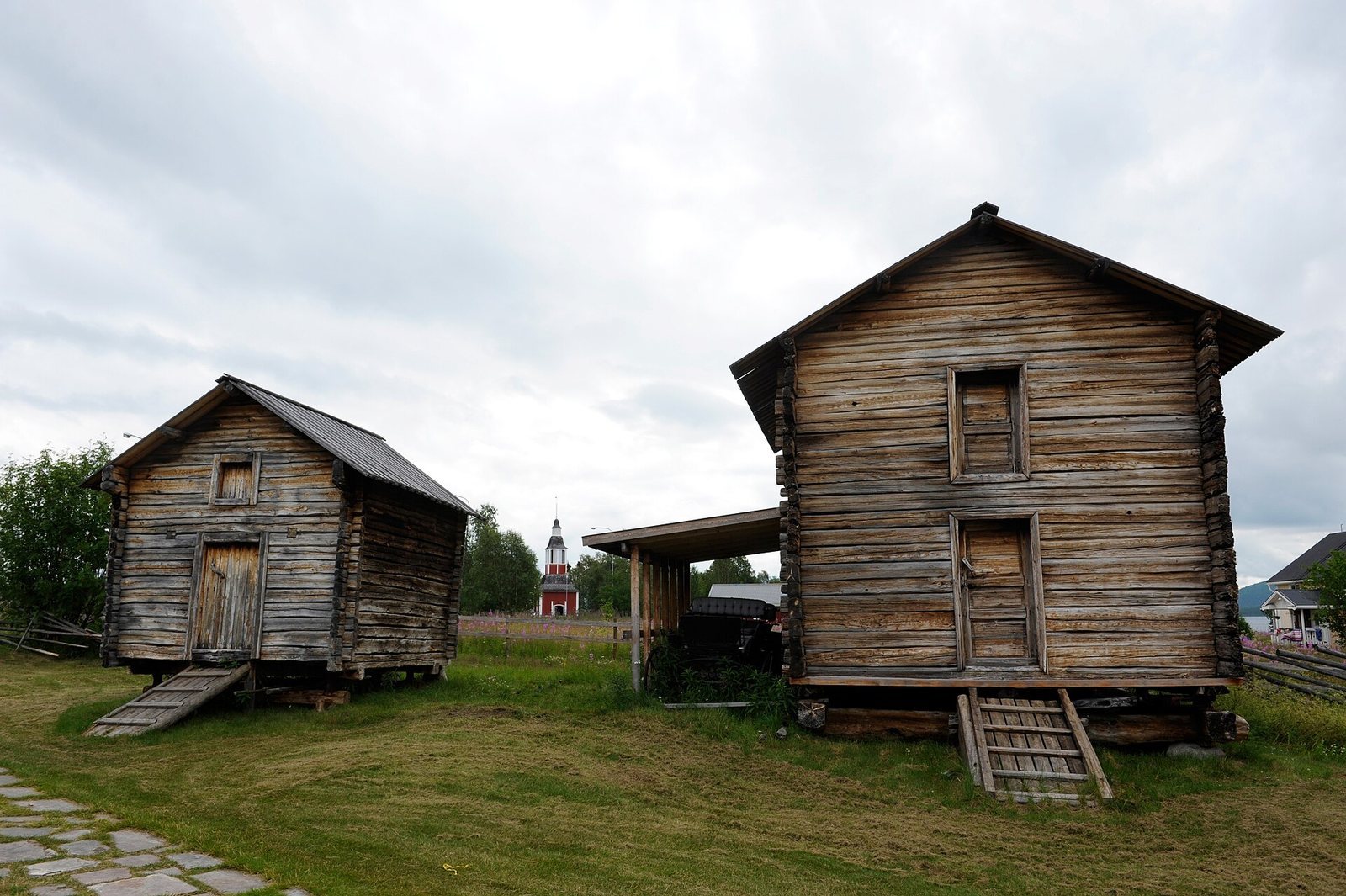
The detached tower has a square base and three sections stacked above it. Each section ends in a truncated-pyramid shape that supports the one above. A passage through the base provides access to the cemetery enclosure and a route toward the church.
Burials and church furnishings
Burials beneath the floor
Repair work in 1907 involved lifting the wooden floor and revealed burial places beneath it. A pine coffin contained the mummified body of a young woman dressed in clothing from the early eighteenth century. Further investigations in 1947 identified the remains of 87 people buried in the church.
Burned inscriptions
Church boards preserve a burned record of the three French travelers’ 1681 visit, including Jean-François Regnard’s group, and a burned Latin hymn composed by Aubry de La Mottraye after his 1718 visit.
Altarpiece and baptismal font
Bror Hjorth’s altarpiece is a three-panel carving in teak. Christ appears in the central panel, while the two side panels portray episodes from the life and missionary work among the Sámi of Lars Levi Laestadius, a nineteenth-century Lutheran priest and religious revivalist. The baptismal font was made by Vilhelm Isaksson using only an axe, as Hjorth had requested.
Organ
The present organ’s façade is made of figured birch, reindeer antler and raw-tanned hide, with a sun and a Christian cross at its center. Birch and reindeer antler form the keyboard. Its control knobs, which select different organ sounds, carry symbols from Sámi mythology, the traditional beliefs and stories of the Sámi, an Indigenous people of northern Europe. The instrument also incorporates birdsong, drums and the sound of reindeer footsteps.
Boat sculpture
On the right side of the church, a devotional sculpture by Thomas Qvarsebo depicts a river boat of the kind used to carry passengers across the Torne River. The work is one metre long.
Historic objects and textiles
The church preserves chalices dated 1687 and 1774, a silver candlestick donated in 1832, and church vestments, the oldest of which dates to 1778.