Velda Mound: A Fort Walton Platform Mound in Florida
Site at a Glance
- Rating
- 4.3
- Popularity
- Very Low
- Country
- United States
- Primary era
- Early Modern
- Eras represented
- Medieval, Early Modern
- Civilizations
- Unclassified
- Site type
- City
On this page12 sections
History
Velda Mound is a Native American archaeological site in northern Tallahassee, Florida, United States. Built and occupied by Fort Walton peoples, a regional expression of Mississippian culture, the site dates mainly to about AD 1450 and was later used by their descendants, the Apalachee. It belongs to the Fort Walton and Apalachee cultural sequence of the Apalachee Province and is one of five recorded Fort Walton mound sites in Leon County.
The Fort Walton and Apalachee Sequence
Velda Mound stands about 8 kilometres east of Lake Jackson Mounds, the paramount center of the chiefdom that became the Apalachee Province of Spanish Florida. Archaeologist B. Calvin Jones regarded Velda as one of the last Fort Walton centers built in the Tallahassee area. The archaeological Velda phase was first defined for the period from 1450 to 1625. Later interpretations place it between 1500 and 1633, after the Lake Jackson phase and before the San Luis phase, which belongs to the Spanish mission period.
During its occupation, the mound supported the residence of a village priest-chief. The settlement around it included homes, family garden plots, communal fields, and storage facilities. Velda may also have served as a town-hall-like center for people living across the surrounding countryside. Larger mound centers such as Lake Jackson supported smaller single-mound settlements like Velda and farmsteads that produced maize.
Fort Walton communities in the Tallahassee Hills grew maize, beans, and squash while also hunting, fishing, and gathering wild resources. Pottery from Velda carries incised scroll designs associated with the broader Fort Walton ceramic tradition. The end of occupation remains uncertain, with proposed abandonment dates around either 1565 or 1625. Suggested pressures include the depletion of nearby firewood and building materials, along with the need to leave cultivated fields fallow so that soil fertility could recover and weeds could be controlled.
Later Land Use and Damage
The land may have continued in use during the Spanish mission, British, Second Spanish, and Territorial periods. It was later incorporated into plantation holdings, and the property eventually became part of Velda Dairy Farm, which produced milk for local distribution by the 1940s. The mound took its name from the dairy.
Antiquarian digging began in the early 1920s. In March 1922, Emma Boyd, head of the vocal music department at Florida State College for Women, died when a trench cut along the mound collapsed while she and two companions were examining it. During the 1950s, a bulldozer cut a trench about 3 metres wide through the mound, but the discoveries were not recorded.
Development of the former dairy property as the Arbor Hills subdivision began around 1973. After B. Calvin Jones alerted the developers to the mound’s importance in 1978, the area was considered for preservation as a small park. A backhoe trench caused further damage in 1980, after which the mound and surrounding land were offered to the State of Florida. A 0.77-hectare parcel was donated to the state and leased to the Division of Historical Resources in 1982. The division repaired the mound in 1999 and established the present passive neighborhood park with volunteer assistance from the Panhandle Archaeological Society at Tallahassee.
Archaeological Investigation and Preservation
In 1969, L. Ross Morrell and Wilburn Cockrell excavated part of the village area before construction of Interstate 10. State archaeologists continued identifying and mapping the site during the 1970s and 1980s. The State of Florida owns Velda Mound, which is managed by the Division of Historical Resources of the Florida Department of State. In 2024, the site became a Florida Heritage Site, and a heritage marker was dedicated by the Tallahassee Historical Society, the Panhandle Archaeological Society at Tallahassee, and the Florida Department of State.
Remains
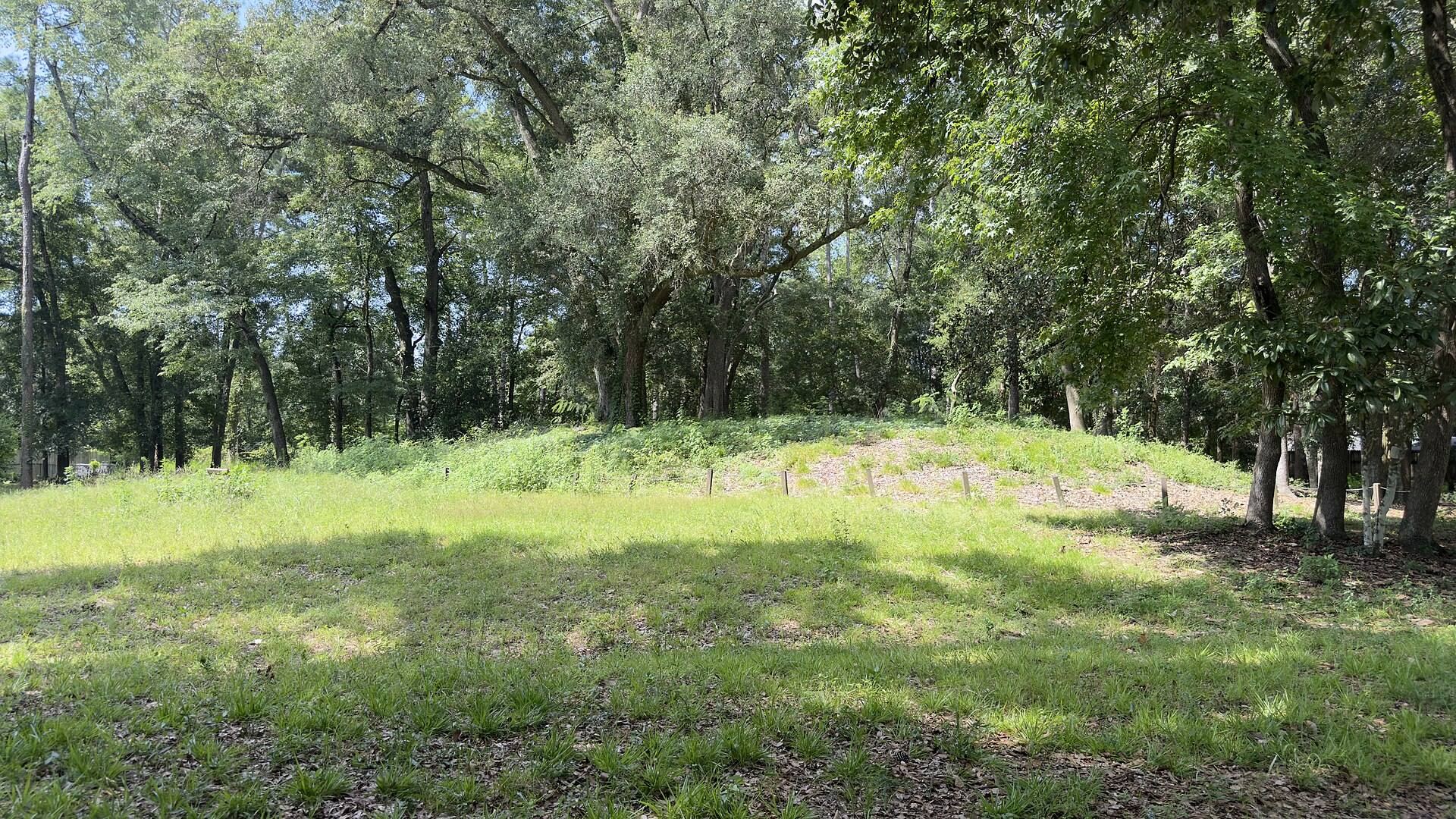
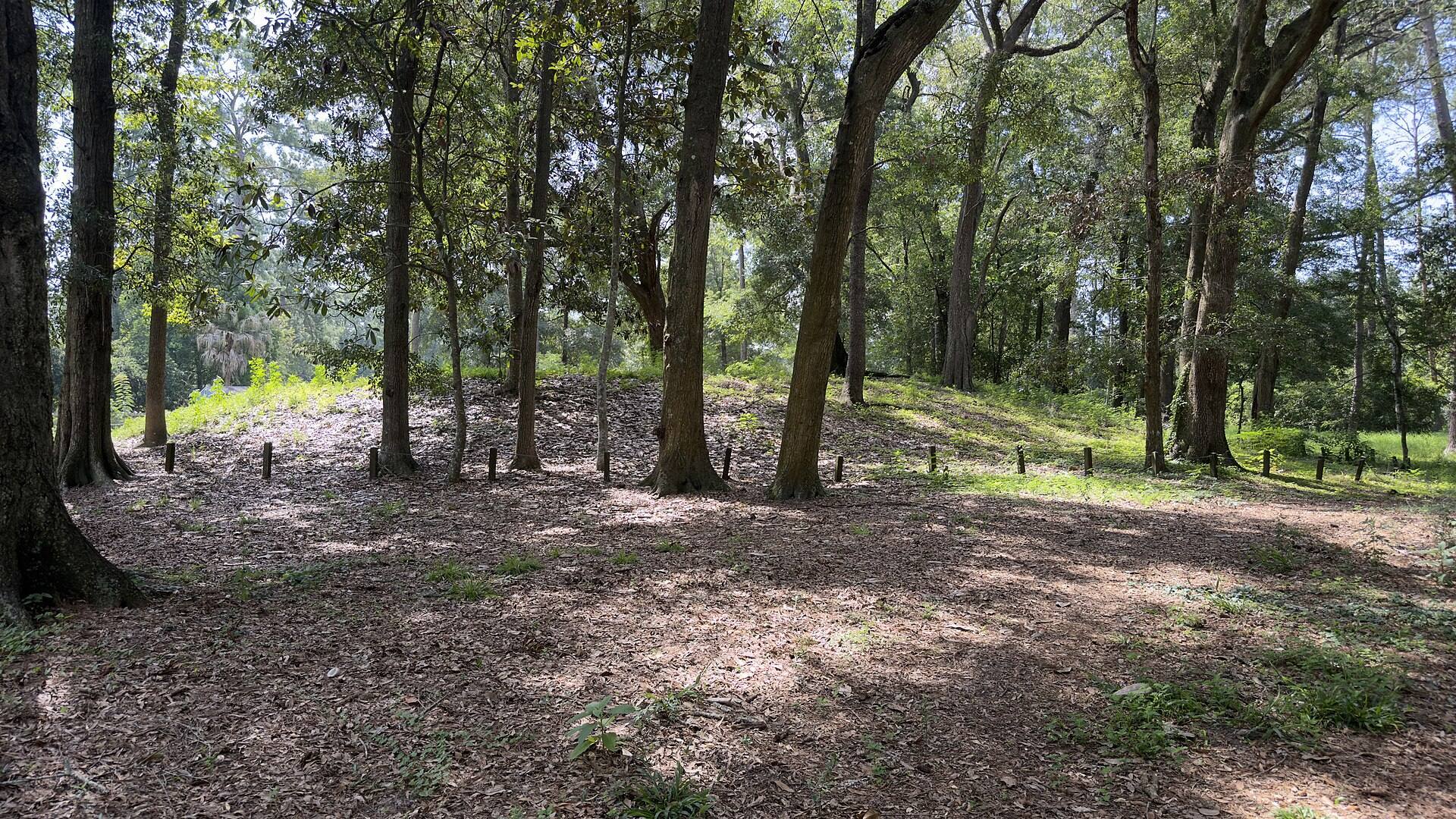
Velda Mound occupies the crest of a ridge in the Tallahassee Hills, on well-drained Orangeburg fine sandy loam. The approximately 0.77-hectare site contains a small rectangular platform mound, an adjoining plaza, and a village area extending southward. Second-growth longleaf pines and live oaks grow across the tract and over the mound, while the surrounding land was previously cleared for cattle pasture.
Mound and Plaza
Platform Mound
The rectangular mound is a platform mound, a flat-topped earthen monument designed to elevate a building. At Velda, it supported the priest-chief’s residence and may also have carried communal buildings. Platform mounds of this kind could support leaders’ residences or council houses. The earthwork is protected by a post-and-chain barrier, and the park’s trail passes around it.
Plaza
A modest plaza lies beside the mound. This open area provided space for civic and religious gatherings, including stickball games and the Green Corn Ceremony, a Southeastern Indigenous renewal ceremony associated with new corn, purification, and communal renewal.
Village Area
Houses and Fields
The settlement south of the mound included round houses about 7.6 metres in diameter, small garden plots, and larger communal fields. These features reflect a community combining household cultivation with shared agricultural activity. The village’s placement beside the mound and plaza formed the residential and working area associated with the ceremonial and leadership center.
Storage Pits and Excavated Finds
Excavation in 1969, approximately 60 metres south of the mound, exposed three circular houses, numerous storage pits, carbonized maize from several pits, large quantities of pottery, and other artifacts. The excavations also produced a contour map of the mound. Carbonized maize and the storage facilities provide material evidence for the agricultural practices that supported the settlement.
Preserved Park
The preserved area includes a mulch walking trail around the mound, benches, picnic tables, a park sign, and an interpretive kiosk. An interpretive panel presents Fort Walton culture, village life, maize agriculture, and the history of Velda Mound. The Florida Heritage Site marker dedicated in 2024 stands as a separate feature of the preserved property. The Division of Historical Resources maintains the grounds and trail, while volunteers periodically remove trash and invasive plants, chiefly mimosa.