Puʻu Loa Petroglyphs: A Sacred Hawaiian Rock-Art Site
Site at a Glance
- Rating
- 4.5
- Popularity
- Low
- Country
- United States
- Primary era
- Medieval
- External website
- Open
- Eras represented
- Medieval
- Civilizations
- Unclassified
- Site type
- Civic
- Remains
- Rock Art
On this page9 sections
History
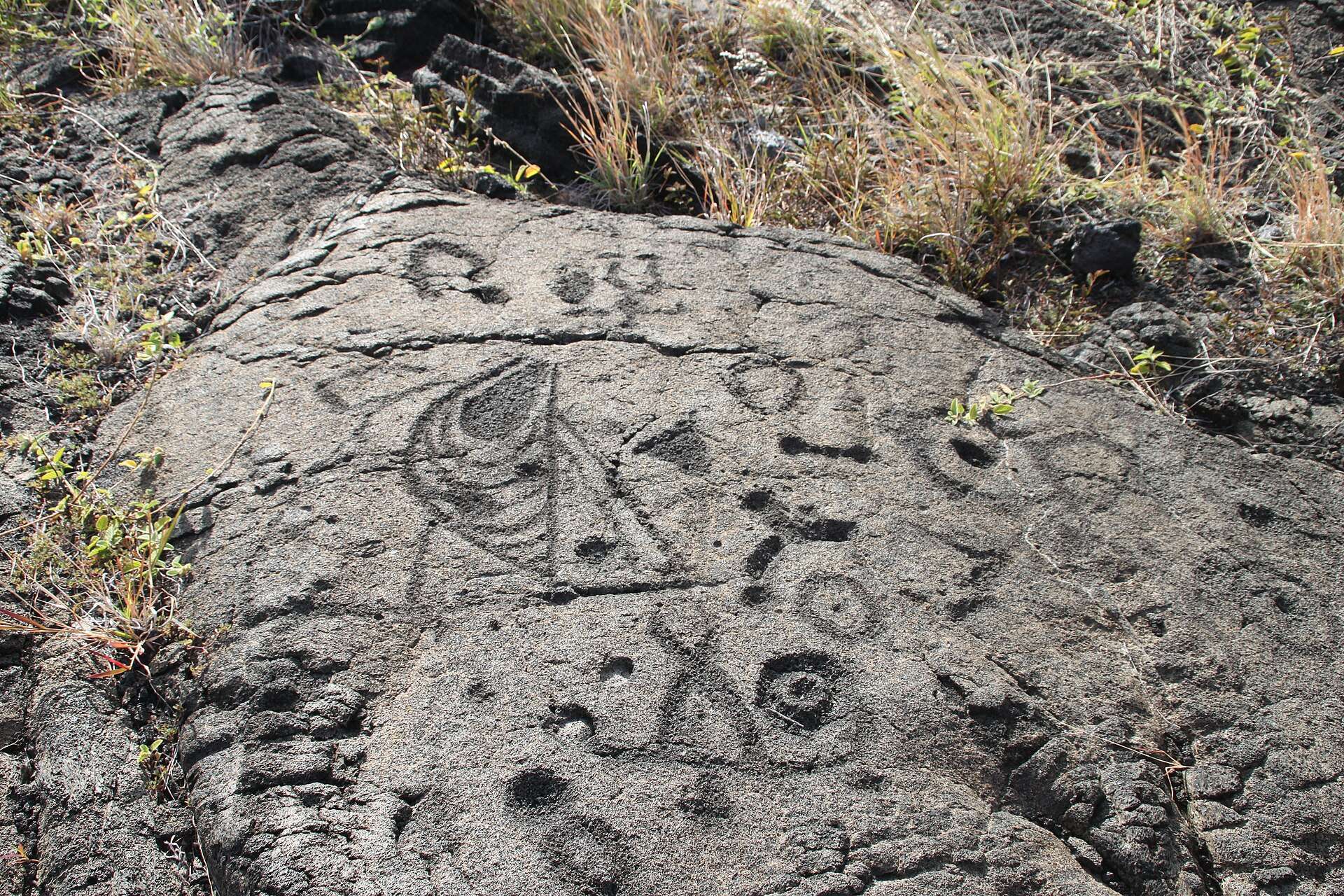
Puʻu Loa Petroglyphs is a Hawaiian archaeological site at the foot of Kīlauea along Chain of Craters Road near Pāhoa, in the United States. Created by Hawaiians on lava dating from approximately the thirteenth to the fifteenth century, the site lies along a former coastal route between Puna and Kaʻū and is regarded as containing the largest concentration of petroglyphs in the Hawaiian archipelago. A petroglyph is an image or mark deliberately cut or pecked into rock. The name Puʻu Loa literally means “long hill,” although its Hawaiian sense is closer to “hill of long life.”
A Coastal Route and Early Interpretations
Before European arrival, Hawaiians used the coastal route beside the petroglyph field to travel between Puna and Kaʻū. The route later became known as the Puna Coast Trail. The carvings therefore formed part of a traveled landscape rather than an isolated group confined to the lava mound.
In 1823, William Ellis, a reverend and the first European to reach the summit of Kīlauea, described the carvings. He proposed that they recorded journeys around Hawaiʻi Island. In this interpretation, individual points represented people, while circles represented completed circuits around the island. A circle with nearby marks indicated the number of participants, and a semicircle showed that travelers had reached Puʻu Loa before returning home. Circumambulation means traveling around a place in a complete circuit.
Family Practice and Sacred Meaning
After visiting Puʻu Loa in 1914, the American anthropologist Martha Warren Beckwith recorded another interpretation. Hawaiians were said to have placed a newborn’s umbilical cord in a hole cut into the lava and covered it with a stone. If the cord had disappeared by the next day, the child was believed to be assured a long life. People from other Hawaiian islands reportedly traveled to Puʻu Loa for this practice.
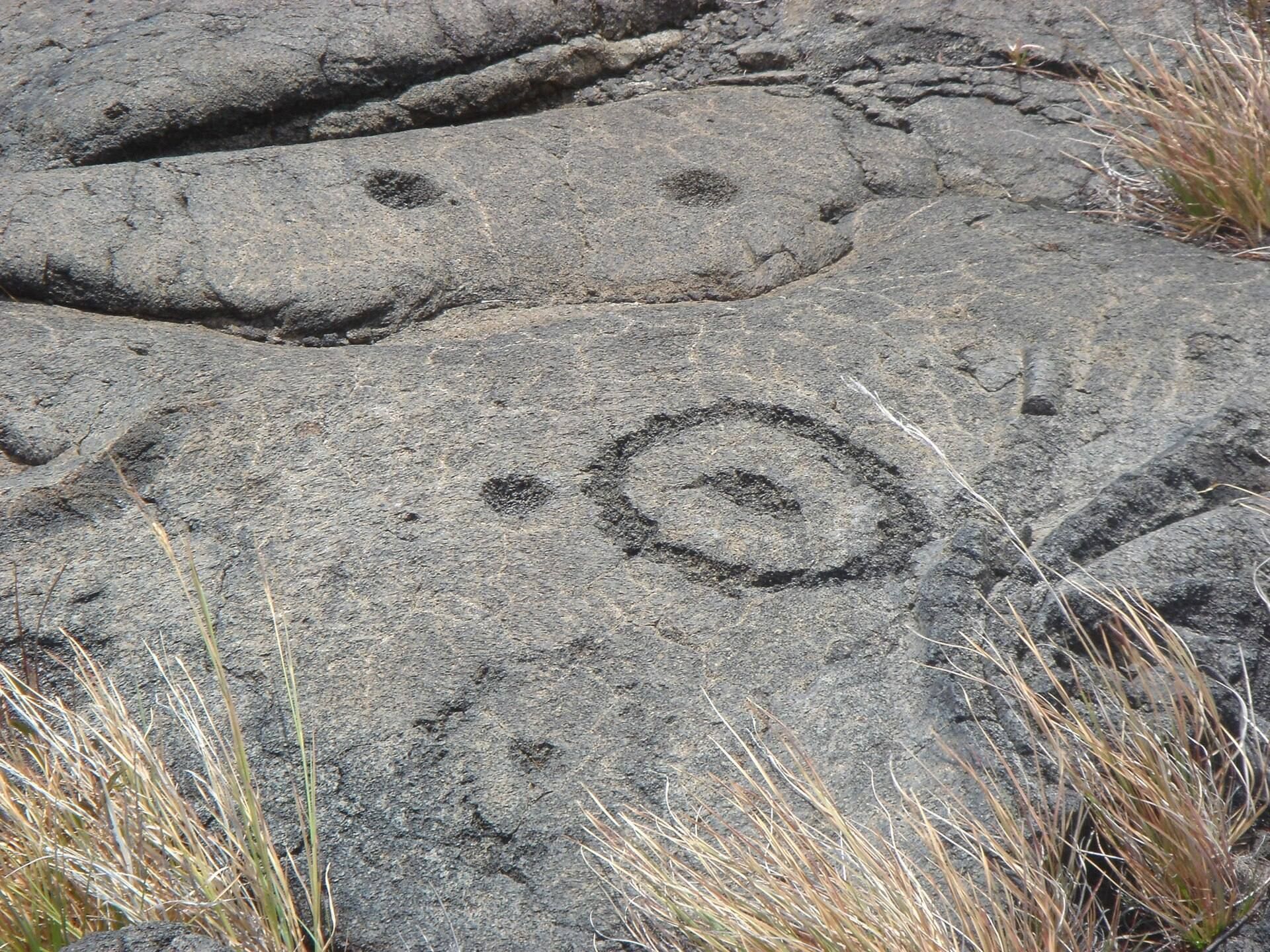
Within this interpretation, one circle around a hole represented a mother’s firstborn, while two concentric circles around one hole represented a chief’s eldest child. A circle enclosing several holes indicated membership in one family. A broken line was understood as a lizard, an isolated circle as a gourd, and a circle with a long line as a puloulou, a Hawaiian taboo marker indicating restricted or sacred status.
The umbilical-cord practice was said to have ended in the late nineteenth century under pressure from Christian missionaries and the wider evangelization of Hawaiians. The carvings and their origins give Puʻu Loa sacred significance, particularly for Hawaiians from Kalapana.
Preservation
Puʻu Loa lies within Hawaiʻi Volcanoes National Park. Erosion has softened some carvings, and preservation work includes photographic and drawn inventories. Paper-and-pencil rubbing was discontinued because it contributed to deterioration. A raised wooden walkway now crosses the petroglyph field, reducing wear on the lava surface.
Remains
Puʻu Loa and the Lava Field
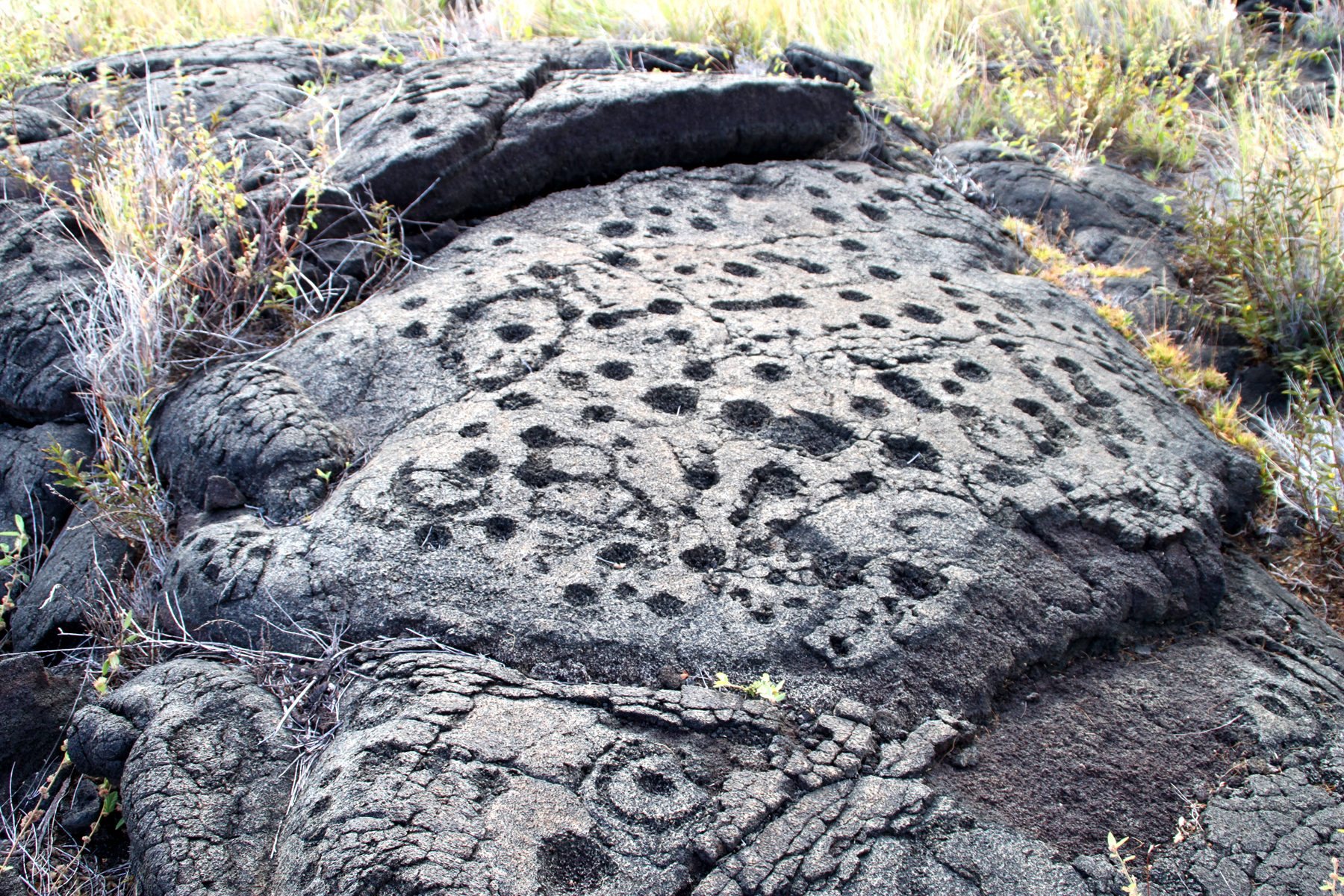
The site contains more than 23,000 carvings cut into pāhoehoe lava, a smooth, often rope-textured form of basaltic lava. The carvings are concentrated on and around Puʻu Loa, a gently sloping lava mound rising to approximately 50 metres. The petroglyph field also extends along the former coastal route between Puna and Kaʻū, so the surviving remains occupy both the mound and the surrounding lava.
Holes and Circular Designs
About 7,000 carvings on the slopes of Puʻu Loa are circular holes. They make up approximately 84 percent of the petroglyphs and occur singly, in groups, or within one or more surrounding circles. A single circle can contain about forty holes. The holes are associated with the interpretations of travel, family, and umbilical-cord practices that give the site much of its cultural meaning.
Figurative and Geometric Motifs
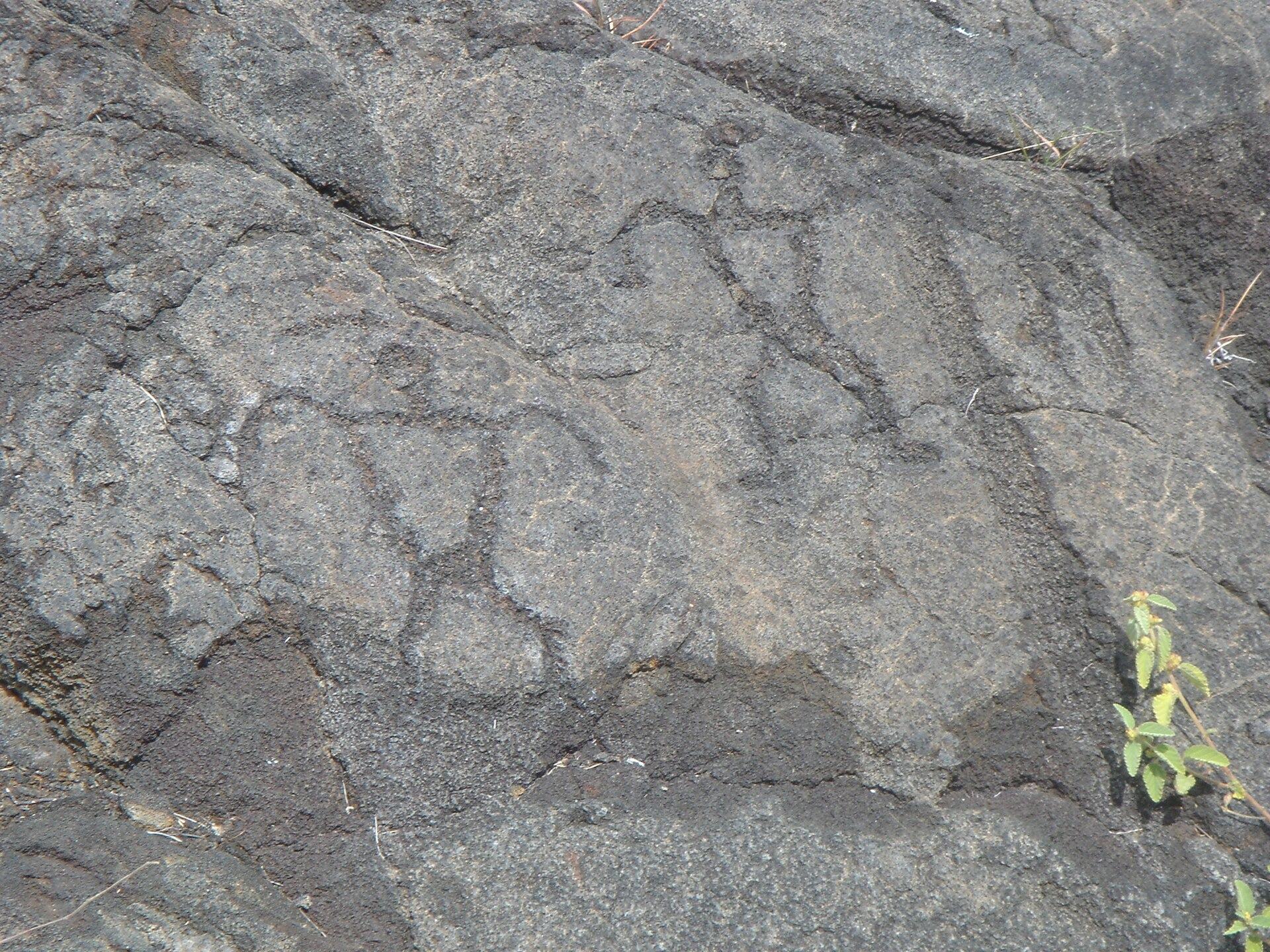
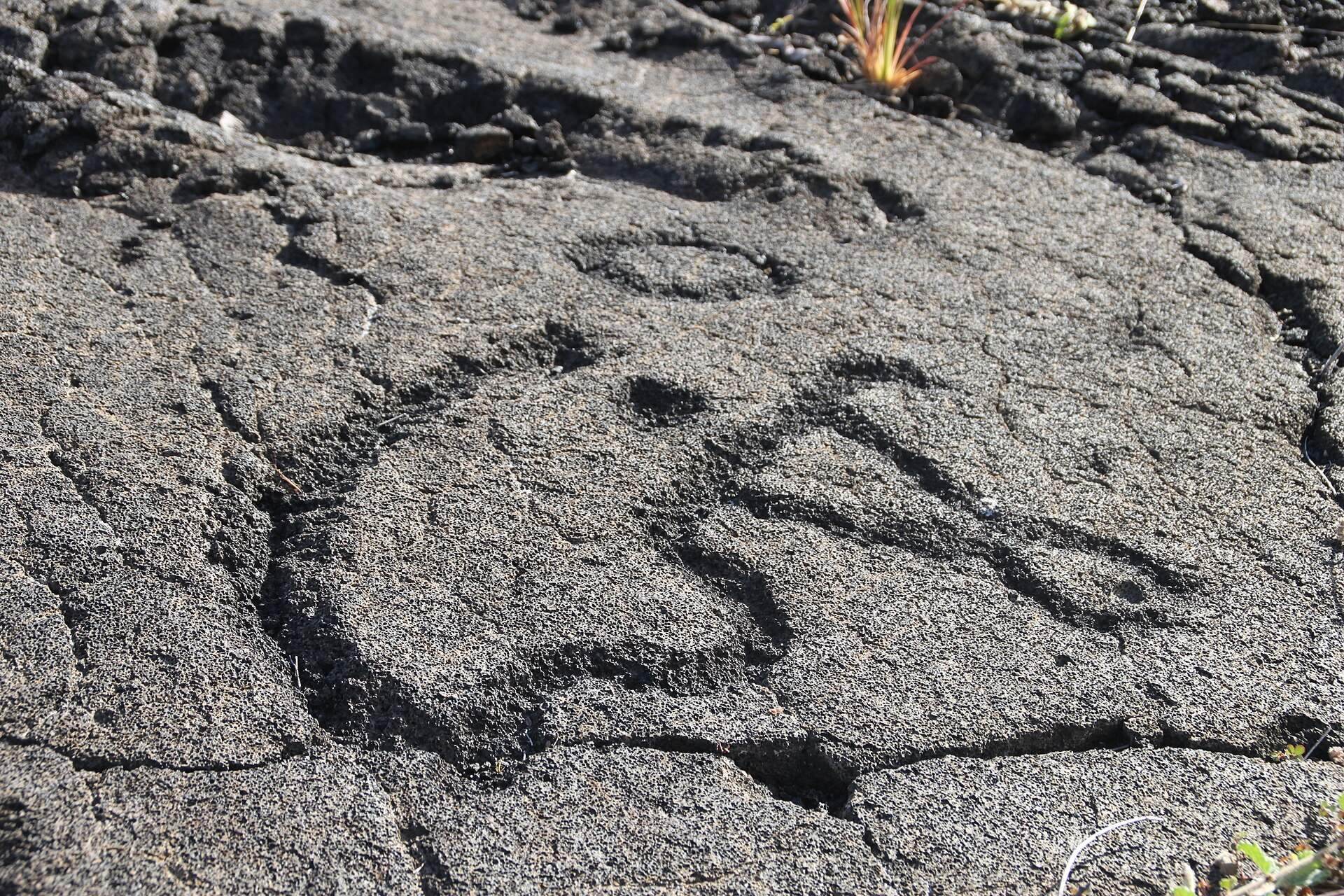
Other carvings include human-like figures, canoes, designs inspired by feather art, geometric forms, broken lines, isolated circles, and circles joined to long lines. These motifs are considered probably younger than the circular holes and are located at the foot of the mound. Together, the different groups of marks show that carving continued across more than one part of the lava field.
Boardwalk and Conservation Measures
The present route crosses the carvings on a wooden boardwalk designed to reduce wear and erosion. This structure allows the surviving marks on the lava to remain in place while limiting direct pressure on the petroglyph surface.