Prairie Grove Battlefield State Park: A Civil War Battlefield and Memorial Park in Arkansas
Site at a Glance
- Rating
- 4.8
- Popularity
- Medium
- Country
- United States
- Primary era
- Modern
- External website
- Open
- Eras represented
- Modern
- Civilizations
- Unclassified
- Site type
- Civic
- Remains
- Park
On this page7 sections
History
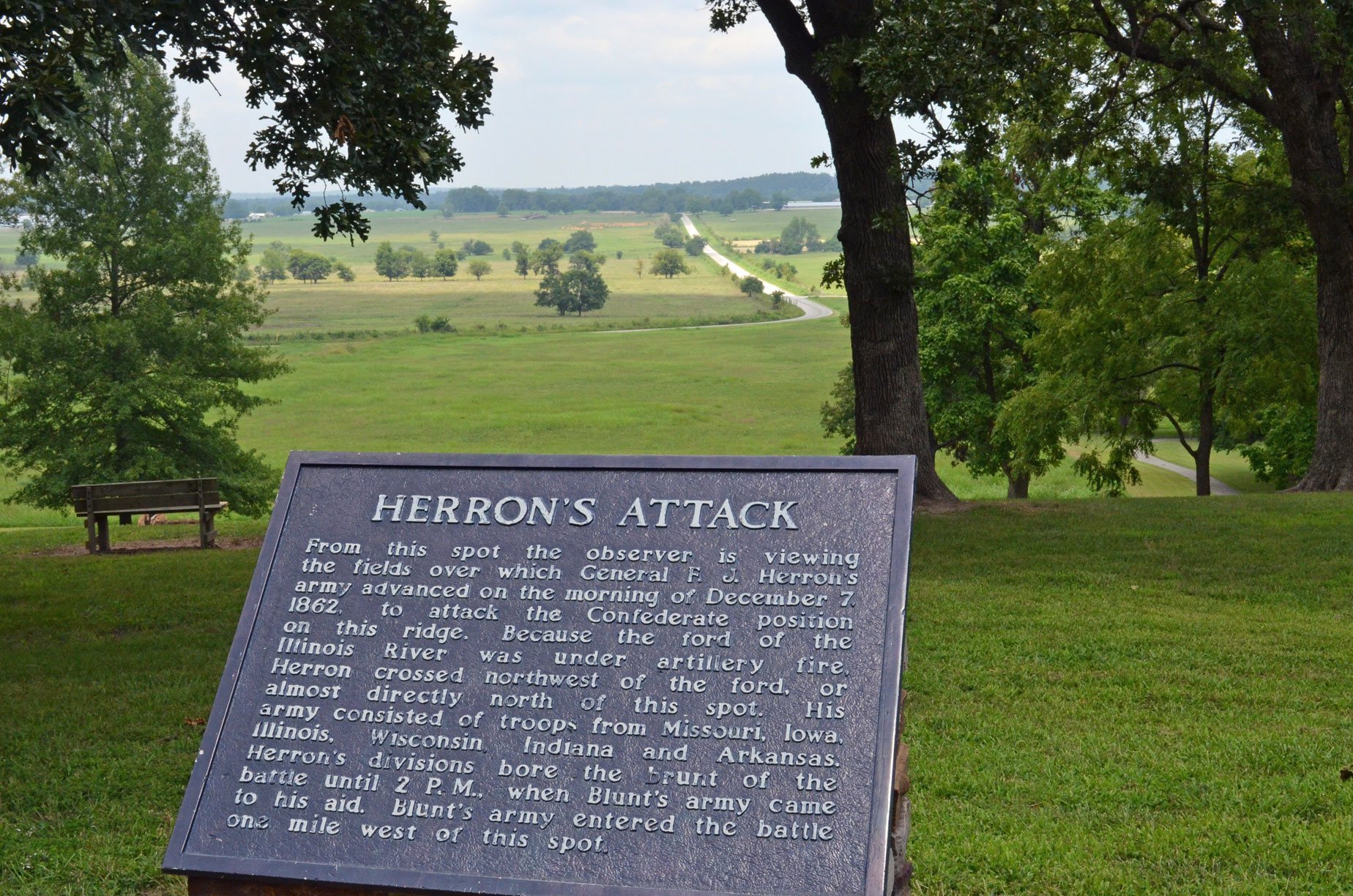
Prairie Grove Battlefield State Park is a historic battlefield park in Prairie Grove, Arkansas, United States. It commemorates the Battle of Prairie Grove, fought on December 7, 1862, during the American Civil War, the 1861–1865 conflict between the Union and the Confederacy. The battle secured United States Army control of northwestern Arkansas, and the Borden Farm became the scene of some of the heaviest fighting.
Battlefield memorialization
In 1908, the local chapter of the United Daughters of the Confederacy, a women’s heritage organization that maintained Confederate memorial sites, purchased 9 acres at the center of the battlefield. The chapter preserved the property as a meeting place and memorial site for almost five decades.
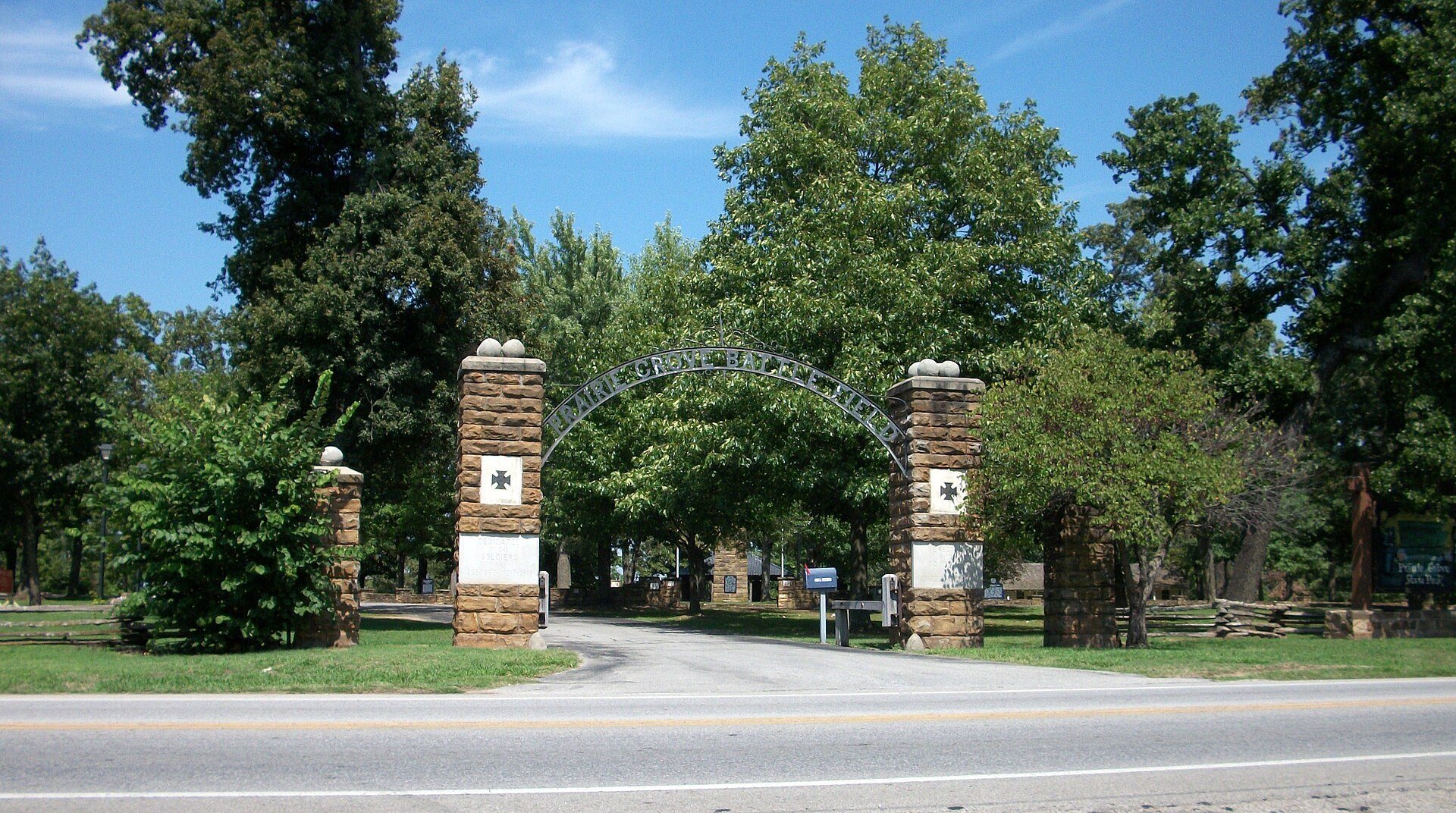
Local business owner and politician J. Sherman Dill later secured funding for improvements. Around 1925, the work produced a stone entrance archway, a wooden bandstand, and a gravel driveway. The grounds declined during the Great Depression and remained fenced for several years. In 1953, a newly formed Lions Club chapter adopted the property, raised money through community events, and added benches, picnic tables, and sidewalks.
Expansion into a state park
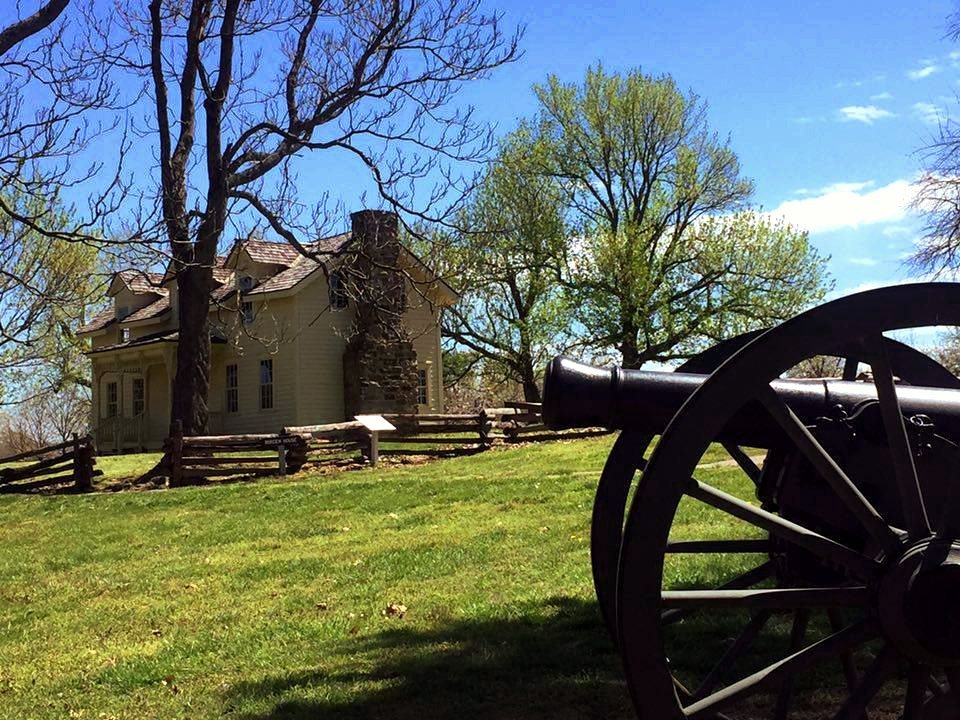
In 1957, a 55-foot stone chimney was moved to the park from nearby Rhea’s Mill Township, where it came from the site of a skirmish. Other historic buildings from the surrounding area followed, including an 1834 log house and a blacksmith’s shop. A bequest from Biscoe Hindman, the grandson of Confederate Major General Thomas C. Hindman, funded a museum dedicated on May 31, 1964. Named Hindman Hall, the museum commemorates Thomas C. Hindman, who commanded the 1st Corps of the Confederate Army of the Trans-Mississippi during the battle. The Army of the Trans-Mississippi was the Confederate military organization operating west of the Mississippi River.
The park entered the Arkansas state park system in 1971 through a joint effort involving Governor Dale Bumpers and state legislators Morriss Henry, Hugh Kincaid, and Charles W. Stewart. Land acquired or donated in 1980, 1992, and 2005 brought the park to 707.8 acres. A 64-acre triangular section of the battlefield was placed on the National Register of Historic Places in 1970. The registered area expanded to 65.8 acres in 1992 and to 707.8 acres in 2005. The National Register is the United States federal inventory of places recognized for historical or architectural significance. The Prairie Grove Airlight Outdoor Telephone Booth, opposite the park entrance on Highway 62, is also listed individually.
Remains
Battlefield landscape
The park occupies land historically used as fields, forest, and battlefield. Its grounds include the Borden Farm area, where intense fighting took place during the 1862 battle. The registered battlefield landscape includes a 64-acre triangle formed in part by North Road on the northwest and Highway 62. Later expansions connect this preserved area with the wider 707.8-acre park.
Entrance and park improvements
A stone archway constructed around 1925 marks the entrance. The same improvement campaign added a wooden bandstand and a gravel driveway around the grounds. Benches, picnic tables, and sidewalks were installed during the community-led work of the 1950s, forming part of the park’s later commemorative landscape.
Relocated buildings and memorial structures
The park contains historic structures moved from nearby locations. A 55-foot stone chimney came from Rhea’s Mill Township, while an 1834 log house and a blacksmith’s shop were relocated from the surrounding area. Hindman Hall serves as the museum building, and a battle monument and the chimney are among the park’s prominent features.