Monte Verde: A Paleolithic Archaeological Site in Chile
Site at a Glance
- Rating
- 4.8
- Popularity
- Very Low
- Country
- Chile
- Primary era
- Stone Age
- Eras represented
- Stone Age
- Civilizations
- Unclassified
- Site type
- Domestic
- Remains
- House
On this page13 sections
History
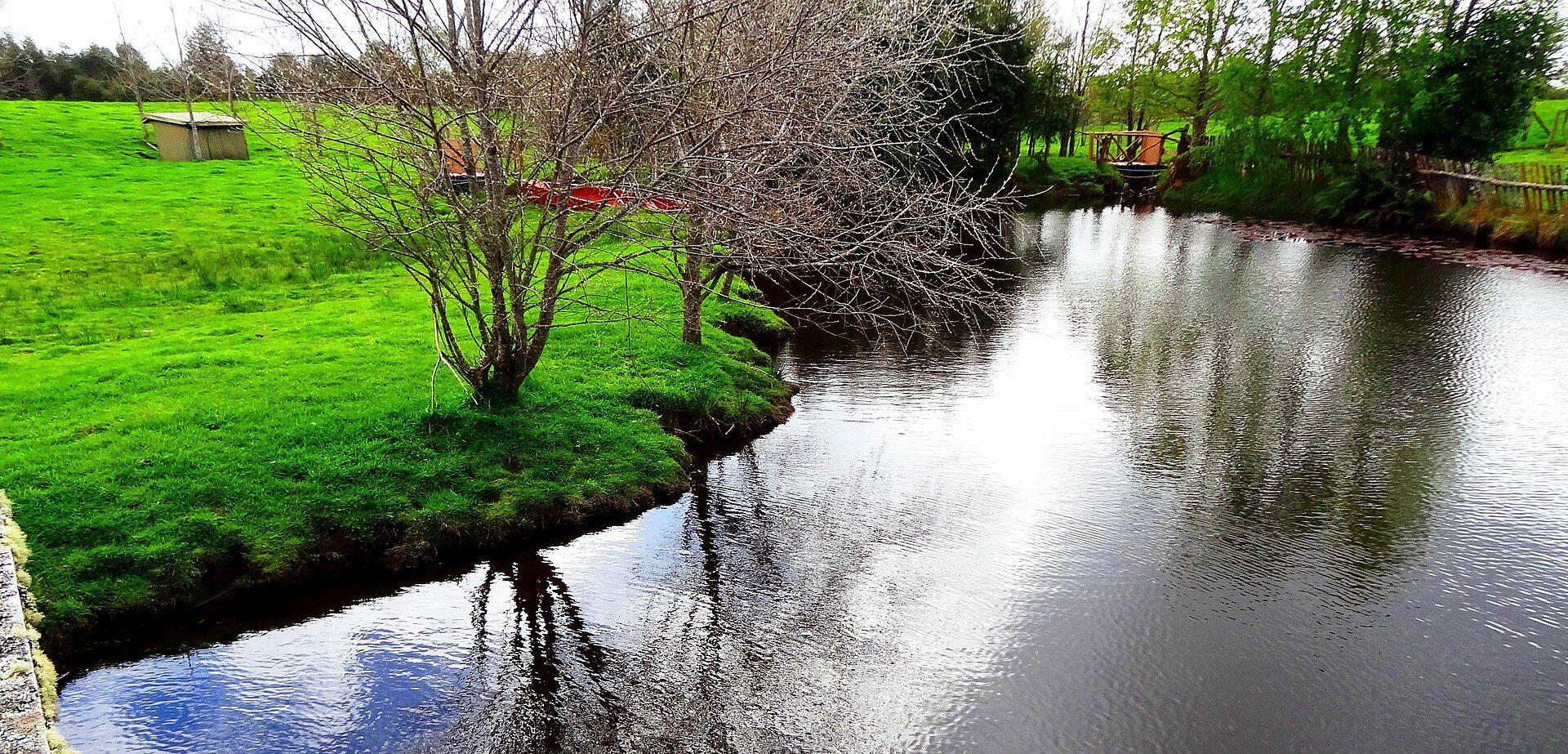
Monte Verde is an open-air Paleolithic archaeological site near Puerto Montt in southern Chile, on the banks of Chinchihuapi Creek. Its principal occupation, Monte Verde II, has generally been dated to about 14,500 years before the present and is associated with early hunter-gatherer settlement during the late Pleistocene, the geological epoch that included the last Ice Age. The site became central to debate over the peopling of the Americas because its accepted chronology placed human occupation more than 1,000 years before the dates traditionally associated with the Clovis culture.
Occupation and environmental change
The Monte Verde complex includes two main occupation components, Monte Verde I and Monte Verde II, along with associated areas near Chinchihuapi Creek. The earliest activity is interpreted as the work of small groups adapted to cold, boreal environments. As conditions became warmer and a wetland formed beside the creek, occupation appears to have lasted longer. The inhabitants used a wider range of resources and left more varied tools, structures, food remains, and other cultural deposits.
The people who used Monte Verde have been interpreted as semi-sedentary to sedentary hunter-gatherers. They responded to seasonal and environmental changes and maintained exchange relationships with groups in distant regions. Coastal plants, marine algae, and other non-local materials indicate contact with areas near the Pacific, while some evidence has also been associated with movement across the Andes and into the Argentine steppes. Monte Verde has been considered complementary to Pilauco Bajo, a nearby site linked to hunting or scavenging activities.
Discovery and archaeological investigation
Monte Verde came to archaeological attention after local farmers altered the course of Chinchihuapi Creek in 1973 to help transport timber. Erosion exposed large bones, which the Barría family collected. In 1976, Luis Werner received the bones and passed them to Maurice van de Maele and Carlos Troncoso. The two researchers visited the area and gathered additional remains exposed by the creek.
Tom Dillehay began systematic excavation in 1977 with four students from the Universidad Austral de Chile. The work identified the Monte Verde I and Monte Verde II components and showed that the site differed materially from known Clovis-associated sites. The findings were presented at the 1979 National Archaeology Congress in Valdivia. Dillehay published a major account of the results in 1989, followed by a revised volume in 2002 and a Spanish-language summary in Chile in 2004.
In January 1997, an international group of scientists examined the excavations and layers, collected samples for radiocarbon dating, and accepted the evidence for human occupation. Monte Verde then gained broad recognition as one of the oldest verifiable human occupations in the Americas. Excavations resumed in 2013 under Dillehay to investigate additional remains and reassess the chronology. Research on seaweed recovered from hearths and other areas produced direct dates of approximately 14,220 to 13,980 years before the present, supporting the early chronology attributed to Monte Verde II.
Chronological debate
Monte Verde II has generally been placed at about 14,500 years before the present, although its chronology remains disputed. In 2026, a study proposed that the campsite was no older than about 8,200 years before the present and belonged to the Middle Holocene, the middle part of the current geological epoch. The study interpreted nearby layers as containing an erosional gap, meaning that some sediment had been removed, and possible redeposition, in which older organic material had been moved and deposited again.
Dillehay and other scholars challenged the interpretation because the analysis was conducted away from the original excavation area, which had been destroyed by flooding. Other researchers supported aspects of the study. The resulting dispute led the Monte Verde Foundation, whose president is Dillehay, to submit complaints about archaeological sampling by César Méndez to Chile’s Council of National Monuments. On 8 April 2026, the council unanimously rejected the complaints, concluding that the work complied with its approved permit and that most of the requested measures fell outside its legal powers.
Monte Verde I is older and more controversial. It has been associated with dates of approximately 18,500 years before the present, while deeper materials have produced reported dates of about 32,840 to 33,900 years before the present. The older dates and the interpretation of associated materials as evidence of human activity remain inconclusive and are not generally accepted. Monte Verde II, by contrast, played a major role in weakening the former “Clovis first” model, which treated the Clovis culture as the earliest widespread human settlement tradition in the Americas.
Protection and changing conditions
Monte Verde is protected under Chile’s 1971 National Monuments Law. The Council of National Monuments approved protection for several properties in 2007, and a decree signed on 25 January 2008 declared 8.35 hectares a Historic Monument. The protected perimeter included properties on both sides of Chinchihuapi Creek. The site was added to Chile’s UNESCO World Heritage Tentative List on 23 February 2004 and was included in Puerto Montt’s 2008 communal regulatory plan as part of the municipality’s historical and cultural heritage.
Seasonal flooding and erosion by Chinchihuapi Creek have affected approximately 80 percent of the area excavated during the preceding four decades. In 2016, a reported chemical discharge into the creek raised concerns about copper and zinc contamination and possible effects on archaeological remains and fossils. In 2018, the Environmental Court found that irregular waste discharges had occurred but concluded that the evidence did not demonstrate ecological damage. Flooding and erosion have continued to place exposed excavations and fossils at risk.
Remains
The archaeological complex is arranged around Chinchihuapi Creek in four excavation zones. Zones A and D lie on the northern bank on an occupation terrace about 80 metres long and 15 to 20 metres wide, with roughly 35 metres between them. Zones B and C are on the southern bank. Zone B lies about 250 metres west of the other zones, while Zones A, D, and C are close together. The Monte Verde II residential area covers approximately 3,000 square metres, and its occupation layer is about 2 to 5 centimetres thick.
Structures and living areas
Zone D dwellings
Zone D contains the remains of up to 12 elongated, tent-like dwellings that were probably covered with animal hides. Their rectangular bases were made from wooden logs, while branches and quila or reed formed the upper framework. Internal subdivisions divided the spaces, and one structure had access steps. Wooden stakes, knotted plant-fibre cords, small interior braziers, and thousands of animal-hide fragments were associated with the dwellings. The hides may have served as floor coverings, and the structural bases, stakes, and other wooden parts used seven kinds of wood.
Two large hearths stood outside the main dwelling area. Smaller braziers or hearths were placed inside the subdivided spaces and were probably used for household or craft activities. The larger fires contained charcoal, plant remains, animal remains, and burned stone tools. Together, the Zone D dwellings and the Zone A structure have been used to estimate a residential group of approximately 35 to 40 people, although estimates based on the initial excavation proposed about 20 to 30 inhabitants.
Zone A specialised structure
About 35 metres west of Zone D, Zone A contained a specialised bone-shaped structure. Its base consisted of hardened gravel and sand, with holes or impressions left by branches that had probably been driven into the ground. Flattened and smoothed tree trunks were also present. The structure was associated with 33 fragments of plant-fibre cord, mostly made from Juncus and possibly Scirpus, as well as abundant salt crystals and red ochre.
The purpose of the Zone A structure remains uncertain, but its materials and layout indicate a specialised use rather than an ordinary dwelling. Medicinal plant remains were especially concentrated around this structure and in some living spaces in Zone D, giving the area an additional connection with plant processing or treatment.
Preservation of organic materials
Monte Verde’s exceptional preservation resulted from a rise in Chinchihuapi Creek. Water transformed the former creek bed and occupation surface into a bog, or waterlogged ground where oxygen-poor conditions slow decay. Peat sealed the camp, while iron derived from Andean volcanoes formed a hard, water-impermeable layer of iron oxide over the peat. Wood, stakes, cords, animal hides, meat tissue, plant remains, food refuse, charcoal, tools, hearths, braziers, and human footprints survived within these deposits.
More than 500 pieces of archaeological wood were recovered, including structural logs, fallen posts, stakes, chips, shavings, burned and unburned pieces, mortars, digging sticks, bowls, awls, drills, and handles. Thirteen kinds of wood were identified, including alerce, canelo, avellano, mañío, maqui, huahuán, arrayán, luma, ulmo, coigüe, tineo, tepú, and tiaca. Most came from young trees no more than 10 to 20 centimetres in diameter. Boldo, a medicinal plant that does not grow locally, was also present.
Plants and coastal resources
Seventy-three plant types were identified in Monte Verde II. The assemblage includes seeds, nuts, fungi, wild potato, fruits, and more than 20,000 plant fragments assigned to 55 local types. Twenty-three plants or trees had medicinal properties, including ten species identified exclusively as medicinal. These included Polygonum sanguinaria, Anagallis alternifolia, and boldo. Eleven specimens of wild potato, Solanum maglia, were recovered, including one from a wooden mortar.
Nine species of marine algae were found in hearths and other settlement areas, including Sargassum, Durvillea antarctica, Porphyra, and Gracilaria. Some were edible or medicinal. Coastal plants such as Atriplex, Scirpus californicus, and Selliera radicans were also present, although some grow more than 80 kilometres from Monte Verde. These remains show that coastal resources were transported to the inland settlement.
Animal remains and human traces
More than 400 animal bones were recovered. Most belonged to six or seven adult gomphotheres, extinct elephant relatives with trunks and tusks. Other remains included a Palaeolama bone, small-animal bones, and eggshell fragments. At least 38 pieces of animal tissue were identified, probably including hide and skin. Some were attached to wooden posts in a Zone D dwelling, while others lay on the occupation floor or remained on stone tools. Two larger pieces may have been muscle tissue or meat.
The animal remains indicate that some gomphotheres were hunted, while much of the material probably came from scavenging and was carried to the residential area. Preserved meat and hide were associated with the gomphothere remains. Three human footprints or foot impressions were found in Monte Verde II. One clearly preserves the toes and measures about 13 centimetres. Another footprint from the initial excavation was interpreted as probably belonging to a child, while a further impression was considered possibly to have been made by an adult weighing about 70 kilograms. Impressions of human teeth occurred on chewable balls made from medicinal plants, and human coprolites, or fossilised human faeces, were also reported.
Stone tools and Monte Verde I
More than 692 stone pieces were recorded in Monte Verde II. The assemblage included at least 24 deliberately flaked tools, among them four bifaces worked on both faces, two bifacial choppers, one core, and 14 flakes. It also contained 54 pecked, polished, or ground pieces, including a perforator, two grooved stones or bolas, 45 polished spheroids, and 34 grinding stones, along with 12 pieces fractured by heat. A further 454 stone specimens were shaped by natural processes rather than deliberate manufacture.
Monte Verde I lay on a higher promontory on the southern slope, beneath an outwash plain formed by meltwater from a glacier. It was not directly below Monte Verde II. Its deposits included charcoal scatters, possible burned areas, stone artefacts, and wood remains. The context of these materials and the question of whether some pieces were modified by people remain uncertain. The Monte Verde collection includes architectural and wooden-tool elements, culturally modified stone pieces, animal bones, reed cordage, hearths, braziers, pits, postholes, ochre stains, and burned areas. Recovered material is housed at the Maurice van de Maele Historical and Anthropological Museum of the Universidad Austral de Chile in Valdivia.