House of Taga: A Prehistoric Latte-Stone Site on Tinian
Site at a Glance
- Rating
- 4.8
- Popularity
- Very Low
- Country
- United States
- Primary era
- Unclassified
- Eras represented
- Unclassified
- Civilizations
- Unclassified
- Site type
- Domestic
- Remains
- House
On this page7 sections
History
House of Taga is a prehistoric Chamoru archaeological site near San Jose Village on Tinian Island in the Commonwealth of the Northern Mariana Islands, United States. Its monumental supports belonged to the architectural tradition of the prehistoric Mariana Islands, and the site is associated with the legendary chief Taga.
Legend of Chief Taga
The name House of Taga comes from a tradition that the chief erected the stone pillars as the foundations of his house. One account recorded by the anthropologist Alexander Spoehr describes Taga as a chief from Guam who was about 3 metres tall and married a woman from Rota. He began quarrying stone at the Rota Latte Stone Quarry for their home, but changed his plan and built the house on Tinian.
A related tradition also places Taga’s origins on Guam. It says that he escaped a jealous father by leaping from a cliff and landing on Rota, where he grew to adulthood. After beginning work at the As Nieves quarry, Taga later sailed with his family to Tinian. The island’s chief tested his strength and appointed him chief of Tinian.
In this tradition, Taga carved the stones for his own house and for a village, carrying the multi-ton pillars himself. His boasting about his strength ended after his brother challenged him to a contest that finished in a draw. The story continues with Taga’s jealousy of his youngest son’s strength, the deaths of Taga, his wife, and their daughter, and the belief that the spirits of Taga’s twelve children entered the latte stones. Each spirit was said to be released when its corresponding stone fell.
Archaeological recognition
In his 1957 study of Marianas prehistory, Alexander Spoehr judged House of Taga probably to have been the central latte structure among eighteen such structures on Tinian. The site was added to the United States National Register of Historic Places on December 19, 1974. The register is the country’s official list of places considered important in American history, architecture, archaeology, engineering, or culture.
Remains
Latte-stone megaliths
Stone arrangement
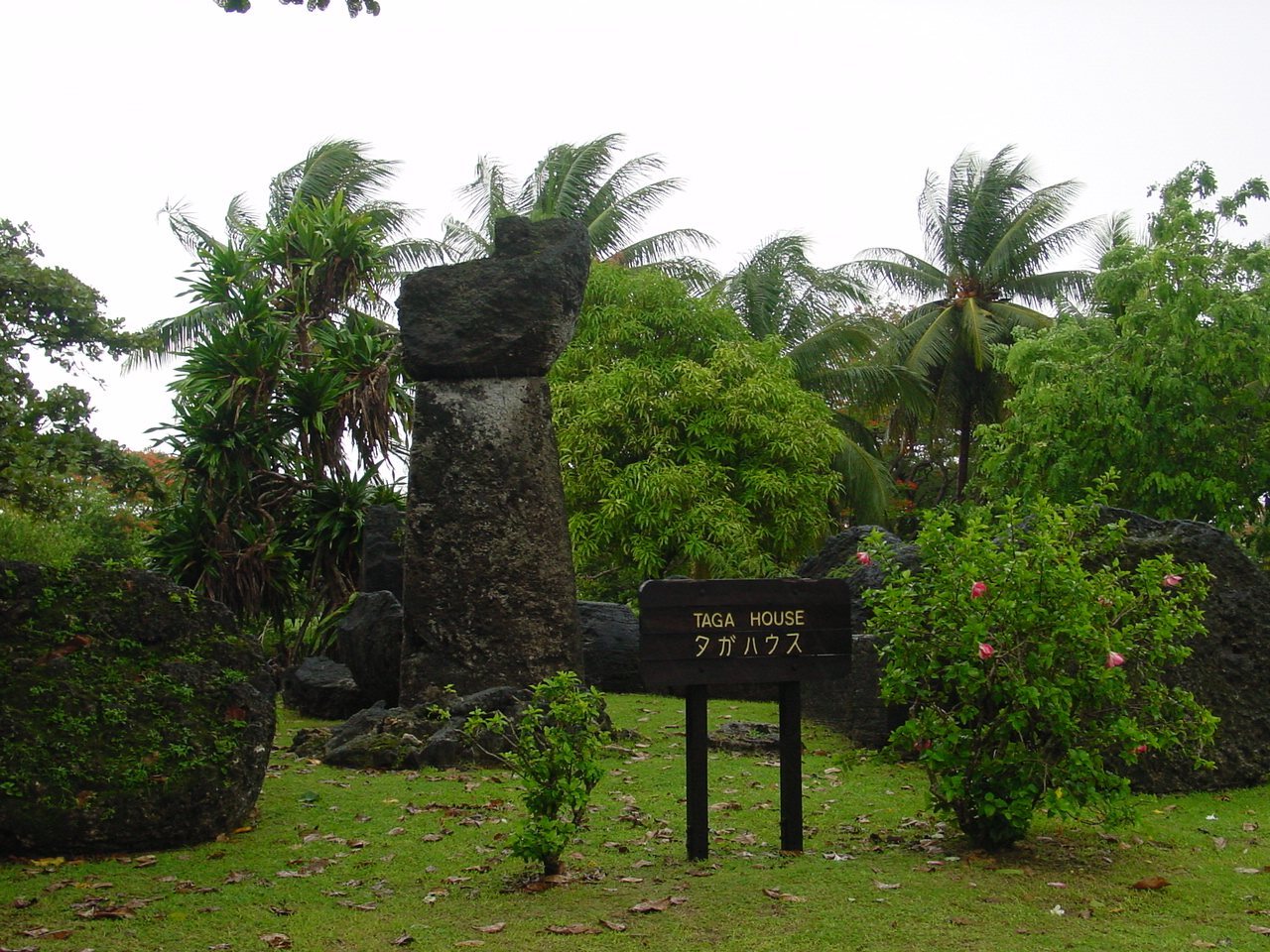
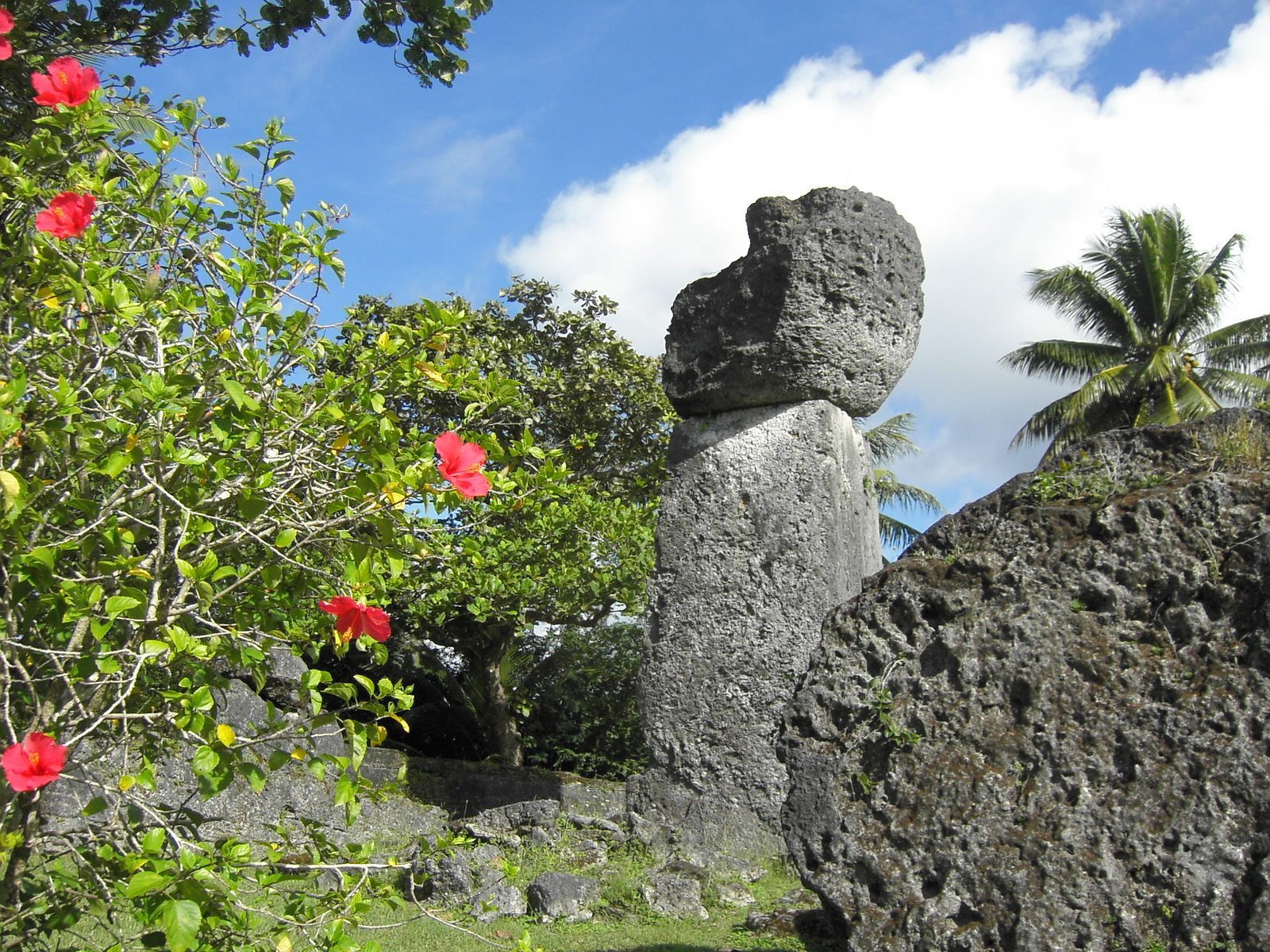
The site consists of prehistoric latte-stone megaliths, monumental supports characteristic of Chamoru architecture in the Mariana Islands. The stones were quarried about 1,200 metres south of House of Taga. Each original support reached approximately 4.6 metres in height and combined a haligi, or upright pillar, with a hemispherical tasa, or capstone. The stones stood in spaced parallel rows, probably supporting a house above them.
Surviving upright
George Anson’s sketches from his 1742 visit to Tinian showed twelve upright stones. Only one remains standing today, while past earthquakes caused the others to collapse. Tradition identifies the surviving upright as the stone containing the spirit of Taga’s daughter, who killed him. The As Nieves Rota Latte Stone Quarry on Rota is regarded as the probable origin of the tradition of constructing these megalithic structures in the Marianas.