Pucará de Tilcara: A Pre-Inca Fortified Settlement in Argentina
Site at a Glance
- Rating
- 4.7
- Popularity
- High
- Country
- Argentina
- Primary era
- Medieval
- Eras represented
- Medieval, Modern
- Civilizations
- Inca
- Site type
- Military
- Remains
- Fortified Town
On this page12 sections
History
Pucará de Tilcara is a pre-Inca fortified settlement in Argentina, built by the Tilcara, a subgroup of the Omaguaca people, around the twelfth century. The site occupies a strategic position above the Quebrada de Humahuaca near the present town of Tilcara, and archaeological estimates place its age at approximately 1,160 ± 70 years. Its elevated location supported defensive, administrative, military, social, and religious functions while allowing control over agricultural fields, lowland dwellings, and the meeting point of the area’s two principal routes.
Tilcara Settlement
The settlement developed as a fortified hilltop community in the Andean valley. Its position combined natural defenses with built walls across the more accessible approaches. More than 2,000 people may have lived there at its height, in a community that included residential quarters, animal enclosures, burial areas, ceremonial spaces, and a necropolis, an organized area containing multiple burials.
The site later became part of the Inca state. After the Quebrada communities were conquered in the late fifteenth century under Tupac Inca Yupanqui, the Incas incorporated Pucará de Tilcara into their provincial administration. It became the administrative capital of the Humahuaca huamani, an Inca provincial unit, and served as a military outpost. The Inca authorities also organized the supply of silver, zinc, and copper extracted nearby. State workshops produced alabaster and marble objects that were transported to Cusco as tribute.
Pucará de Tilcara was associated with the family of local leaders known as curacas, Indigenous authorities incorporated into an Andean political system. Viltipoco, a prominent Indigenous leader in the region, belonged to this family. An Inca noblewoman was also buried at the settlement with her funerary equipment. Inca control lasted for approximately half a century. Spanish arrival in 1536 ended Inca domination, and the modern town of Tilcara was founded in 1586.
Rediscovery and Reconstruction
Ethnographer Juan Bautista Ambrosetti and his archaeological student Salvador Debenedetti rediscovered the site in 1908. Over the following three summers, they explored the settlement and recovered or catalogued approximately 3,000 artifacts. Their observations and finds helped reconstruct aspects of life in the region before the Spanish conquest.
With Ambrosetti’s approval, Debenedetti began the first restoration around 1911. The work cleared approximately 2,000 square metres and raised some walls to slightly more than one metre. Debenedetti returned to the site in 1929 with archaeologist Eduardo Casanova to continue the reconstruction, but his death the following year interrupted the project. Casanova revived the work in 1948 with assistance from the University of Buenos Aires and completed the reconstruction.
The government of Jujuy later donated the Pucará lands to the Faculty of Philosophy and Letters of the University of Buenos Aires, on the condition that an archaeological museum be established. The Dr Eduardo Casanova Archaeological Museum opened during the 1960s, and excavation and rebuilding have continued under the university’s direction. Modern study of photographs, plans, sketches, publications, and other records made before 1910 has examined changes introduced during the early reconstruction. Planimetric surveying, which records the site’s measured layout, is used to monitor the effects of circulation and climate and to improve preservation.
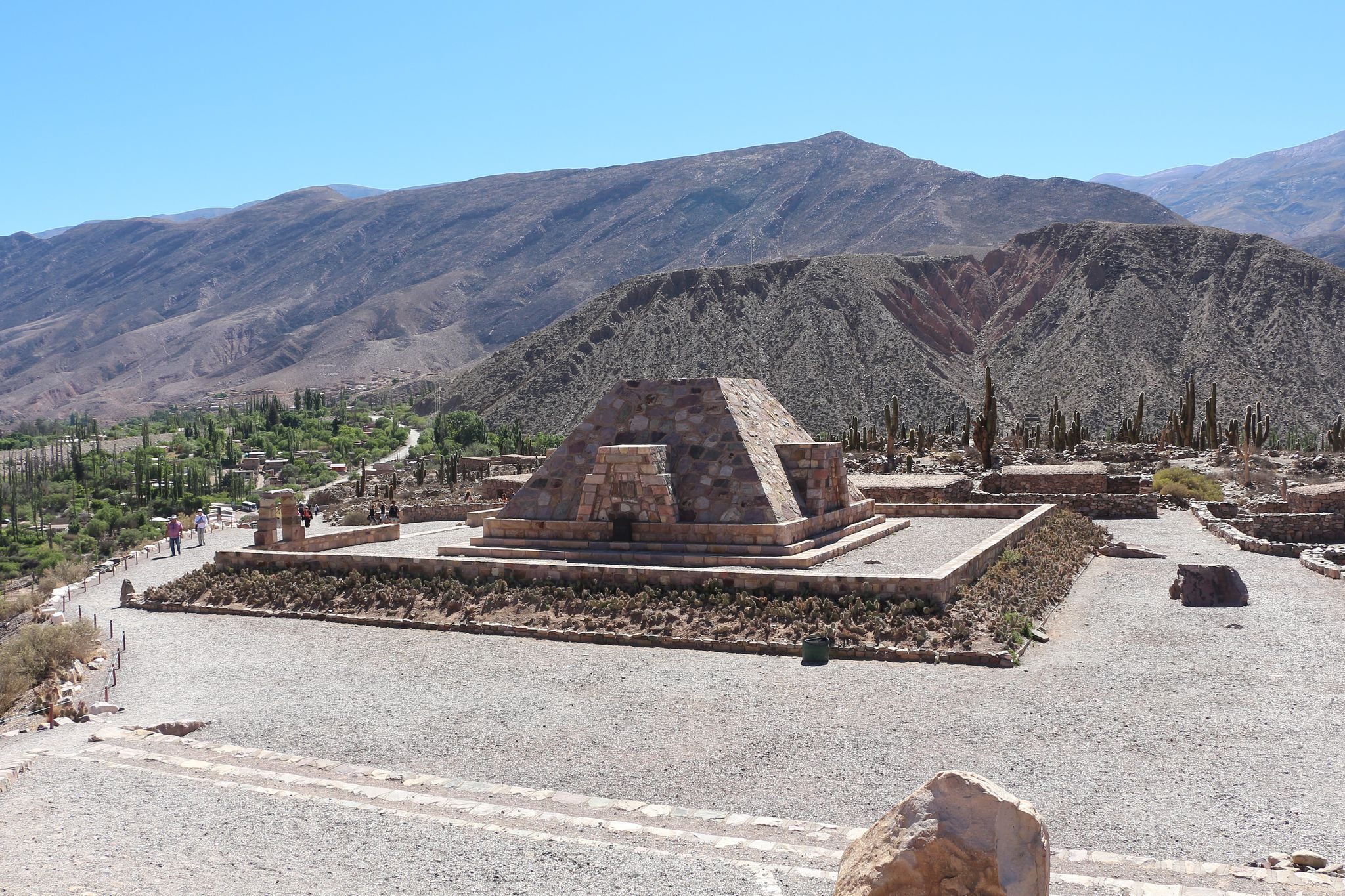
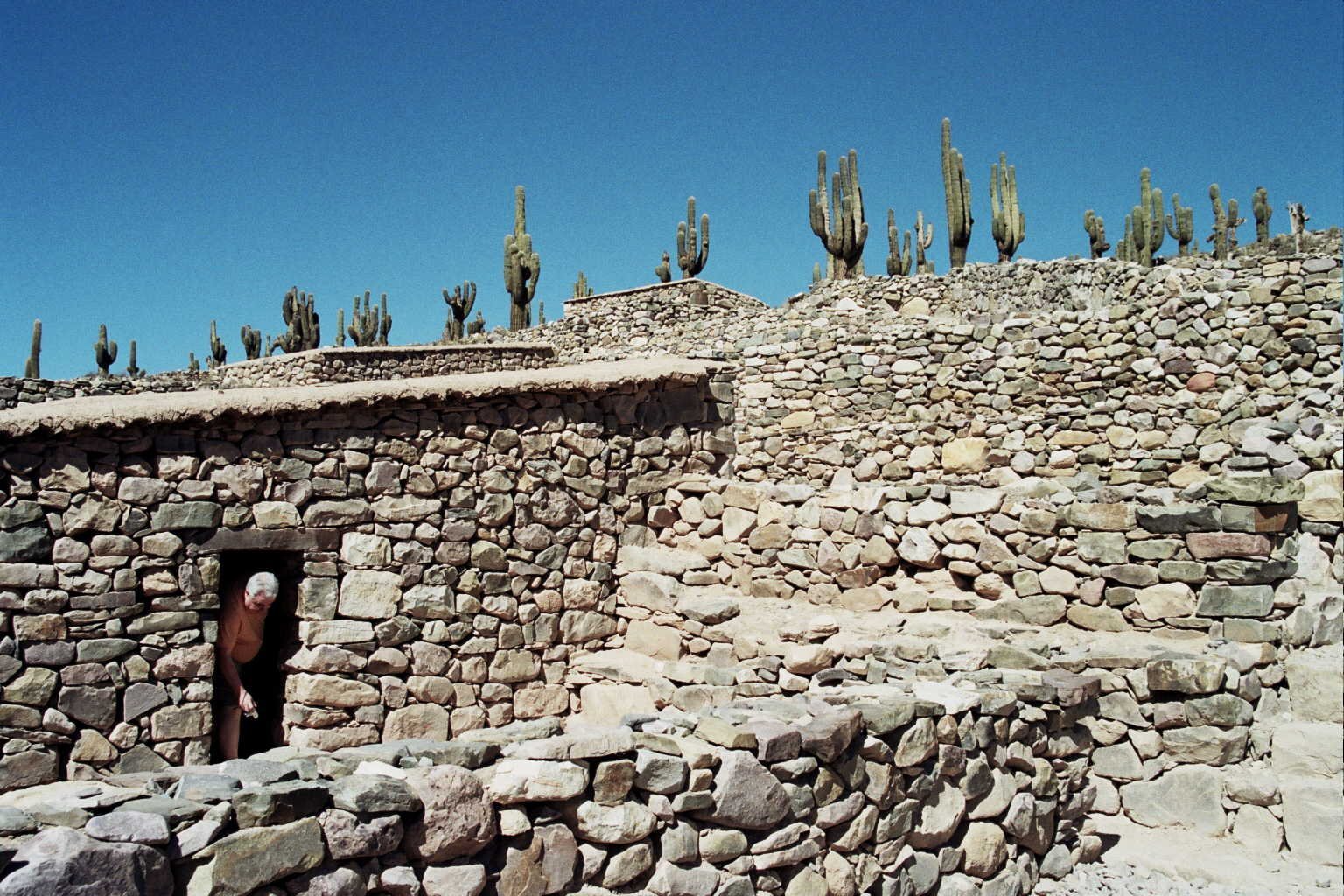
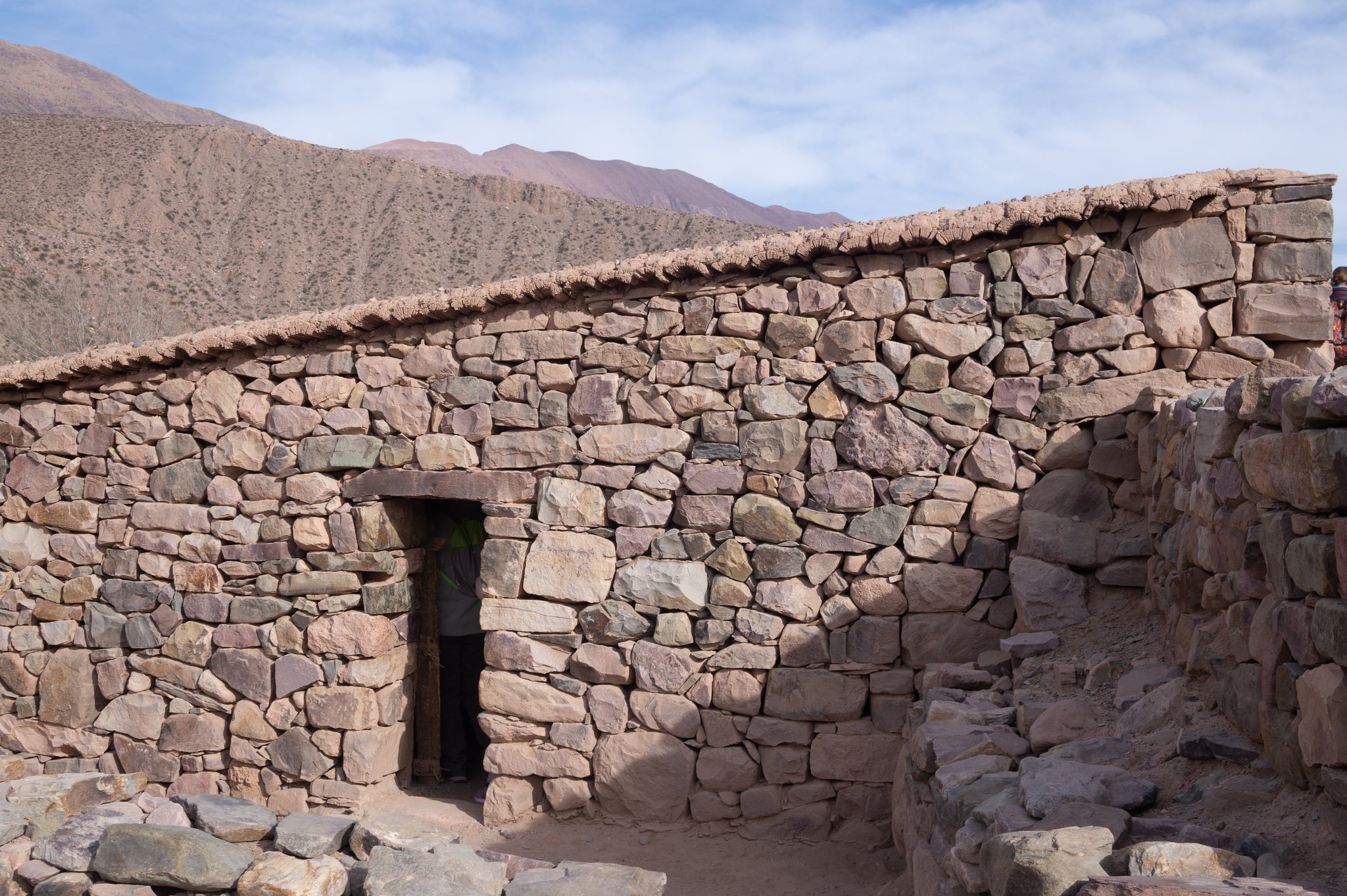
The reconstructed settlement reflects archaeological methods of the early twentieth century. The internal visitor route and reconstructed roofs are regarded as appropriate, while reconstructed walls and vehicular access altered the site. A truncated pyramid was also introduced even though it does not correspond to the architectural tradition of the region. Pucará de Tilcara was declared an Argentine National Historical Monument in 2000. The World Heritage inscription of the Quebrada de Humahuaca has further increased the site’s wider heritage importance.
Remains
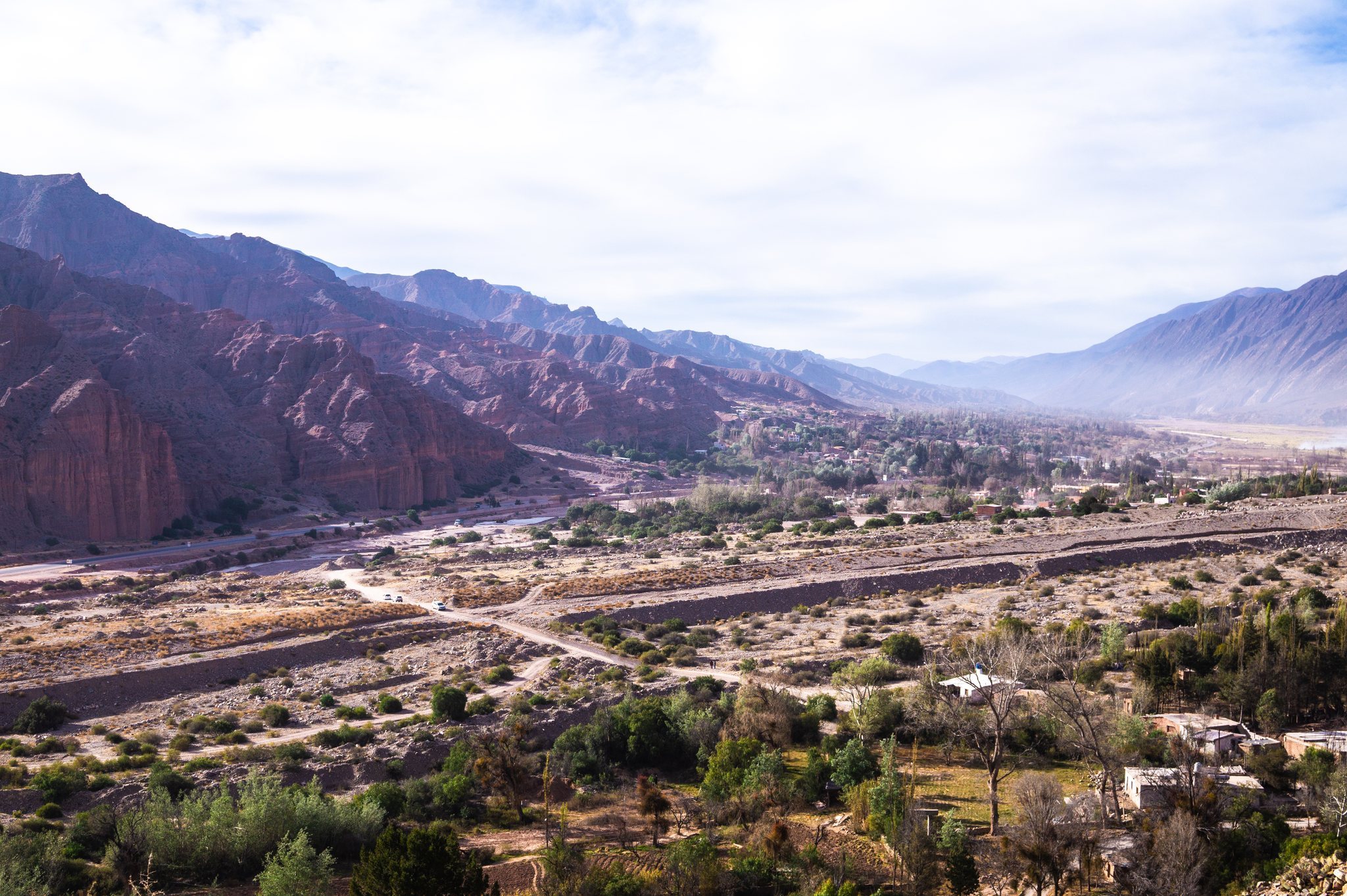
Pucará de Tilcara occupies a rocky hill about 80 metres high beside the confluence of the Huasamayo and Grande rivers, at an elevation of approximately 2,450 metres. It lies about one kilometre south of Tilcara and overlooks a long stretch of the Quebrada de Humahuaca. Cliffs above the Grande River protect one side of the hill, steep rough slopes defend another, and high walls were built across the more accessible approaches. The settlement covers approximately 8 to 15 hectares.
Settlement and Defensive Features
Residential and Communal Areas
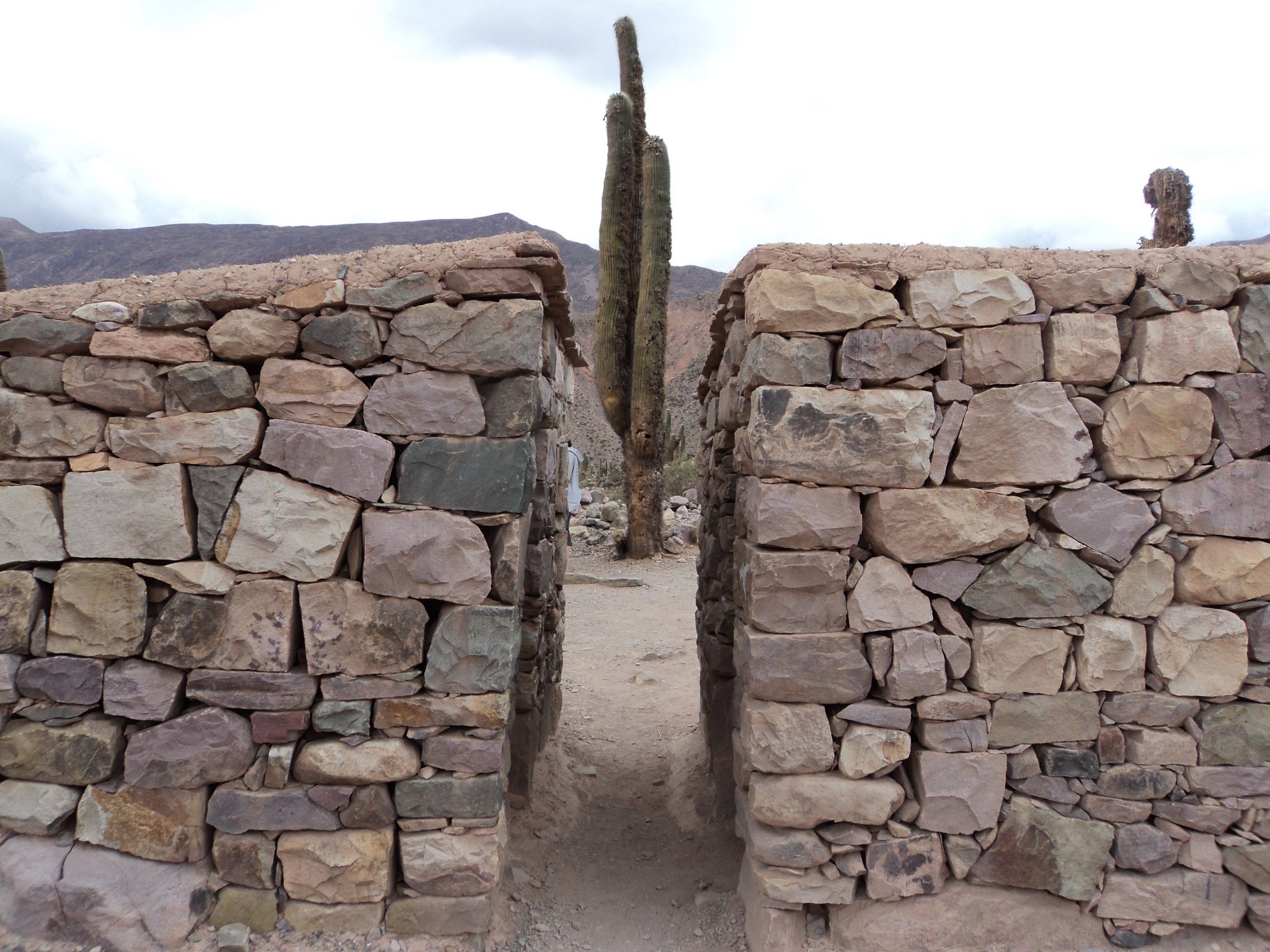
The settlement was organized into several residential quarters and associated spaces for social, religious, agricultural, and funerary activity. Houses were small square structures built of stone, with low entrances and no windows. Animal corrals formed part of the settlement, alongside burial areas and spaces for sacred ceremonies. Together, these remains show how domestic, communal, ritual, and defensive functions occupied the same fortified hilltop.
Inca Workshops
Inca-period installations included several state workshops for making objects from alabaster and marble. Their presence reflects the administrative role that Pucará de Tilcara held within the Humahuaca provincial system. Nearby mineral extraction supplied silver, zinc, and copper, while finished craft objects were prepared for transport to Cusco as tribute.
Burial Areas
The site contains a necropolis and other burial areas. An Inca noblewoman was buried there with her funerary equipment, linking the physical remains to the settlement’s role within the Inca political order. A reconstruction of an Aymara burial ground is also presented in the archaeological museum.
Museum and Botanical Garden
Dr Eduardo Casanova Archaeological Museum
The Dr Eduardo Casanova Archaeological Museum contains seven permanent exhibition rooms and three rooms for temporary exhibitions, together with a library and administrative offices. Its permanent displays include more than 5,000 historical objects from Indigenous cultures. Collections include ceramics associated with the Nazca, Mochica, and Chimú cultures, materials from the period of the Spanish conquest, objects from the Puna and Jujuy regions, and pieces from Pucará de Tilcara and the Quebrada de Humahuaca.
The museum formerly displayed a mummified body found fully clothed and exceptionally well preserved in the Atacama Desert. Its exhibits also include archaeological material connected with the wider history of the region and a reconstruction of an Aymara burial ground.
High-Altitude Botanical Garden
A botanical garden beside Pucará de Tilcara contains cactus species native to the region. It forms part of the modern complex associated with the archaeological site and reflects the high-altitude environment in which the settlement was built.
Interpretive Features
A commemorative plaque at the site addresses earlier twentieth-century interpretations that treated Indigenous cultures as having disappeared after the Spanish conquest. It recognizes the cultural and ethnic pre-existence of Argentina’s Indigenous peoples under Article 75, Clause 17, of the reformed 1994 National Constitution. The plaque presents archaeology as a means of sustaining their memory and connects the surviving settlement with the continuing presence of Indigenous peoples in Argentina.