Castillo de San Felipe de Lara: A Spanish Colonial Fort in Guatemala
Site at a Glance
- Rating
- 4.7
- Popularity
- Medium
- Country
- Guatemala
- Primary era
- Early Modern
- Eras represented
- Early Modern
- Civilizations
- Spanish
- Site type
- Military
- Remains
- Fort
On this page11 sections
History
Castillo de San Felipe de Lara is a Spanish colonial coastal fortification in Guatemala, built in the seventeenth century at the entrance to Lake Izabal, where the Dulce River connects the lake with the Caribbean Sea. Its position at the river’s narrowest point allowed it to guard the waterway against attacks by Caribbean pirates and Indigenous groups.
Early fortifications and construction
An earlier tower at the site was destroyed in 1604 after pirates from England, the United Provinces, and Portugal entered the Dulce River. Captain Pedro de Bustamante ordered its reconstruction, and the rebuilt structure became known as the Tower of Bustamante.
Construction of the present fort began in 1644 on the orders of Diego de Avendaño, a colonial governor in Spanish Central America. It was completed in 1651 and named in honor of King Philip and Antonio de Lara y Mogrovejo, an oidor, or judicial official, of the Audiencia of Guatemala, the colonial high court and administrative institution for the region. The fort combined military and commercial functions, serving as a stronghold, prison, customs center, and exchange depot. Its warehouses supported trade between Guatemala and Spain.
Expansion and strategic decline
The fort was rebuilt between 1687 and 1689 in designs influenced by Vauban, the French military engineer whose fortress systems emphasized angular bastions and coordinated artillery defenses. By 1697, the complex had three bastions named Nuestra Señora de Concepción, Nuestra Señora de Regla, and San Felipe.
Further defenses were added in 1797, when military engineer José Sierra designed three artillery batteries, San Carlos, San Felipe, and Santiago, along with two barracks. The Dulce River region later lost economic importance as other Central American ports became more prominent and indigo exports declined. The fort was abandoned in 1817.
During the nineteenth century, the development of Santo Tomás de Castilla under General Rafael Carrera, followed by the construction of Puerto Barrios, shifted maritime commerce toward the Caribbean coast. Castillo de San Felipe de Lara consequently lost its strategic importance and fell into ruins.
Reconstruction and conservation
By 1955, the ruins had become a tourist attraction. Architect Francisco Ferrús Roig reconstructed the fort after researching its history and consulting plans and documents preserved in Spain’s General Archive of the Indies, which holds records of Spain’s colonial administration and overseas territories.
A 1999 earthquake seriously damaged the castle walls. The Guatemalan Institute of Anthropology and History took part in restoration work in 2001 to address damage associated with the earthquake and sustained tourist visitation. The castle was added to UNESCO’s World Heritage Tentative List in 2002, an inventory of sites considered suitable for possible future nomination to the World Heritage List. It is managed by the Guatemalan Institute of Tourism, while the municipality of Livingston is identified as its owner.
Remains
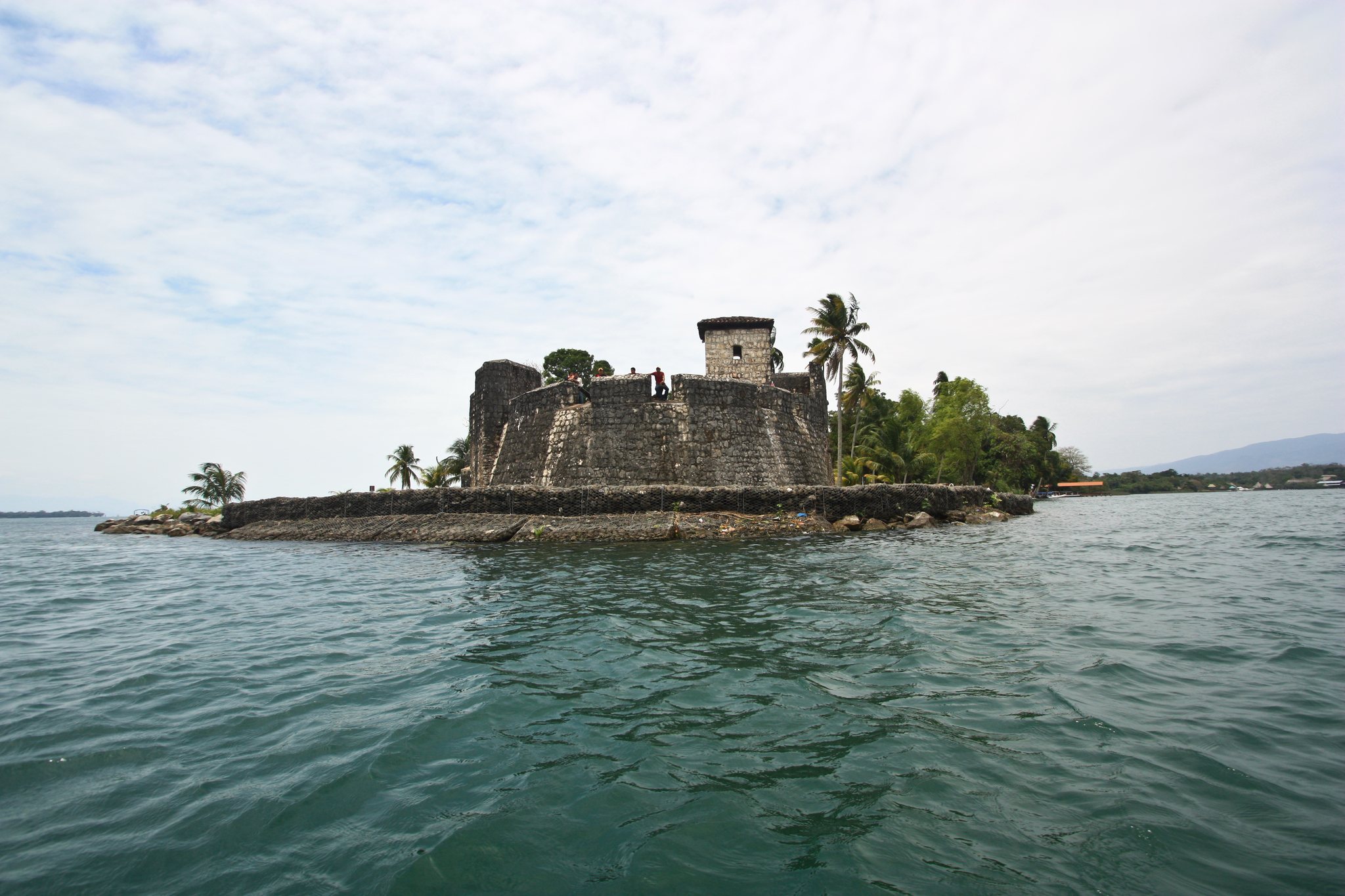
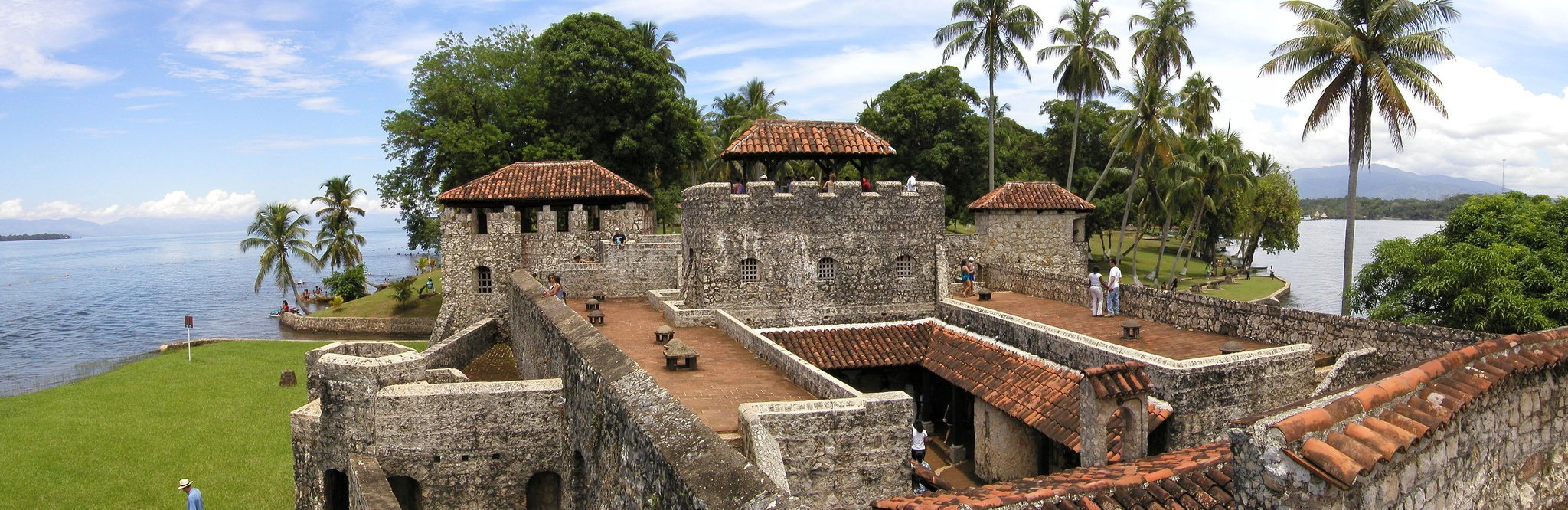
The restored fort stands at the mouth of the Dulce River on Lake Izabal, along the waterway linking the lake with the Caribbean Sea. Its surviving structure is principally a reconstruction from the 1955 intervention, with later conservation work following earthquake and visitor-related damage. The complex includes the Tower of Bustamante, three bastions, three artillery batteries, two barracks, warehouses, and nineteen cannons.
Defensive structures
Tower of Bustamante
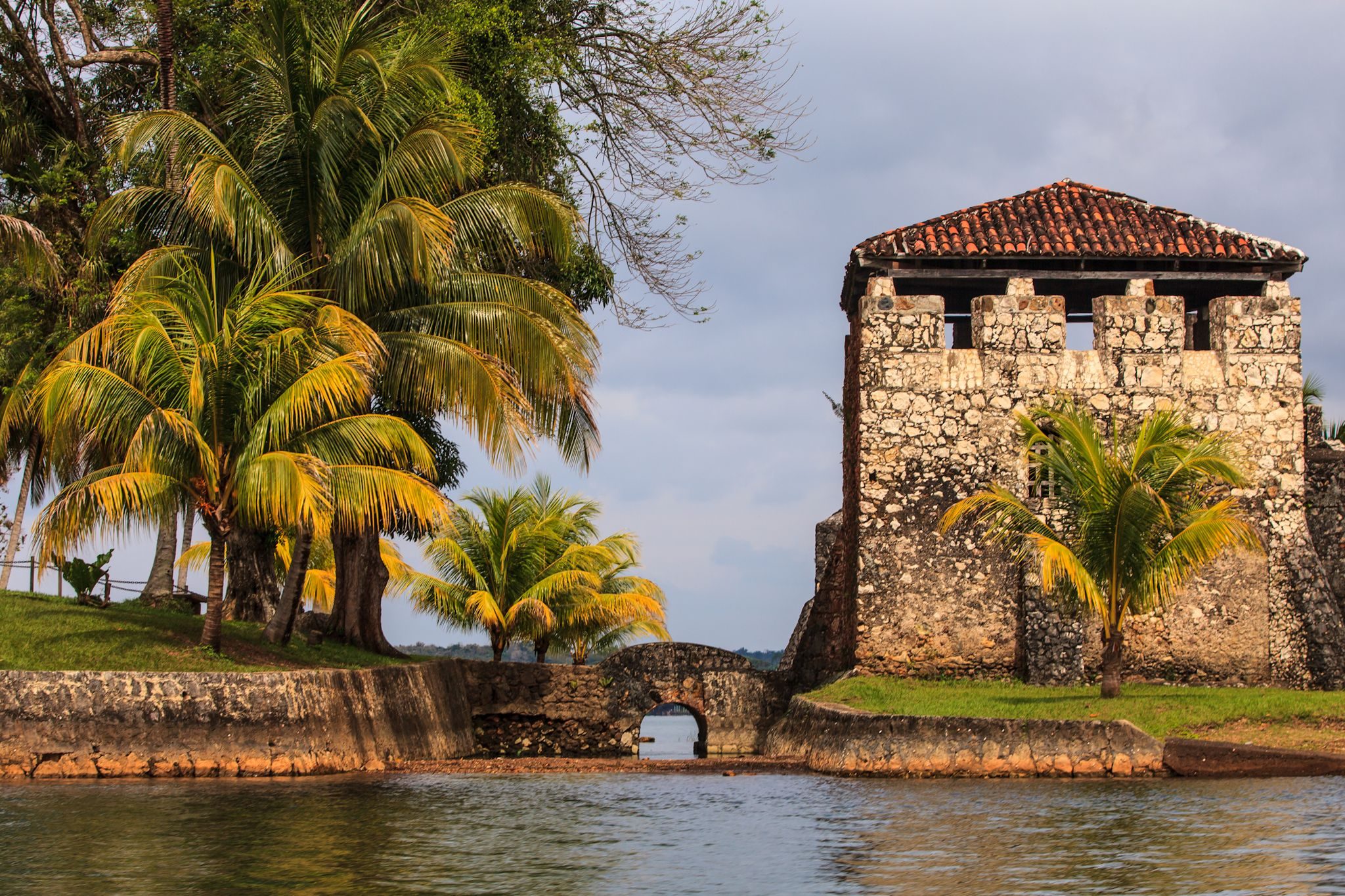
The Tower of Bustamante is the fort’s most prominent feature. It represents the reconstruction ordered after the earlier tower was destroyed in 1604 and forms part of the defensive complex at the river entrance.
Bastions and artillery batteries
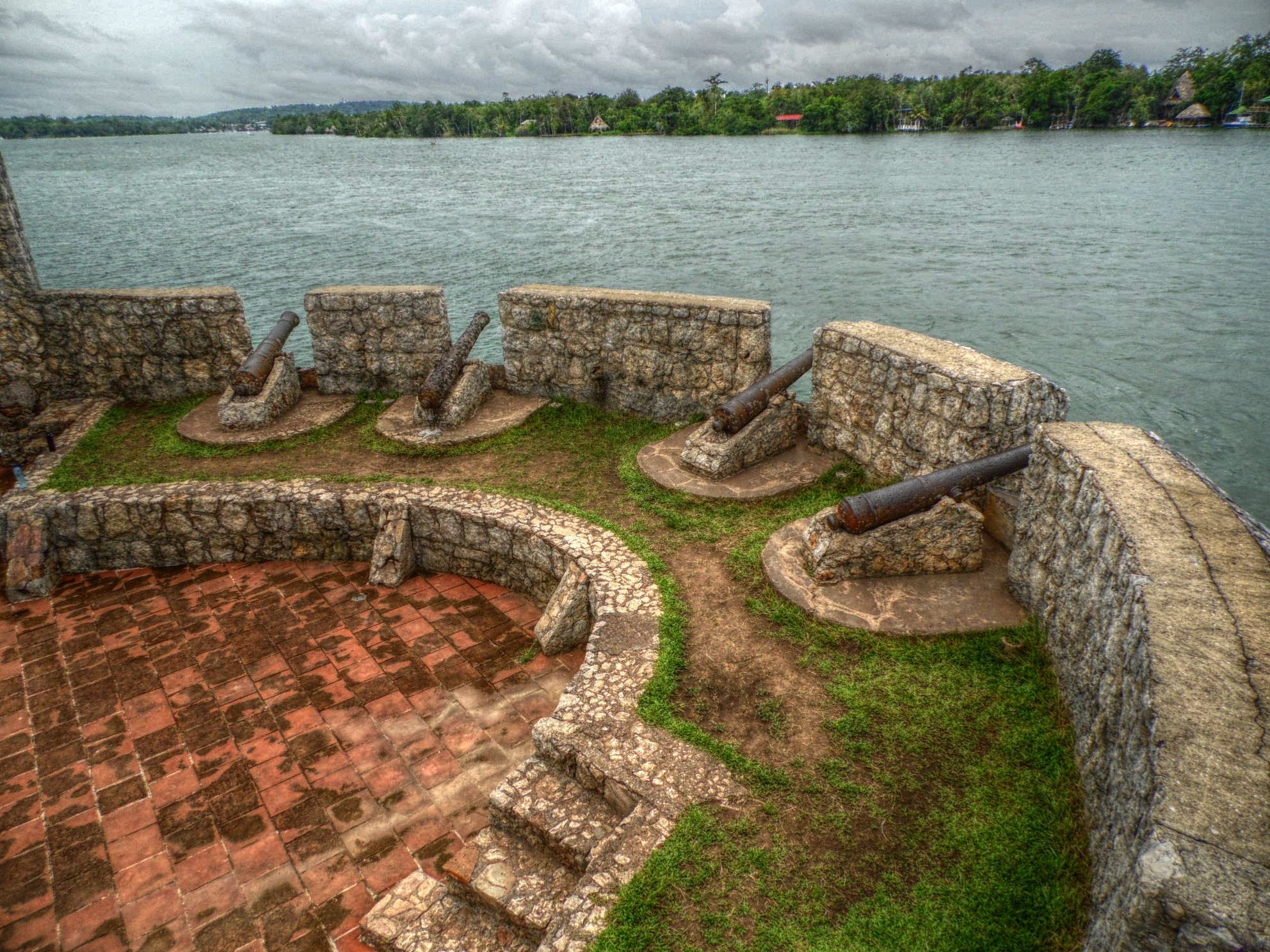
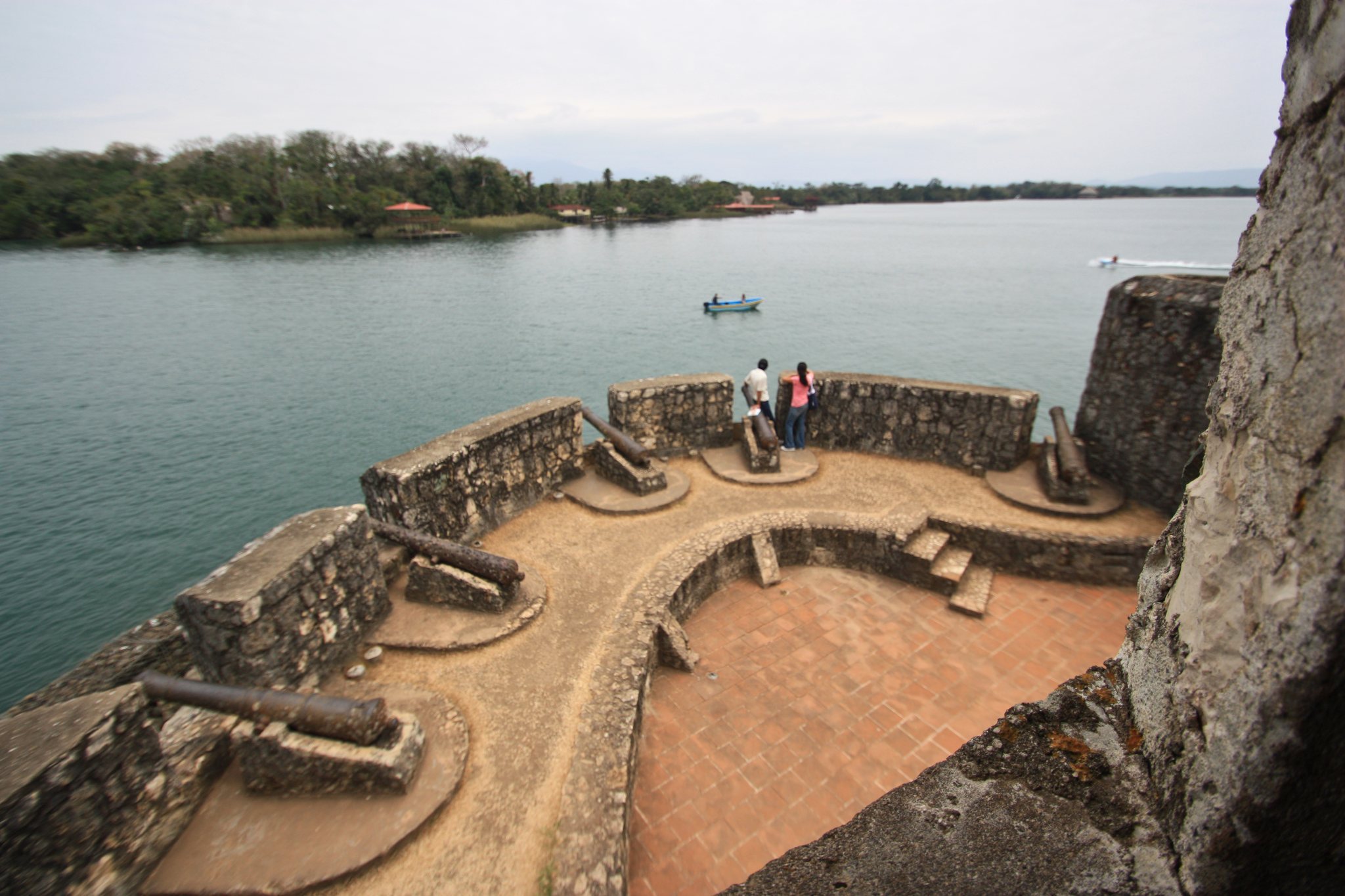
Three bastions, Nuestra Señora de Concepción, Nuestra Señora de Regla, and San Felipe, belong to the fort’s expanded defensive layout. The later artillery works comprise the San Carlos, San Felipe, and Santiago batteries, added with two barracks in 1797. Nineteen cannons remain within the complex, including seventeen made of iron and two of bronze.
Commercial and military facilities
Warehouses
Multiple warehouses formed part of the fort and served as facilities for commercial exchange between Guatemala and Spain. Their inclusion reflects the compound’s role as more than a coastal defense, since it also handled goods moving through the Dulce River waterway.
Barracks
Two barracks were added among the defensive works designed by José Sierra in 1797. They remain part of the complex’s physical components alongside the batteries, bastions, warehouses, and reconstructed tower.