Fuerte Reina Luisa: A Colonial Fort in Osorno, Chile
Site at a Glance
- Rating
- 4.2
- Popularity
- Low
- Country
- Chile
- Primary era
- Early Modern
- Eras represented
- Early Modern, Modern
- Civilizations
- Spanish
- Site type
- Military
- Remains
- Fort
On this page8 sections
History
Fuerte Reina Luisa is a Spanish colonial fort in Osorno, Chile, established during the city’s repopulation in the late eighteenth century. Built between 1793 and 1794 during the Arauco War, the prolonged conflict between Spanish forces and Mapuche communities in south-central Chile, it protected the settlement against possible attacks by pirates or Mapuche forces.
Foundation and construction
After the Spanish military officer Tomás de Figueroa took possession of Osorno in November 1792, a 60-man detachment occupied the site in mid-August 1793 under Sub-Lieutenant Julián Pinuer Zurita. Captain Manuel Olaguer Feliú of the Spanish Royal Corps of Engineers directed the fort’s design and construction. He later became Osorno’s first governor.
The first defenses consisted of palisades. A permanent fort was then built with cancagua, a locally used volcanic stone, taken from the ruins of the former city of Osorno. Prisoners brought from Valdivia supplied much of the labor, and construction was completed in June 1794. The fort was initially known as Fuerte San Luis because work on its moat began on Saint Louis’s day, 25 August. Ambrosio O’Higgins later renamed it Fuerte Reina Luisa in honor of Maria Luisa of Parma, the wife of King Charles IV of Spain.
Colonial garrison
The fort’s other historical names included Fuerte Reina Maria Luisa, El Castillo, and Fuerte Rahue. Manuel Olaguer Feliú, César Balbiani, Juan Mackenna, and Ambrosio O’Higgins are associated with periods of residence there. Its military establishment comprised 50 soldiers, supported by 100 militiamen recruited from local residents.
Capture and independence
On 25 February 1820, Jorge Beauchef, a former Napoleonic officer serving with the Chilean independence forces, captured the fort and Osorno while pursuing Royalist troops fleeing from Valdivia toward Chiloé. He renamed the site Fuerte Mackenna. On 27 February, he had the flag of the independent Chilean state recognized by the people of Osorno.
Beauchef left Osorno on 3 March 1820 to confront Royalist forces attempting to recover the southern region in the engagement later known as the Combat of El Toro. The fort also became the setting for the planning of the Osorno mutiny. On the night of 14 November 1821, hunger and poverty caused discontent among the independence troops, and the mutiny took place the following day. Beauchef suppressed it after returning to the region in 1822.
Destruction and reconstruction
A major earthquake destroyed the fort in 1835. Osorno’s resident Spanish community later initiated a reconstruction in connection with the city’s fourth centenary. The rebuilt structure was designed by the Osorno architect Carlos Buschmann, and the reconstruction is also dated to 1977.
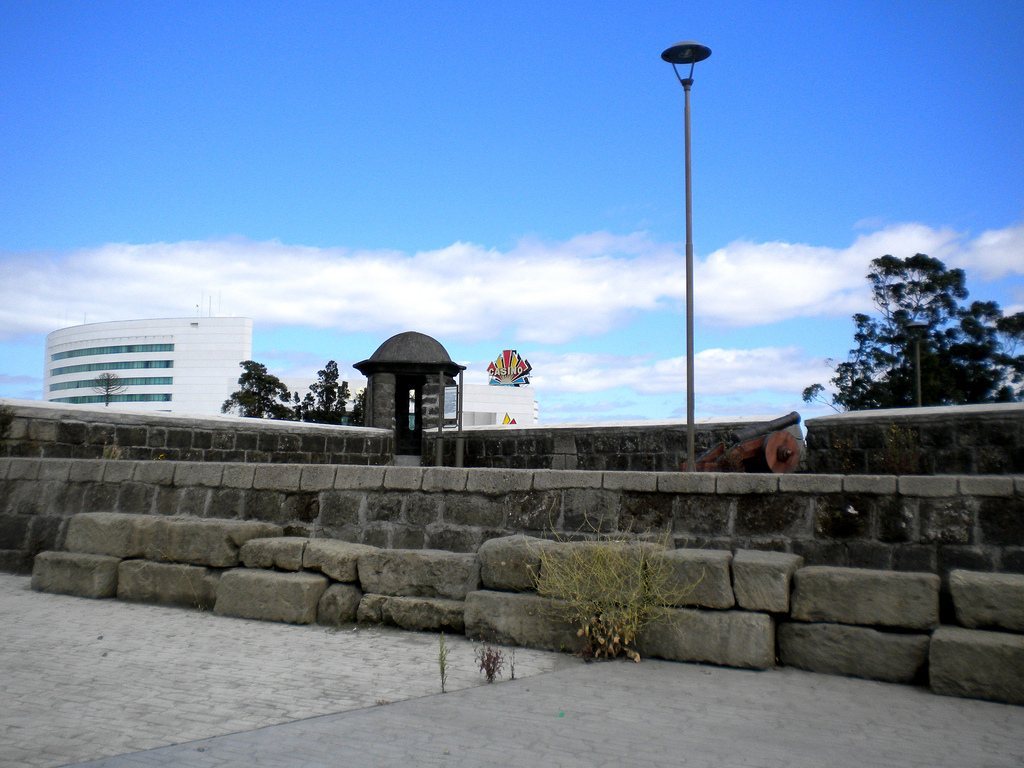
A further improvement project began in 2007 as part of the renewal of the Rahue riverfront. It repaired the entrances and walls, replaced the artillery pieces, remodeled interior spaces, added a perimeter enclosure, and installed lighting. The work also re-established the fort as a historical site and created an exhibition hall for displays on Osorno’s history, temporary exhibitions, lectures, seminars, workshops, and cultural events.
Remains
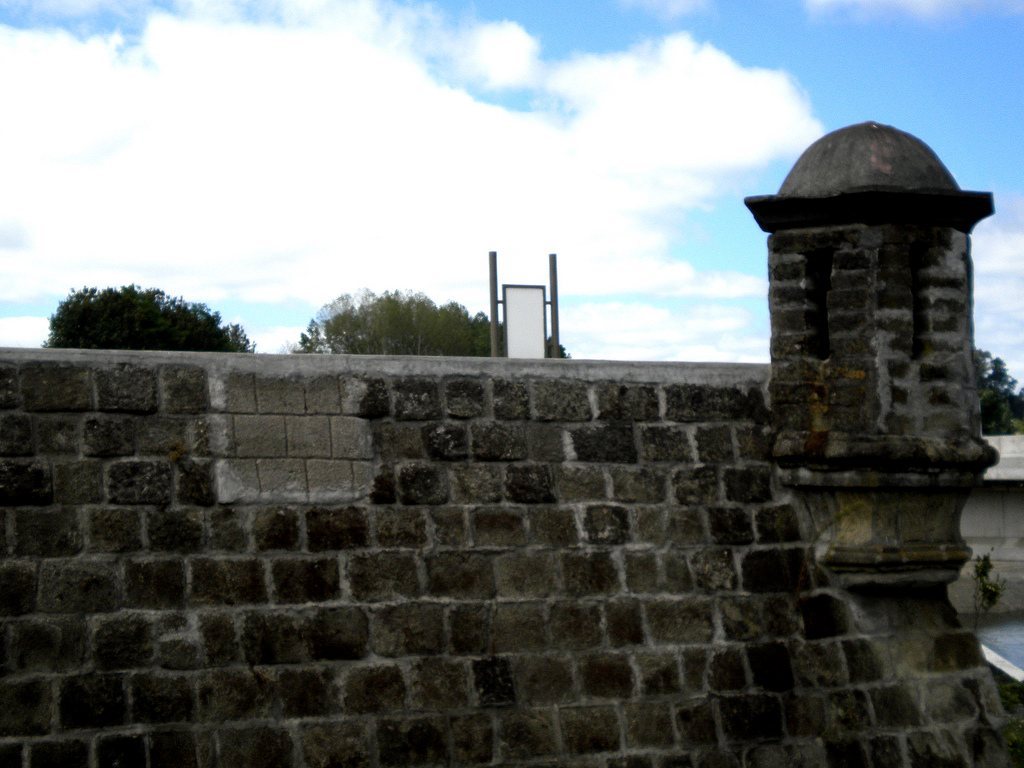
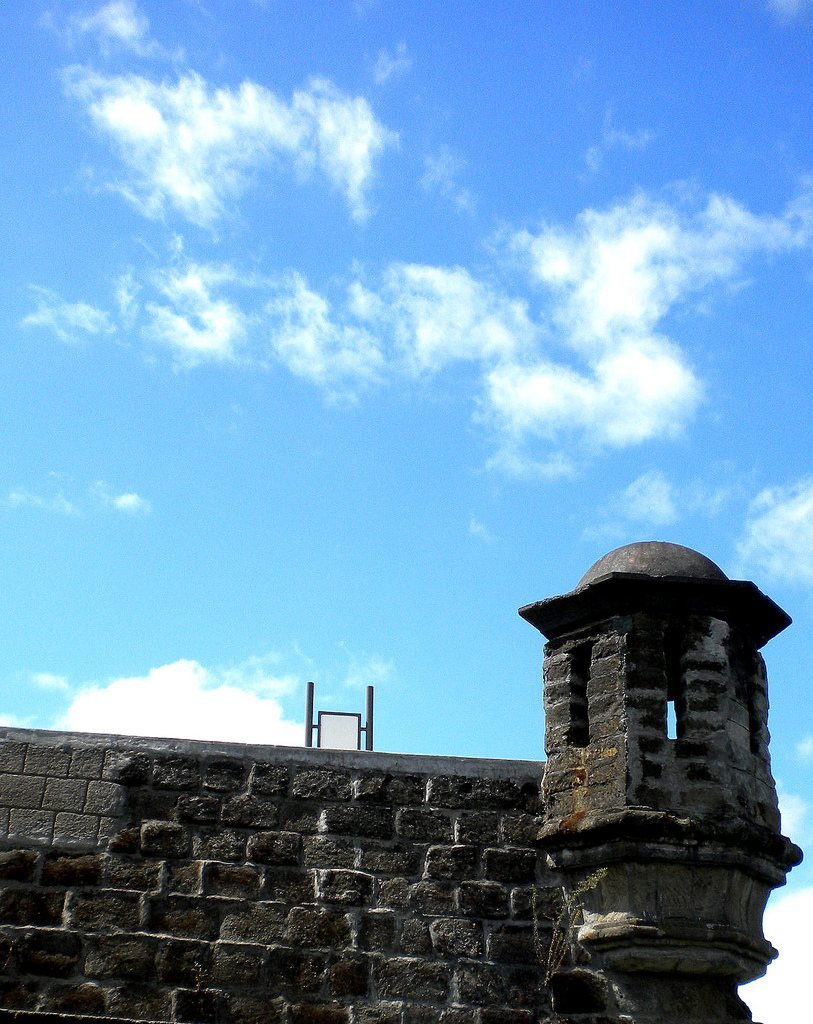
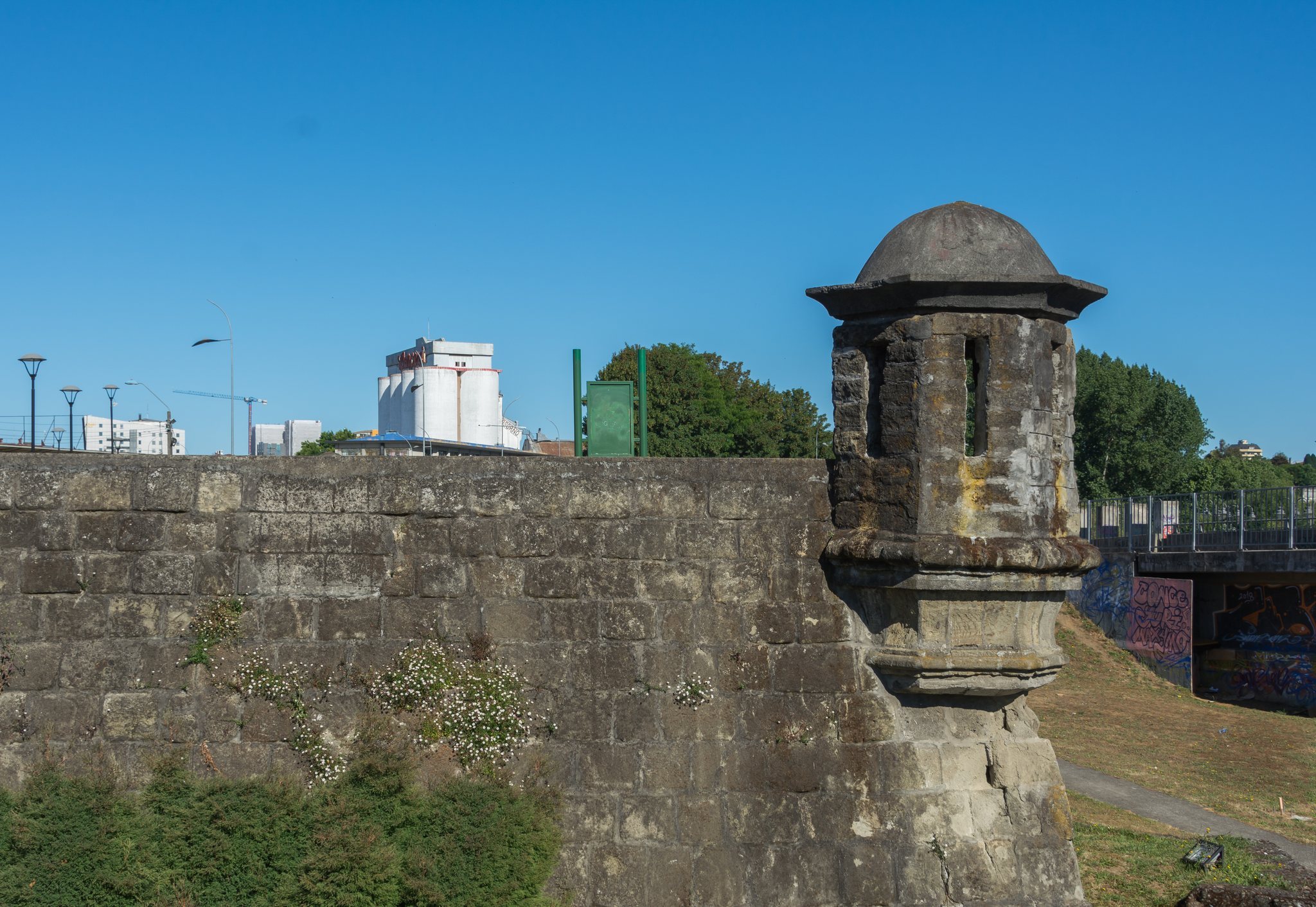
Fuerte Reina Luisa stands on the bank of the Rahue River in Osorno, approximately 250 metres from its confluence with the Damas River. The original fort had a triangular plan, three bastions, and a perimeter of about 200 metres. A bastion is a projecting fortification that allows defensive fire along the walls. Water-filled moats protected the side facing the river.
Walls, moat, and entrance
A drawbridge occupied the northeastern end, separating the fort from the natural ground. The moat measured five varas in depth and eight varas in width at the projecting angles. The original walls were built from cancagua stone taken from the ruins of the former city, while the earliest defensive arrangement used palisades. The base of the wall facing the Rahue River is identified as the only surviving original structural element, because the present structure does not reproduce the fort’s original form.
Interior buildings and later exhibition space
The fort contained five divisions used as officers’ quarters and storehouses, together with a chapel and a guardhouse area. An “empostada” house served as a residence for the governors of Osorno. An alarm bell announced danger during the fort’s military use, and the bell is preserved in the Municipal Historical Museum.
The 2007 redevelopment repaired the surviving walls and entrances and replaced the artillery pieces identified as pedrero-type cannons. It also remodeled the interior and added the Sala de Exposiciones Fuerte Reina Luisa, an exhibition and multipurpose space associated with the fort.