Maputo Fortress: A Portuguese Fortification in Mozambique
Site at a Glance
- Rating
- 4.1
- Popularity
- Medium
- Country
- Mozambique
- Primary era
- Early Modern
- Eras represented
- Early Modern
- Civilizations
- Portuguese
- Site type
- Military
- Remains
- Fort
On this page13 sections
History
Maputo Fortress is a historic fortification in Mozambique, in the Baixa district of Maputo. Its history began with a Dutch trading post in 1721 and continued through Austrian and Portuguese occupations, repeated attacks, rebuilding, and twentieth-century restoration. The site is regarded as one of Maputo’s principal historical monuments.
The Dutch and Austrian outposts
The earliest fortification was Fort Lijdzaamheid, a wooden pentagonal trading post established in 1721 by a Dutch expedition from Cape Town. The expedition, led by Klaas Nieuhof, arrived in the ships Gouda and Caap after receiving authorization from the local chief. Disease quickly weakened the settlement. Within about six months, roughly half of the Europeans had died, mainly from malaria, before reinforcements and supplies arrived from the Cape aboard the Zeelandia and the Uno.
On April 11, 1722, three English pirate ships commanded by Captain George Taylor entered Maputo Bay while being pursued by four ships of the English East India Company. On April 18, a force of about 900 men attacked the Dutch post, bombarded the fort, and captured a boat and the ship De Caap. The garrison surrendered. The Dutch second-in-command, Van de Capelle, escaped inland with eighteen men, while the attackers destroyed the fort and trading post before withdrawing at the end of June.
In 1777, Austrian forces under William Bolts established São José Fort on the site. A Portuguese expedition from Goa, commanded by Lieutenant-Colonel Joaquim Godinho de Mira aboard the frigate Sant’Anna, expelled the Austrians in March 1781. The Portuguese seized the Imperial vessel and a land battery of thirteen guns without resistance. They lowered the Imperial flag, raised the Portuguese flag on April 1 with a twenty-one-gun salute, removed the artillery, and demolished the battery.
Portuguese occupation and rebuilding
After the Austrian position was dismantled, a Portuguese presídio, meaning a military settlement or fortified garrison, occupied the site under Joaquim de Araújo. He began a new fortification in 1782 to protect the Lourenço Marques trading post. The establishment was dedicated to Nossa Senhora da Conceição, or Our Lady of the Conception.
Stone-and-lime houses were later built beside the fort, including Casa Amarela. In 1785, warriors of the Tembe chiefdom attacked the position but were repulsed with assistance from the Matola chief. Captain António José Teixeira Tigre subsequently rebuilt the fort. An inscription at the site states that he completed the fortress in 1791 while commanding the islands.
Attacks and renewed Portuguese control
On October 26, 1796, three French corsair vessels attacked and looted the fort. Corsairs were privately operated armed vessels authorized by a state to attack enemy shipping and possessions, and this assault took place during the conflicts that followed the French Revolution. The small garrison, commanded by Governor João da Costa Soares, abandoned the position, which was captured and plundered.
A detachment from the Fortress of São Sebastião, commanded by Lieutenant-Aide Luís José aboard the Minerva, was sent to recover the site. It reached Lourenço Marques on June 7, 1799, but initially settled at Capella because the Matola chief would not receive it immediately. Around 1805, after conditions had become relatively secure, the Portuguese returned to the former Dutch and Austrian site. They built a small fortified residence for troops and a trading post, flying the Portuguese flag as a sign of possession. The limited size of the establishment reflected the province’s lack of resources, and it was not intended to withstand an enemy attack.
Restoration and later institutional use
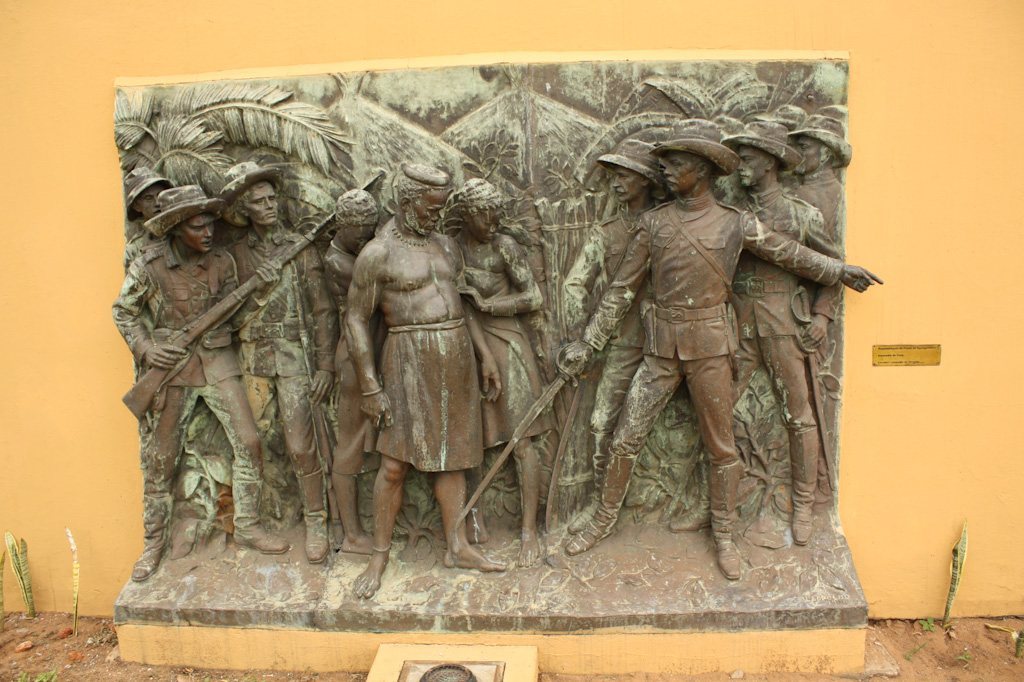
Around 1946, during centenary celebrations, the fort was restored over the foundations of the earlier fortification. Its interior buildings were adapted for use as the Historical Museum of Mozambique, and a historical tree beside the Gate of Arms was conserved. In 1985, the mortal remains of Gungunhana, ruler of the Gaza state who was defeated and captured by Portugal in 1895, were transferred to the fortress from Terceira Island in the Azores.
Remains
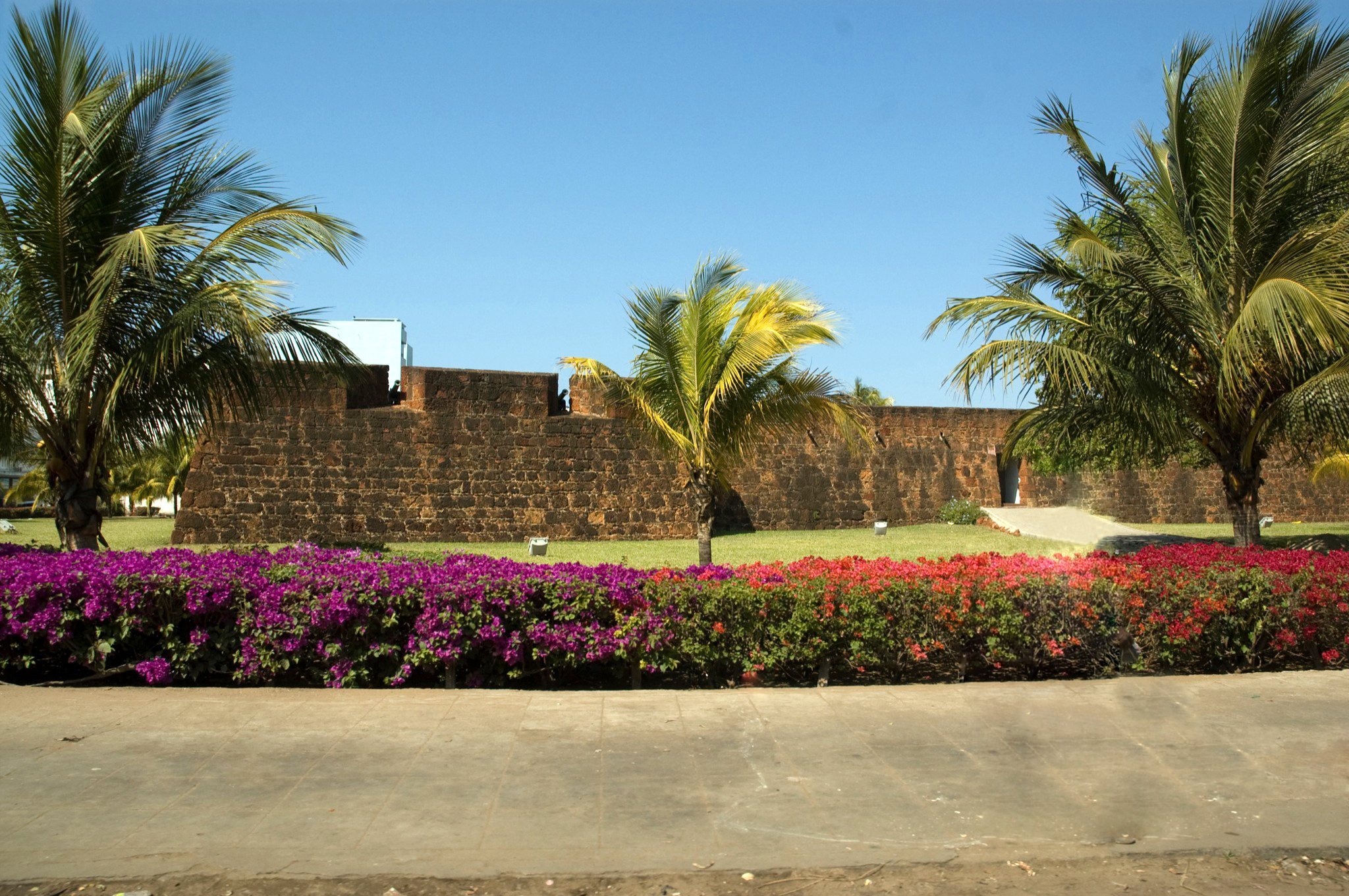
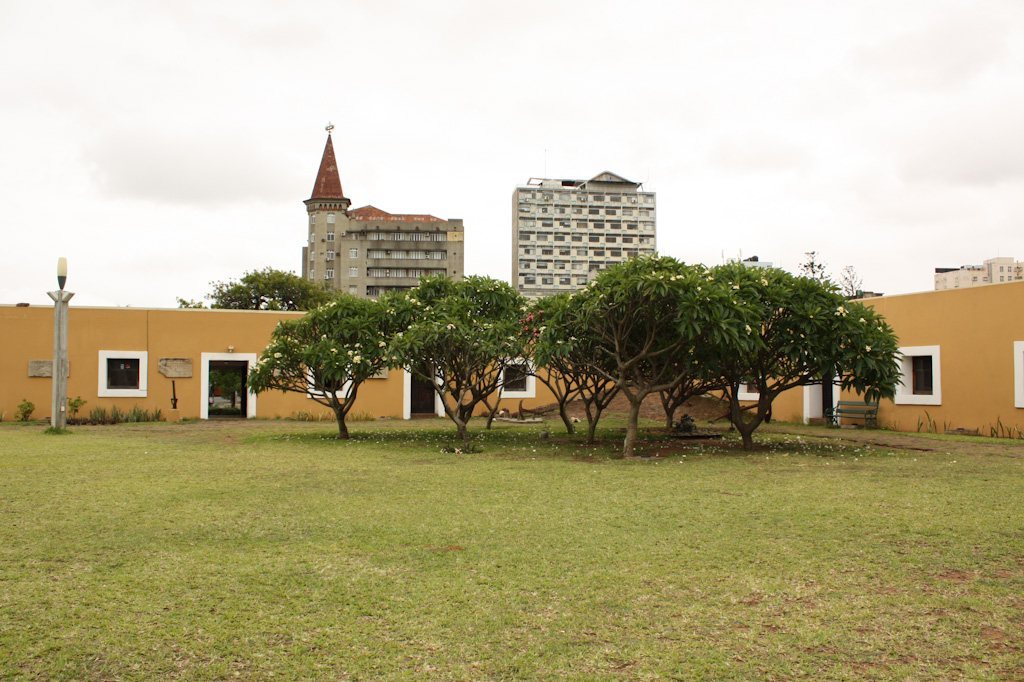
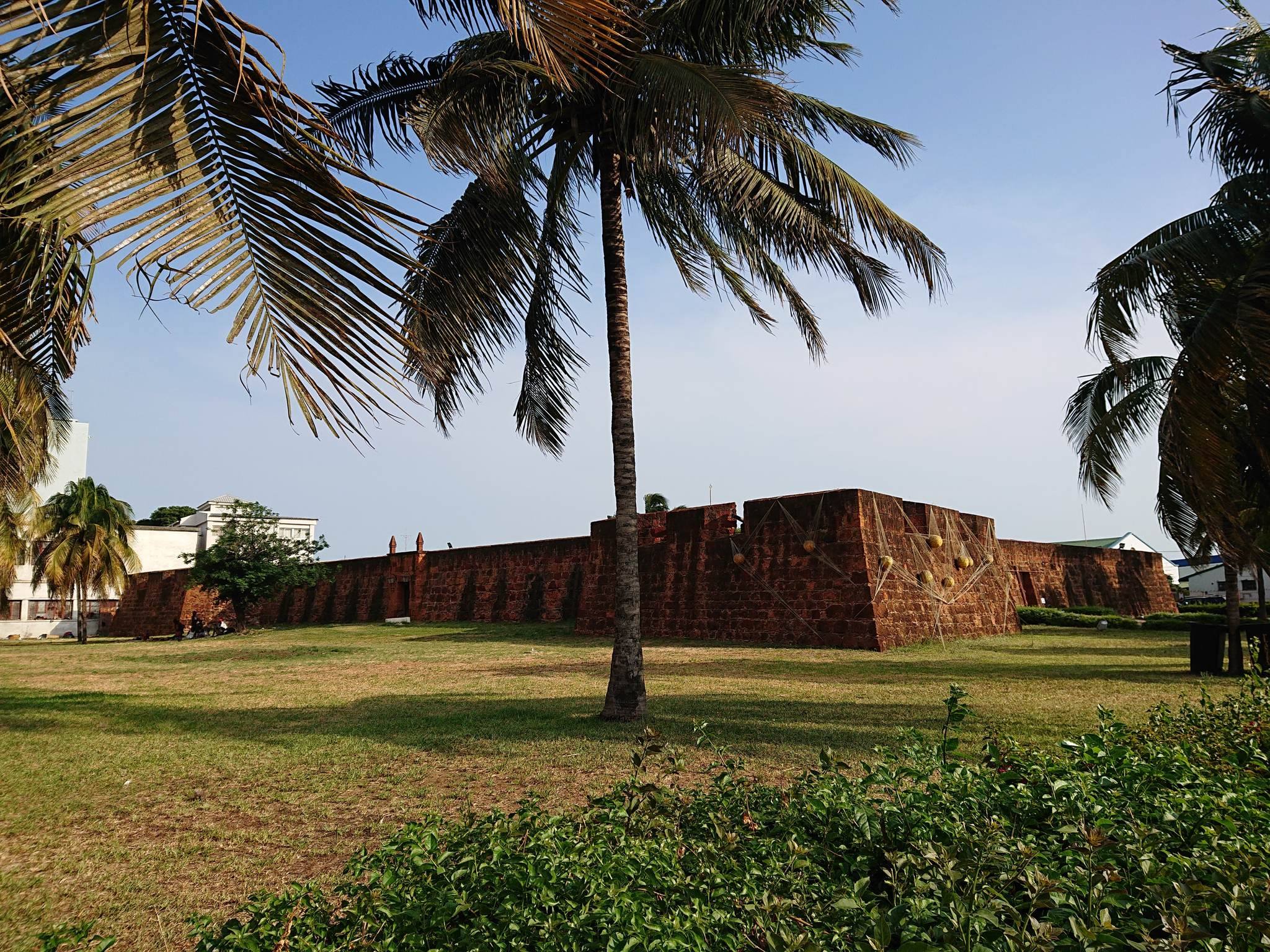
Maputo Fortress has a square plan and reddish stone masonry. A single entrance leads into a square central courtyard, around which the rooms are arranged. The present structure incorporates the foundations of the earlier fortification and reflects the site’s successive military phases, from the wooden Dutch post to the later Portuguese construction.
Fortifications and courtyard
Early and later defensive works
Fort Lijdzaamheid, the Dutch predecessor of the present fortress, had a pentagonal plan and was built of wood. The Portuguese fortification begun in 1782 used bundled wooden branches, known as faxina, together with earth. The rebuilding associated with Captain António José Teixeira Tigre in 1791 produced a quadrangular fort surrounded by a moat. An epigraphic inscription at the site records that rebuilding.
Central courtyard
The square courtyard contains the equestrian statue of Mouzinho de Albuquerque, a Portuguese colonial military officer and administrator associated with the conquest and administration of Portuguese Mozambique. Before Mozambican independence, the statue stood in front of the Municipality of Lourenço Marques. The fortress also contains Gungunhana’s mortal remains, transferred there in 1985.
Associated buildings and features
Casa Amarela
Casa Amarela stands beside the fortress. Built as one of the stone-and-lime houses associated with the fort, it now houses the National Currency Museum.
Gate of Arms tree
A historical tree stands beside the Gate of Arms and was preserved during the restoration carried out around 1946. Tradition associates it with the hanging of Governor Dionísio Ribeiro by Vátua warriors in 1883.
Military History Museum
The restored interior buildings accommodate the Military History Museum, which is managed by Eduardo Mondlane University. The museum use continues the adaptation of the fortress buildings for historical interpretation begun when they were requalified as the Historical Museum of Mozambique.