Turov Settlement: An Early-Medieval Hillfort in Belarus
Site at a Glance
- Rating
- 4.7
- Popularity
- Very Low
- Country
- Belarus
- Primary era
- Medieval
- Eras represented
- Medieval
- Civilizations
- Kievan Rus
- Site type
- Military
- Remains
- Fortified Town
On this page6 sections
History
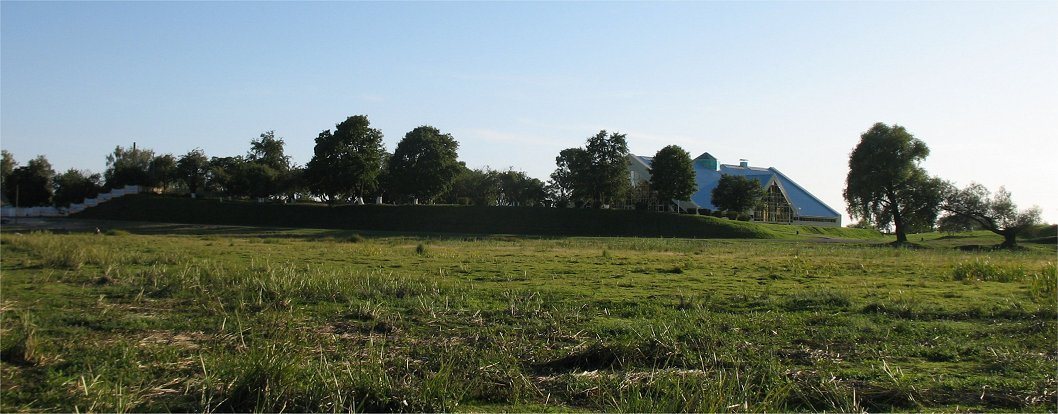
Turov settlement is an early-medieval hillfort in Belarus, located in Turaŭ at the confluence of the former Yazda River and the Strumen River. Ancient Turov developed as a fortified center with extensive connections reaching Kyiv, the northern Black Sea region, the Middle East, Asia Minor, Volhynia, and the Baltic region.
Trade and crafts in ancient Turov
Excavated materials show that the settlement participated in wide-ranging exchange networks. Its inhabitants practiced ironworking, jewelry making, working with bone and wood, shoemaking, and pottery production. The variety of imported and locally made objects indicates a community with both specialized crafts and connections beyond the surrounding region.
Archaeological investigation
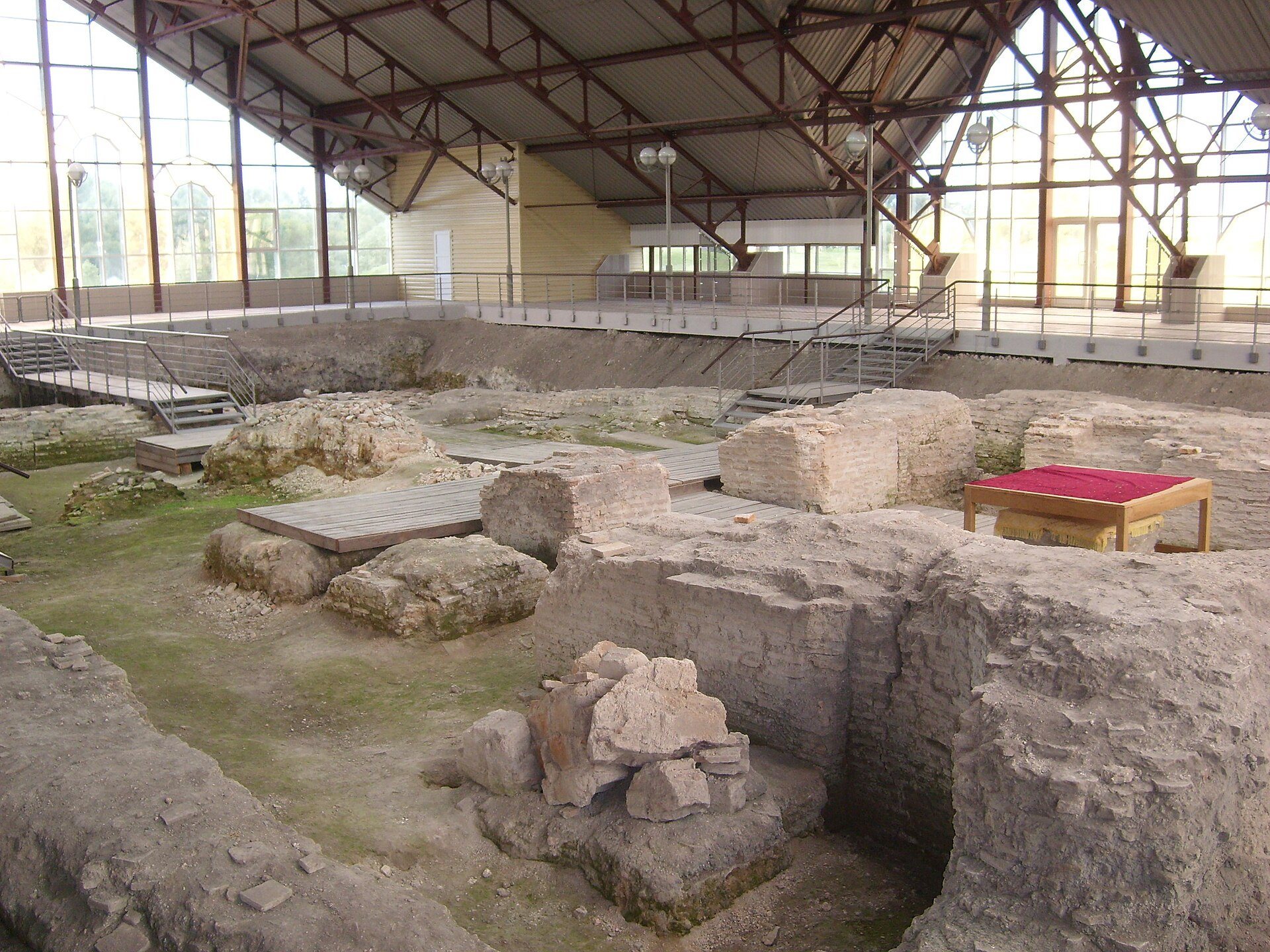
The hillfort was surveyed or investigated in 1889 by U. Z. Zavitnievich, in 1909 by A. K. Snitka, in 1927 by A. D. Kavalenia and S. S. Shutau, in 1929 by A. M. Liaudanski, and in 1974 by L. D. Pobal. Excavations led by V. V. Siadou and D. M. Palubaiarynava in 1961, and by P. F. Lysenko in 1962-1963 and 1968, revealed residential buildings, ovens, and a substantial archaeological assemblage. In 1963, M. K. Karger excavated the ruins of a twelfth-century church and found sarcophagus burials believed to have belonged to princes of Turov. The site is protected as a historical and cultural value of Belarus under designation code 313V000360.
Remains
The hillfort covers approximately 180 by 200 metres and was divided into two fortified areas by a deep moat. Its citadel measured about 75 by 70 metres, while the outer town, the settlement outside the principal fortified area, measured about 150 by 100 metres. Ramparts surrounded both parts. Traces of the moat remain visible in places on the side facing the open fields. The former Yazda River was diverted into a drainage canal in 1925, changing the watercourse near the settlement.
Buildings and domestic features
Investigations uncovered the remains of 35 structures, including 24 residential buildings. Ten ovens were identified, with seven made of clay and three incorporating brick. These features provide evidence for domestic activity and craft production within the fortified settlement.
Artefacts and religious objects
The finds include amphora fragments from the northern Black Sea region, tools, implements, weapons, household objects, jewelry, bronze vessel fragments, book fasteners, and objects connected with religious worship. Large quantities of pottery were recovered alongside brick fragments, glazed decorative tiles, crucibles used to melt non-ferrous metals, and candlesticks.
Four rare lead relief icons date from the thirteenth or fourteenth century. Their figures have been tentatively identified as the Virgin Mary; Saint Euphrosyne or Anastasia; a great martyr, possibly Saint Barbara; and a hierarch, possibly Cyril of Turov, the twelfth-century Eastern Christian bishop and religious writer associated with the town. Excavated materials are held by the Turaw Museum of Local History, the Polesia Museum of History in Pinsk, the Institute of History of the National Academy of Sciences of Belarus, and the Institute of Archaeology of the Russian Academy of Sciences.