Asigarh Fort: The Historic Fortress of Hansi, India
Site at a Glance
- Rating
- 4.4
- Popularity
- Medium
- Country
- India
- Primary era
- Medieval
- Eras represented
- Medieval, Modern
- Civilizations
- Ghurid
- Site type
- Military
- Remains
- Fort
On this page13 sections
History
Asigarh Fort, also known as Hansi Fort, is a historic fortress in Hansi, India, whose mound contains evidence of settlement dating to the BCE period. Its early history is uncertain, but the site later became associated with the Tomara and Chauhan dynasties and with Hansi’s production of swords. The fort continued to serve military and political rulers through the medieval, early modern, and colonial periods.
Early settlement and Tomara rule
Excavated ancient coins indicate that the mound was occupied long before the present fort. Hansi’s foundation is traditionally attributed to Anangpal Tomar, a Tomara ruler of Delhi, while his son Drupad is said to have established a sword-making center there. The name Asigarh is connected with asi, meaning sword, and garh, meaning fort. Swords made at Hansi were exported as far as the Arab countries.
During the eleventh century, the Tomara dynasty, a medieval ruling house based in the Delhi region, controlled Hansi and the surrounding territory. Mahmud of Ghazni, a ruler of the Ghaznavid dynasty known for military campaigns in northern India, attacked Hansi and Thanesar in 1014. His son Masud I attacked Hansi in 1037, and Mawdud of Ghazni seized power in 1041. Kumarpal Tomar, also identified as Mahipal Tomar, later recaptured Hansi and Thanesar.
Chauhan and Ghurid control
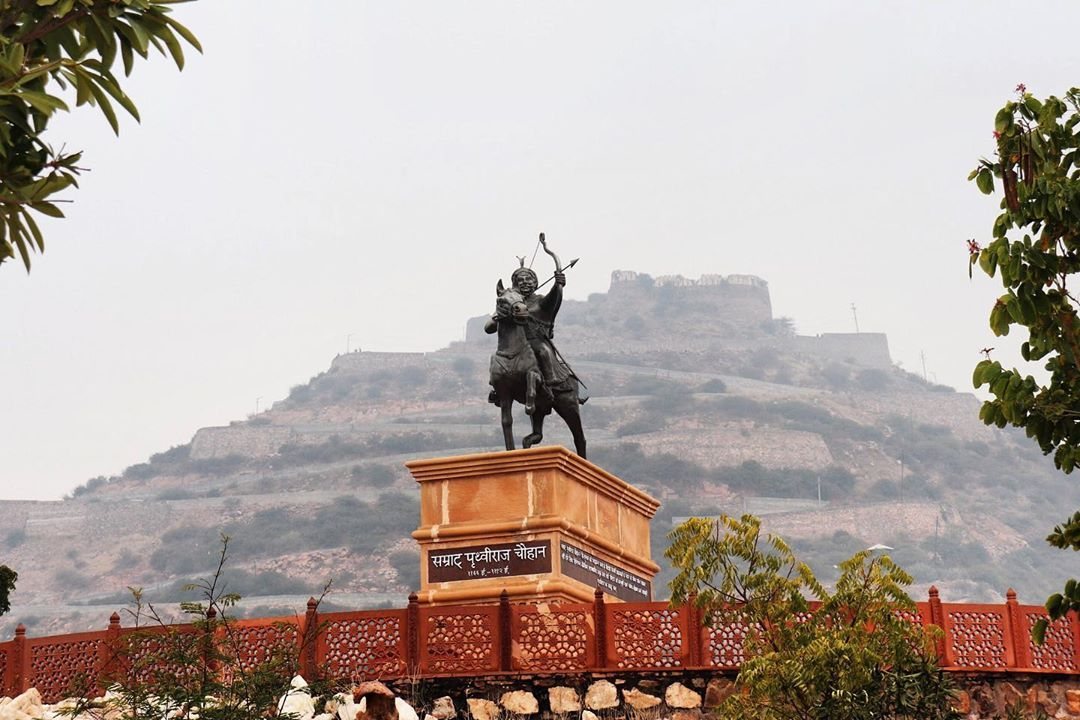
The Chauhan ruler Vigraharaja IV captured Hansi, probably after defeating the Tomara ruler Anangpal III. The Chauhans were a major north Indian ruling dynasty that controlled Delhi and parts of present-day Rajasthan and Haryana. Prithviraj Chauhan made additions to the fort during the twelfth century.
After Prithviraj Chauhan was defeated by Muhammad of Ghur in 1192, Hindu rule at Hansi ended. Muhammad of Ghur’s campaigns helped establish Ghurid power in northern India. Soon afterward, Jatwan besieged the Muslim commander Nasrat Uddin at Hansi. Qutb-ud-din, a Ghurid commander, marched approximately 40 miles in one night to confront him, after which Ghurid forces took control of the fort.
Sikh, Maratha, and regional rule
Guru Gobind Singh, the tenth Sikh Guru, is said to have visited Hansi in 1705 to encourage resistance to Mughal rule. Baba Banda Singh Bahadur, a Sikh military leader who fought Mughal authority, attacked Hansi in 1707. The fort was under Maratha rule by 1736.
During the 1780s, Maharaja Jassa Singh Ramgarhia, an eighteenth-century Sikh leader, controlled the area for several years as a Maratha vassal before leaving it. From 1798 to 1801, George Thomas, an Irish military adventurer who established an independent territorial regime in north India, controlled the surrounding area. He made Asigarh Fort the capital of a territory that included the Hisar and Rohtak districts and rebuilt the fort in 1798.
British occupation and preservation
The British East India Company seized the fort after the Anglo-Maratha Wars, the conflicts through which British power expanded against the Maratha states, in 1803. The Company had assumed control by 1810 and retained it until Indian independence in 1947. After George Thomas surrendered, the British Indian Army established a cantonment, or military station, inside the fort.
During the revolt of 1857 against British rule, the cantonment was abandoned and the fort was damaged. Lala Hukam Chand Jain was executed by the British in connection with the uprising. Prisoners associated with the Kuka movement, a nineteenth-century Sikh reform and resistance movement, were held in the fort during the 1880s.
The Archaeological Survey of India, the Indian government agency responsible for archaeological research and monument conservation, restored the fort in 1937 and declared it a centrally protected monument. Asigarh Fort is also described as having once controlled approximately 80 forts in the surrounding area. Historical forms of its name include Asidurga, Asigarh, Asika, A-sika, Ansi, and Hansi.
Remains
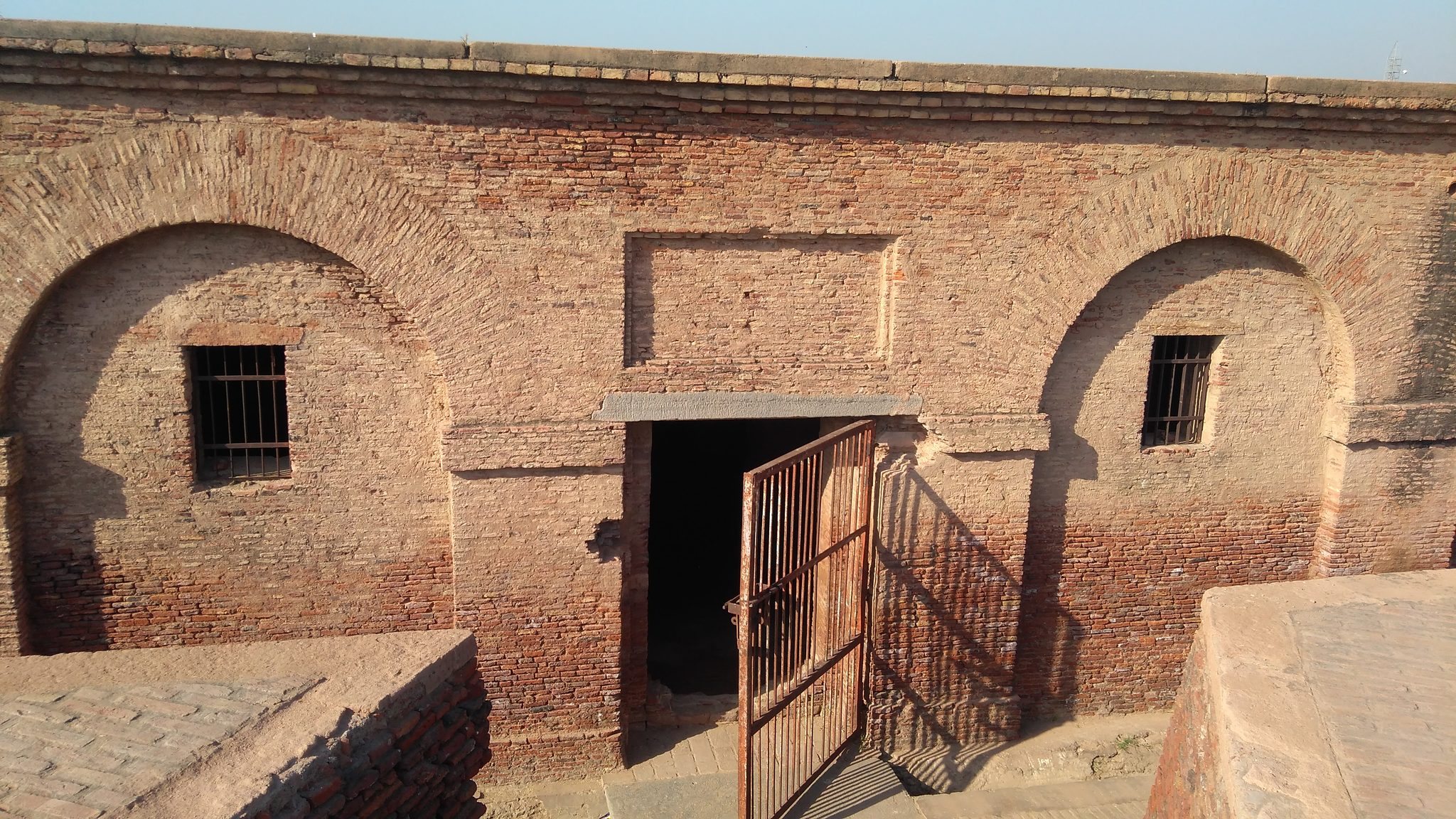
Asigarh Fort occupies approximately 30 acres on the eastern bank of Amti Lake in Hansi, Haryana. The fort stands on a mound enclosed by massive masonry walls, which rise about 52 feet and measure approximately 37 feet in thickness. Carvings in the masonry have been interpreted as evidence of Hindu origins, while the surviving buildings and excavated objects reflect later phases of use.
Walls, gates, and entrance features
Main walls and entrance
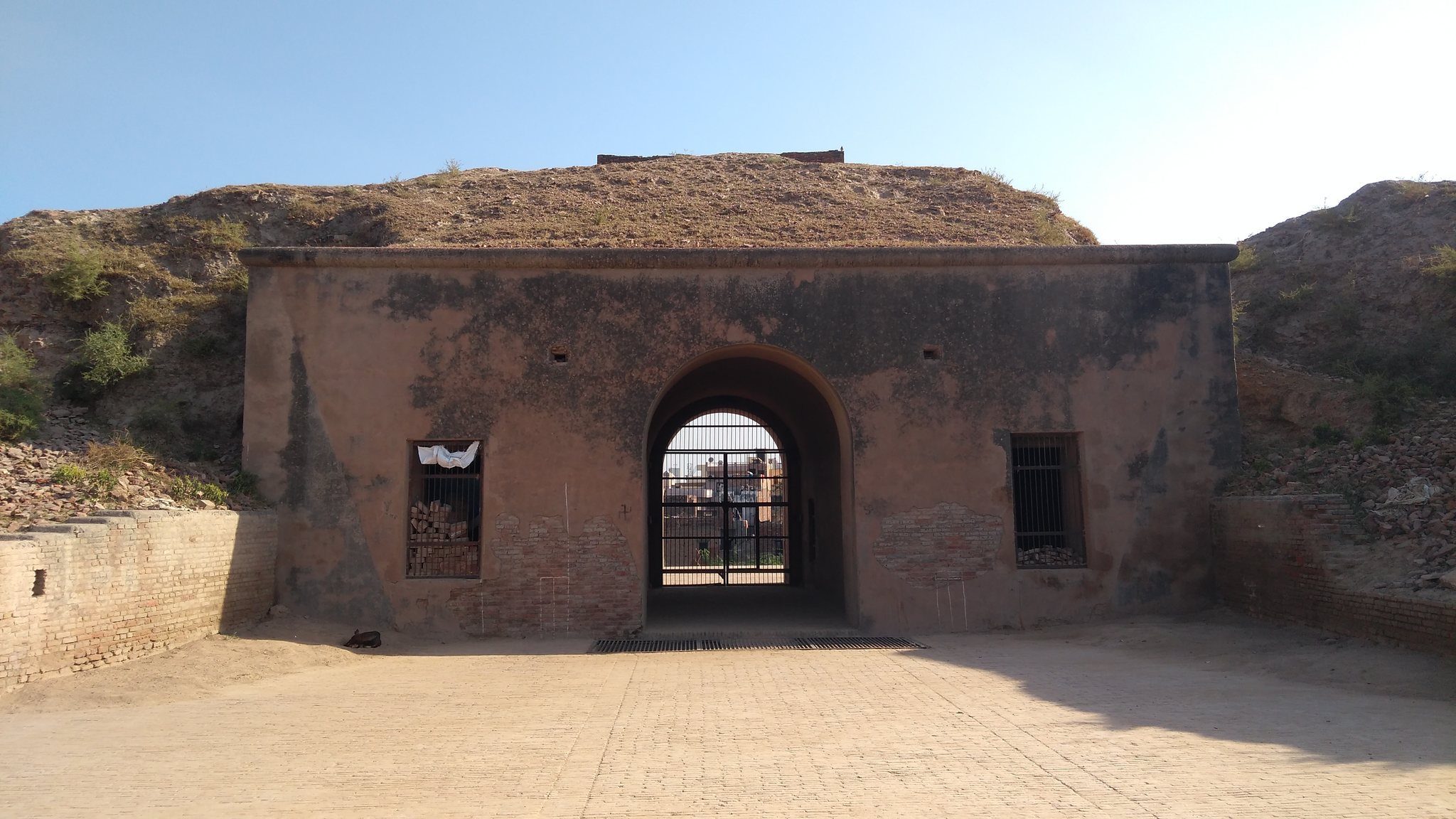
The fort’s principal walls form the dominant surviving defensive structure on the mound. The main gate carries carvings of birds, animals, and Hindu deities. These carved elements are part of the masonry associated with the fort’s earlier Hindu character.
Southern gate
A large gate at the southern end was added by George Thomas during his rebuilding of the fort in 1798. It represents a later alteration to the entrance system within the existing fortified complex.
Structures and excavated images
Baradari
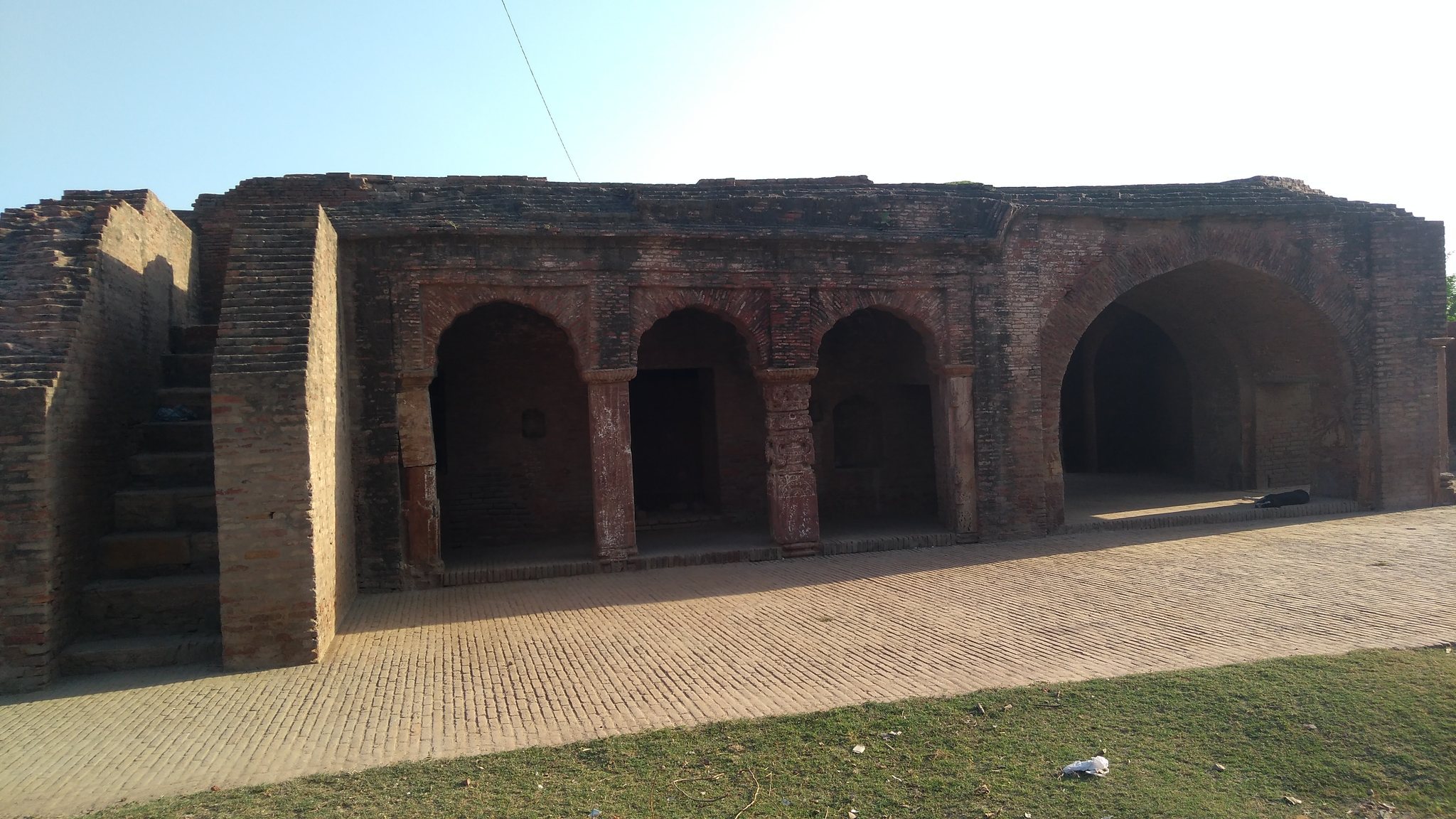
The Baradari is a long, pillared structure with a flat roof positioned on top of the mound. Its open hall form distinguishes it from the surrounding defensive walls and gates.
Char Qutub Dargah
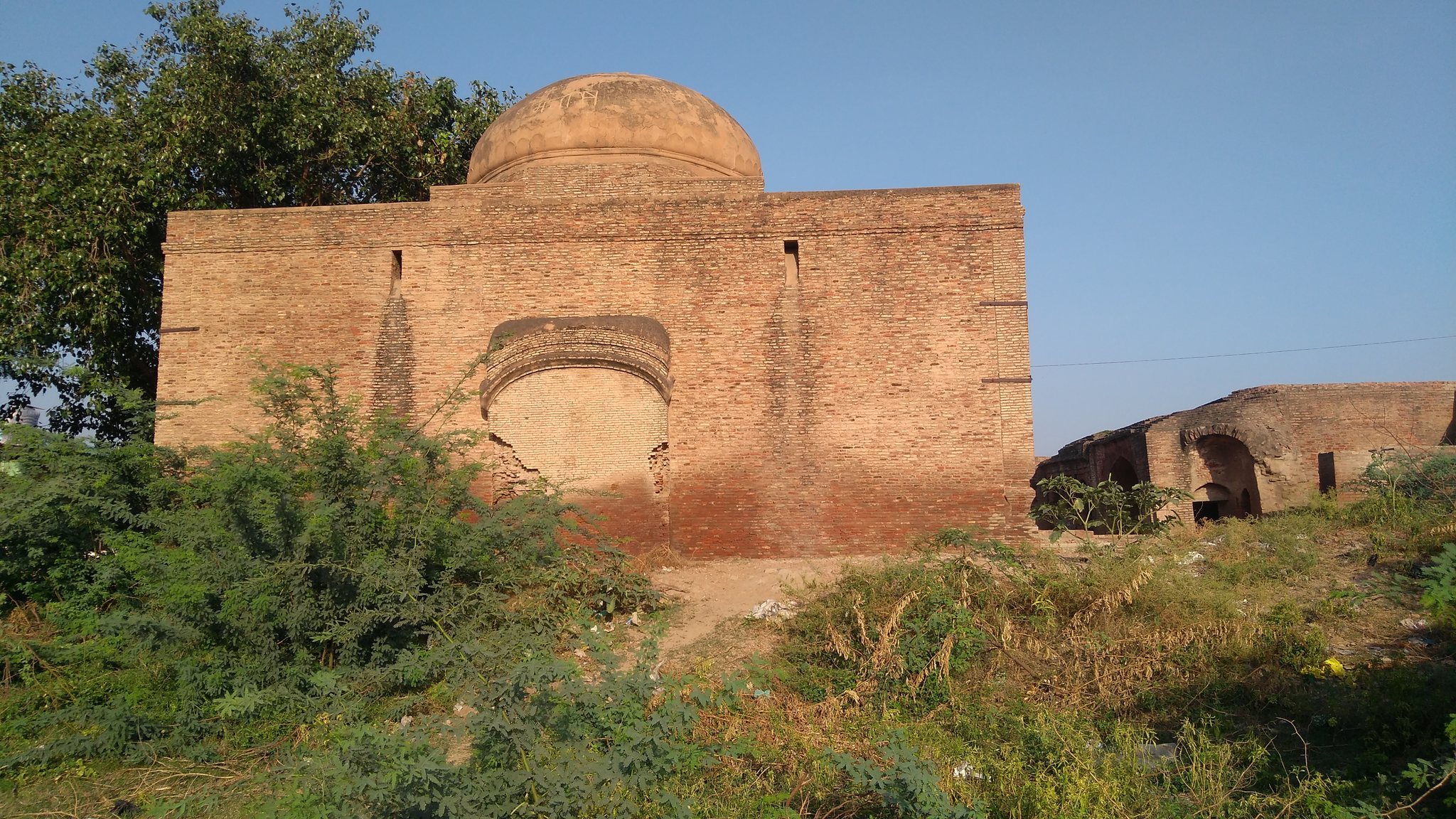
The fort complex includes the Char Qutub Dargah, described as a mosque. A dargah is a Muslim shrine or tomb complex. This structure was added after the defeat of Prithviraj Chauhan, placing it within the fort’s later Muslim phase.
Jain and Buddhist images
Excavations at the fort produced 57 bronze images of Jain Tirthankaras, revered spiritual teachers believed in Jainism to have attained liberation and shown the path to others, together with a statue of the Buddha. In February 1982, the Hansi hoard, a large group of Jain bronzes, was discovered. It included images dating to the Gupta period, approximately 319 to 605 CE, and to the seventh and eighth centuries CE.