Fort Scratchley: Newcastle’s Coastal-Defence Installation
Site at a Glance
- Rating
- 4.6
- Popularity
- Medium
- Country
- Australia
- Primary era
- Modern
- External website
- Open
- Eras represented
- Modern
- Civilizations
- British
- Site type
- Military
- Remains
- Fort
On this page12 sections
History
Fort Scratchley is a former coastal-defence installation in Newcastle, Australia, built on Flagstaff Hill to protect Newcastle and the Hunter River estuary. The fort was completed in 1882 during the late nineteenth-century expansion of coastal military defences and was designed by Lieutenant-Colonel Peter Scratchley, a British military engineer and colonial defence adviser involved in Australian defence planning. It was intended to meet the possibility of a Russian attack, although Russia was no longer considered the principal threat when construction was finished.
From coal hill to military ground
Flagstaff Hill had an earlier connection with Newcastle’s coal industry. In the late eighteenth century, Lieutenant John Shortland found coal fragments at its base while searching for rogue criminals. During the early nineteenth century, the hill remained associated with coal export, until the army claimed the land in 1843.
The first artillery position on the hill was established in 1866, when a battery of two 32-pounder smoothbore cannons was installed on Allans Hill. Smoothbore cannons had barrels without internal rifling. Two 68-pounder guns replaced them in 1874. Preparations for a battery of four 80-pounder guns began on 1 April 1878, and the battery was completed on 19 April. Fort Scratchley itself was completed on 2 April 1882.
Expansion of the artillery defences
The fort’s armament changed as artillery technology developed. In 1889 it received three 6-inch breech-loading guns and one 8-inch breech-loading disappearing gun. A breech-loading gun was loaded through the rear of its barrel, while a disappearing gun could be lowered out of sight after firing. In 1898 the four 80-pounders were replaced by quick-firing Nordenfelt machine guns. Two 6-inch Mark VII breech-loading guns replaced the disappearing guns in 1911.
Wartime service
A Battery Observation Post was built at the fort in 1914 during the First World War. This was a military position used to direct or coordinate artillery fire. During the Second World War, the post was extended, a Searchlight Directing Station was added to coordinate searchlights used to detect or illuminate targets, and blast walls were constructed in 1942.
On 8 June 1942, the two 6-inch Mark VII guns fired at the Japanese submarine I-21 during the shelling of Newcastle. This was the first occasion on which Fort Scratchley’s guns were fired in combat.
Military withdrawal and restoration
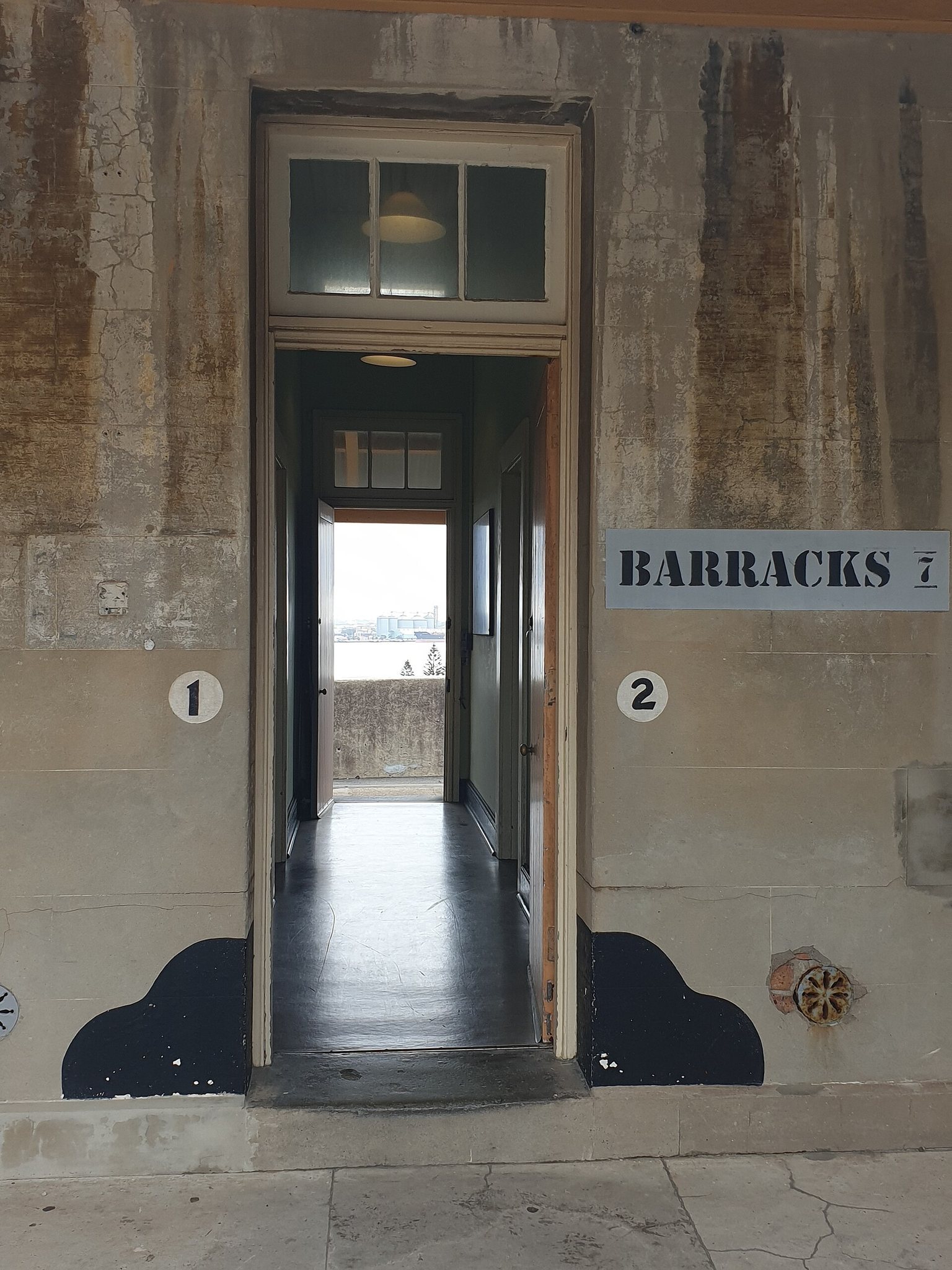
After the Second World War, the fort housed 13 Medium Coast Battery, Royal Australian Artillery, the artillery corps of the Australian Army, as part of the National Service Scheme. This was an Australian system of compulsory military service and training. During the 1960s, the unit became 113 Coast Battery, Royal Australian Artillery. The Australian Army left the site in November 1972.
The two 6-inch guns were decommissioned in 1965 and removed as memorials. They were relocated to Obelisk Hill, returned to Fort Scratchley in 1978, and placed in their original positions. The Fort Scratchley Historical Society restored them in 1992, and they remain capable of ceremonial and saluting fire. The fort closed for renovation in 2004. Restoration followed agreements involving Newcastle City Council in 2004 and 2007, and the restored site reopened in June 2008. A museum was operating there by 2009, and the fort is now owned by Newcastle City Council. It has also received an Engineering Heritage Marker through Engineers Australia’s Engineering Heritage Recognition Program.
Remains
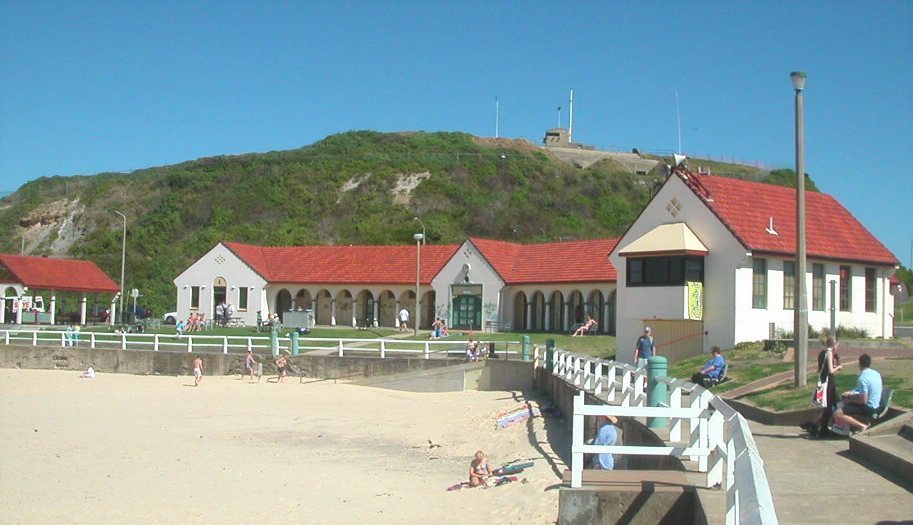
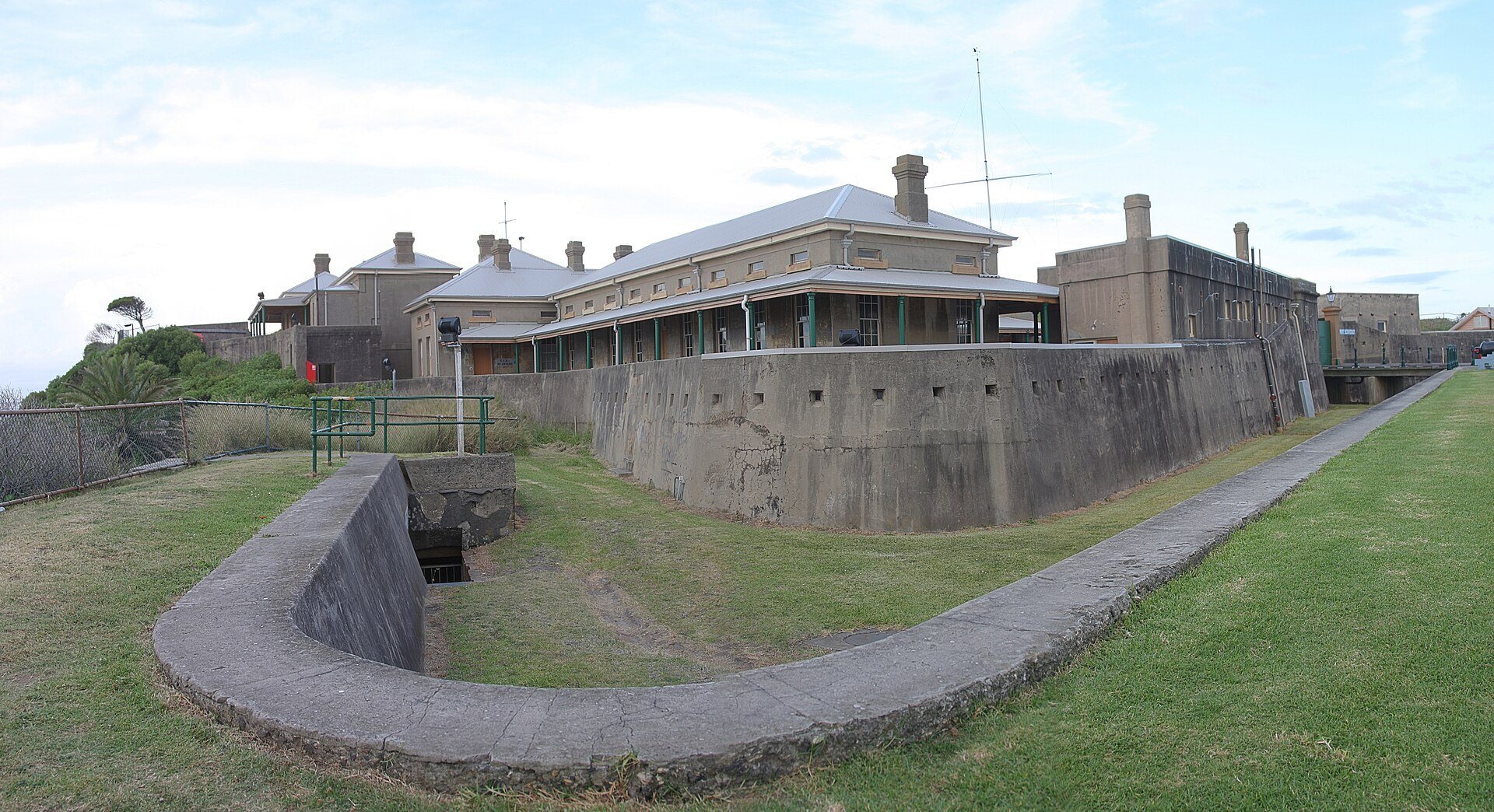
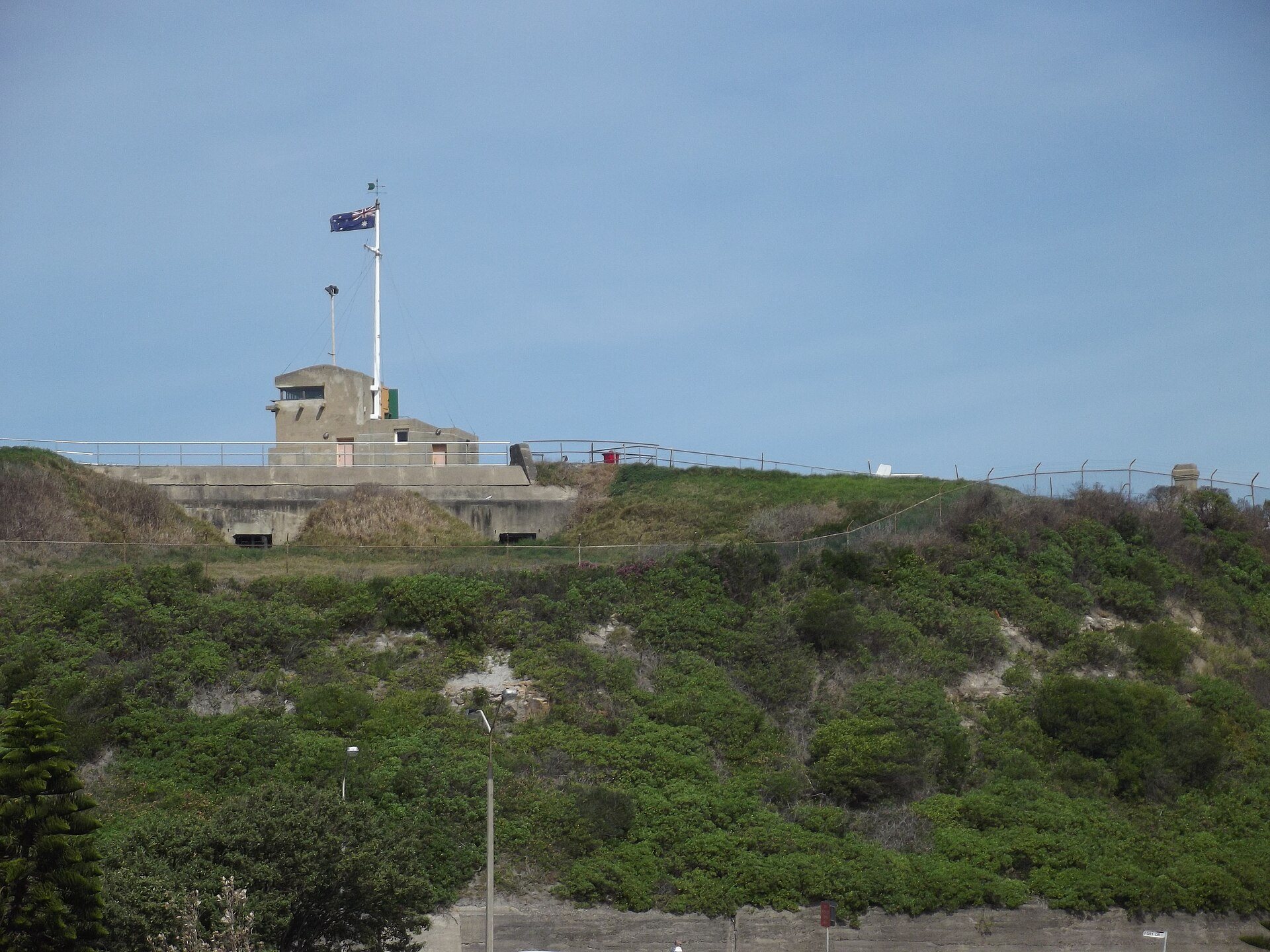
Fort Scratchley occupies the summit of Flagstaff Hill, which rises approximately 30 metres above the surrounding area. The fort overlooks the Tasman Sea and the Hunter River estuary, between Newcastle Beach and Nobbys Beach, at a position directly associated with the defence of the river entrance. Its surviving fabric combines the original nineteenth-century fortifications, later gun positions, wartime observation and searchlight facilities, and restored military features that now form part of the museum.
Fortifications and gun positions
Original artillery batteries
The 1882 fort incorporated three 9-inch rifle muzzle-loading guns and a casemated battery of four 80-pounder guns. A casemated battery was a group of guns installed in protected fortified chambers. The fort’s artillery was later altered as breech-loading and quick-firing weapons replaced earlier systems.
Six-inch Mark VII guns
Two 6-inch Mark VII breech-loading guns occupy their original positions after being returned to the fort in 1978. Restored by the Fort Scratchley Historical Society in 1992, they remain capable of firing on special occasions for ceremonial and saluting purposes.
Nordenfelt gun
The fort’s sole Nordenfelt gun was returned in 1985. It was restored to fully functional condition in 2015 and is fired on special occasions from its underground casemate. The other Nordenfelt guns had different later histories. One was removed in 1910, and the remaining two were removed in the 1930s and sent to Sydney, with one later returning to Fort Scratchley. Two 68-pounder cannons are now located at Stroud, New South Wales.
Other transferred guns
One 8-inch disappearing gun was transferred to the North Head Artillery School for training. A signal cannon was moved first to Georges Heights in Sydney and later to the Army Barracks at Puckapunyal, Victoria.
Wartime additions and present condition
The Battery Observation Post built in 1914 was extended during the Second World War. The wartime works also included a Searchlight Directing Station and blast walls constructed in 1942. These additions remain part of the fort’s physical military history alongside its earlier batteries and gun positions.
The fort is preserved in restored condition and contains the museum established after its early twenty-first-century renovation. Its surviving structures and returned artillery present the site as a coastal-defence complex that continued to be altered as weapons, observation methods, and wartime requirements changed.