Fortress of São Miguel: Luanda’s Historic Defensive Stronghold
Site at a Glance
- Rating
- 4.3
- Popularity
- Medium
- Country
- Angola
- Primary era
- Early Modern
- Eras represented
- Early Modern, Modern
- Civilizations
- Portuguese
- Site type
- Military
- Remains
- Fort
On this page9 sections
History
The Fortress of São Miguel is a Portuguese-built defensive stronghold in Luanda, Angola, constructed in the mid-1570s to protect the newly founded São Paulo de Luanda. Ordered by Paulo Dias de Novais, the first governor of Angola, it was the first defensive structure built in both Luanda and Angola. The fortress later became an administrative center and a major outlet for the transatlantic slave trade to colonial Brazil.
Early Luanda and Dutch occupation
São Paulo de Luanda became the administrative capital of the Kingdom of Angola in 1627. The fortress stood at the center of this developing colonial administration until the Dutch West India Company, a chartered company that organized Dutch commercial and military operations in the Atlantic, captured Luanda and the fort on 24 August 1641 during the Portuguese-Dutch War. Under Dutch rule, the stronghold was known as Fort Aardenburgh.
Portuguese forces recaptured Luanda on 15 August 1648 in an expedition that departed from the Captaincy of Rio de Janeiro under Salvador Correia de Sá e Benevides, a Portuguese colonial military commander. In 1650, the Overseas Council received new plans for Luanda’s fortifications. Pedro Pelique, an engineer brought from Rio de Janeiro, was responsible for the plans. The fort’s former name, São Paulo, was changed to São Miguel in reference to the saint to whom Salvador Correia de Sá was devoted.
Portuguese reconstruction
The fortress was rebuilt in masonry through successive phases under Portuguese governors. Work began in 1705 under Lourenço de Almada, and the construction was completed between 1764 and 1772 under Francisco de Sousa Coutinho. During the government of César Meneses, from 1697 to 1701, a powder house was added inside the fortification. Thick defensive walls, projecting bastions, and two curtain walls formed an autonomous fortified settlement with artillery installations.
An inspection commissioned by Governor Pedro Alexandrino in 1846 revealed weaknesses in the defensive arrangement. The chief engineer Francisco Xavier Lopes found that the bastions were too cramped for effective troop manoeuvres and that the governor’s house obstructed communication between the two fortified squares. These findings recorded the limits of a structure that had been altered repeatedly as military requirements changed.
Penal institution, museum, and military headquarters
A decree of 15 September 1876 established the Angola Deportees’ Depot in the fortress, although the colonial penal institution for convicts deported to Angola began operating there in 1881. Adaptation works included a two-storey building. After the depot was abolished by a decree of 8 September 1938, the fortress was declared a National Monument by provincial decree on 2 December of the same year.
The Museum of Angola occupied the fortress from 1939 until 1958, when it moved and was renamed the National Museum of Military History. Military use resumed in 1961, and the fortress became the headquarters of the Portuguese military command in Angola. It served as the headquarters of the commander-in-chief of the Portuguese armed forces in Angola until 1975.
In 1977, the fortress was used as a detention site for participants in the Fractionists’ Revolt. Nito Alves, José Van-Dúnem, Sita Valles, and Jacob Caetano were killed there. After Angolan independence, the facilities housed the Museum of the Armed Forces from 1978. The institution is now Angola’s National Museum of Military History, also known as the Museum of the Armed Forces.
Conservation and heritage status
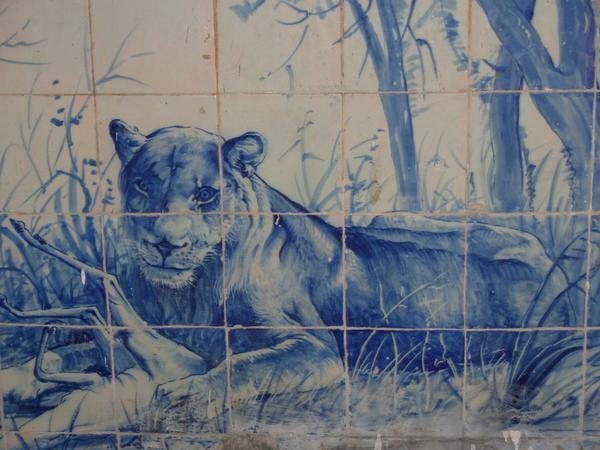
Exterior conservation work took place in 1995. Rehabilitation between 2009 and 2013 added museum facilities and restored tile panels and other parts of the fortress. The state owns the complex, which is affiliated with Angola’s Ministry of Defence and Ministry of Culture. It is recognized as a National Monument and as Portuguese-influenced cultural heritage, and it has been included on Angola’s tentative list for World Heritage status.
Remains
Setting and defensive layout
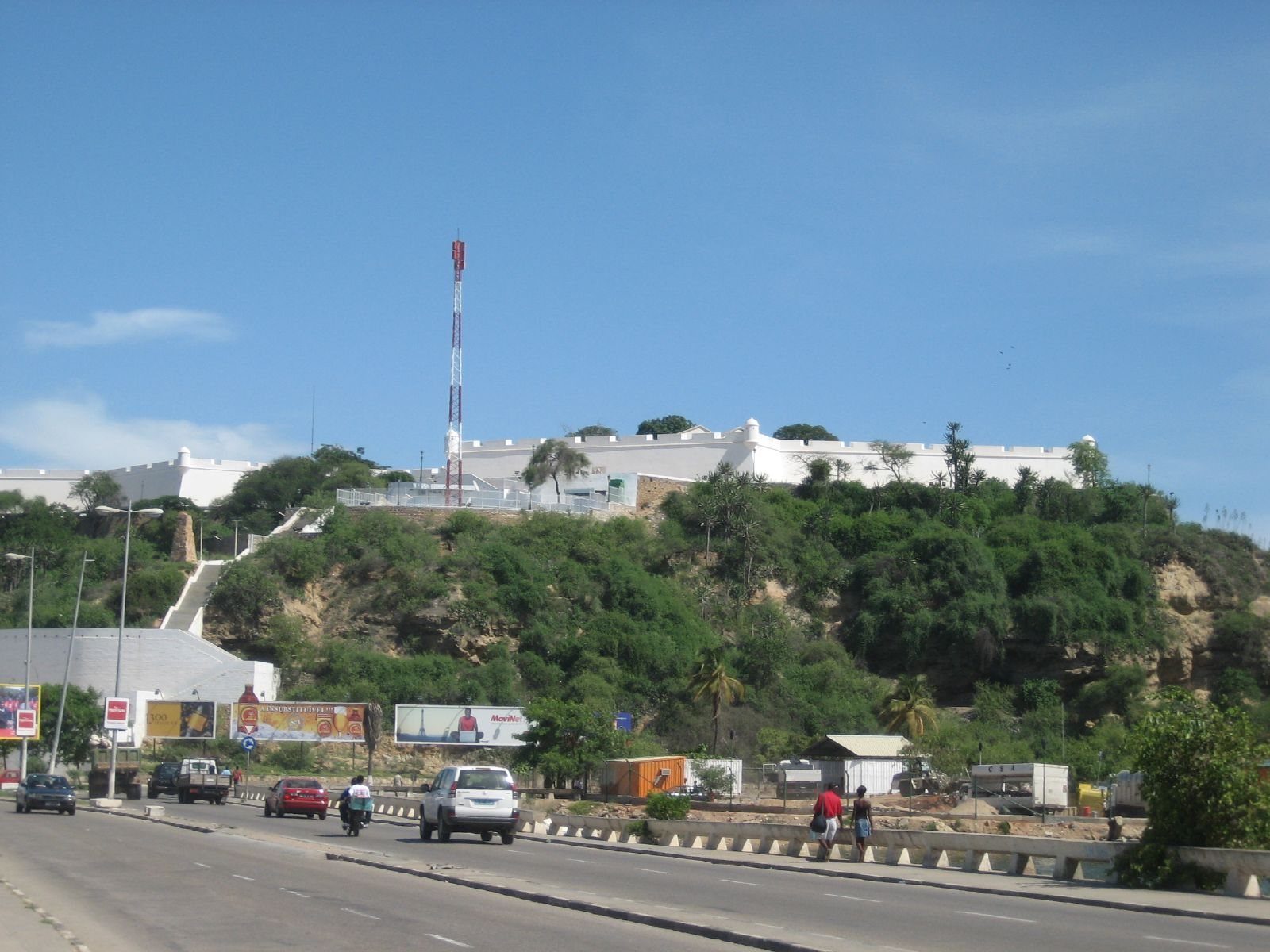
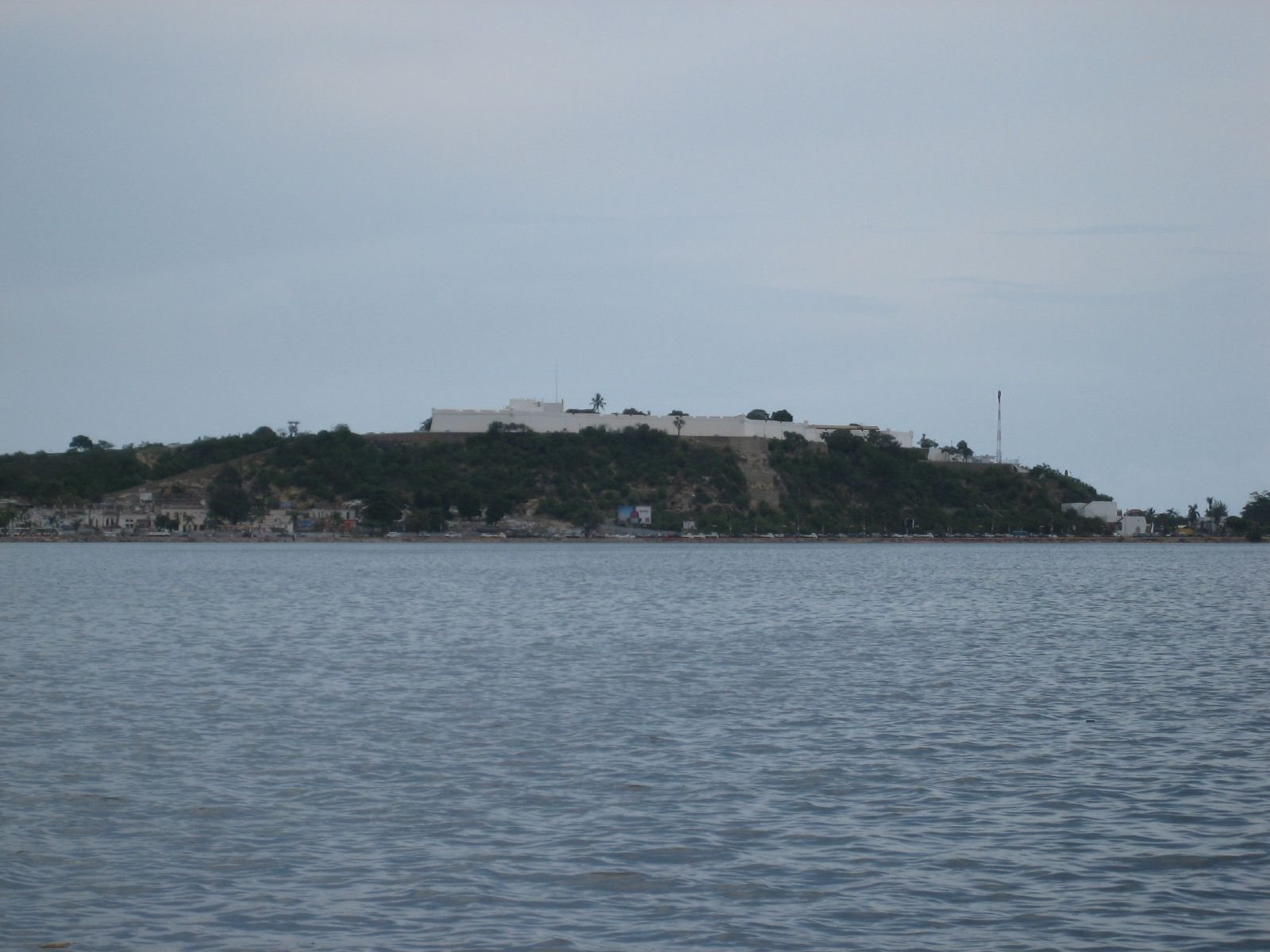
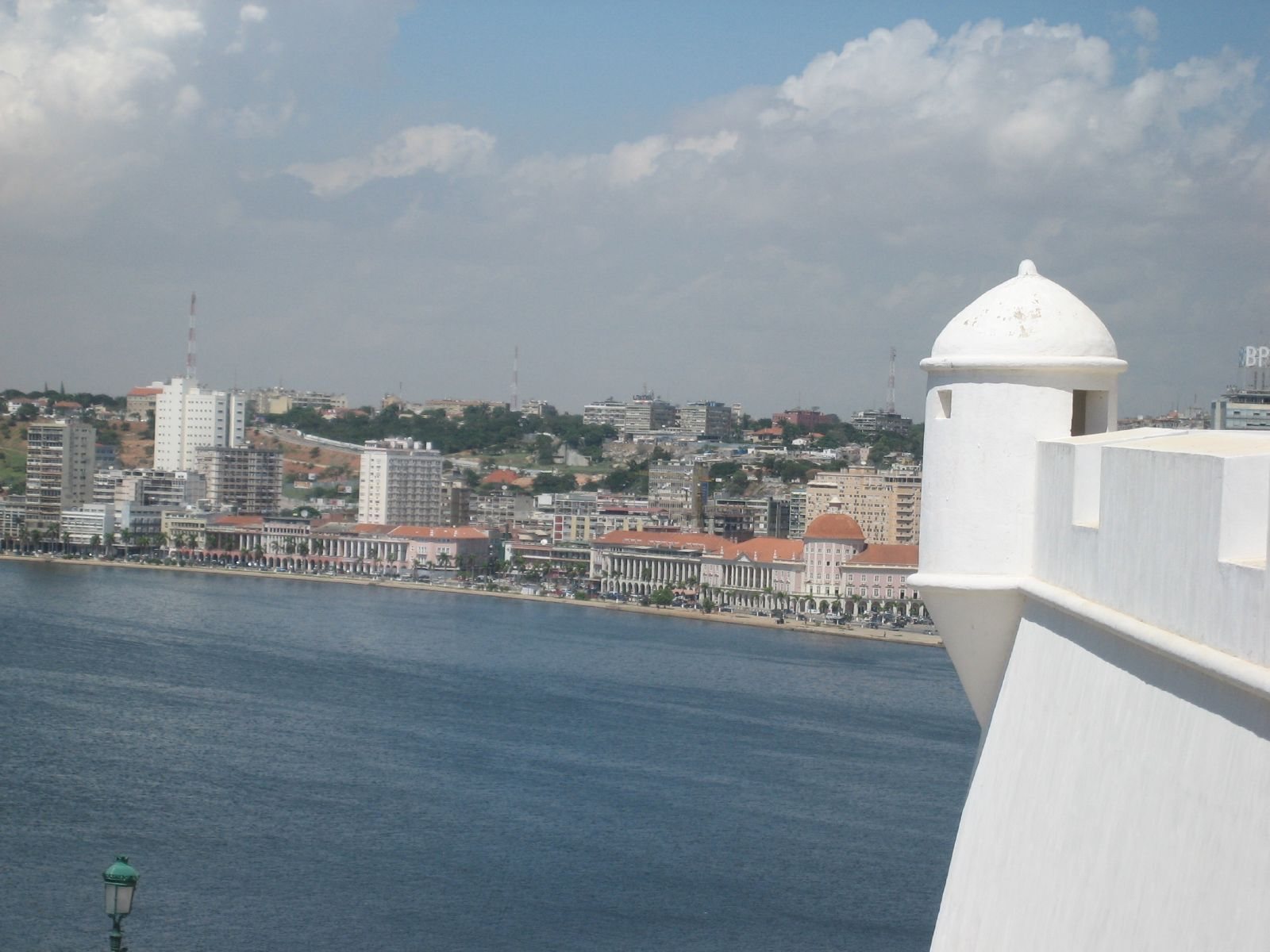
The fortress stands in Luanda’s Ingombota area, near the bridge linking Luanda Island with the mainland. It was initially the southwestern limit of the city. After the Barra da Corimba silted up around 1648, Luanda expanded northward on the opposite side of the hill, leaving the fortress within the urban area. The original earth fort was later reconstructed in masonry, with walls consolidated in stone and lime during successive phases that continued into the twentieth century.
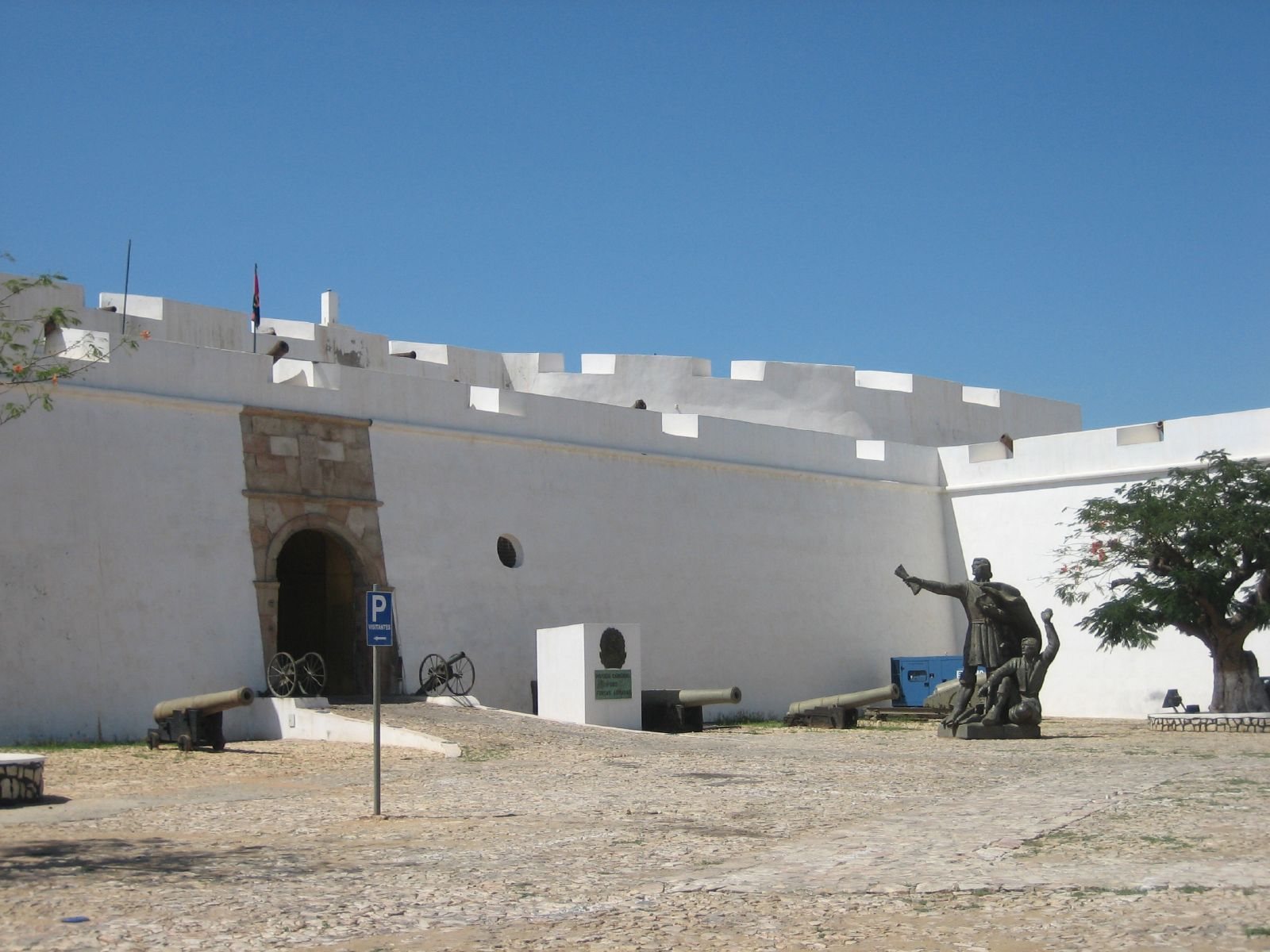
Its defensive enclosure consists of thick walls, bastions, and two curtain walls, the sections of defensive wall between bastions. The fortification had 131 gun ports, openings through which artillery could be fired. The bastions were judged too small for effective troop manoeuvres during the 1846 inspection. The fortress also contained two fortified squares, a governor’s house, and a powder house, reflecting its historic function as a self-contained fortified settlement.
Interior structures and museum spaces
The central casemate, a fortified vaulted space, contains restored ceramic-tile panels. Other tile panels installed within the fortress depict the history of Angola from its early period. The former cellars now accommodate a laboratory, an audiovisual room, a cafeteria, and the museum’s administrative area, while the former powder house contains study rooms and a library.
A 1,200-square-metre underground space constructed during the 2009 to 2013 rehabilitation contains an auditorium, a gallery, and a pantheon of heroes. In this setting, the pantheon is a commemorative space devoted to the memory of important figures. An exhibition park was also built outside the fortress and includes the monument’s flag.
Courtyard sculpture
The inner courtyard contains large statues representing Afonso Henriques, the first king of Portugal, as well as Diogo Cão and Vasco da Gama. Diogo Cão was associated with early Portuguese voyages along the west coast of Africa, while Vasco da Gama led the first voyage from Europe to India around the Cape of Good Hope. The courtyard also includes statues of other prominent figures.