Forte de São Francisco Xavier de Piratininga: Guardian of Vitória Bay
Site at a Glance
- Rating
- 4.7
- Popularity
- Low
- Country
- Brazil
- Primary era
- Early Modern
- External website
- Open
- Eras represented
- Early Modern, Modern
- Civilizations
- Portuguese
- Site type
- Military
- Remains
- Fort
On this page8 sections
History
Early Defenses and Colonial Foundation
Forte de São Francisco Xavier de Piratininga, in Vila Velha, Brazil, was a Portuguese colonial fortification established to defend the southern bar of Vitória Bay on the coast of the former Captaincy of Espírito Santo. Tradition places an earlier small defense on Penha Hill in 1535, built by Vasco Fernandes Coutinho, the donatário, or grantee who received administrative authority over a Portuguese captaincy. That first fortification did not survive for long.
Francisco Gil de Araújo acquired the Captaincy of Espírito Santo from Antônio Luís Gonçalves da Câmara Coutinho around 1674 or 1675. During his administration, construction of a new fort began in 1702 under Captain-Major Francisco Ribeiro. The work was well advanced by 1703 and included ten artillery pieces of different calibers. While the fort was still being built, English and Dutch privateers, privately operated armed vessels authorized by states to attack enemy shipping, assaulted it in 1705.
Repairs and Eighteenth-Century Development
Vasco Fernandes César de Meneses, viceroy and captain general of the State of Brazil, later commissioned the engineer Nicolau de Abreu Carvalho to repair the defenses of Vitória Bay. Work at the fort began in 1726, when its layout was made circular and its armament increased to fifteen artillery pieces. Further renovations followed in 1767.
A report from 1724 described the Fort of Barra de São Francisco Xavier as circular, with nine mounted artillery pieces: one classified as sixteen-gauge and eight as eight-gauge. Two other pieces had been dismantled, and the wall was badly damaged. The artillery classifications identified the stated caliber of the guns. A plan and prospectus prepared by Luís dos Santos Vilhena in 1801 placed the fortress at Paratininga, on the southern side of Vitória Bay’s entrance. It stated that King Peter II of Portugal had ordered the fort built by Rodrigo da Costa, governor and captain general of the State of Brazil.
Naval and Army Uses
On June 2, 1862, the fort passed to the Ministry of the Navy for use as a warehouse. Legislative Decree No. 1,654, dated June 13, 1907, expanded the facilities to accommodate the School of Apprentice Sailors of Espírito Santo. The school opened on April 1, 1909, and was abolished in 1913.
On November 10, 1919, the fort returned to the custody of the Ministry of War. A modern barracks was added for the 3rd Battalion of Hunters of the Brazilian Army. The historic fort now forms part of the complex of the 38th Army Infantry Battalion.
Remains
Fortification Layout
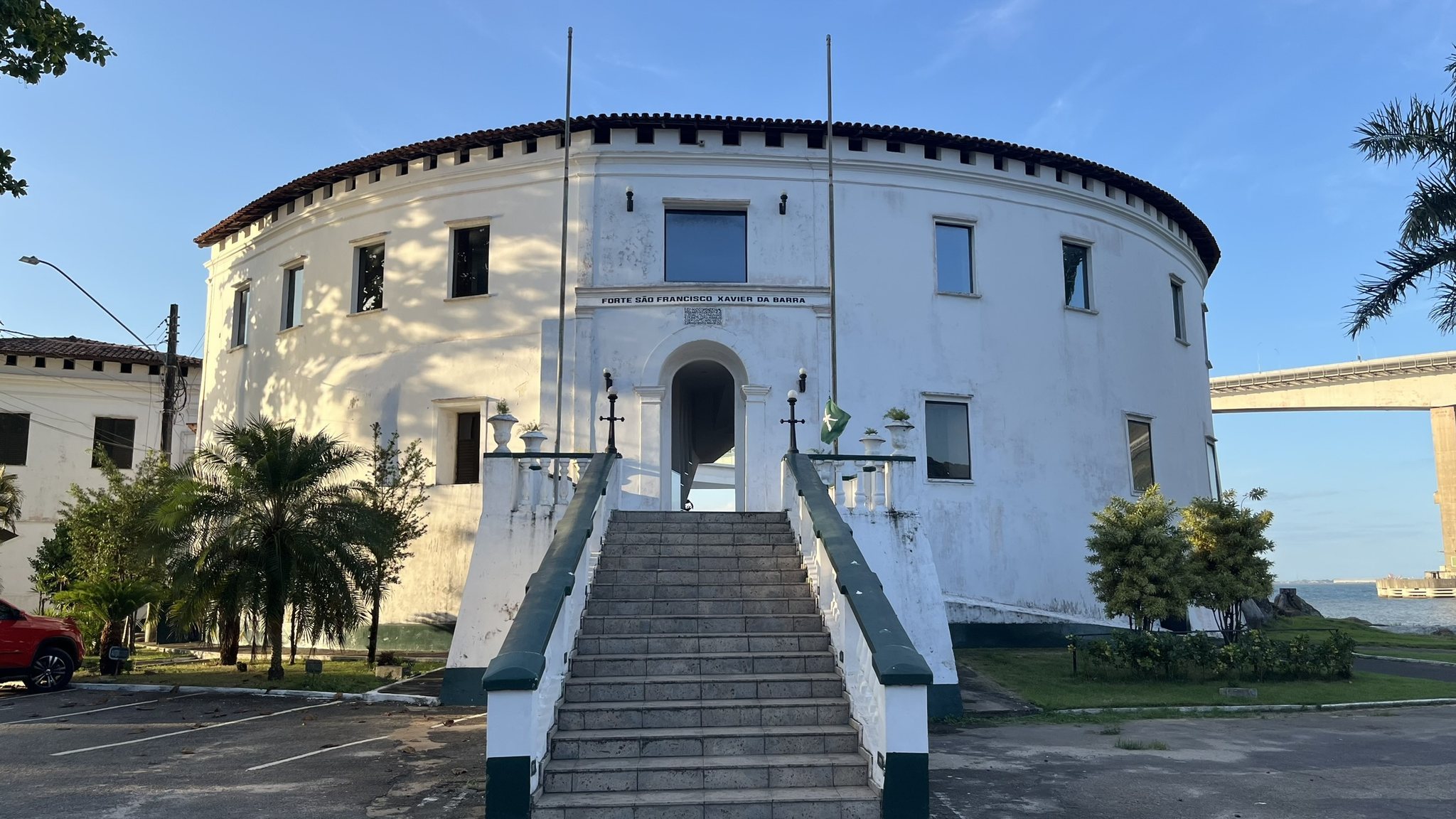
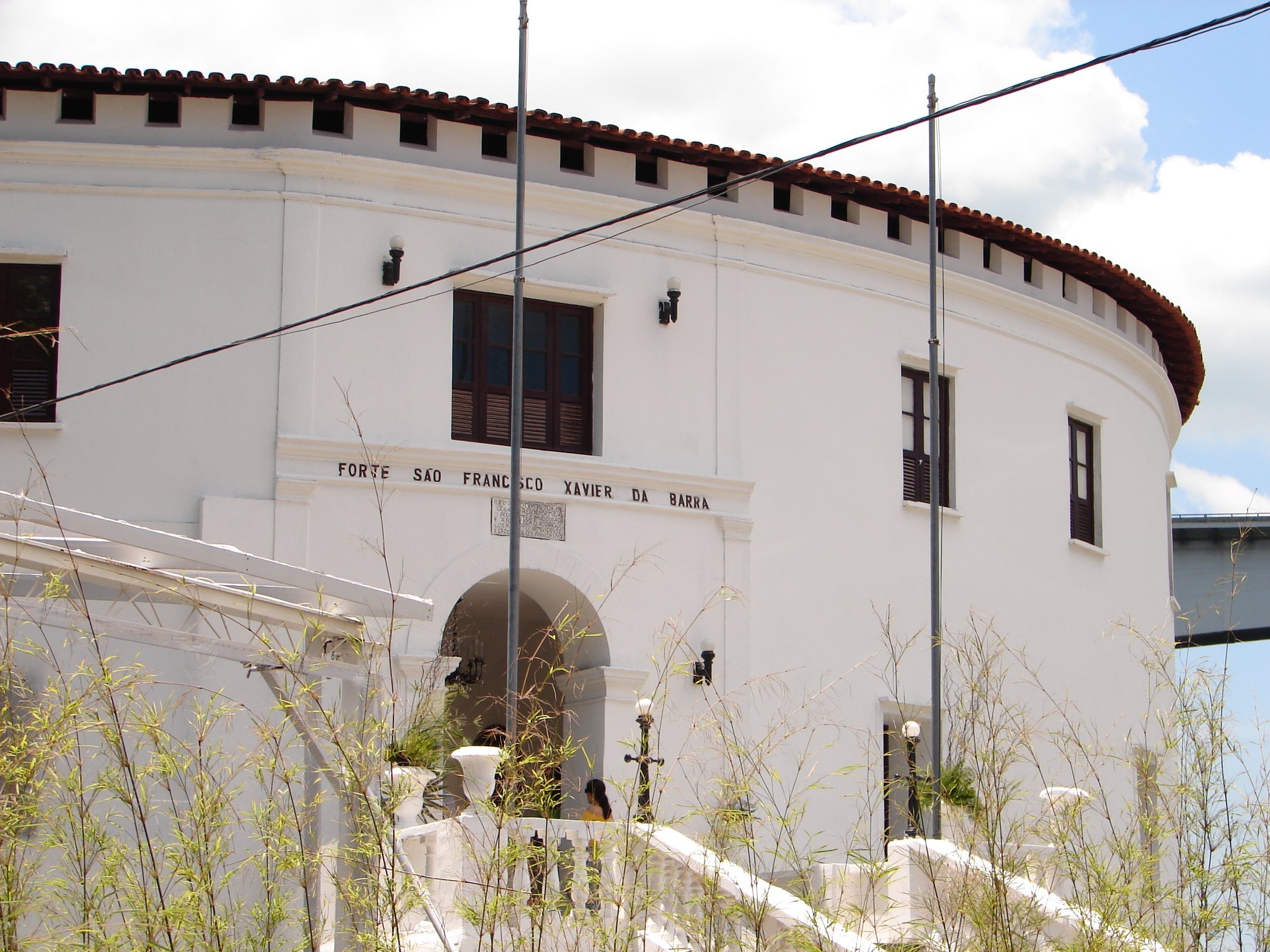
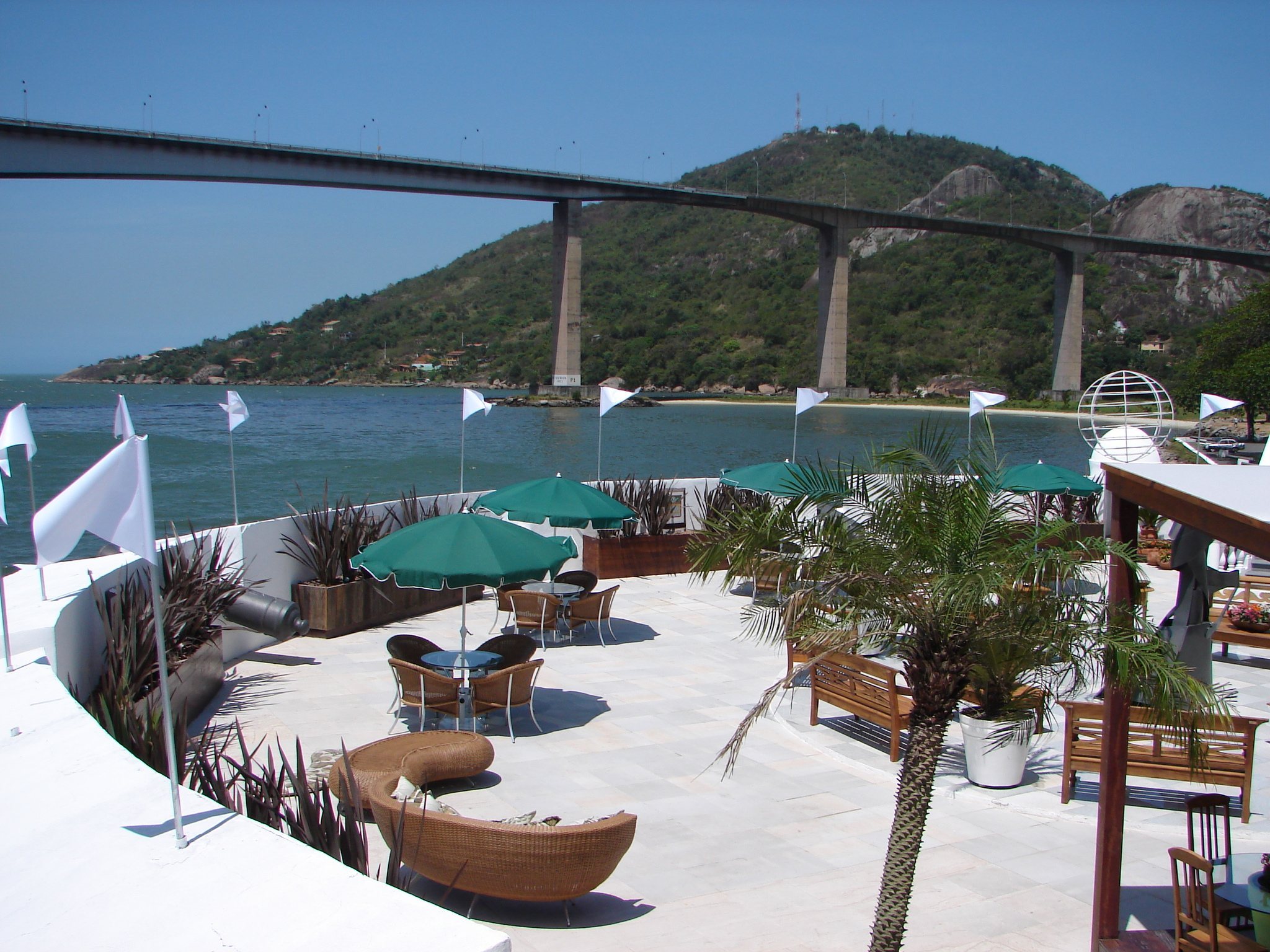
The fort stands in Inhoã Cove at the base of Penha Hill, occupying a strategic position at the southern bar of Vitória Bay. Repair work begun in 1726 gave the fort a circular plan and left it armed with fifteen artillery pieces. On level ground, a two-storey Command House formed part of the installation, while an external ramp provided access.
Vilhena’s 1801 plan placed the fort on exposed rock, one league from the village of Vitória, with the village of Espírito Santo behind it. The plan also stated that the sea did not reach the fort’s wall, defining the relationship between the installation and the shoreline at that time.
Navy-Era Traces
Elements associated with the period under Navy custody survive within the fort. These include a balustrade made from anchors, an interior staircase, and a navy mast. Together, they reflect the later naval use of the historic military site.
Twentieth-Century Military Complex
The later military complex includes the modern barracks built for the 3rd Battalion of Hunters in the twentieth century. The earlier fort is incorporated into the present 38th Army Infantry Battalion complex, linking the surviving historic structure with its subsequent army use.