Hüdâvent Hatun Türbe: A Seljuk Islamic Tomb in Niğde


Site at a Glance
- Rating
- 4.8
- Popularity
- Very Low
- Country
- Turkey
- Primary era
- Medieval
- Eras represented
- Medieval
- Civilizations
- Seljuk
- Site type
- Religious
- Remains
- Tomb
History
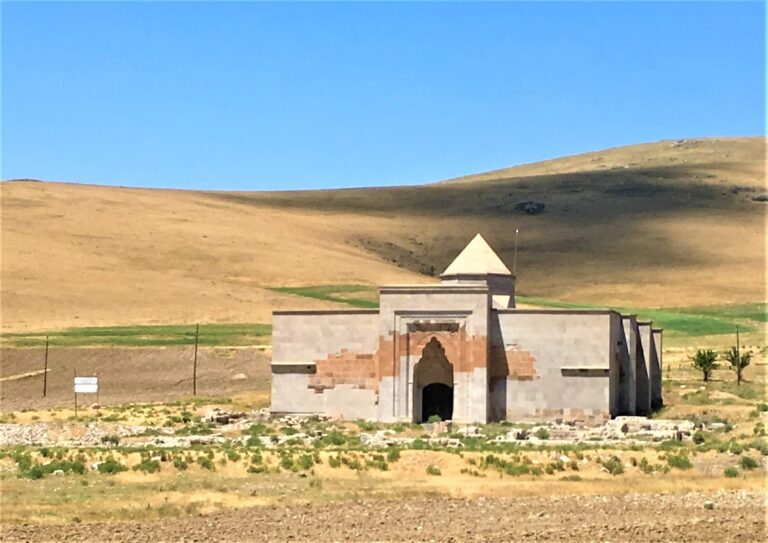
Hüdâvent Hatun Türbe is a Seljuk Islamic tomb in Niğde, Turkey, built in 1312 for Hüdâvent Hatun, the daughter of Kilij Arslan IV. A türbe is an Islamic funerary monument or tomb. Kilij Arslan IV ruled the Seljuk Sultanate of Rum, the Seljuk state that governed much of Anatolia. The building belongs to the Seljuk architectural tradition of Anatolia, which commonly combined masonry construction with domed funerary monuments and carved geometric, vegetal, and animal imagery.
The tomb is constructed from yellow cut stone and rises to a total height of 15.5 metres. Its octagonal body supports a dome, which is crowned by a sixteen-sided pyramidal roof. White marble forms the lintels, arches, inscription plaques, and cornice around the dome. The monument is particularly noted for its elaborate vegetal and zoomorphic carvings, including representations of plants and animals.
Hüdâvent Hatun Türbe was restored in 1962 by the General Directorate of Religious Endowments. This intervention helped preserve the tomb as an example of Seljuk Islamic architecture in Niğde.